With over 25 years at Samsung, Kyungyun (KY) Roo has seen the company evolve across multiple technology cycles, from feature phones to today’s AI-first smartphones. As the Managing Director of Samsung R&D Institute India, Noida (SRI-N), Roo leads one of Samsung’s most critical global R&D hubs, overseeing advanced work in AI, software frameworks, and service innovation.
Established in 2007, the Noida centre has grown into a key pillar of Samsung’s global mobile development ecosystem. As Roo outlined during a recent media roundtable, the facility has transitioned from feature phone development to smartphones and now to “AI phone development,” with a strong focus on innovation, expertise-building, and strategic partnerships.
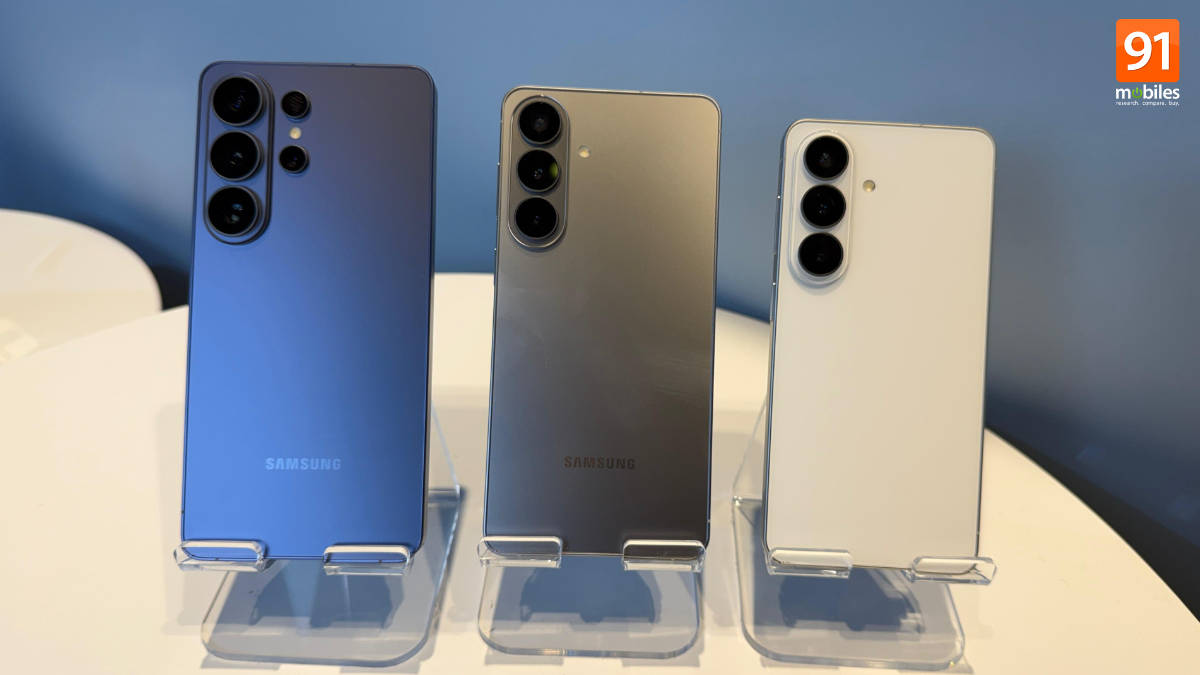
Today, SRI-Noida works as part of a “global one team,” collaborating closely with Samsung’s headquarters in Suwon. Its contributions span across core areas like frameworks, applications, AI features, and services, many of which have made their way into flagship devices like the Galaxy S26 series.
From India to the world: a feature that went global
When I asked Roo whether any feature had originated in India and later made its way to global Galaxy devices, he pointed to Direct Voicemail as a standout example.Originally developed based on feedback from Indian users via the Samsung Members community, the feature allows users to access voice messages for missed calls. It was first introduced on the Galaxy A series and, after receiving strong consumer feedback, was scaled up to the flagship Galaxy S26 lineup globally.
The example underscores how the Noida R&D centre is not just executing global mandates, but also shaping product direction, turning India-specific use cases into globally relevant features.
Key highlights from the roundtable
AI-first transition
SRI-Noida’s shift to “AI phone development” reflects Samsung’s broader pivot—and importantly, shows India is now deeply involved in building core AI experiences, not just local adaptations.Six key contributions to Galaxy S26
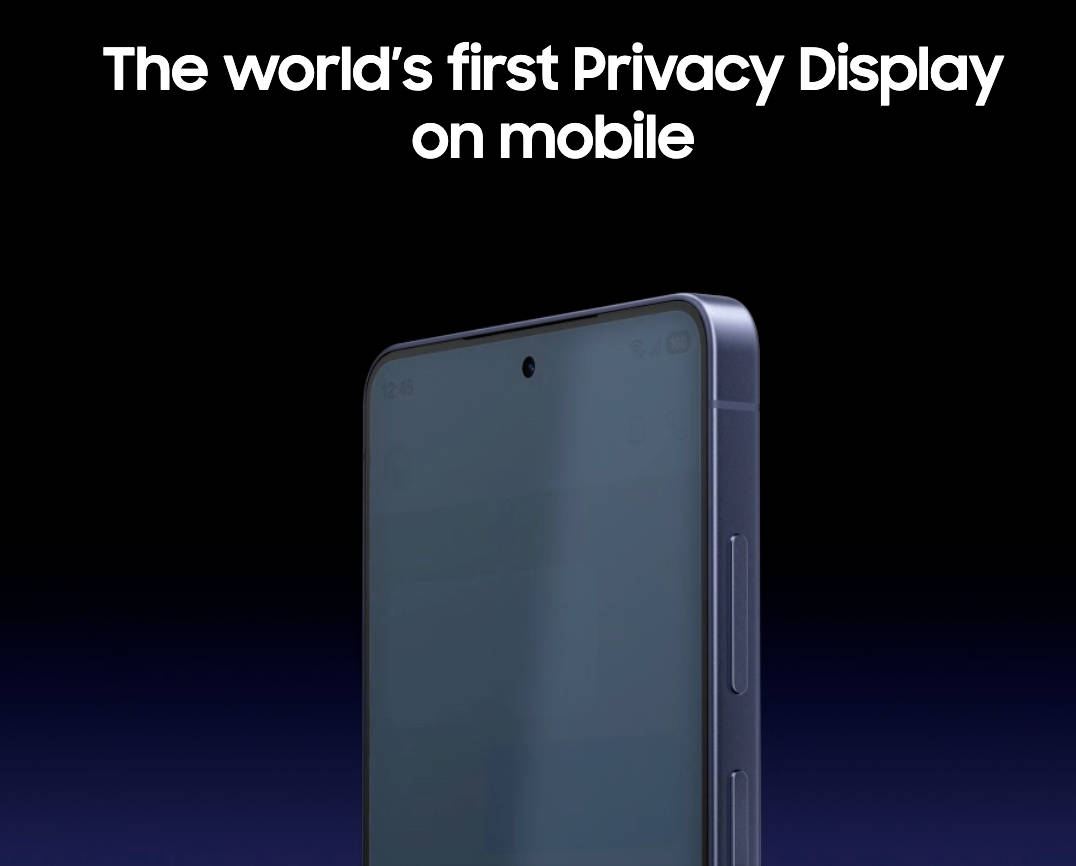
Features like Privacy Display (pictured above), Now Nudge, and Creative Studio highlight that the Noida team isn’t working on fringe elements — it’s contributing to core user-facing experiences on a flagship device.
Agentic AI with user control
While features like Now Nudge push toward proactive, assistant-like behaviour, Samsung’s emphasis on user permissions and private albums suggests a cautious approach — balancing usefulness with concerns around intrusiveness.On-device AI focus
Samsung’s continued investment in on-device AI signals a clear priority on privacy and responsiveness, though the need to balance it with cloud capabilities shows the limitations are still very real.India-driven innovations
Direct Voicemail and backup calling are strong examples of how India’s unique usage patterns (missed calls, dual SIM popularity, etc) are influencing features that eventually scale globally.AI for real-world India challenges
The use of AI to handle patchy networks and dropped audio packets is particularly relevant in India, and arguably more impactful than headline AI features that often feel more experimental.Language AI challenges and progress
Building on-device AI models for Indian languages is clearly non-trivial, especially given dialect diversity. The fact that Samsung started with Hindi and Gujarati shows progress, but also highlights how much work remains.Privacy Display use case
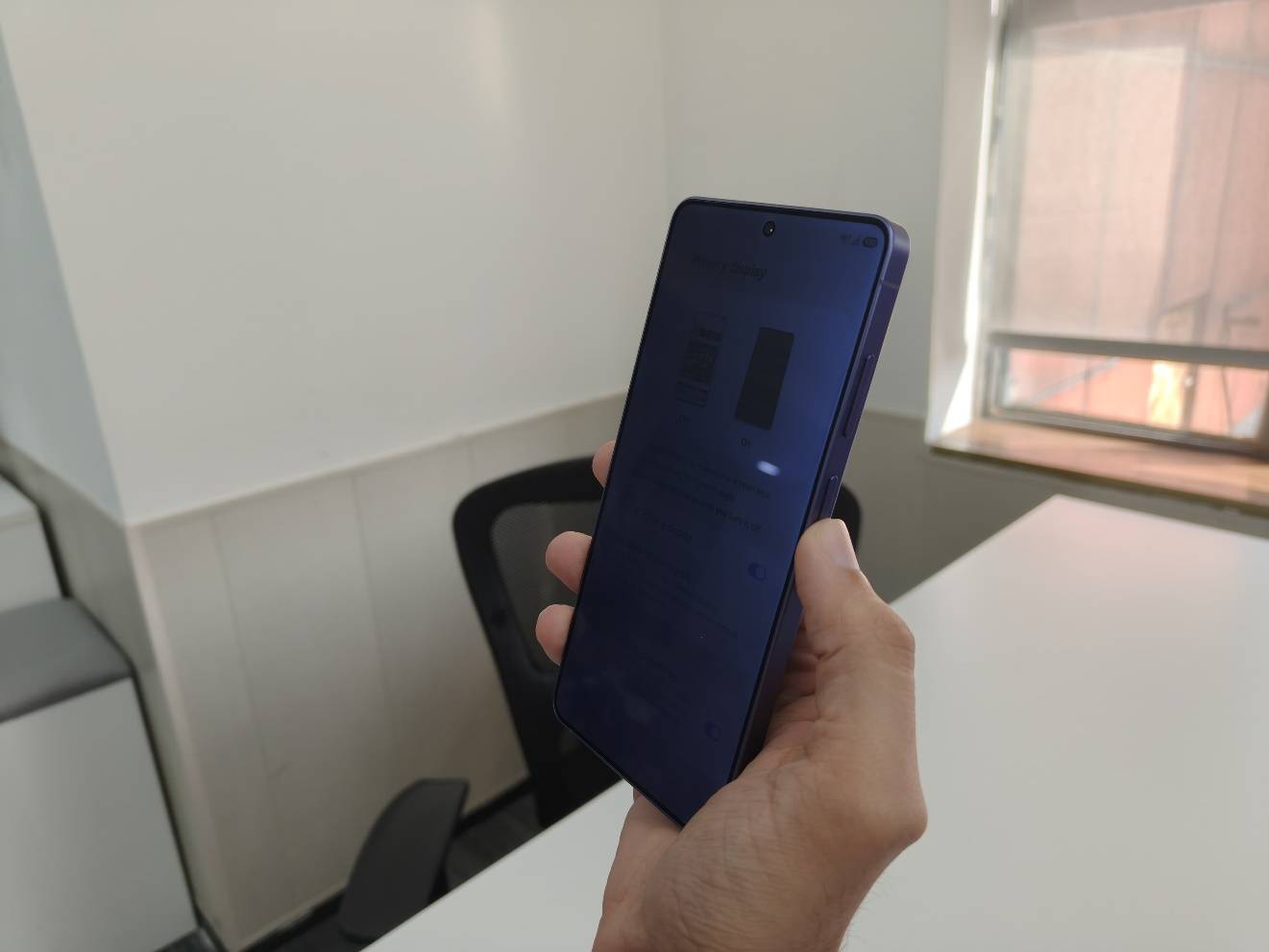
It’s a small but meaningful feature. Thanks to the new Privacy Display, you can hide sensitive information like OTPs. This use case feels especially relevant in India, where such notifications are frequent, and privacy concerns in public spaces are high.
Deep collaboration with manufacturing
The proximity to Samsung’s Noida factory is a tangible advantage, enabling faster iteration and debugging, something many global R&D centres don’t have.Global “One Team” approach
Samsung’s emphasis on collaboration rather than competition across R&D centres reflects a mature development structure, though it also means individual centres rarely “own” entire features end-to-end.Continuous optimisation focus
The focus on performance under high temperatures is a reminder that optimisation isn’t just about benchmarks—it’s about ensuring consistent real-world performance in markets like India.Strong academic and startup partnerships
Collaborations with IITs and startups indicate a long-term investment in talent and innovation pipelines, especially in AI.AI safety and ethics
The emphasis on filtering inappropriate content and keeping AI interactions safe suggests Samsung is taking a more controlled, platform-level approach compared to some more open AI implementations.The bigger picture
 What stands out is how Samsung’s Noida R&D centre has evolved from a support function into a core innovation engine, influencing both feature development and global product strategy.
As smartphones transition into AI-first devices, the role of centres like SRI-Noida is only set to grow, especially in shaping solutions rooted in real-world usage scenarios like those found in India.
And if Direct Voicemail is any indication, the next globally relevant Galaxy feature might already be taking shape in Noida.