At TP-Link India, our focus is on delivering integrated connected ecosystems: Sanjay Sehgal, CEO & MD


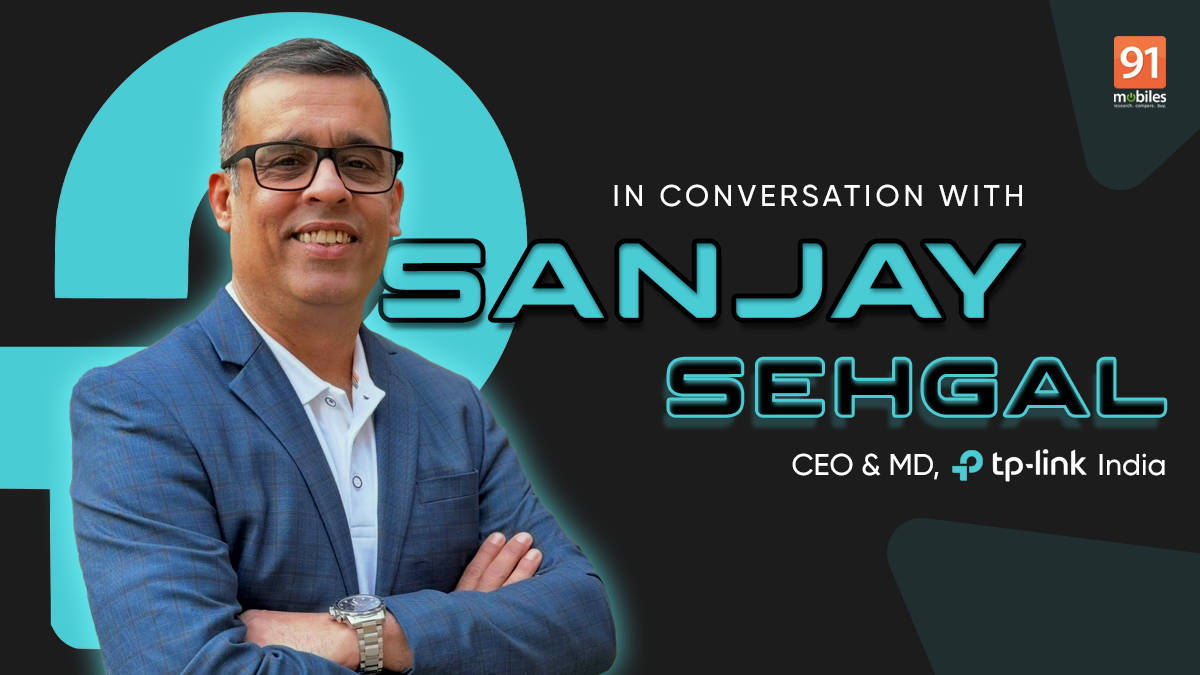
As a tech brand, TP-Link sits in an interesting space, addressing both the consumer and enterprise sides of the fence in a way not many can. On one side are its enterprise networking products, and on the other, consumer networking and smart home devices aimed at end users. While its range of Wi-Fi 6 and Wi-Fi 7 routers is quite extensive, the smart home portfolio is equally vast, comprising a broad range of products.
I bumped into Sanjay Sehgal, TP-Link India’s CEO and Managing Director, at the brand’s booth at CES earlier this year. Given how the brand has been in the news lately, I decided to follow up with a more detailed discussion around the brand and its offerings in the country.
Recently, TP-Link India issued a press release clarifying that the company is a subsidiary of US-based TP-Link Systems. Please elaborate on how the organisation is structured.
TP-Link India operates as a subsidiary of US-headquartered TP-Link Systems Inc., following the company’s global restructuring completed in 2024. Headquartered in Irvine, California, TP-Link Systems oversees the company’s international business, including operations in India.
TP-Link India functions as an independent local entity with dedicated leadership across operations, sales, service, manufacturing, and compliance. At the same time, it benefits from the global R&D strength, product roadmap, and technological expertise of TP-Link Systems.
This integrated structure enables TP-Link India to combine global innovation with strong local execution, ensuring agility and relevance in addressing the evolving needs of the Indian market.
What is the focus area for the company, and how do you cater to both enterprise customers and end users?
At TP-Link India, our focus is on delivering integrated connected ecosystems, not standalone products. Our portfolio is built across three core pillars: consumer networking, enterprise networking, and smart home.
For consumers, we offer a comprehensive range of solutions, including routers, mesh Wi-Fi systems, and smart home and security products under brands such as Tapo, designed for simplicity, reliability, and value.
For business and enterprise customers, we provide end-to-end networking solutions through our Omada platforms—enabling seamless connectivity, scalability, and centralised management.
Our strategy is anchored in addressing both segments through specialised product portfolios, distinct go-to-market approaches, and dedicated support structures.
We recognise that consumer and enterprise needs are fundamentally different. While consumers prioritise ease of use, affordability, and reliability, enterprises demand scalability, security, and control. Our solutions are designed to meet these diverse requirements—delivering high performance without compromise on user experience.
Give us a quick brief on your hero devices.

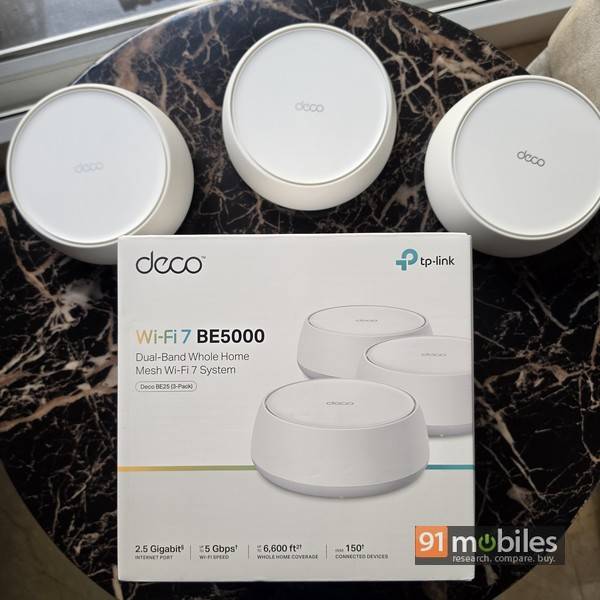
Among our strongest-performing categories in India, the Wi-Fi 6 portfolio continues to be a key growth driver. With average household bandwidth consumption increasing by over 30–40% year-on-year, driven by the proliferation of smart devices, OTT streaming, remote work, and IoT adoption, the demand for high-performance home networks has evolved significantly.
Today’s users expect not just higher speeds, but uniform, low-latency connectivity across multiple devices and every corner of the home. This shift is accelerating the adoption of mesh-based networking solutions over traditional routers.
Our Deco series, particularly the Deco X10 and Deco X50, is well aligned with these requirements. These solutions offer seamless whole-home coverage of up to 4,500 sq. ft., support for dozens of connected devices simultaneously, and deliver consistent gigabit-class performance. As a result, mesh Wi-Fi is rapidly transitioning from a premium niche to a mainstream home networking standard, especially among users who prioritise reliability, coverage, and uninterrupted digital experiences.
In the enterprise segment, we have been consistently expanding our footprint in advanced networking infrastructure, with a strong focus on Layer 3 switching, high-density fibre deployments, and 100G uplink capabilities. This aligns with the growing demand for high-throughput, low-latency networks across campuses, data centres, and large enterprise environments.
Our commitment to Make in India goes beyond intent—it is a core part of our strategy. We are now actively manufacturing high-performance, enterprise-grade products, including Layer 3 switches, to support India’s evolving digital infrastructure and regulatory ecosystem.


Within our Omada portfolio, the SG6428X stands out as a high-performance L3 managed switch designed for the convergence layer. It offers advanced L3 routing, 10 Gbps uplinks, physical stacking, and redundant power supply options, making it ideal for scalable and resilient enterprise networks.
On the wireless front, the EAP610 (ceiling-mount Wi-Fi 6 access point) continues to be one of our most widely adopted solutions. With high client capacity, seamless roaming, and centralised cloud management, it has established strong traction across key verticals such as education, retail, warehousing, and hospitality.
Together, these solutions reinforce TP-Link’s positioning as a reliable, scalable, and enterprise-ready networking partner for diverse industry environments.
How do you see the smart home segment evolving in the country?
The smart home segment in India is still at a nascent stage, but it is witnessing rapid growth and strong future potential.

At TP-Link, we already offer a range of products that play a key role in home automation, including light sensors, smart door locks, robot vacuum cleaners, smart lighting, and smart switches, among others. These solutions are part of a unified ecosystem that is easy to manage and scalable to suit varying automation needs.
Additionally, products such as smart indoor plugs and smart switches serve as effective entry points for consumers. They are particularly relevant for users who may not want to replace existing infrastructure immediately—either due to cost considerations or a preference to experience and evaluate smart automation before transitioning to a fully integrated system.
Consumers today are steadily moving beyond basic connectivity and showing a growing preference for integrated smart living experiences—encompassing security cameras, smart lighting, plugs, sensors, and broader home automation solutions.
What are the plans for the coming months? What can we expect from TP-Link this year?
In the coming months, TP-Link India will continue to strengthen its presence across consumer and enterprise segments. We aim to expand our Wi-Fi 7 portfolio, bringing advanced, future-ready connectivity solutions to both homes and businesses, while introducing new innovations in smart home and security.
A key priority this year is to accelerate growth in our enterprise business through Omada, further strengthening our position in the segment. In parallel, we are making strategic investments in local manufacturing, certifications, and partner ecosystem development, aligned with India’s evolving regulatory and security landscape.
Our long-term vision is to establish TP-Link as one of the most trusted technology brands in India across all connected categories.