91mobiles was recently part of a closed-door hardware deep-dive ahead of the Galaxy Unpacked launch of the Galaxy Z Fold8 series. The session, held under embargo, was led by Sunghoon Moon, EVP and Head of Hardware R&D at Samsung Mobile, who has been with the company since 2004 and has worked on the Galaxy S and Galaxy Z lineups through their evolution. Over roughly an hour — a 30-minute presentation followed by a 30-minute Q&A — Moon walked through the engineering philosophy behind what Samsung is calling its most complete foldable portfolio yet, spanning the Galaxy Z Fold8 Ultra, Galaxy Z Fold8, and Galaxy Z Flip8.
Table of Contents
Three devices, three kinds of users

Moon’s presentation opened with a simple question: what actually makes the ideal foldable? Samsung’s answer, after seven generations of foldable hardware, is that there isn’t a single answer — different users use foldable devices differently, and trying to serve all of them with one form factor no longer works.
That’s the reasoning behind splitting the new lineup into three distinct devices. The Galaxy Z Fold8 Ultra is pitched as Samsung’s most capable AI productivity foldable, aimed at users who go deep into a single device and want it to do everything. The Galaxy Z Fold8 is positioned as the everyday, general-content foldable for users following curiosity rather than maximum productivity. And the Galaxy Z Flip8 is built for users who want to express themselves on their own terms — the sleekest and most “AI-native” of the three, in Moon’s words.
Three engineering priorities ran across all of them, per Moon: bigger, more immersive screens; a thinner and lighter build; and ultra performance without giving up the core advantages that make a foldable a foldable. The harder problem, he stressed, wasn’t nailing any one of these individually — it was delivering all three together in a single device, which meant re-engineering the display, structure, hinge, and thermal design as one connected system rather than optimising each part in isolation.
Flex Titanium: why titanium, and how thin it actually gets
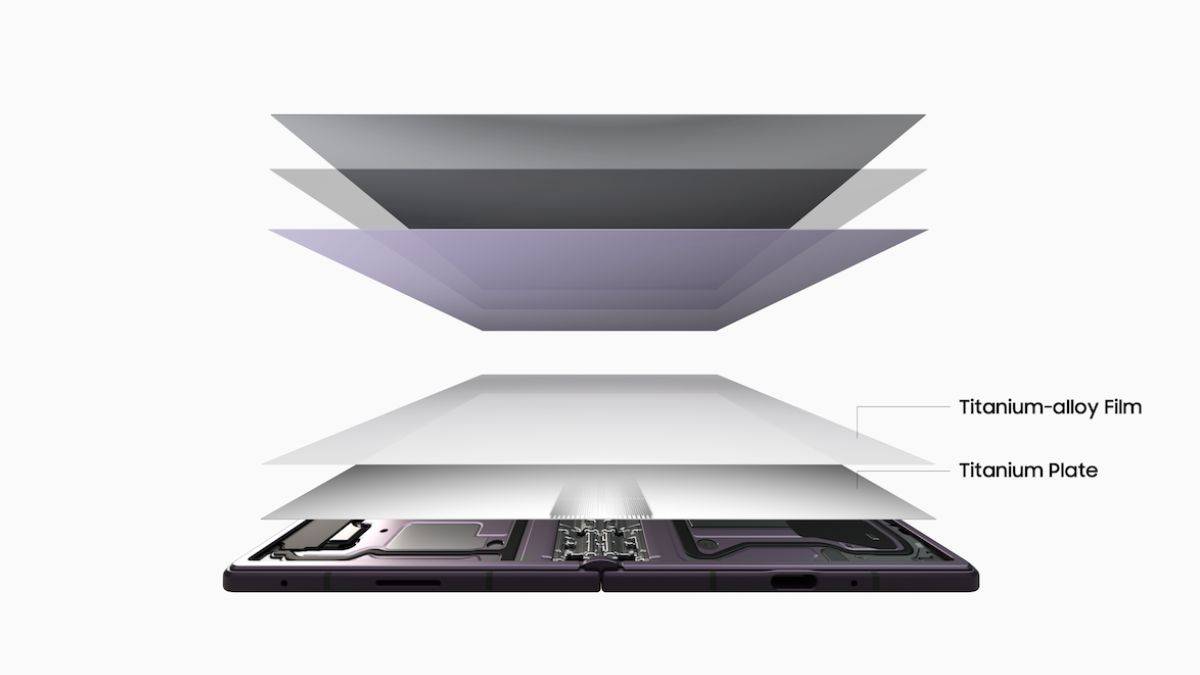
The headline materials story this generation is what Samsung is calling Flex Titanium technology. Why titanium specifically? Moon explained that the material offered the right foundation for a folding display — strong, stable, and resistant to permanent deformation, the same properties that make it useful in aerospace applications. But selecting the material was only step one; the harder engineering problem was figuring out how to process it so it retained that strength through repeated folding and unfolding.
Samsung’s solution uses two layers of titanium — a titanium plate and a titanium alloy hinge structure. The plate absorbs pressure and shock while smoothing out unevenness on the display surface, with a precisely engineered mesh pattern in the folding area to preserve flexibility despite titanium’s natural rigidity. A second, thinner titanium layer sits just beneath the display panel itself, refined through ultra-thin processing and precise heat treatment down to roughly a tenth of a micrometre — about a third the thickness of a human hair, according to Moon, to give it long-term durability without adding bulk.
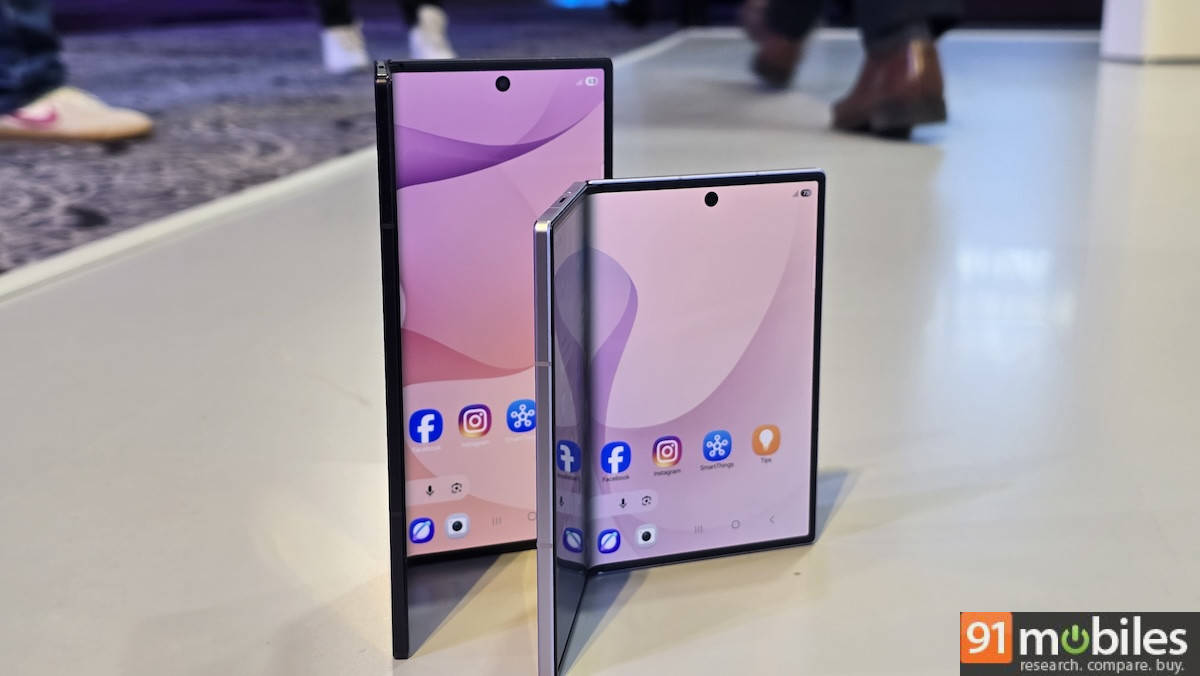
**Design changes driven by user feedback** also featured here: Samsung said it heard from users that foldables had become harder to grip while opening as they got slimmer, so this generation refines the hinge’s magnetic structure and display tension, along with reshaping the folded edges, specifically to make opening the device easier.
Battery: silicon carbon, and a bigger cell without changing the footprint
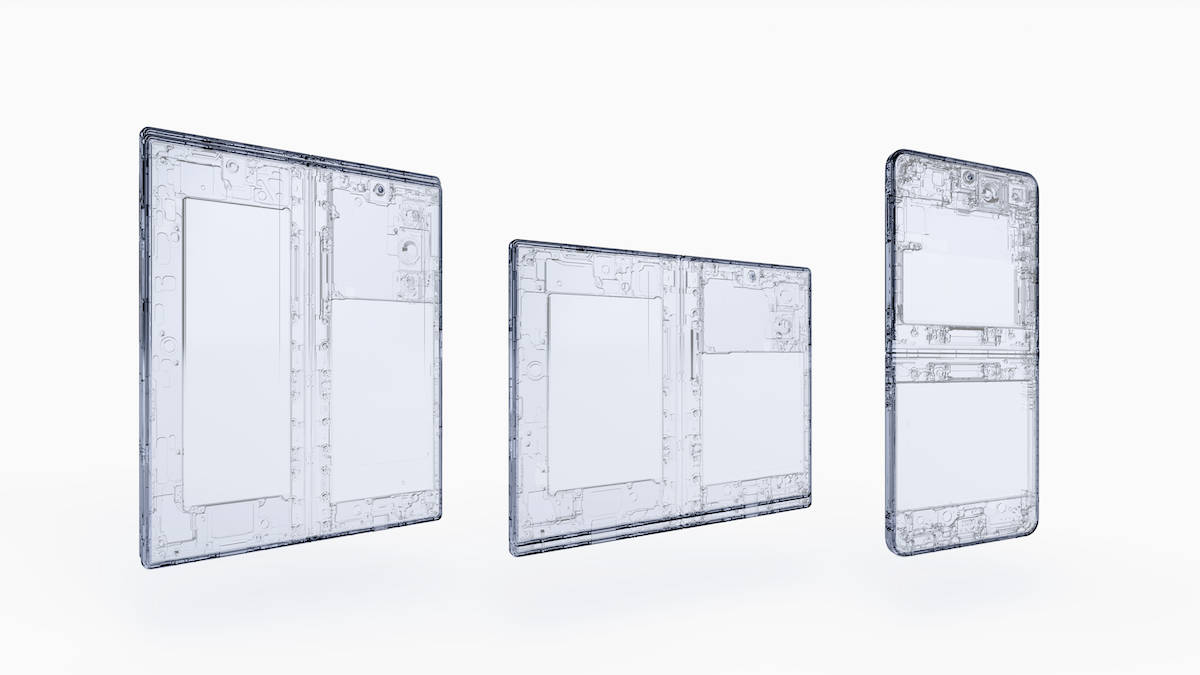
For the first time in a Samsung foldable, the Z8 series uses a silicon carbon anode battery, aimed at pushing energy density higher without compromising Samsung’s stated priorities of safety and long-term stability. Moon said this meant redesigning the electrode, electrolyte, separator, and other components essentially from scratch to manage silicon carbon’s higher reactivity, with extensive internal validation before Samsung was comfortable shipping it.
The payoff, combined with the space saved by the thinner Flex Titanium structure, is a larger battery: Moon cited a 5000mAh capacity on the Galaxy Z Fold8 Ultra without growing the device’s footprint. Charging also gets a bump — 35W super-fast charging on the Fold8 and Fold8 Ultra, a first for Samsung’s foldables — with charging architecture tuned individually for each device’s battery layout and form factor.
Durability: “we don’t chase numbers”
A recurring theme through both the presentation and the Q&A that followed was Samsung’s insistence that it isn’t optimising for spec-sheet bragging rights. Moon said the Z8 series went through more than 100 reliability validation tests covering multi-angle and multi-surface drops, repeated folding cycles, pressure and compression, and moisture exposure including sweat-like conditions.
When directly pressed in the Q&A on a specific fold-cycle number, Moon didn’t offer a figure, arguing that such numbers depend heavily on the exact test conditions and environments, and that Samsung’s internal bar is its own strict reliability requirement rather than a public number to quote. He did say durability has improved significantly enough this generation that users “don’t need to hesitate” when opening or closing the devices.
The Q&A: form factors, India R&D, charging speeds, and rising memory costs
On why three form factors, now:
Asked why Samsung is only now expanding beyond two foldable form factors, even as rivals had already introduced competing designs, Moon pointed to seven generations of accumulated learning about how customers actually use foldables. That data, he said, is what let Samsung redefine its portfolio around three models rather than two — including introducing the Fold8’s new aspect ratio, which required close work with Google and third-party developers to make sure apps actually work well on the new proportions.
On the toughest unsolved engineering problem: Asked directly whether crease visibility, hinge durability, or battery density remains the hardest unsolved challenge, Moon pushed back gently on the framing — as an engineer, he said, there’s no real “end” to the challenges in a continuously evolving product. He did concede all three areas saw a significant leap this generation, which is what let Samsung bring the new lineup to market.
On India’s role in foldable hardware: Asked how much Samsung’s Bangalore R&D centre — its largest outside Korea — contributes to the physical hardware and architecture of the foldable lineup, Moon said India’s research capacity today is weighted mostly toward software engineering, though Indian engineers based at Samsung’s head office do collaborate closely on hardware development. He added Samsung recognises India’s broader talent pool, including on the hardware side, and remains open to deepening that collaboration.
On battery capacity and charging speed lagging rivals: This drew one of the sharper exchanges of the session — a question on why the Z Fold8 series still tops out around 5000mAh and 35W charging while some competitors have pushed toward 100W. Moon reiterated that Samsung’s top priorities with its first silicon carbon battery are safety and stability, and that charging speed on paper matters less than how effective and fast charging feels in real usage, which requires the full charging architecture — not just a bigger number — to back it up.
On dust resistance: Asked whether the IP rating had improved beyond the existing IP48 dust-resistance level, Moon confirmed the new generation remains IP48, again framing Samsung’s approach as validating real-world worry-free usability through its own testing rather than chasing a higher rating for its own sake.
On rising memory and component costs: In the session’s final question, Moon was asked how Samsung is managing a sharp rise in memory and raw material costs over the past 18 months without passing that cost on to customers or compromising quality. Moon, who has been in the industry for roughly two decades, called the current spike in raw material pricing an unprecedented situation, and said Samsung’s engineering teams are focused on absorbing that pressure internally as much as possible while holding the line on build quality.
Where this leaves the Z Fold8 series
While stuff like titanium hinges, silicon carbon batteries, and incremental IP ratings might not be groundbreaking, Samsung is betting that by stacking all of it together, backed by seven generations of usage data, adds up to a portfolio that’s harder to replicate than any single piece of it. And given how the Z Fold8 series has turned out, Samsung seems to have translated all of that into a meaningfully better everyday foldable experience.
Disclosure: This writer attended Unpacked 2026 on Samsung India’s invitation