Tinder held its first product keynote, Tinder Sparks 2026, where it announced over ten major updates. These updates cover AI-driven personalisation, new matching modes, real-world event discovery, and improved safety features.
The event took place on March 12 in Los Angeles and marks what the company considers the most significant change to the app in years. New modes push beyond the standard swipe.
Tinder is expanding its Modes framework, first introduced last year with College Mode and Double Date Mode, by adding two new options that will be rolled out worldwide:
Music Mode
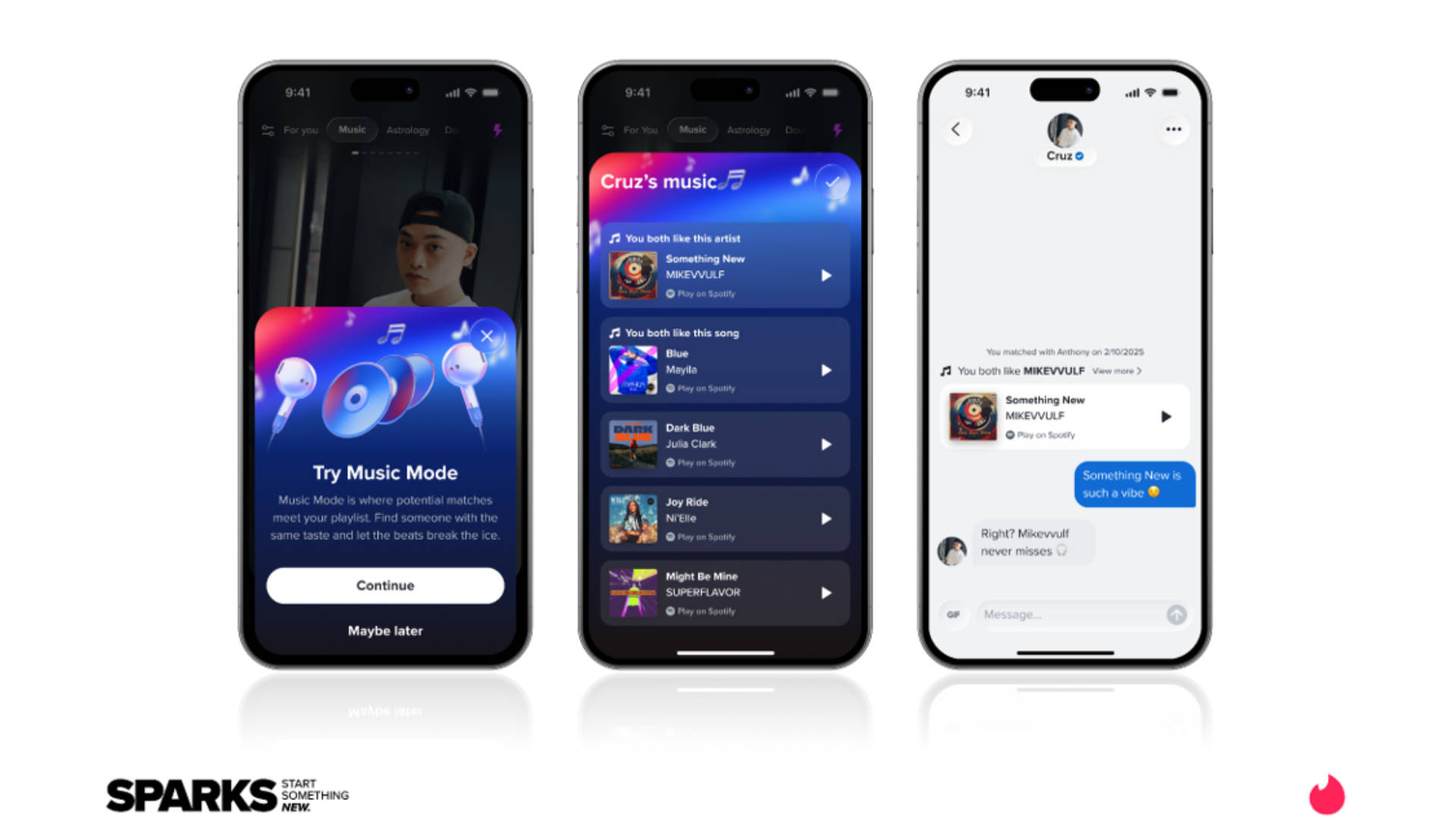
Originally launched in 2021, has been completely redesigned. The updated version highlights profiles with shared music preferences more prominently.
Astrology Mode
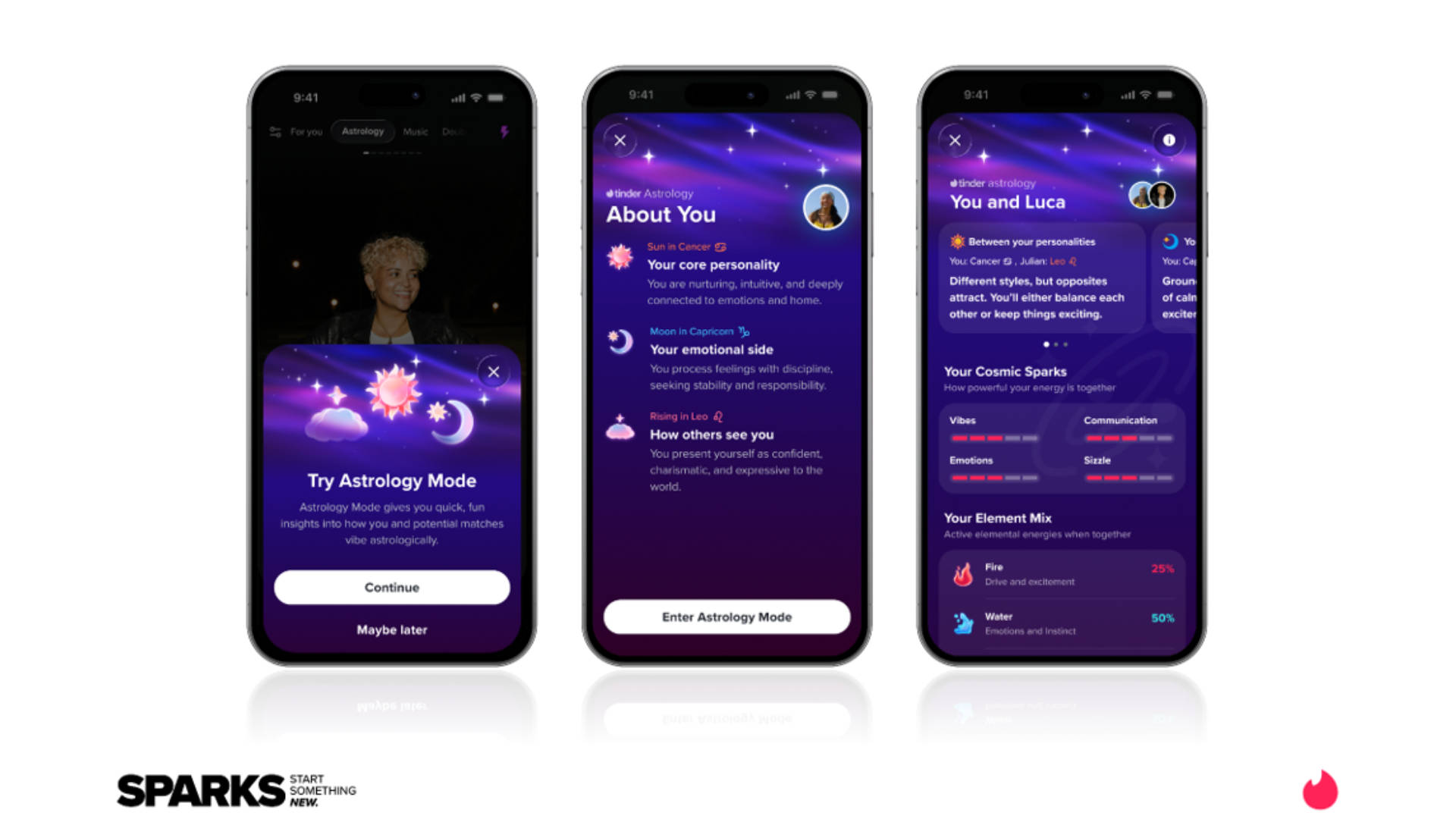
This feature allows users to input their birth details to generate Sun, Moon, and Rising sign profiles, providing compatibility insights along with potential matches.
Table of Contents
From app to real life: Events and video speed dating.
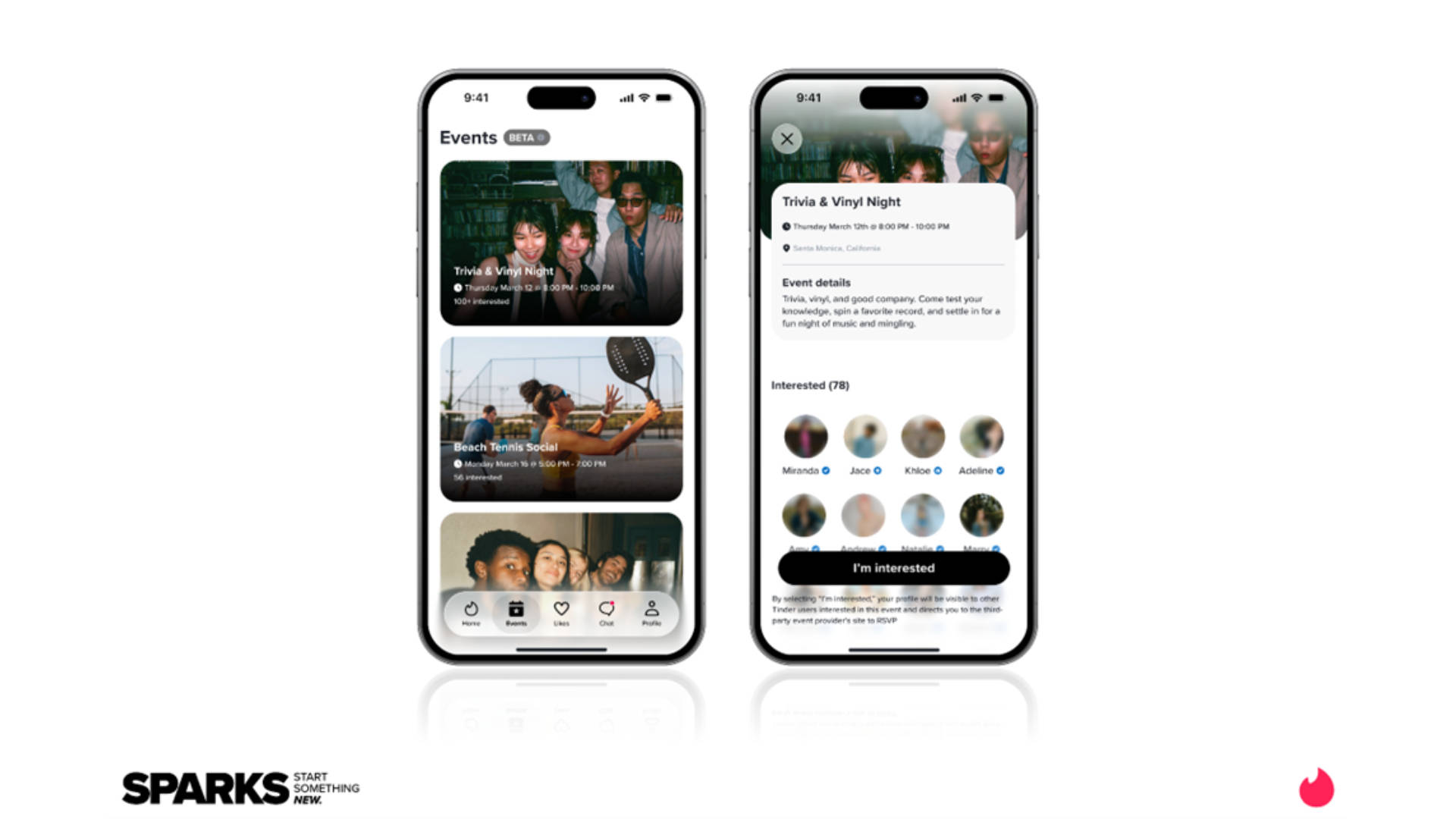
Tinder is testing a new Events feature in Los Angeles. This feature helps users find local in-person events like pottery classes, trivia nights, and other low-pressure social activities. Users can also see which other singles are interested in attending. This feature complements, rather than replaces, the Swipe experience, serving as a bridge between digital matching and face-to-face meetups.
Additionally, Tinder is set to launch a video speed dating feature later this spring. Photo Verified users will have the chance to join scheduled live events for three-minute video chats. Along with the options to extend chat time and cycle through multiple matches in one session.
Safety features get updated with LLM upgrades
Two of Tinder’s existing safety features are being significantly enhanced with large language models:
The “Are You Sure?” prompt
This feature warns users about potentially harmful language before they send a message and has been improved for better harm detection. It now goes beyond keyword matching to analyse context and tone.
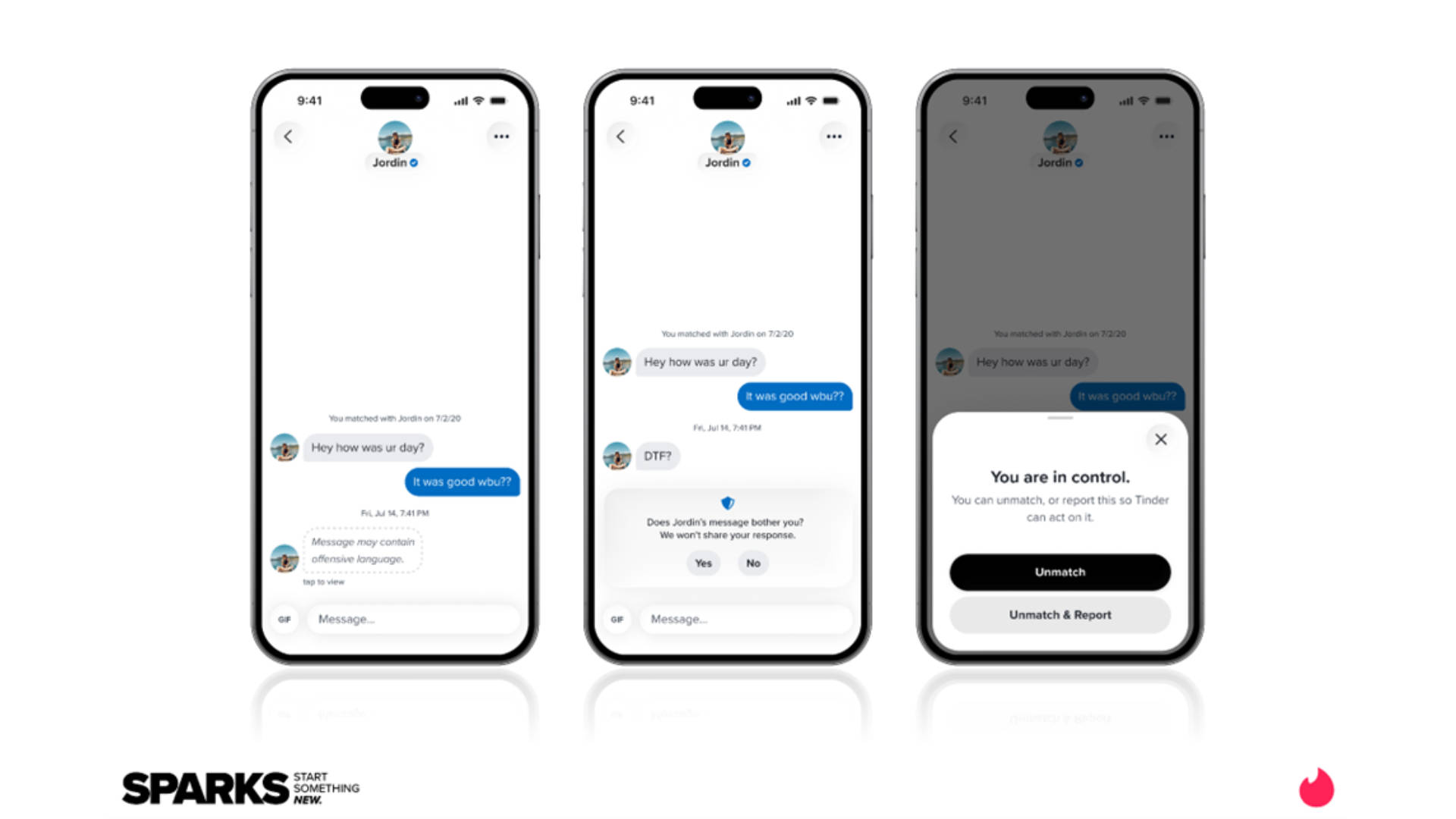
The companion feature, “Does This Bother You?”
This feature flags inappropriate incoming messages and now includes an auto-blur function that conceals potentially offensive content before the recipient sees it.
AI personalisation expands with Chemistry
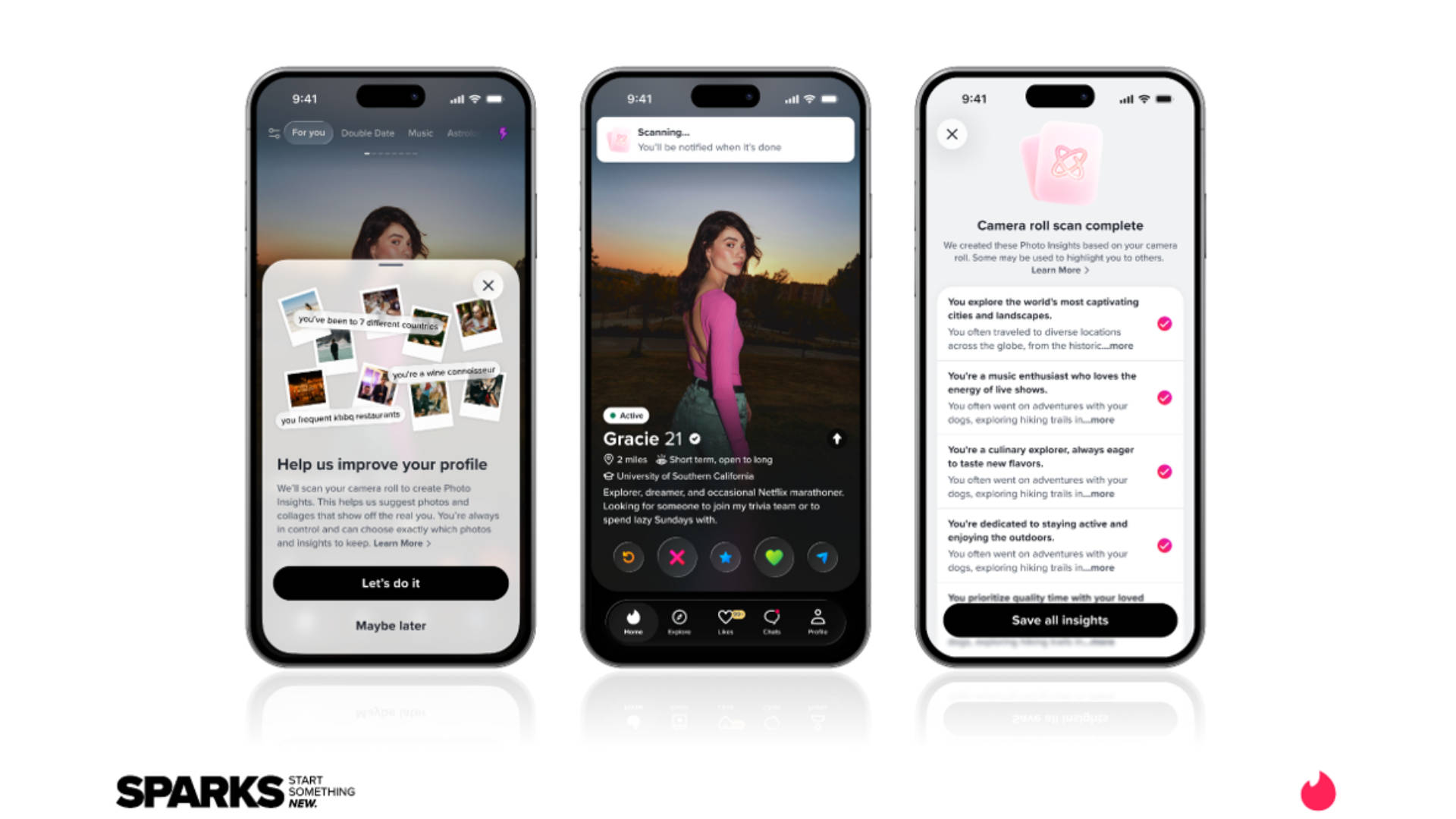
Tinder’s AI personalisation feature, Chemistry, is expanding from its Australia and New Zealand pilot to the US and Canada. It offers daily curated match suggestions based on Q&A responses and an optional Camera Roll Scan. The scan identifies interests and personality traits from a user’s photo library and app activity.
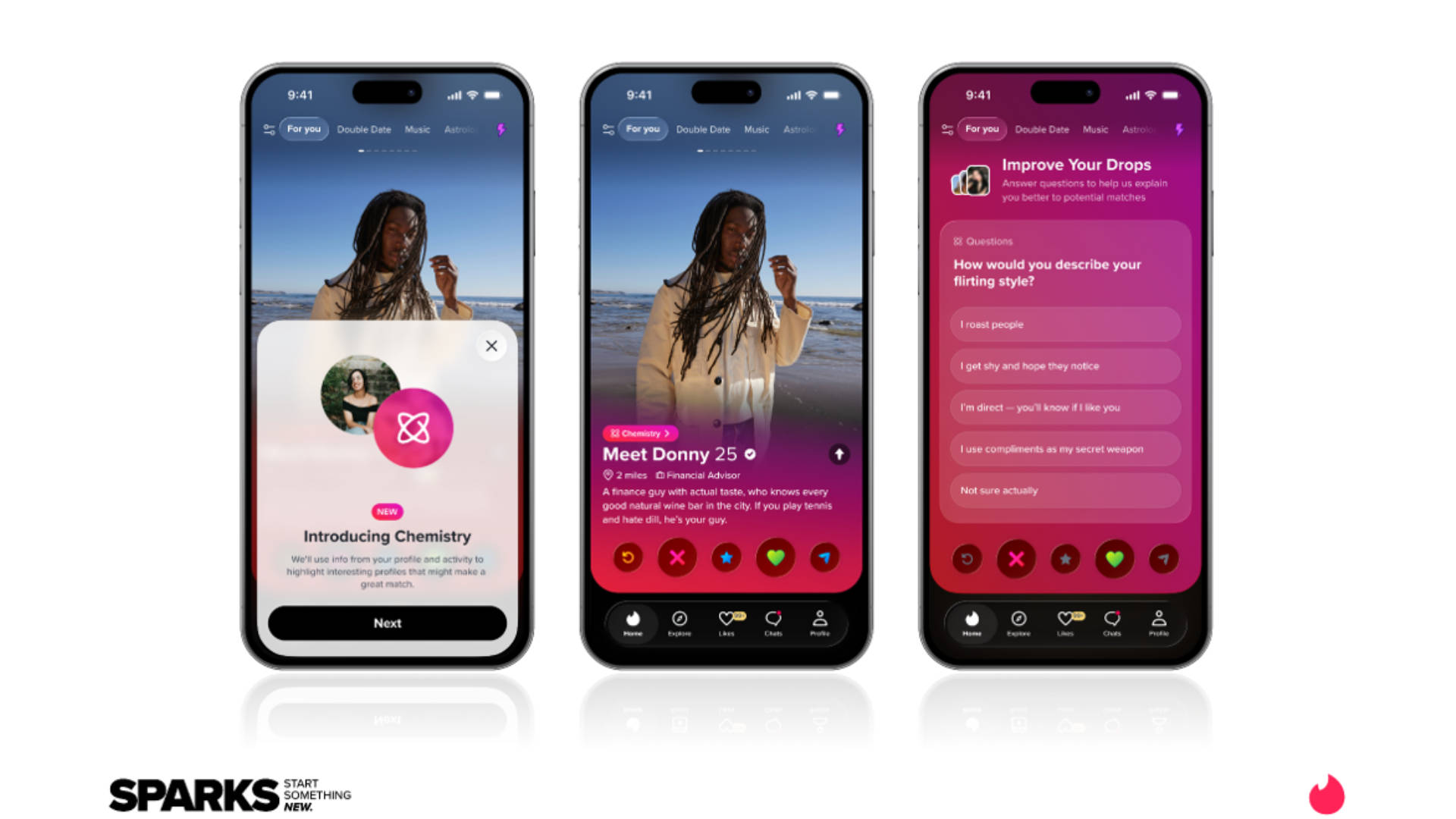
Complementing it is Learning Mode, a real-time recommendation engine that adapts to in-session behaviour. Internal tests across 14 million users found that new women users in the Learning Mode group were more likely to return within their first week. Specific retention figures, however, were not disclosed.
Tinder Connect brings third-party integrations to profiles.
Tinder Connect builds on the existing Spotify integration by adding two new partners — Duolingo and Beli, a food and restaurant preference app. Both serve as profile data sources, surfacing shared interests to spark more specific conversations. Additional profile updates include Visual Interests and AI-powered Photo Enhance. A full visual redesign is also on the way, featuring edge-to-edge photos and a liquid glass aesthetic across the Like and Nope bar.
Tinder is responding to Gen Z’s growing ambivalence toward traditional swipe-based dating by leaning into lower-pressure formats, identity-forward features, and AI that reduces browsing fatigue. The Chemistry and Learning Mode expansion signals a deliberate shift from volume-based matching toward intentional connection. Whether that translates into meaningful retention gains, however, will depend on execution and real-world usage patterns still to emerge.