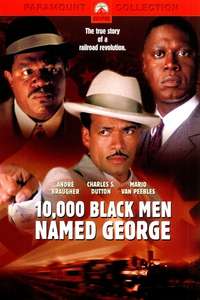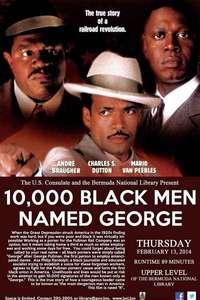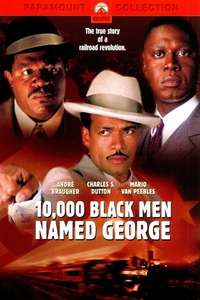

Movie |
Labor Organizer | 1920s
Disclaimer: All content and media belong to original content streaming platforms/owners like Netflix, Disney+ Hotstar, Amazon Prime Videos, JioCinema, SonyLIV etc. 91mobiles entertainment does not claim any rights to the content and only aggregate the content along with the service providers links.
NetworkCable Best Supporting Actor | 2003 | Charles S.
NetworkCable Best Director | 2003 | Robert
Outstanding Actor in a Television Movie MiniSeries or Dramatic Special | 2003 | Charles S.
Teleplay | 2003 | Cyrus
NetworkCable Best Actor | 2003 | Andre
Outstanding Actor in a Television Movie MiniSeries or Dramatic Special | 2003 | Andre
Outstanding Television Movie MiniSeries or Dramatic Special | 2003
Drama | 2003
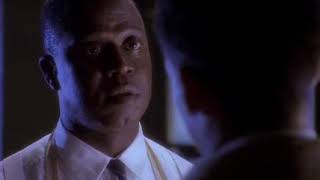
The Brotherhood of Sleeping Car Porters (BCSP) was created August 25, 1925 as a union for Pullman porters and maids. While the script and storyline of this movie does not make reference to female membership directly, there are visual references to female voting membership in the meetings and especially in the voting lines, especially as depicted in the union/police confrontation scene towards the end of the movie. The BSCP was the first Afro-American labor organization to receive a charter (membership) in the American Federation of Labor (AFL), and continued to be an active member union of the AFL up to and including the 1955 merger of the AFL with the Congress of Industrial Organizations (CIO) to form the AFL-CIO.
A. Philip Randolph was the first president of the BSCP, serving in that position from 1925 through 1968, and received the Presidential Medal of Freedom (the highest civilian honor awarded in the United States) in 1964 from President Lyndon B. Johnson. Randolph was born in 1889, in Florida, and died in 1979 in New York City, aged 90.
"[last tile cards] Title Card: On August 25th, 1937 the Pullman Company signed the first ever agreement between a union of black workers and a major American corporation. It was twelve years - to the day - of the founding of the Brotherhood of Sleeping Car Porters. Title Card: For the next four decades Randolph carried forward his fight for equality. In 1963, commemorating the 100th Anniversary of the Emancipation Proclamation, Randolph initiated the March on Washington for Jobs and Freedom. It was at that gathering that a young Martin Luther King, Jr. delivered his "I Have a Dream" speech... and Randolph passed his torch to a new generation of leaders in the fight for Civil Rights."