
Movie |
Revenge | Paris, France
Disclaimer: All content and media belong to original content streaming platforms/owners like Netflix, Disney+ Hotstar, Amazon Prime Videos, JioCinema, SonyLIV etc. 91mobiles entertainment does not claim any rights to the content and only aggregate the content along with the service providers links.


Top Musical | 1960
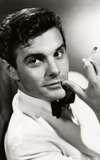
Top Male Musical Performance | 1960 | Frank
Top Female Musical Performance | 1960 | Shirley
Best Soundtrack Album or Recording of Original Cast from a Motion Picture or TV | 1961 | Cole
Best Foreign Actress Mejor Actriz Extranjera | 1962 | Shirley
Best Music Scoring of a Musical Picture | 1961 | Nelson
Best Costume Design Color | 1961
Best Motion Picture Musical | 1961
Best Written American Musical | 1961
Outstanding Directorial Achievement in Motion Pictures | 1961
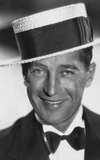
Top Male Musical Performance | 1960 | Maurice
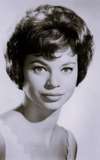
Top Female Musical Performance | 1960 | Juliet
Budget 5,000,000 USD
Box Office Collection 8,400,000 USD
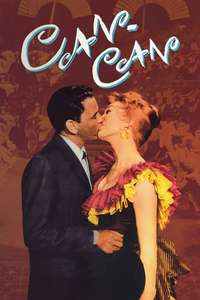
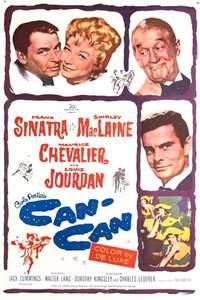
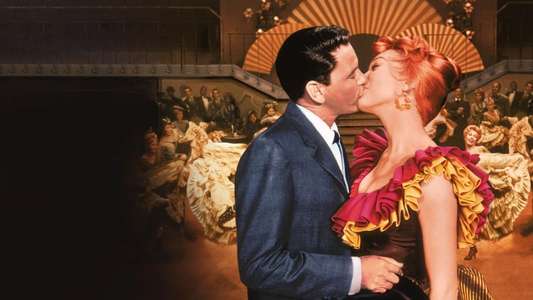
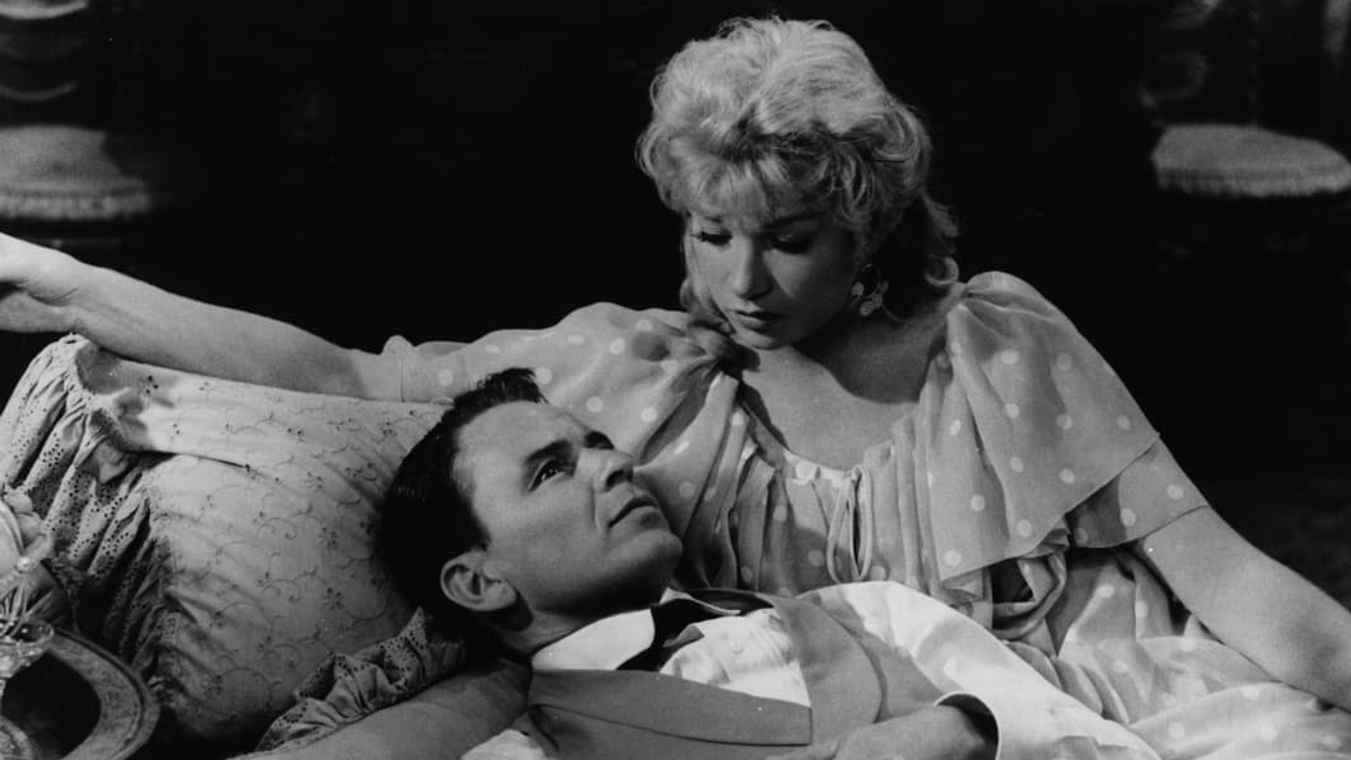
During filming on 19th September 1959, Soviet Premier Nikita Khrushchev visited the set on Sound Stage 8 with his wife Nina. He reportedly was shocked by the open sexuality on display, condemning the film as pornographic and depraved: "The face of mankind is prettier than its backside... The thing is immoral. We do not want that sort of thing for the Russians."
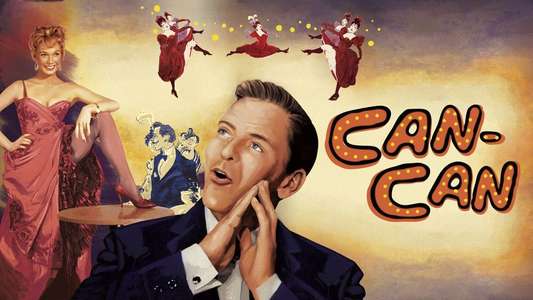
It is explained in the film that the can-can was considered a lewd and lascivious dance (in reality often performed without panties).
Gwen Verdon won the 1954 Tony Award (New York City) for Supporting or Featured Actress in a Musical for "Can-Can".
A duet of Frank Sinatra and Maurice Chevalier singing Cole Porter's "I Love Paris" was deleted from the release print, although the song is performed by a chorus at the beginning and end of the film. The Sinatra-Chevalier audio has been presented on Capitol's 1960 movie-soundtrack LP and 1990 CD, plus on an EMI CD import from Britain in 2000, but the film footage has yet to surface. Rendered solo by Mr. Sinatra, recorded in Los Angeles on April 13, 1960, and arranged and conducted by Nelson Riddle (who served as the film's music arranger and conductor), a second "I Love Paris" originally was released later that year on a Capitol 45-rpm single. In 1998, the label added the solo "I Love Paris" as a bonus track on Mr. Sinatra's "Come Fly with Me" CD reissue.
During the opening song, François Durnais (Frank Sinatra) says 'You'll never make it' to a very short man with a taller woman. The man, carrying a painting, is a reference to Henri de Toulouse Lautrec. Strangely enough, in the history of the musical, Broadway producers Feuer and Martin and original book writer, Abe Burrows, had sought out to create a "Toulouse-Lautrec-type" show, for which Burrows was sent to Paris for a few weeks to do onsite research. The following year, 1952, the original MOULIN ROUGE film (the one indeed about Toulouse-Lautrec, starring Jose Ferrer and directed by John Huston, but a non-musical film), was released.
"François Durnais: You look like a broken umbrella."
"François Durnais: Your honor, I am a member of the bar and wish to represent myself. Philipe Forrestier: You realize that a lawyer who represents himself is said to have a fool for a client? François Durnais: That may be true, but it's better than having a fool for a lawyer."