
Movie |
New York City | Ventriloquist
Disclaimer: All content and media belong to original content streaming platforms/owners like Netflix, Disney+ Hotstar, Amazon Prime Videos, JioCinema, SonyLIV etc. 91mobiles entertainment does not claim any rights to the content and only aggregate the content along with the service providers links.



International Competition | 2000 | Tim
Top Ten Films | 1999
1999 | Tim
Best Supporting Actress | 2000 | Cherry
Best Supporting Actor For | 2000
Best Supporting Actor | 2000 | Bill
British Supporting Actress of the Year | 2001 | Emily
2000
Best Ensemble | 2000
Best Performance by an Actor in a Supporting Role Comedy or Musical | 2000 | Bill
Budget 36,000,000 USD
Box Office Collection 2,900,000 USD
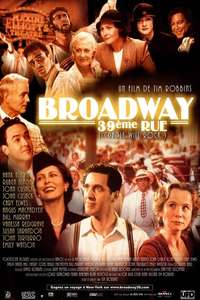
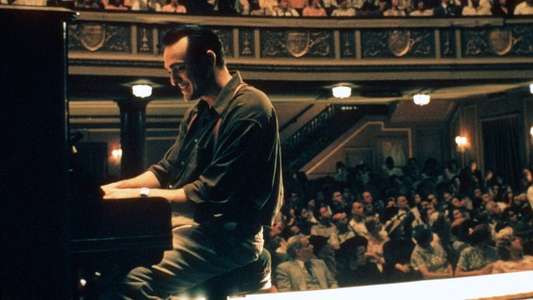
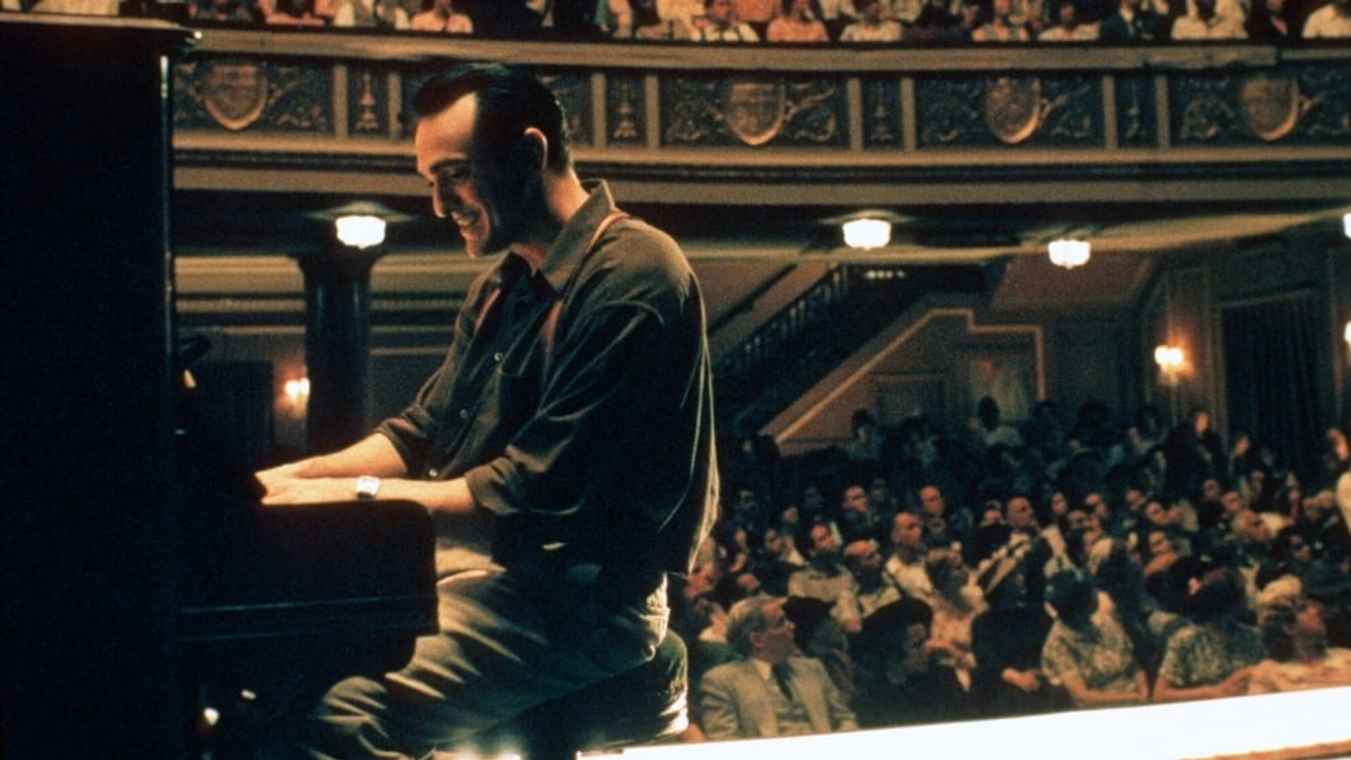
This film is based on actual events, though it takes liberties with the details. Marc Blitzstein's 1937 anti-capitalist operetta 'The Cradle Will Rock', about the effort to unionize steelworkers, was originally produced as part of the Federal Theatre Project. The Federal Theatre Project (1935-1939), in turn, was part of the Works Progress Administration (WPA), which was created in 1935 by President Franklin D. Roosevelt to employ people during the Great Depression. Directed by Orson Welles and produced by John Houseman, Cradle was shut down right before it was due to open because of "budget cuts" at the FTP. Everyone involved believed the government deliberately cut funding because the play's message offended its more conservative contingent; Actor's Equity prohibited its members from taking part, apparently oblivious to the fact that Cradle was a pro-union piece and Actor's Equity was - and is - a union. Welles, Housman and Blitzstein spontaneously rented another theater and planned to put on Cradle with Blitzstein himself singing/reading the piece; the show sold out and various actors defied Equity and performed their parts from the seats they'd bought. The secondary plot which involved Mexican painter Diego Rivera butting heads with Nelson Rockefeller when the mural the latter commissioned for a Rockefeller Center lobby on the high-minded subject of "human intelligence in control of the forces of nature" included a portrait of Lenin, is also based on fact, though it happened in 1933. The incident is also dramatized in the 2002 film Frida (2002). Tim Robbins included it because it tied into the theme of artistic integrity vs. economic practicality.
The planned 1984 version of this story, which had to be abandoned for financial reasons, would have been directed and written by Orson Welles himself. Rupert Everett would have played the young Welles, and Amy Irving his first wife, Virginia Nicholson. Welles's unmade screenplay was published after his death. Tim Robbins has always insisted that he has never read it.
The part of the movie in which Congressman Joe Starnes asks Federal Theatre Project director Hallie Flanagan if Christopher Marlowe is a Communist and Flanagan responds that he was not--that he was "the greatest dramatist in the period immediately preceding Shakespeare," is repeated verbatim from the transcript of Flanagan's testimony in front of the house Un-American Activities Committee (HUAC) in December 1938. What isn't made clear in this film is that Starnes and the other HUAC members had been the victims of a deliberate and elaborate hoax designed and perpetrated by Orson Welles, who knew quite well that his office was being illegally bugged by the committee. He arranged several telephone conversations with his collaborators, all carefully scripted and rehearsed to give the impression of spontaneity, and suggesting that Marlowe, who had actually died in 1594, was a living person and a Communist, working with Welles and his team on their production of "Dr. Faustus". The committee was greatly embarrassed by Welles's joke.
Bertolt Brecht appears as a spirit-like figure. Technically, Brecht was still alive in 1936, the year the film is set in.
The controversy over the Rockefeller Center mural came to a head on April 24, 1933. The New York World-Telegram that day ran an article that attacked Diego Rivera's painting. The newspaper said it was anti-capitalist propaganda. After that, Rivera added the portrait of Lenin to the mural. Upset by the bad publicity, Rockefeller in May asked Rivera to remove the picture of Lenin. Rivera refused, and Rockefeller paid him in full and fired him from completing the job. Workers then chiseled the nearly completed mural off the wall.
"Gray Mathers: Get in the car! Now! Countess LaGrange: Perhaps you've mistaken me for a spaniel."
"John Houseman: I've always said the play would be better on a bare stage. Orson Welles: Actually, Hallie said that. John Houseman: No, I said it first. Orson Welles: No you didn't. John Houseman: Yes I did. Orson Welles: No, you didn't! John Houseman: Yes, I did! Orson Welles: No, you DIDN'T! John Houseman: Yes, I BLOODY WELL DID! Orson Welles: Oh, *fine*, Jack! You win, you've got the biggest creative dick, okay? John Houseman: Thank you."