
Movie |
New York City | Blackout
Disclaimer: All content and media belong to original content streaming platforms/owners like Netflix, Disney+ Hotstar, Amazon Prime Videos, JioCinema, SonyLIV etc. 91mobiles entertainment does not claim any rights to the content and only aggregate the content along with the service providers links.

Joe Sawyer's character of washed-up baseball player Babe Dooley was based on Chicago Cubs hitting great Hack Wilson. whose problems with alcoholism led to his steep professional and personal decline.
Harold Clurman, a noted stage director from New York's Group Theatre, made his screen directing debut and sole feature film with this production. It was the only film that Clurman and his frequent theatrical collaborator, Clifford Odets, made together. A Jun 1944 HR news item noted that Clurman worked on the film's script with Odets.
The film's first shot is a closeup of Lola Lane's face as she's sleeping, and a fly lands briefly on her cheek. It crawls around for a moment, takes off, and then lands again. A close examination of the scene reveals that the fly is actually a special effect, matted into the shot. At first the audience wonders if Lane is dead, but a knock at the door awakens her. However, she is found dead a short while later, so the fly may have been intended as foreshadowing.
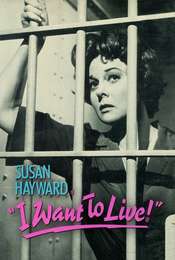
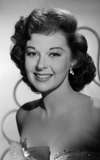
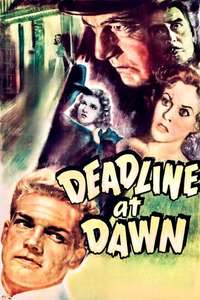
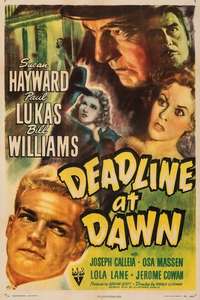
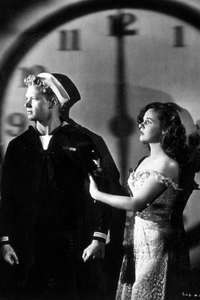
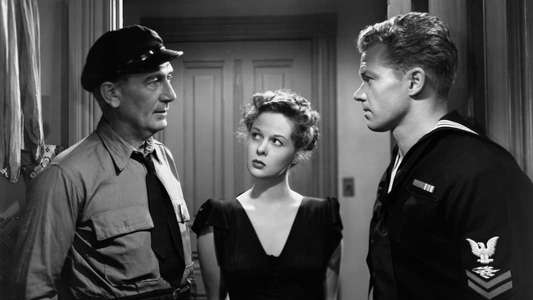
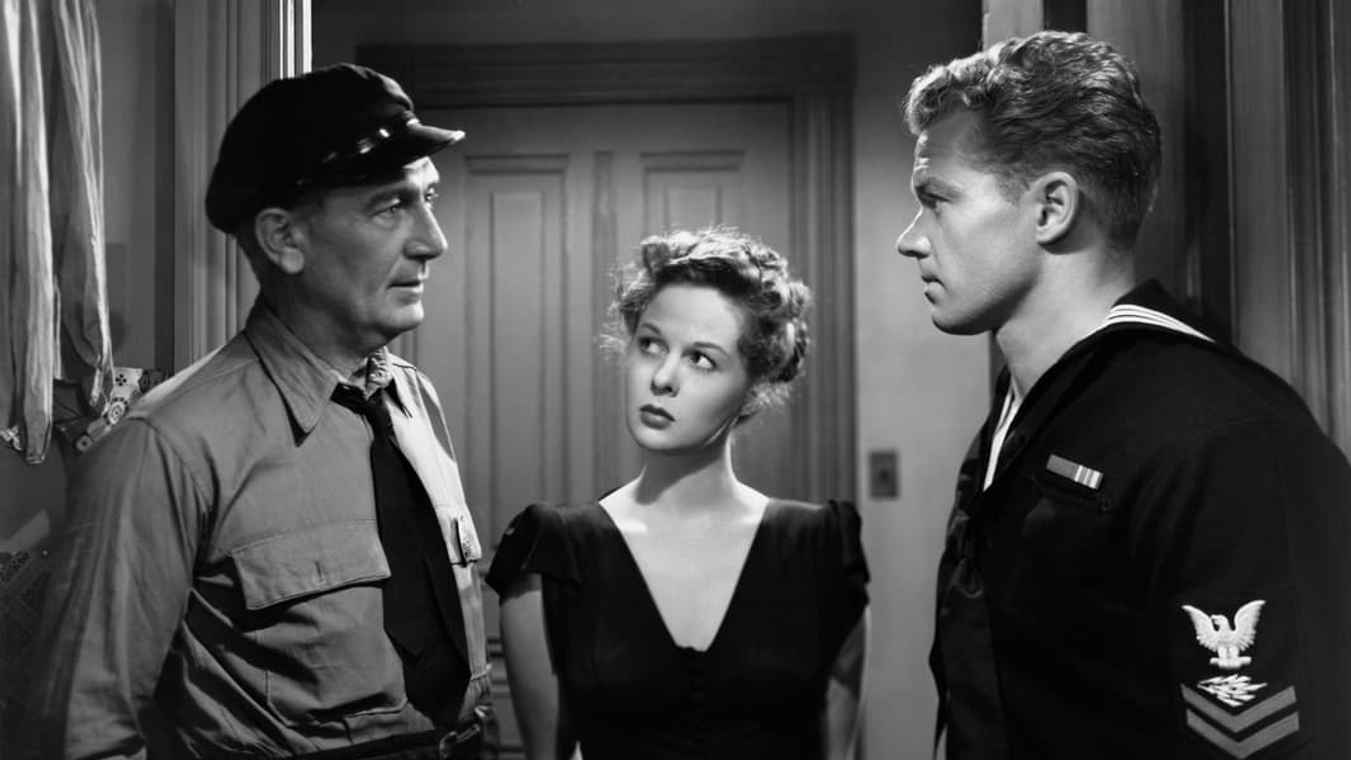
Deadline at Dawn was the first film that Susan Hayward made following the birth of her twin sons on February 19, 1945. Production on this film started about three months later. This was her last picture for Paramount, where she was utterly miserable, and Universal quickly signed her to a more lucrative contract. Soon thereafter, her career skyrocketed.
Edna's apartment is depicted as being across the street from the 17th Precinct, which is on East 51st Street, on the east side of midtown Manhattan.
"June Goffe: You see, son, it's all right to live in a cocoon like this if you expect to be a butterfly someday. Otherwise..."
"June Goffe: If you hear a peculiar noise, it's my skin creeping."