
Movie |
Chicago, Illinois | Ghetto
Disclaimer: All content and media belong to original content streaming platforms/owners like Netflix, Disney+ Hotstar, Amazon Prime Videos, JioCinema, SonyLIV etc. 91mobiles entertainment does not claim any rights to the content and only aggregate the content along with the service providers links.
Winner | 1996
Documentary | 1995
Best Documentary | 1995
Best New Filmmaker | 1995 | Steve
1995 | Frederick
Outstanding Directorial Achievement in Documentary | 1995 | Steve
Best Edited Documentary | 1995 | William
Best Picture | 1995
Best Documentary | 1994
Best NonFiction Film | 1994
The Influentials | 2014 | Steve
Best Documentary | 1994 | Steve
Best Documentary | 1994
Honorable Mentions | 1994 | Steve
Best DocumentaryNonFiction Film | 1994 | Steve
Best Documentary | 1994
Feature Documentaries | 1994 | Frederick
Best Documentary | 1994
Documentary | 1994 | Steve
Motion Picture | 2022
Best Documentary | 2015
Best Film Editing | 1995 | Steve
Documentary | 1994 | Steve
Best Film Editing | 2015 | William
Outstanding News Talk or Information Special | 1996
1995 | Steve
Best Picture | 1995
Best Film | 1995
Best Picture | 1995
Best Director | 1995 | Steve
Budget 700,000 USD
Box Office Collection 7,830,611 USD
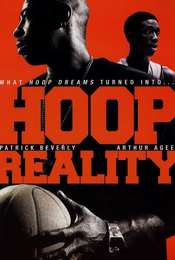
According to Roger Ebert, after the film failed to receive an Oscar nomination for Best Documentary, he and Gene Siskel learned about the nominating process. He said that members of the Academy's documentary committee held flashlights when they watched documentaries, and anyone who had "given up" could wave it against the screen. The movie was turned off if a majority waved their flashlights. This film was turned off after 15 minutes.
During filming, as depicted in the film, the electricity was turned off in the Agee home. The filmmakers paid for it to be turned back on.
To stay eligible for college basketball (according to NCAA rules), neither player's family received any money for the film's sale while in school. Agee and Gates were later made full partners and received shares equal to the producers'.
The film was originally intended to be a 30-minute PBS special about multiple players on a single basketball court. After 5 years, the filmmakers had shot 250 hours of footage, which was trimmed down to 3 hours.
When the film failed to be nominated for Best Documentary, even though it was nominated for Best Film Editing, Entertainment Weekly ran a story about how the Academy of Motion Picture Arts and Sciences selected documentary nominations. Most of the voting members were not documentary filmmakers, and many worked against nominating the film. As a result, the rules were changed to allow documentary filmmakers to vote in that category.
"William Gates: That's why when somebody say, "when you get to the NBA, don't forget about me", and that stuff. Well, I should've said to them, "if I don't make it, don't you forget about me.""
"William Gates: When I had some real problems, I couldn't go to none of them about it. You know, was havin' some problems with Catherine's family and my family and I said, you know, "Coach Pingatore, you know, they finally been gettin' on me about, you know, I'm not doin' this and I'm not doin' that," And the only thing Coach Pingatore said, "Write 'em off." That was ll he told me. And I was like, what kind of advise is that?"