
Movie |
Aging Actor | Vietnam Veteran
Disclaimer: All content and media belong to original content streaming platforms/owners like Netflix, Disney+ Hotstar, Amazon Prime Videos, JioCinema, SonyLIV etc. 91mobiles entertainment does not claim any rights to the content and only aggregate the content along with the service providers links.

Best Rediscoveries | 2017 | Peter
Budget 130,000 USD
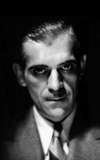
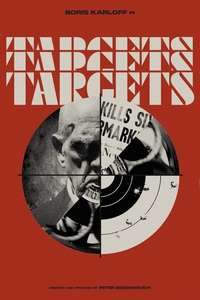
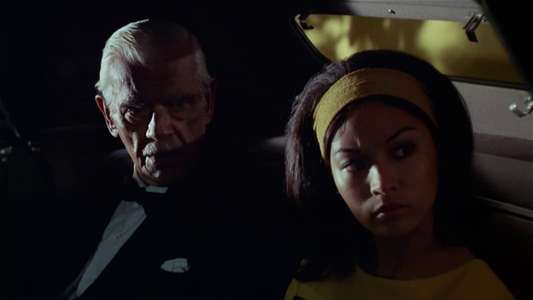
By the time this film was made (November-December 1967), 80-year-old Boris Karloff was in very poor health suffering from emphysema along with rheumatoid arthritis and had only half of one lung and spent the time between takes in a wheelchair with an oxygen mask on. He also wore braces on both legs and had difficulty standing or walking without his cane; the weakness of his legs is visible in some scenes. Fortunately, Karloff lived long enough to view the completed film as well as enjoy the well-deserved accolades he received for this performance.
Roger Corman told Peter Bogdanovich he could make any film he wanted to, with two conditions: he had to use stock footage from The Terror (1963), and he had to hire Boris Karloff for two days (Karloff was under contract and owed Corman those two days). Karloff was so impressed with the script that he refused pay for any shooting time over his contracted two days. He worked for a total of five days on the movie.
As the film includes extracts from Roger Corman's film The Terror (1963), Corman suggested to Peter Bogdanovich that the little-known actor who appears opposite Boris Karloff in that film should also appear in this one, perhaps in the role of the killer. Bogdanovich turned down this idea. The young actor later became world-famous shortly after "Targets" first appeared: he was Jack Nicholson.
Peter Bogdanovich planned to have Boris Karloff actually appear in the film for about 20 minutes with two days of filming, and have the stock footage from The Terror (1963) add another 20 minutes of screen time for Karloff. In the final movie, Karloff is actually on screen (not counting the scenes from "The Terror") for about 30 minutes and shot all his scenes in five days.
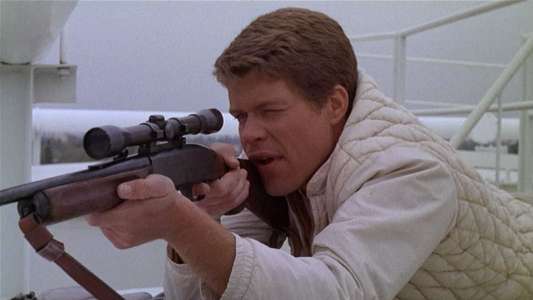
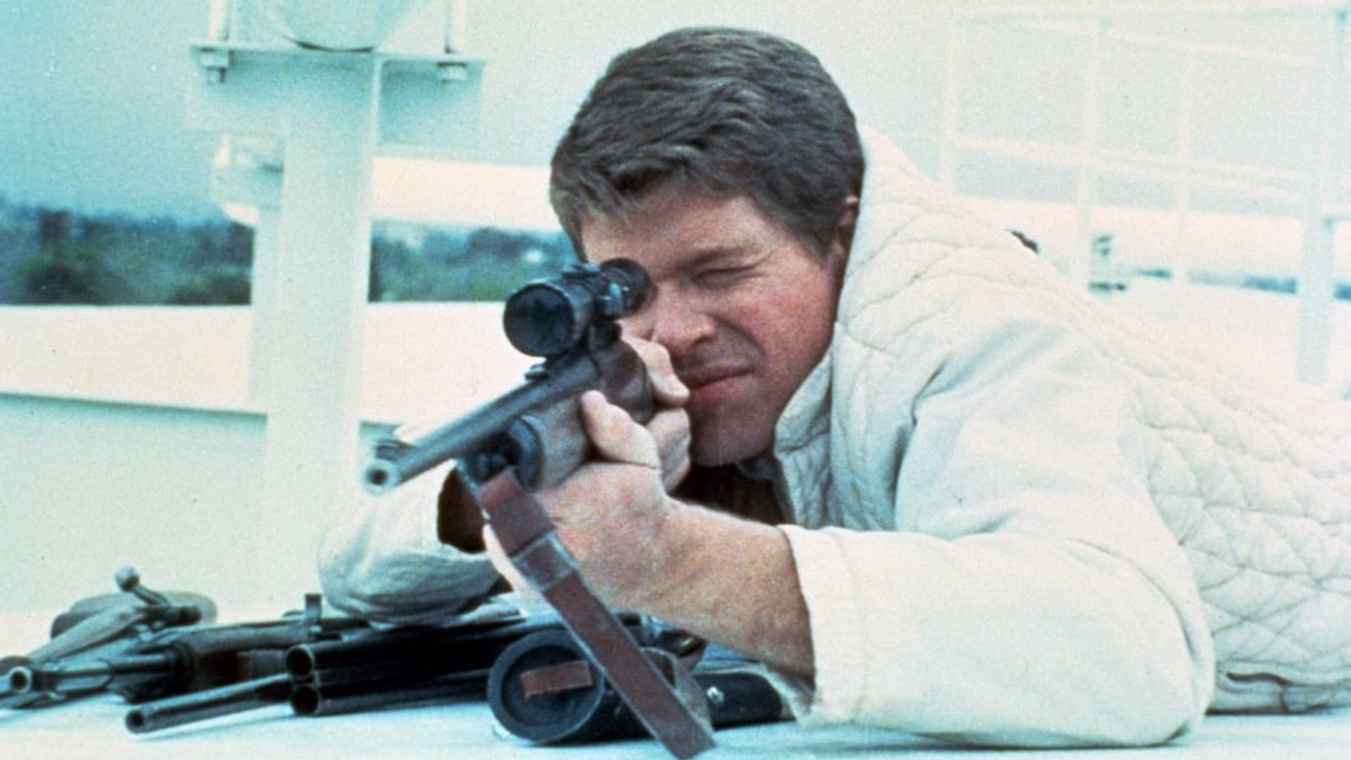
The freeway shooting scenes were "stolen", meaning they were done without permits. Walkie-talkies were used to communicate with the cast members out on the freeway, telling them when to act as if they had been shot. Two cameras were used - one with a telephoto lens and one with a wide-angle lens. The last shot was done with the woman trying to run away as the police had been called after someone saw her fall, and the production crew bugged out before they arrived.
"Byron Orlok: Ladies and gentlemen, boys and girls, I'd like to leave you with a little story to think about as you drive home through the darkness. Once upon a time, many, many years ago, a rich merchant in Baghdad sent his servant to the marketplace to buy provisions. And after a while, the servant came back, white-faced and trembling, and said, "Master, when I was in the marketplace, I was jostled by a woman in the crowd, and I turned to look, and I saw that it was Death that jostled me. And she looked at me and made a threatening gesture. Oh, Master, please, lend me your horse, that I may ride away from this city and escape my fate. I will ride to Samarra, and Death will not find me there." So the merchant loaned him the horse, and the servant mounted it and dug his spurs into its flank, and as fast as the horse could gallop, he rode towards Samarra. Then the merchant went to the marketplace, and he saw Death standing in the crowd, and he said to her, "Why did you make a threatening gesture to my servant when you saw him this morning?" And Death said, "I made no threatening gesture. That was only a start of surprise. I was astonished to see him here in Baghdad, for I have an appointment with him tonight in Samarra.""
"[Bobby Thompson cowers before Byron Orlok] Byron Orlok: Is *that* what I was afraid of?"


![Targets [1968] Trailer](https://img.youtube.com/vi/oiSc3xAXX5g/mqdefault.jpg)