

Movie |
Gay | Gay Subtext
Disclaimer: All content and media belong to original content streaming platforms/owners like Netflix, Disney+ Hotstar, Amazon Prime Videos, JioCinema, SonyLIV etc. 91mobiles entertainment does not claim any rights to the content and only aggregate the content along with the service providers links.






1999 | William
Best Performance by an Actress in a Supporting Role in a Series Miniseries or Motion Picture Made for Television | 2000 | Miranda
Best Television Feature or Miniseries | 2000 | F. X.
Best Film | 1999 | George
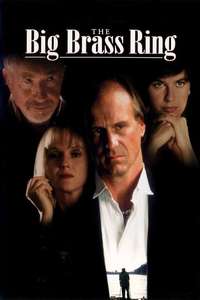
Based on a well-known un-produced script by Orson Welles.
This movie contains numerous Shakespearean references, including direct quotes from the Bard's plays.
Orson Welles had hoped to direct this movie in the early 1980s, and to play the role of Minnaker, not least as he had been a "New Deal" Democrat close to Franklin D. Roosevelt, but he was unable to attract enough funding. He had been given a list of six "bankable" stars who could play Pellarin, including Clint Eastwood, Jack Nicholson, Robert Redford, and Burt Reynolds, and was told by investors that if he could sign up one of them, then the movie could be made; but all six actors refused for various reasons, according to Welles' partner Oja Kodar, Redford was unavailable, Nicholson asked for too much money (he would not work for less than two million dollars, which was the entire proposed budget of the movie), while both Eastwood and Reynolds were uncomfortable with the movie's homosexual subtext, fearing its potential effect on their screen images, and Eastwood in particular feeling that it was at odds with his conservative values.
George Hickenlooper and F.X. Feeney heavily re-wrote the screenplay and made substantial changes from the Orson Welles script (published in 1991 by the University of Santa Barbara Press). Welles' script concerned Senator Pellarin, a Democratic Presidential candidate in 1984 (closely modelled on Senator Gary Hart), and his troubled relationship with his disgraced homosexual mentor Kim Minnaker, a one-time Roosevelt New Deal Democrat, who was now living in exile as advisor to the corrupt government of an unnamed African dictatorship. Hickenlooper retained the basic concept, but instead re-cast Pellarin as a candidate for Governor of Missouri, and Minnaker as living in Cuba, while much of the dialogue was re-written and re-interpreted. None of Welles' satire of Reagan-era politics was retained in the final movie, while several key scenes, like a charged confrontation between Pellarin and Minnaker on a Ferris wheel, were also omitted.
According to co-writer F.X. Feeney: "On the surface, it is a very free adaptation. Underneath, it is highly faithful. Orson Welles' original script was set in Spain and the Congo. We set ours along the Mississipi and in Cuba. Nevertheless, the characters have kept their original names and essential personalities through the many adaptations George Hickenlooper and I devised (whether separately or together) between 1991 and '98."
"[first lines] Kim: Abraham Lincoln said it best: it is common enough that we triumph under adversity, but if you truly wish to test a man's character, give him power."
"Homeless Man: I thought you were someone else. Blake: I *am* somebody else."