
Movie
Disclaimer: All content and media belong to original content streaming platforms/owners like Netflix, Disney+ Hotstar, Amazon Prime Videos, JioCinema, SonyLIV etc. 91mobiles entertainment does not claim any rights to the content and only aggregate the content along with the service providers links.





Best European Film Bedste europiske film | 1952
Top Foreign Films | 1951
Best Foreign Actor | 1951
1951 | Terence
1951
Best Drama | 1951
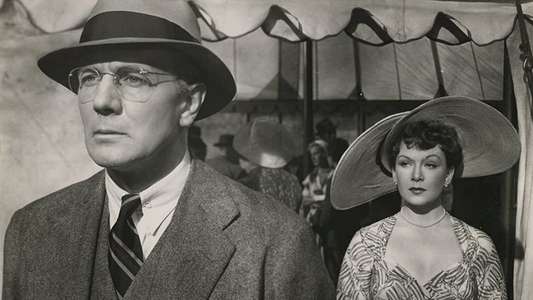
Terence Rattigan's original one-act play ended with Crocker-Harris telling the headmaster that he wished to speak last at the closing ceremony. His apologetic speech to the students was written by Rattigan especially for the screen.
In 1993, director Mike Figgis was dressing for a dinner party at the home of Ridley Scott's producer and happened to switch on this version of the Terence Rattigan play. He became so riveted that he arrived late to the party. He explained to his host the reason for his tardiness. His host said that, coincidentally, he himself had recently optioned the remake rights and was looking for a director. Figgis went on to direct the 1994 remake (The Browning Version (1994)) with Albert Finney.
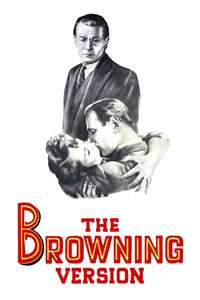
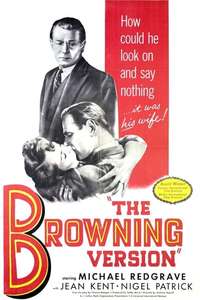
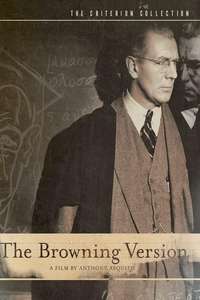
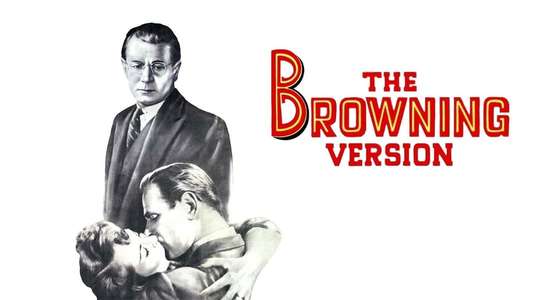
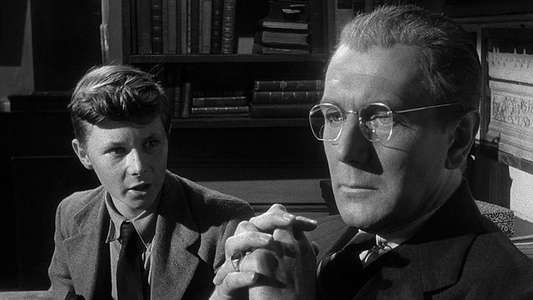
The title refers to a translation of "Agamemnon." Of the many such translations, one of Crocker-Harris' pupils gives him the version written by poet Robert Browning.
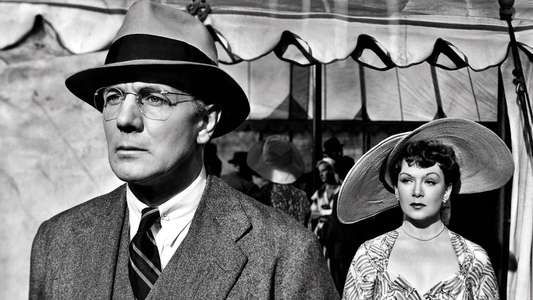
Michael Redgrave was 43 when he made the film, the exact age that Crocker-Harris was supposed to be.
Director Anthony Asquith's father was Prime Minister H.H. Asquith, who--as Home Secretary--had signed the warrant to arrest Oscar Wilde. It was Wilde's trial and subsequent imprisonment that sent a chill over England's gay and creative community for the next 60 years. When playwright/screenwriter Terence Rattigan met Asquith for the first time, he recalled being profoundly aware of who the director's father was. Rattigan had the misfortune to come of age as a gay man in the 1930s, when a homosexual relationship between consenting males in England was still a prosecutable offense, with jail sentences of up to two years at hard labor. Even with a great deal of self-censorship, critics and audiences found the hints of homosexuality in Rattigan's first play ("First Episode") shocking. Any homo-erotic reference in a play's subject material was enough to halt its production by the Lord Chamberlain of England. The best Rattigan could do (until well into the 1960s) was to veil his own sensibilities and create dramas critiquing the heterosexual norms of his day. In Crocker-Harris' after-dinner monologue to Hunter, the reference to "two kinds of love" is as close as the playwright ever comes to naming "the love that dare not speak its name," even in 1951 England.
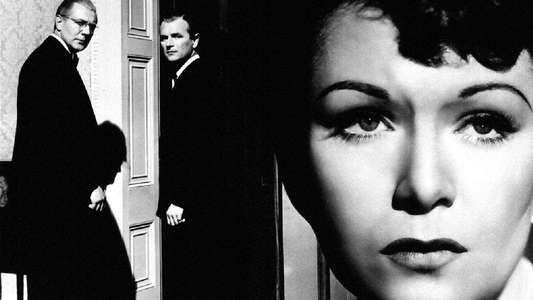
"Andrew Crocker-Harris: You see, my dear Hunter, she is really quite as much to be pitied as I am. We are both of us interesting subjects for your microscope, hmmm! Oh, both of us needing something from the other to make life supportable for us... and neither of us able to give it. Two kinds of love, hers and mine. Worlds apart! Oh, I know now, but back when I married her, I did not think that they were incompatible, nor, I suppose, did she."
"[Crocker-Harris is making his farewell speech to the whole school. He starts with a very dry, erudite speech but soon abandons it] Andrew Crocker-Harris: You must excuse me. I had prepared a speech, but I find now that I have nothing to say. Or rather, I have three very small words, but they are most deeply felt. They are these: I am sorry. I am sorry because I have failed to give you what you had the right to demand of me as your teacher: sympathy, encouragement, and humanity. I'm sorry because I have deserved the nickname of Himmler. And because, by so doing, I have degraded the noblest calling that a man can follow: the care and molding of the young. I claim no excuses. When I came here, I- I knew what I had to do, and I have not done it. I have failed. And... miserably failed. But I can only hope that you and the countless others who have gone before will find it in your hearts to forgive me for having let you down. I shall not find it so easy to forgive myself. That is all. [rapturous and prolonged applause by the boys]"