
Movie |
Small Town | Lovers
Disclaimer: All content and media belong to original content streaming platforms/owners like Netflix, Disney+ Hotstar, Amazon Prime Videos, JioCinema, SonyLIV etc. 91mobiles entertainment does not claim any rights to the content and only aggregate the content along with the service providers links.
Achievement in Editing | 2017 | Richard
Achievement in Art Direction Production Design | 2017 | Emmanuel
Best Sound | 2017 | Claude La
Best Cinematography Meilleure Direction de la Photographie | 2017 | Nicolas
Outstanding Performance Female | 2017 | Tatiana
Achievement in Music Original Score | 2017 | Jesse
Outstanding Directorial Achievement in Feature Film | 2017 | Kim
Feature Film | 2017 | Kim
Best Performance by an Actor in a Northern Ontario Production | 2017 | Tatiana
Best Feature Film | 2017 | Kim
2016 | Kim
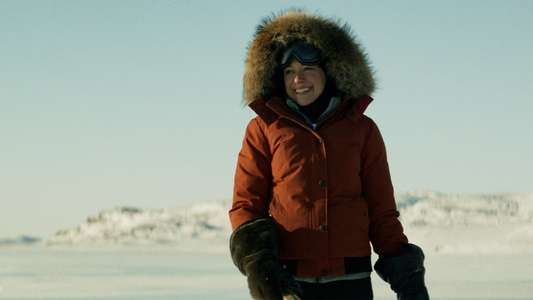
The production ran into a problem with the streetlights of Iqaluit and Apex during filming in Nunavut. The streetlights in these locations are sodium-based and cast an unusual orange-green hue, especially when captured on camera. The production asked the Qulliq Energy Corporation of Nunavut for permission to turn off 50 lights for filming, but was told it would cost at least $22,500 for turning off just 15 lights and would cost much more to turn off the full 50 lights, something the production had not expected and therefore had not allocated any of their production budget for. This led the production to many discussions over several months with the Iqaluit City Council for assistance in turning off the lights.
Nunavut vehicle registration plates (such as the one on the back of Roman's blue pickup truck) are in fact in the shape of a polar bear.
D.E.W. line sites (short for Distant Early Warning) were a series of radar stations in northern Canada and Alaska intended to warn of approaching Soviet bombers on polar circle routes. Almost all have been deactivated, and some have been rebuilt into Northern Warning System sites.
The yellow and black aircraft at the airport is a de Havilland Canada DHC-6 Twin Otter, which is often used for Arctic routes on because of its short takeoff and landing (STOL) capabilities in addition to being able to operate out of rough airstrips. The aircraft itself (registration "C-GOGA") at one point had pontoon landing gear and was used as a float plane several years before it appeared here and is operated by the Province of Ontario Ministry of Natural Resources.
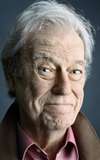
Gordon Pinsent's final feature film.
"Lucy: You think we're like the caribou who cross the river even if they know they're gonna drown? We keep following people and things. And we know it's gonna kill us someday, but we keep doing it. Roman: I don't know. Maybe it's a good thing, you know? You live your life, and you're not afraid to die. You do what you have to do, because most of the time it works out the way it's supposed to, you know? Then you don't lose your ground. You don't lose your ground. You cross the river, and you grow up, and you live free and proud, 'cause you crossed the river, even if you were scared. You crossed the river inside. You walked across your fear, because *that's* the biggest river to cross. You dive in, and the water's warm. And It feels good. And the people you love are following you, and you follow the people you love. And maybe, one day, you won't make it, but that's OK, 'cause that's how it is. Nobody knows when the water's gonna get too high. You just try and hope for the best. You just don't give up. That's what's important."
"Roman: How does that happen? Lucy: The tide gets too high. They do this every Spring. They cross the river to get to the other side, and one leads. The second one follows the first one. The third one follows that second one. Sometimes there's thousands of them. And if the first one loses ground, then it's over. The second one becomes the leader and he loses ground. And the third one follows him and loses ground. And it keeps going like that until they all drown."