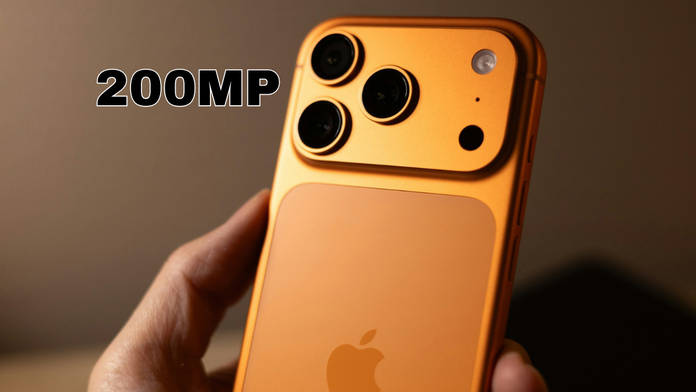
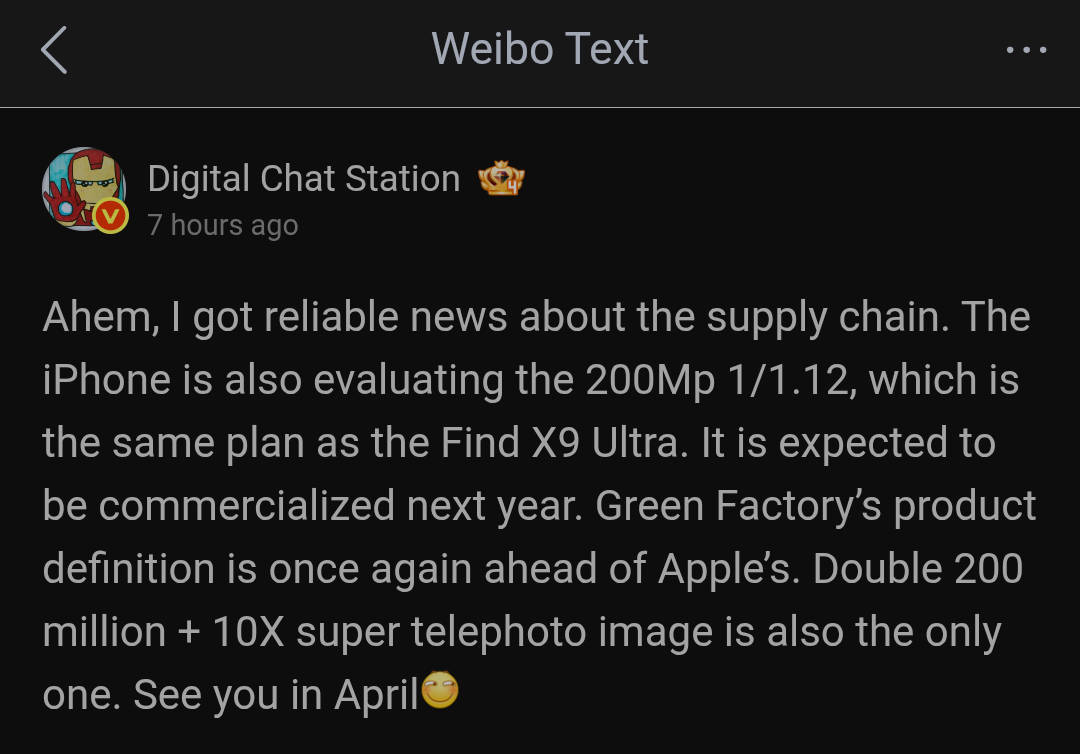
Apple is reportedly exploring a significant upgrade to its iPhone camera system, with internal testing underway for a 200MP main sensor, according to tipster Digital Chat Station’s (DCS) post on Weibo. If this information holds, it’ll put Apple in line with Samsung and even OPPO’s upcoming offerings. Since the post notes that the addition of a 200MP sensor is still under evaluation, it does not guarantee any feasible output, at least at this point in time.
Table of Contents
Apple’s rumoured 200MP camera and where it would stand
Per the post by DCS, the 200MP camera, which Apple is evaluating for a future iPhone model, could feature a large 1/1.12-inch sensor size. Not necessarily on the iPhone 18 Pro series, this sensor is likely to be utilised on the main camera since the tipster mentions “same solution used in the Find X9 Ultra“, which is rumoured to be equipped with the Sony LYTIA 901. The sensor with a 1/1.12-inch size made its debut in November 2025, marking Sony’s entry into the 200MP sensor bandwagon.
As it’s a commonly known fact that Apple generally stays put in implementing newer or advanced technologies or components initially, the push towards a 200MP camera could mean Apple is confident in its R&D that actually pays off, instead of just chasing big numbers on paper. But for now, it’s too early to tell whether the investment will be worth it, considering the plan to implement a 200MP camera is just at an evaluation stage.
The Vivo X300 Ultra, which is launching on March 30th, is also likely to gain the Sony LYTIA 901 sensor for its primary camera, a notable improvement over the Vivo X300 Pro‘s 50MP 1/1.28-inch Sony LYT-828 sensor. Furthermore, both Vivo X300 Ultra and OPPO Find X9 Ultra could obtain 200MP sensors for their ~3x periscope lenses, possibly resulting in sharp and detailed zoom, portrait, and macro shots.
How will a 200MP camera on iPhone help improve picture and video quality?
Considering the 200MP sensor being talked about by DCS is rumoured to carry a 1/1.12-inch sensor size, this puts it ahead of Apple’s current 48MP 1/1.28-inch primary camera used on the iPhone 17 Pro and 17 Pro Max. A larger the sensor size gathers significantly more light, ensuring cleaner images with less digital noise, especially in low-light conditions. Similarly, videos shot in dimly lit conditions or at night may carry more details while offering enough brightness to darker areas.
Even though Apple’s 200MP camera will likely utilise pixel binning, the iPhone 17 Pro can output 25MP images using its 48MP camera; as a result, the 200MP sensor will have significantly more data to play around with using the same existing system. Users would benefit greatly from this, as even heavily cropped images could retain a high level of detail.
Furthermore, bigger sensors make it easier to achieve a natural, pleasing blur in the background even without using the dedicated portrait mode. This gives images a more professional, DSLR-like look, especially for portraits and close-up shots. On the other hand, if the new 200MP also gains a wider aperture than f/1.8 found on iPhone 17 Pro’s 48MP primary shooter, this could translate to less noise and faster shutter speeds, allowing users to capture more versatile shots of moving subjects and in low light.