If overnight success had a name in 2025, it would be Arattai. Chances are, you must have come across this Tamil buzzword lately, which means “casual chatter” in its native language. The Zoho-made app has risen to the top of app stores, overtaking Telegram, Google Meet, Botim and even WhatsApp. It is being touted as India’s answer to Meta’s messaging platform. Interestingly, Arattai has been around since 2021. So what caused this overnight success? And is the success here to stay, or would the app end up joining the likes of Koo and Hike, the forgotten homegrown apps that were being called India’s answers to Twitter and Messenger?
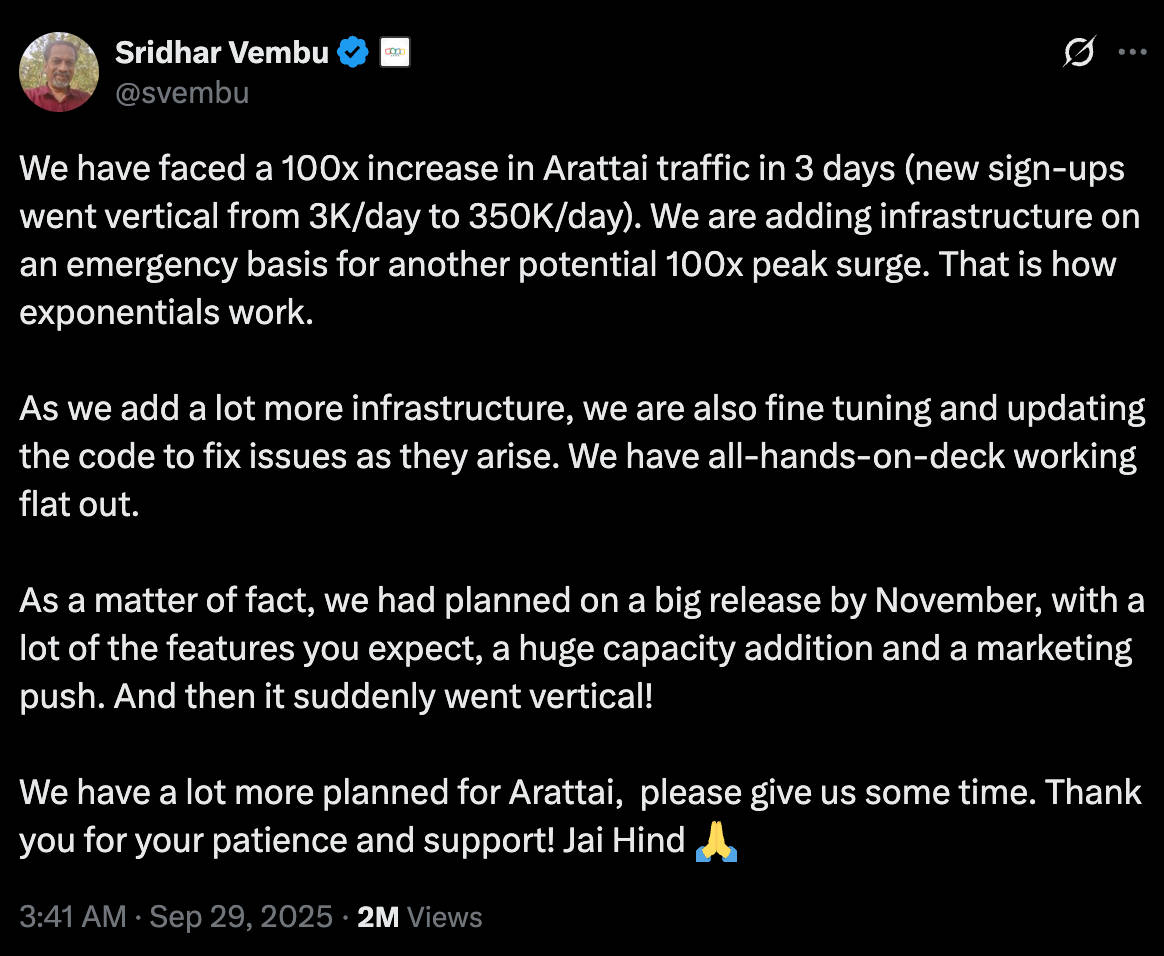
Business software maker Zoho launched Arattai during the pandemic as part of its suite of offerings. Not much hue and cry then, but fast forward to now, Arattai’s traffic has increased 100x, with daily signups increasing to 3.5 lakh from a mere 3,000 in just three days, as claimed by Zoho co-founder and Chief Scientist Sridhar Vembu.
The sudden rally behind the app was led by Union Education Minister Dharmendra Pradhan, who urged Indians on X to adopt native digital solutions and endorsed Arattai. He was followed by Minister of Information and Broadcasting Ashwini Vaishnaw sharing a picture with Zoho’s team, including Vembu. The app quickly went viral, with the likes of Anand Mahindra voicing their support and making calls to action to download the app.


WhatsApp vs Arattai: Is there really an edge?
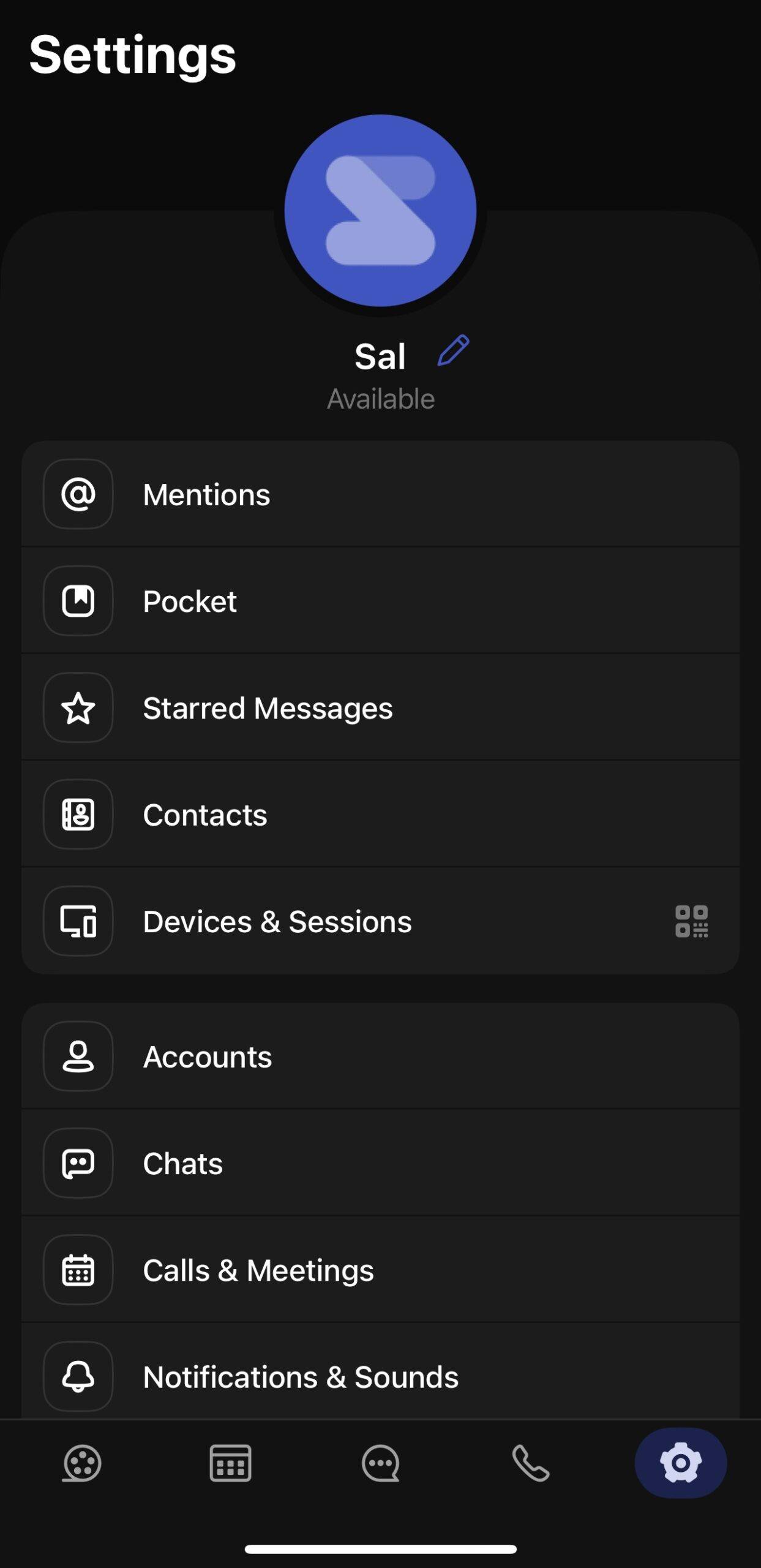
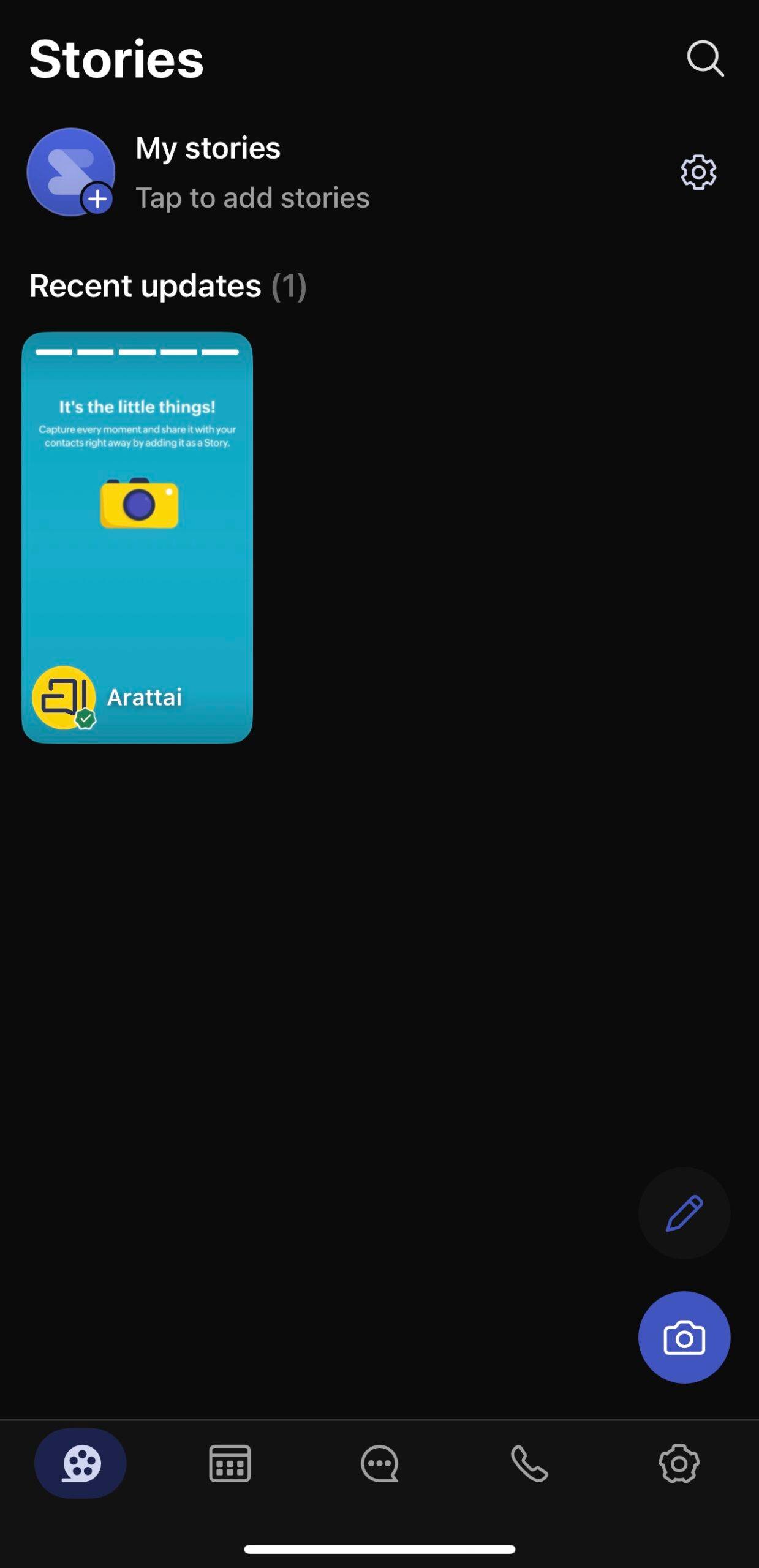
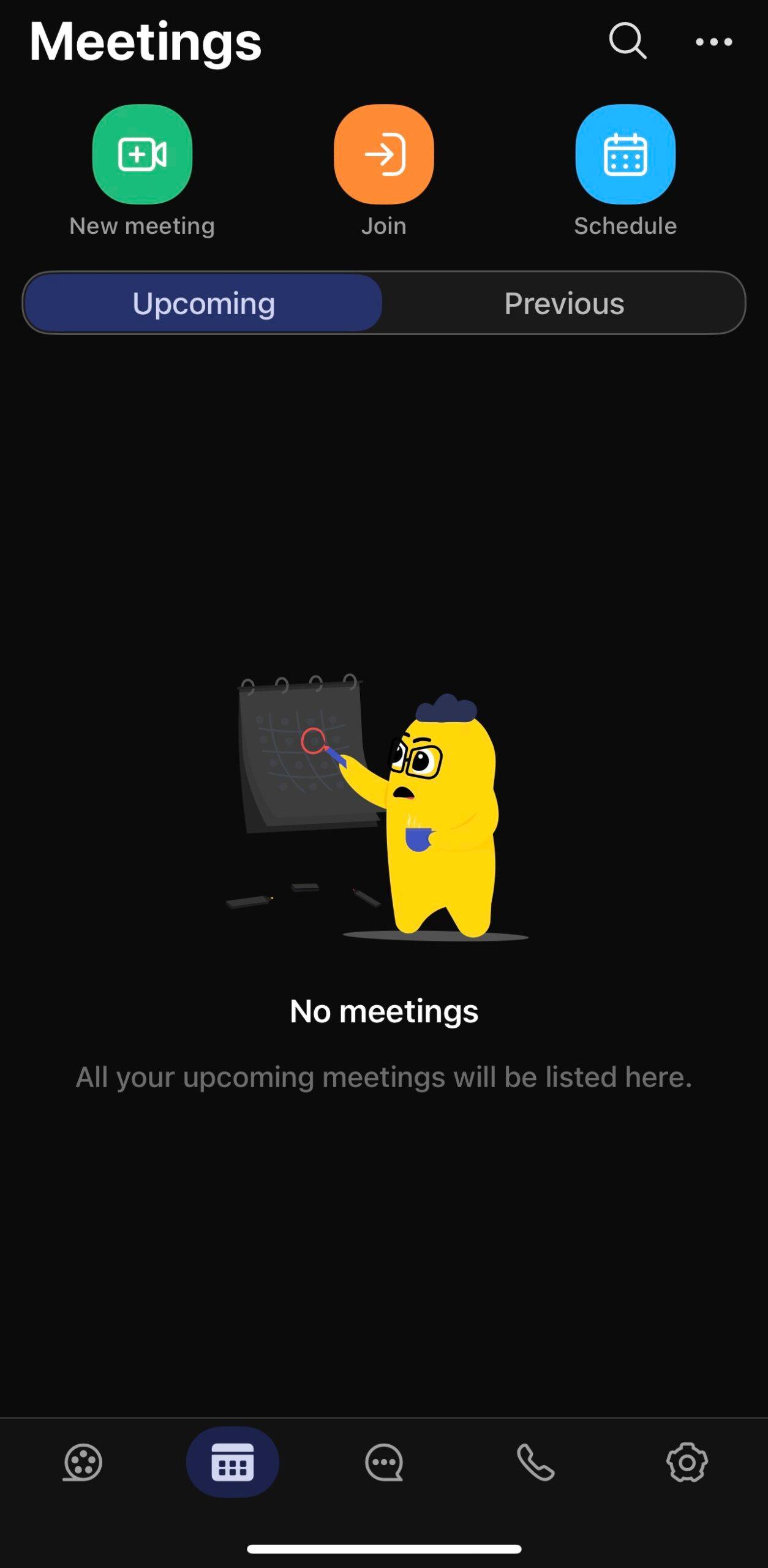
So, how different/similar is Arattai compared to WhatsApp? For starters, the interface is fairly intuitive, similar to WhatsApp, with primary features that are largely the same as those of the Meta-owned messaging platform. You get the usual text messages, voice calls, voice notes, media sharing, group calls and chats, as well as updates and channels, all laid out in a very similar-looking UI. A couple of secondary but handy features include Pocket, a personal cloud storage for users where one can save messages and media to revisit later. There’s a borrowed feature from Slack called Mentions, where all messages you’ve been tagged in appear in one place.
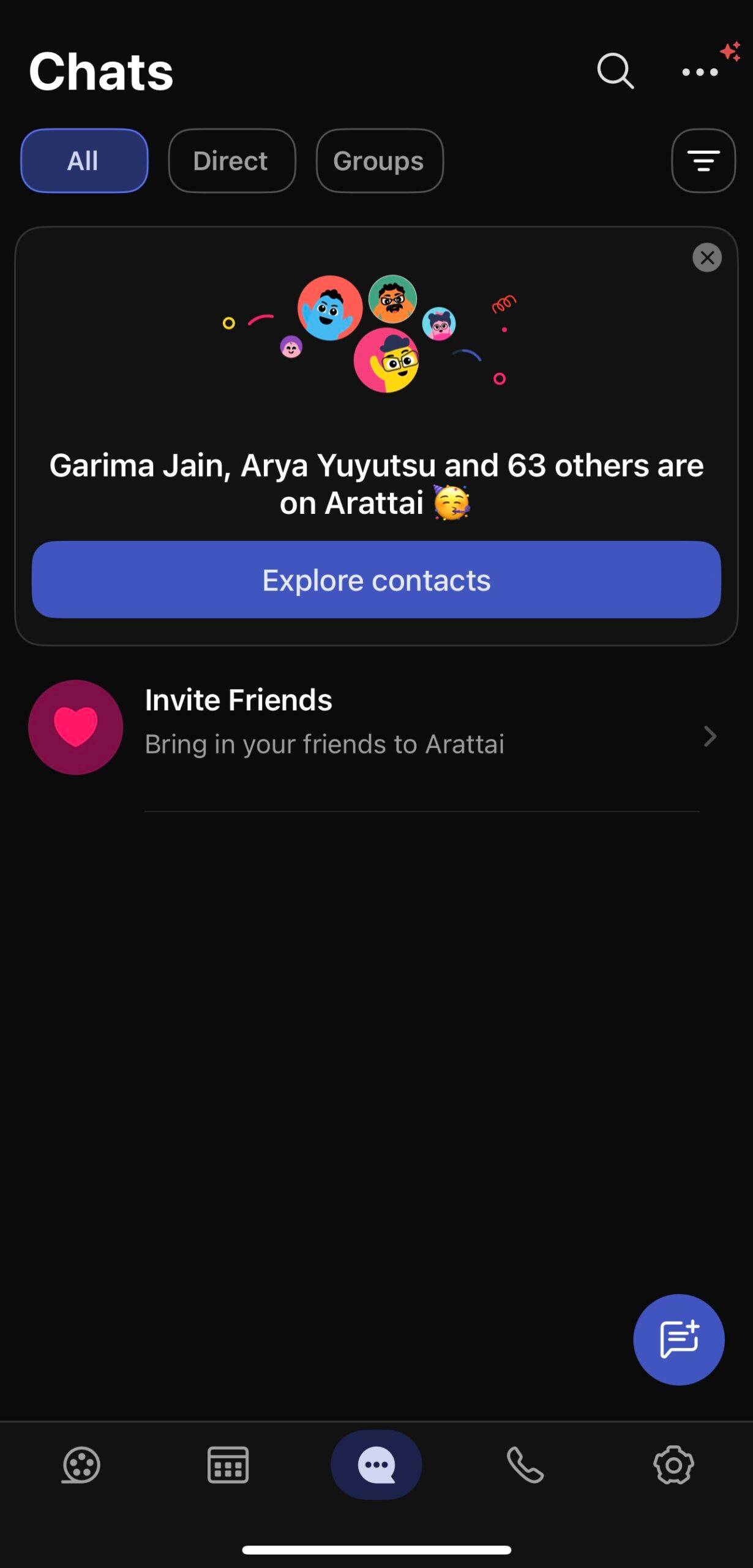
For some, one delight could be the absence of a forced AI interface. WhatsApp has strategically placed the Meta AI button at the bottom right of the screen, with accidental touches sometimes activating it. The search bar for chats also serves as a question box for Meta AI, which some could feel is an unnecessary addition to what was earlier a clean messaging interface. Arattai has no such AI abilities at the moment.
There is multi-device support, with a dedicated app for Android TV, which WhatsApp doesn’t offer. However, there is not a broad audience that would want to use their messaging app on a TV, so that makes it inconsequential. The absence of ads is also a plus with Arattai, unlike WhatsApp, which shows them in the Status and Channel tabs. Zoho promises that Arattai will not sell or mine personal data, but that becomes a non-issue when one realises that Arattai doesn’t offer end-to-end encryption for its chats, which is becoming the main concern with the app.
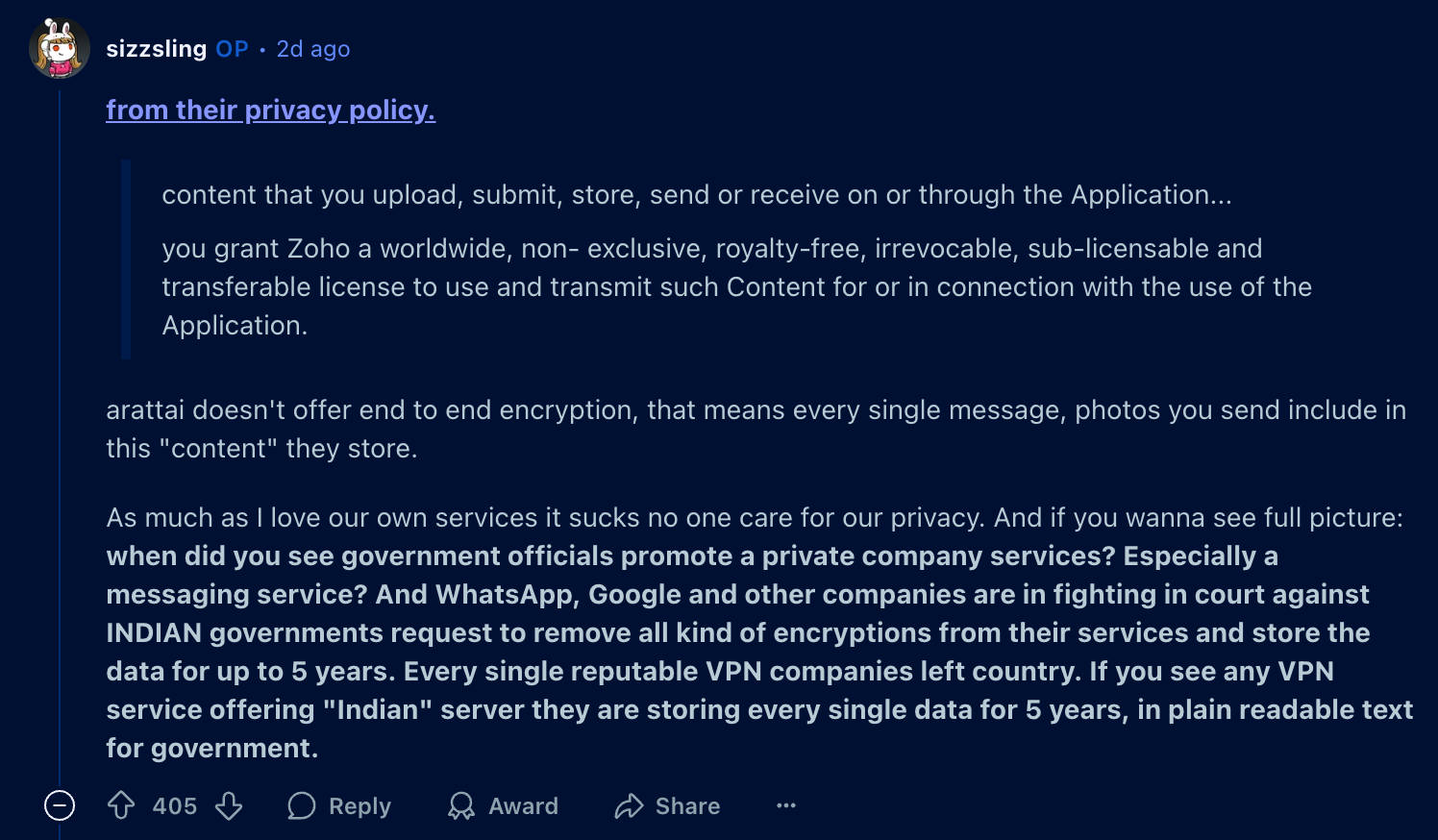
Arattai brands itself as spyware-free and made-in-India, which has been one of its main selling points. However, the lack of E2EE for chats (voice calls are end-to-end encrypted) raises questions on data safety. The company claims to keep user data secure by storing it within the country and not sharing it. However, this is significantly different from the full privacy protection that end-to-end encryption offers. Without E2EE, messages are not locked on the sender’s phone and unlocked only by the recipient. Instead, they remain readable to the app provider (Zoho) or vulnerable if hackers or government agencies gain access to the servers.
This is a major security flaw. Users coming from WhatsApp, Signal, or iMessage will expect end-to-end encryption (E2EE) by default. Additionally, without E2EE, all conversations stored on Arattai’s servers could be exposed, whether through hacking or even by insiders with access. The government’s push for an app that doesn’t support E2EE is also not helping the cynics.
Sridhar Vembu says the company is working hard to scale infrastructure to keep up with the growing demand, but that hasn’t stopped issues like server overload, call lags, slow contact syncing, and OTP delays from marring the user experience.
Arattai’s rise is impressive, but it’s also a reminder of how quickly hype can outpace readiness. The app has struck a patriotic chord and showcased Zoho’s ability to move beyond enterprise tools into consumer tech, but the road ahead is steep. Without end-to-end encryption and stronger infrastructure, it’s hard to recommend Arattai as a daily driver just yet. For now, it works best as a secondary app, something you try out to support the Made-in-India movement, not something you fully switch to.
Zoho’s challenge will be to sustain interest once the initial buzz fades. If it can fix its privacy gap and polish the user experience, Arattai could carve out a real space for itself as a privacy-conscious, ad-free alternative to WhatsApp. Until then, its success feels more like a patriotic experiment than a permanent migration. The buzz is real, but for Arattai to truly rival WhatsApp, it needs more than momentum; it needs trust.