
Acer showcased its latest lineup of gaming laptops at CES 2026 and the Predator Helios Neo 16S AI takes the limelight here. This new lineup, which also includes the Nitro V 16 AI and Nitro V 16S AI, integrates the latest Intel Core Ultra Series 3 processors and NVIDIA GeForce RTX 50 Series Laptop GPUs. This hardware combination aims to deliver top-tier performance, high-fidelity graphics, and advanced AI capabilities across different price points. We’ll look at their features in more detail below:
Acer Predator Helios 16S AI: high-end gaming in a thin form factor
The new Predator Helios bridges the gap between desktop-grade power and portable design. The chassis houses an Intel Core Ultra 9 processor paired with the NVIDIA GeForce RTX 5070, despite measuring just 18.9 mm thin. For the end user, this hardware combination is pretty significant, as you get the efficiency of Intel’s Series 3 architecture alongside the graphical capabilities of NVIDIA’s latest Blackwell platform.

The key feature here is newly announced DLSS 4.5 support, which leverages AI to generate frames at much higher speeds, ensuring that demanding titles run smoothly without compromising visual fidelity.
The viewing experience is particularly impressive here and it centres on a 16-inch WQXGA OLED display. Unlike standard IPS panels, an OLED panel delivers great contrast and inky blacks, and with the 165 Hz refresh rate, you can expect fluid motion for competitive shooters. To prevent the thermal throttling that often plagues thin gaming laptops, Acer employs liquid metal thermal grease. Since liquid metal conducts heat far better than traditional thermal compounds, it allows the processor to sustain peak speeds for longer durations.
The laptop rounds out with up to 64 GB of fast DDR5 memory, up to 2 TB of storage, and essentials like Wi-Fi 6E and Thunderbolt 4. This laptop thus positions itself as a versatile driver for both high-end gaming and creative workflows.
Acer Nitro V Series: mainstream gaming done right
For those who want great performance without the flagship price tag, Acer has refreshed its Nitro lineup with two new models: the Nitro V 16 AI and the slimmer Nitro V 16S AI. Both laptops are powered by the Intel Core Ultra 7 355 processor and up to the NVIDIA GeForce RTX 5070.
While it is a slight step down from the Predator’s Core Ultra 9, it is actually pretty decently balanced for most gamers. You get plenty of processing headroom for multitasking and enough graphical power to push high frame rates in modern AAA titles, especially when backed by up to 32 GB of DDR5 memory and up to 2 TB of storage.
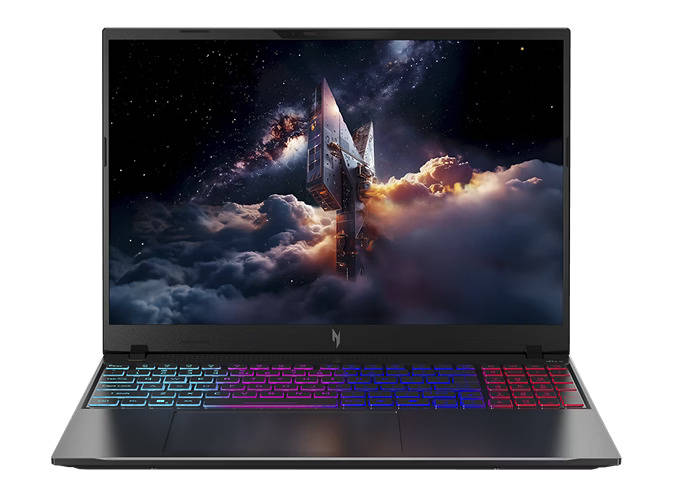
And you also get a MUX Switch, which is always a welcome addition. The MUX Switch allows the RTX 5070 to bypass the integrated GPU and communicate directly with the screen, which significantly reduces latency and boosts frame rates in competitive games.
In terms of display, both models stick to a 16-inch WUXGA panel with a 1920 x 1200 resolution. The 16:10 aspect ratio gives you a bit more vertical screen real estate for productivity, while the 180 Hz refresh rate ensures motion remains buttery smooth. That’s a little step above the standard 165 Hz panels often found in this segment.
The primary difference between the two lies in the chassis. The Nitro V 16S AI is the more portable option, shaving the thickness down to just 17.9 mm. With essential features like Thunderbolt 4, Wi-Fi 6E, and Copilot+ PC AI capabilities included as standard, these laptops look to be very capable daily drivers for students and serious gamers alike.
Other peripherals
The gaming launches conclude with the Predator Galea 570 headset, which ensures clear communication via ENC and 50mm drivers with flexible tri-mode connectivity. There’s also the new Cestus 530 mouse, which boasts a PixArt PAW3395 sensor and a blistering 8,000Hz polling rate, offering great precision and the speed required for competitive gaming.
The new hardware lineup will roll out globally in stages throughout 2026. The peripherals are set to launch first in Q1, followed by the Predator and Nitro laptops arriving in major markets across North America, EMEA, and Australia between Q1 and Q3.