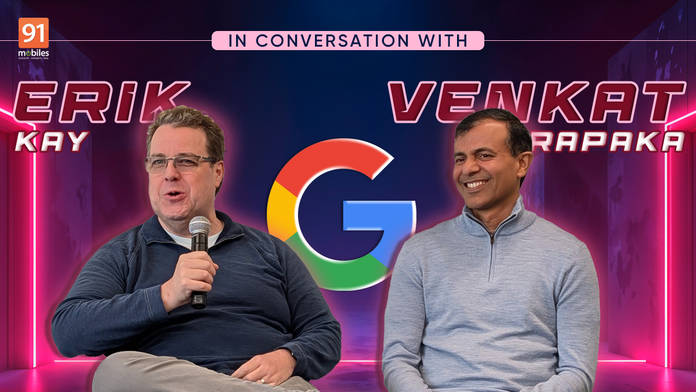
A chance to take a peek inside Google’s secret Pixel Labs in Taipei, and talk Android and Pixel with senior executives? I couldn’t say no to that, could I? At Google’s office nestled up on the 77th floor of the iconic Taipei 101 tower, I was one among a select gathering of global tech media folks who got a chance to throw questions at Erik Kay, VP of Engineering for Android, and Venkat Rapaka, VP of Product for Pixel. The conversation covered everything from AI to user experience, interoperability to ecosystem, longevity to hardware durability, and of course, what we can expect in the time to come. A panel discussion was also part of the agenda. Here are the highlights, followed by what transpired during the panel discussion.
One of the most noteworthy statements was made by Erik Kay, when he indicated that AirDrop could come to all Android phones. Answering a question on interoperability and AirDrop capability on the Pixel, he said, “We built an implementation compatible across iPhones, iPads, and MacBooks. Because Pixel has a full-stack investment, we could do this work independently. Now that we’ve proven it works, we are working with partners to expand this ecosystem-wide. Expect announcements soon.“
My question to them was: From a hardware standpoint, what will phones do in two years that they can’t do today?
Erik: I expect scaled adoption of technologies like Auracast. This allows devices to tune into public broadcasts—like silent TVs in airports or gate announcements directly into hearing aids. It transforms how devices interact with the environment.
Venkat: Devices will become more autonomous and build a richer context of the user and their surroundings. The ability to sense and act will grow exponentially.
Regarding a “high-friction flow” being implemented for sideloading apps on Android, Eric said, “Android supports openness and sideloading, but we must balance it with safety. Scammers are leveraging openness to trick users into downloading malicious apps. While Play Store apps are vetted, sideloaded apps can be anything. We are introducing friction to protect inexperienced users from deception, while ensuring enthusiasts still have the ability to sideload. We are working with the community to refine this.”
Next, here are some excerpts from the panel discussion.
On the high-level vision for Android
Erik: The mission has always been to empower developers and build technology for everyone. It is about openness and working with ecosystem partners to create a variety of devices—phones, watches, tablets, TVs, and autos. Our goal is to build devices that connect well and work naturally as a unified ecosystem.
Venkat: For Pixel, it has always been about bringing the best of Google to our users and ensuring Google’s services work seamlessly on our devices. As Rick Osterloh mentioned at our first launch a decade ago, this requires a “full stack investment” across hardware, software, and AI. We are obsessed with products, but we also focus on bringing Google’s intelligence to elevate the user experience.
On AI model enhancements and the role of Android and Pixel.
Erik: AI isn’t new for us; we’ve been investing in it for years. Our view is that it isn’t “about AI,” but about great user experiences where AI is the tool that makes them magical.
Take “Circle to Search.” There is no “AI” in the name, but it is underpinned by it. I used it on a family vacation in Costa Rica to identify exotic wildlife from photos and ask follow-up questions about their migration and diet. We also use AI for background features like earthquake early warning, theft detection (locking your device if it’s snatched), and scam protection in calls and messages. It is a tool to improve the user journey and safety.
Venkat: As a user, I don’t think about “AI”—I think about getting things done. Pixel has led the charge on this for over a decade, starting with the Google Assistant and computational photography. Five years ago, we decided to go deeper, leading to the Tensor program. Building our own Tensor Processing Unit (TPU) enabled on-device machine learning, voice recognition, and image processing.
Features like Live Translate or Super Res Zoom (enabling 100x zoom) rely on deep investments in Tensor and Gemini. Whether through dedicated silicon or computational photography, we are moving the industry forward.
On prioritising seamless device interoperability
Venkat: This is a major focus as we expand beyond phones. We want to remove friction. For example, if I’m listening to music on my laptop with Pixel Buds and get a call, the audio seamlessly switches to my phone, then switches back when I hang up. We also add delight, like using the Pixel Watch as a remote viewfinder to take group photos without a timer. A lot of this relies on the “Better Together” work Eric’s team delivers.
Erik: “Better Together” is rooted in Android’s mission of openness. When we develop features like Cast (streaming video to TVs) or Fast Pair (connecting Bluetooth devices), we build standards that work across thousands of devices from partners like Bose, Sony, and JBL. It’s about ensuring everything works seamlessly regardless of the Android phone you use.
On product longevity
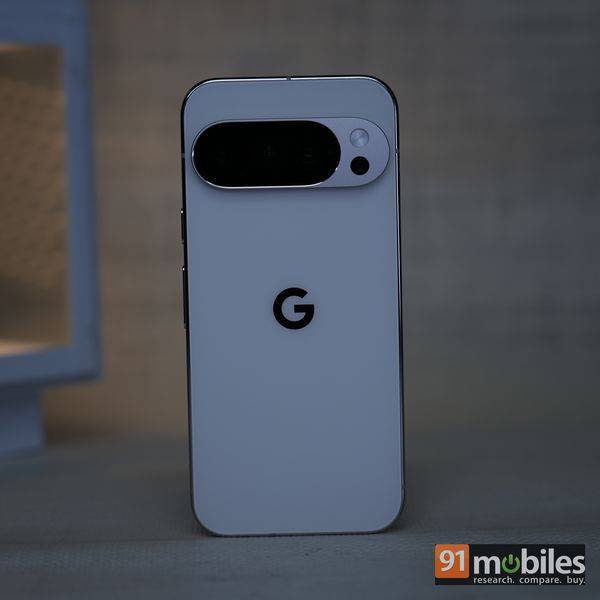
Venkat: On software, we were the first to commit to seven years of updates, so Pixel phones improve over time. On hardware, we prioritise durability and repairability. Our testing is rigorous; standard drop tests are no longer “good enough” for us—we push the envelope. We are also committed to repairability, with serviceable batteries in Pixel Watches and Buds. Our new devices feature gearless hinges and IP67 durability aimed at lasting a decade.
Erik: Venkat makes my job harder with the seven-year commitment! We must ensure new features work efficiently on older hardware. This requires deep investment in system health. However, we believe a device should get better over time. It’s good for users, their wallets, and the ecosystem.
Disclosure: this writer was in Taipei, Taiwan on Google India’s invitation