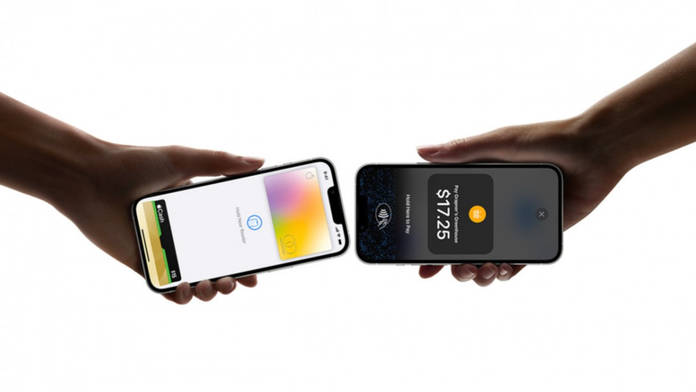
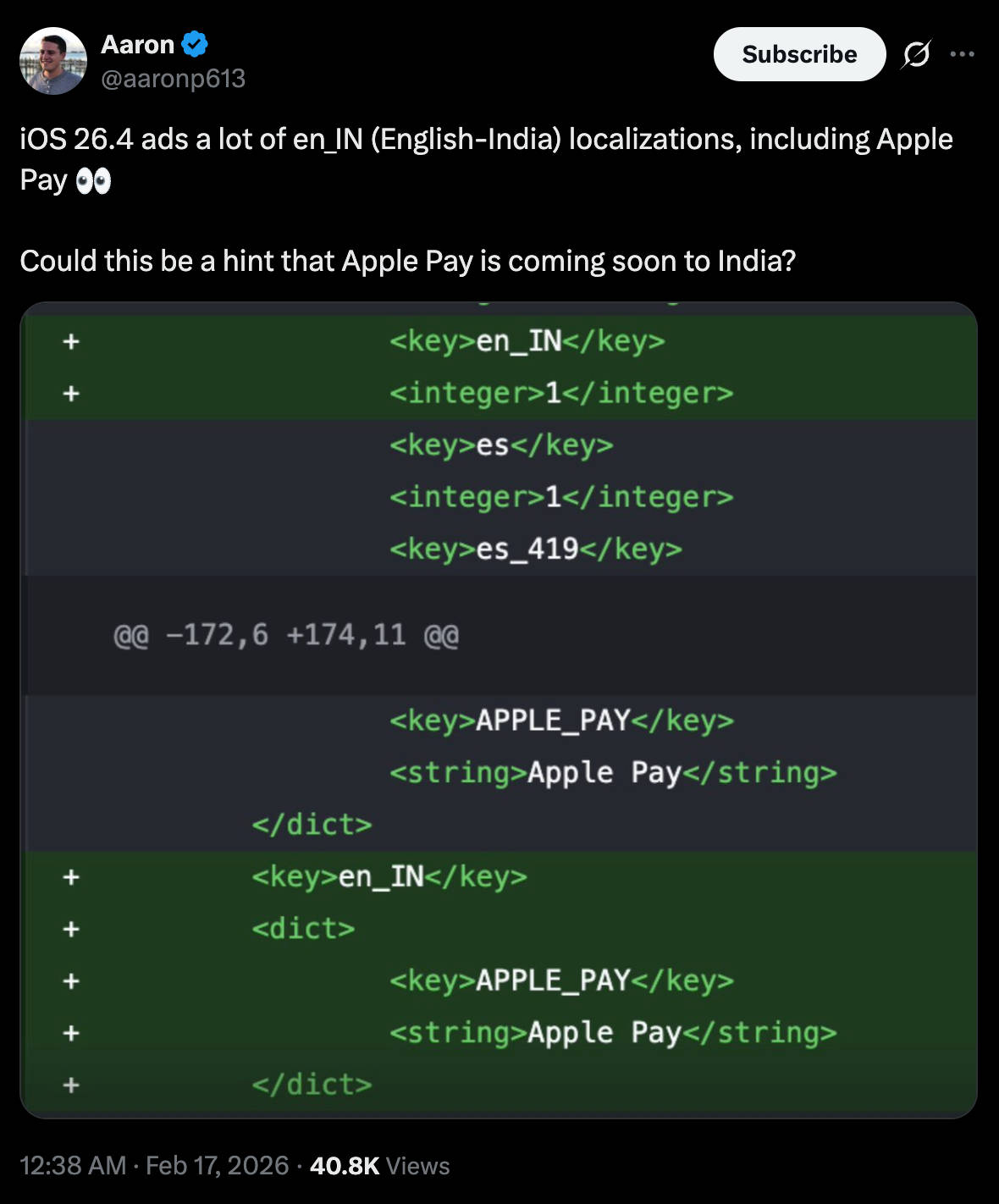
Apple may be moving closer to launching Apple Pay in India, with new clues appearing in the iOS 26.4 beta. Code spotted by developer Aaron Perris includes “en_IN” (English-India) localisation strings for Apple Pay, along with labels such as “APPLE_PAY” and “Apple Pay.” Similar additions have preceded Apple Pay rollouts in other regions, suggesting Apple is preparing the Wallet app and backend for a potential launch.
The timing aligns with reports from late 2025 that Apple had begun discussions with major Indian banks including Axis Bank, HDFC Bank, ICICI Bank, and SBI. Those talks were said to focus primarily on card-based payments, with no confirmation of UPI integration. Industry reports suggest Apple may begin with card payments and expand later, as applying for a third-party UPI licence involves regulatory and technical complexity.
India’s digital payments ecosystem is dominated by UPI, which powers QR-based transactions through apps such as Google Pay, PhonePe, and Paytm. NFC tap-to-pay using debit and credit cards exists but remains a smaller share of daily transactions. Samsung Wallet has gained traction in India largely because it added UPI QR support alongside card payments, highlighting the importance of UPI for mainstream adoption.
If Apple Pay launches in India without UPI support, its appeal may initially be limited to users who rely on cards, international payments, or Apple’s ecosystem features. A more meaningful rollout would likely require some form of UPI integration, whether through QR scanning in Wallet, UPI ID linking, or deeper system-level support.
Apple Pay would allow users to make contactless payments using an iPhone or Apple Watch at compatible terminals and could also bring Tap to Pay on iPhone, which turns the device into a payment terminal for merchants. However, Indian-issued cards are not yet supported in Apple Wallet, a prerequisite for any full rollout.
Apple’s entry would put it in direct competition with Samsung Wallet and existing UPI apps. Google Pay and PhonePe dominate everyday transactions, while Samsung has positioned its wallet as a hybrid platform combining cards, UPI, and services. Apple is likely to emphasise privacy, security, and tight integration with iOS rather than replace existing payment apps outright.
For users, Apple Pay’s worth will depend on how well it integrates with India’s payment habits. Those who rely on cards or travel internationally may benefit immediately, while UPI-heavy users may see limited advantages until broader support arrives. If Apple can adapt to India’s QR-first ecosystem, Apple Pay could become a useful addition to the apps people already use.