Forget the iPhone Duo, the new iPad Mini OLED with iPhone 18 Pro is the real deal


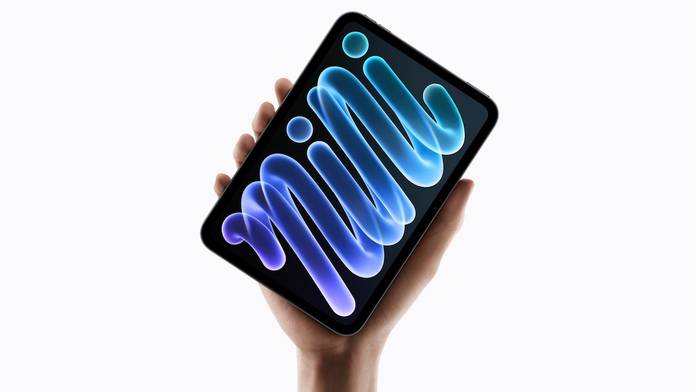
Apple has launched the new iPad mini with an 8.5-inch OLED display, the A20 Pro chip, and an IP67 rating, calling it the biggest update the iPad mini has ever received. It’s thinner and lighter than before, gets a new Acoustic Display for audio, and starts at Rs 82,900 for the Wi-Fi model. The timing is interesting: the iPad mini lands just weeks after the iPhone Duo, and together with the iPhone 18 Pro, it makes a strong case that you don’t need a foldable to get a big screen and a flagship camera.
Table of Contents
iPad mini 2026 price in India and availability
Pre-orders begin on Wednesday, October 28, at apple.com/in and in the Apple Store app, with availability from Friday, November 6. The iPad mini comes in Midnight and Starlight, with 128GB, 256GB, and 512GB configurations.
| Storage | Wi-Fi | Wi-Fi + Cellular | Wi-Fi with nano-texture | Wi-Fi + Cellular with nano-texture |
| 128GB | Rs 82,900 | Rs 1,00,900 | Not offered | Not offered |
| 256GB | Rs 94,900 | Rs 1,12,900 | Rs 1,06,900 | Rs 1,24,900 |
| 512GB | Rs 1,18,900 | Rs 1,36,900 | Rs 1,30,900 | Rs 1,48,900 |
Show Full Article
The nano-texture glass option adds Rs 12,000 on the 256GB and 512GB models, and cellular adds Rs 18,000 on all three. With education savings, the iPad mini starts at Rs 76,900.
The new TechWoven Smart Folio costs Rs 8,500 and comes in Navy Blue and Taupe. The iPad mini supports both the Apple Pencil Pro (Rs 11,900, or Rs 10,900 with education savings) and the Apple Pencil (USB-C) (Rs 7,900, or Rs 6,900 with education savings).
iPad mini 2026 specifications and features
The new iPad mini is 5.4mm thin and has an IP67 rating for water and dust resistance. The big change is the display: an 8.5-inch OLED panel that fits into the same footprint as the previous iPad mini, thanks to 24 percent thinner bezels. Apple says it reaches up to 1,200 nits of peak brightness, more than twice the previous generation, with 600 nits of full-screen brightness for SDR and HDR content, a 2,000,000:1 contrast ratio, and a 1-nit minimum brightness for dim rooms. It supports the P3 wide colour gamut, and there’s an optional nano-texture finish to cut glare.
The iPad mini is the cheapest Apple device with the new 2nm A20 Pro chipset.
Performance moves to the 2nm A20 Pro, the same chip that powers the iPhone 18 Pro and iPhone Duo. This makes the iPad mini the cheapest Apple device with the A20 Pro chip. It has up to a 6-core CPU and a 7-core GPU with Neural Accelerators in each core. Apple claims up to 4.5x faster AI performance, up to 2.7x faster graphics (with hardware-accelerated ray tracing and mesh shading), and up to 60 percent faster multithreaded performance, all compared to the previous iPad mini. Memory bandwidth more than doubles. One catch worth noting is that Apple specifies the Dual 16-core Neural Engine only for the 512GB configuration, and says nothing about the lower-storage models.
The new Acoustic Display uses woofers paired through the screen for more bass and volume, with custom tweeters hidden between the glass and aluminium body. This is what allows Apple to offer IP67 rating for the iPad mini. A 12MP Center Stage front camera now sits on the landscape edge for video calls, and the 12MP rear camera shoots 4K video at up to 60fps, with a new Adaptive True Tone flash for better document scans.

Connectivity gets a boost with Apple’s N1 chip, which brings Wi-Fi 7, Bluetooth 6, and Thread. Cellular models get Apple’s C2 modem, which Apple says delivers up to 50 percent faster data speeds, with eSIM support. The iPad mini also supports fast charging, though Apple hasn’t shared the wattage.
On the software side, the iPad mini runs iPadOS 27 with Apple Intelligence and Siri AI in beta. iPadOS 27.2 adds extended display mode for external monitors, and there’s a new Liquid Glass slider that lets users adjust how clear or tinted the interface looks.
iPad mini with iPhone 18 Pro is a solid iPhone Duo alternative
Here’s where it gets interesting. The iPhone Duo is Apple’s first foldable, and it starts at Rs 2,99,900. For the price of one device, you could get an iPhone 18 Pro (Rs 1,64,900) and an iPad mini and still have change left over. Even with the base 128GB iPad mini (Rs 82,900), that’s about Rs 52,000 saved.
Comparing like for like on storage, a 256GB iPhone 18 Pro and a 256GB iPad mini (Rs 94,900) cost about Rs 40,000 less than the 256GB iPhone Duo. And if you get the 256GB iPad mini with Wi-Fi + Cellular and nano-texture display at Rs 1,24,900 and throw in the Apple Pencil Pro at Rs 11,900, along with the 256GB iPhone 18 Pro, you’ll only have to pay Rs 1,700 more than the Duo.
The pairing wins on several fronts. The iPad mini’s 8.5-inch OLED display is larger than the Duo’s 7.6-inch inner screen on the diagonal. The iPhone 18 Pro has the camera features the Duo lacks, namely the Variable Aperture, Pro Controls, and Apple Reference Image, and it keeps Face ID, where the Duo uses Touch ID. The iPad mini works with the Apple Pencil Pro, while the Duo supports only the Apple Pencil (USB-C). Both run the A20 Pro.

The Duo has real advantages, too. It’s one device that fits in a pocket, while the iPad mini doesn’t. Its peak outdoor brightness is 3,000 nits against the iPad mini’s 1,200. Camera tricks like Duo Preview and Smart Take are possible only on a foldable. And the cellular iPad mini needs its own data plan on top of the extra Rs 18,000 for the cellular model.
The benefit of an iPad mini + iPhone 18 Pro combo depends on how you configure the tablet. If you go for the regular Wi-Fi-only model, it becomes more attractive.
If what you’re after is a big screen for reading, watching, and note-taking alongside a flagship camera, the iPad mini and iPhone 18 Pro combo offers better value than the iPhone Duo. You get a larger OLED display, better camera hardware, Face ID, and some change back, as long as you don’t load the iPad mini with every option. The Duo is for people who want a single device in their pocket, and for them, paying the foldable premium might make sense. For everyone else tempted by the idea of a foldable iPhone, the iPad mini makes it much harder to justify.