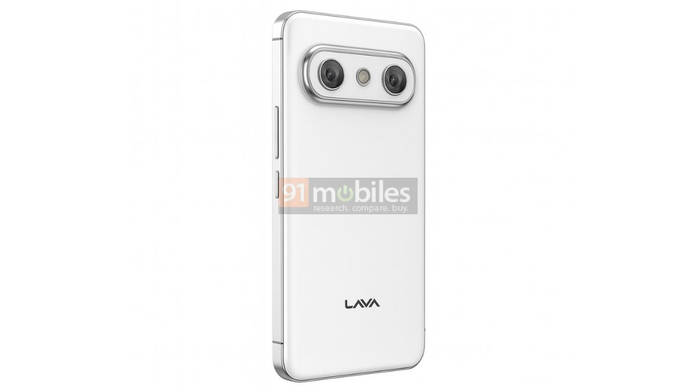
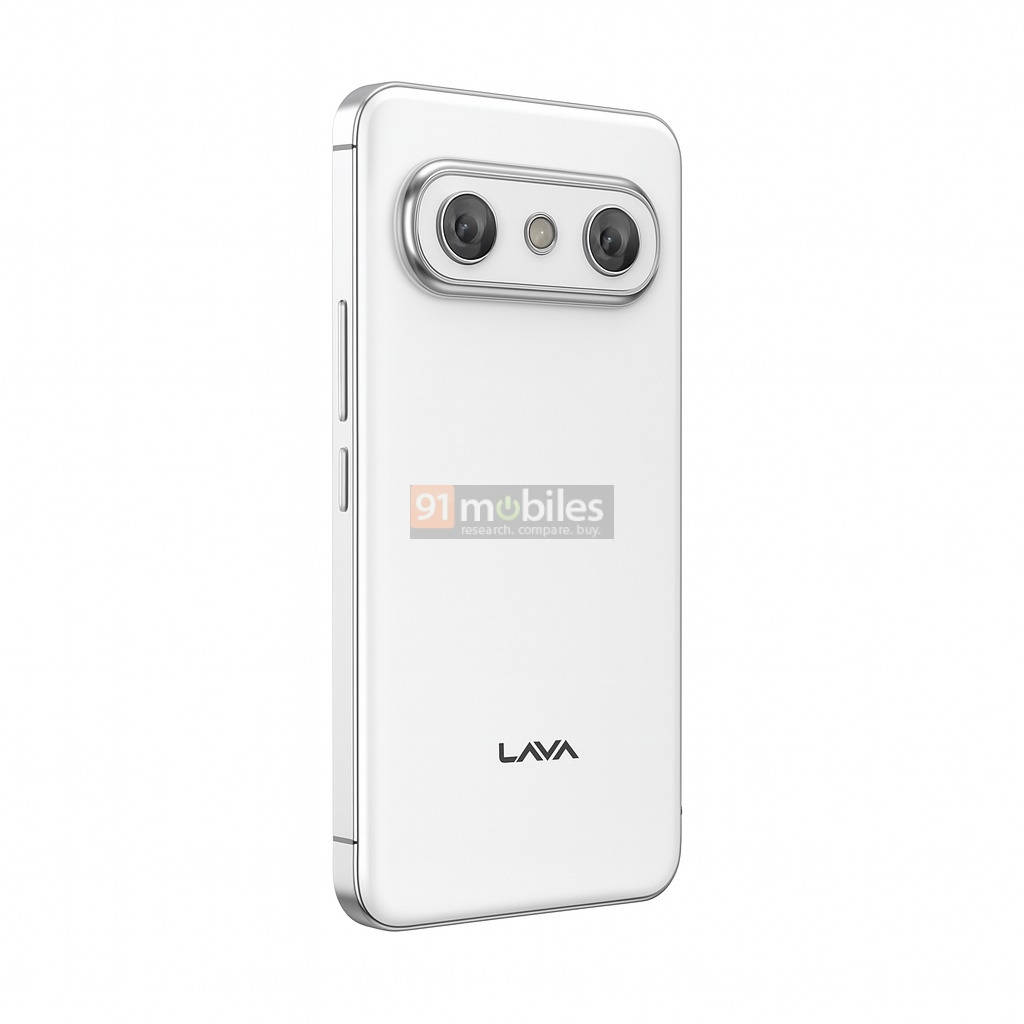
Lava Agni 3 launched in India last October with an ambitious secondary display on the rear panel, and an iPhone-like Action Button. With the Lava Agni 4, the brand might be taking things down a notch by going for a simpler camera design. It might even remind one of the old LG smartphones (RIP) with their signature pill-shaped rear camera module. This is based on a render of the Lava Agni 4 shared with 91mobiles by tipster Yogesh Brar.
The Lava Agni 4 is seen here with a dual-camera setup at the back. It’s a pill-shaped camera module with two sensors on each side and an LED flash in the middle. There seems to be a metal frame around the camera module, and it also appears to be slightly thick. The overall colour scheme is also the same, with a metal frame and the phone’s back panel in white colour. The Lava Agni 4 has a flat edge, indicating a flat display, unlike the Lava Agni 3’s curved screen.
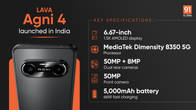
The tipster also shared some specifications of the Lava Agni 4 with us. The smartphone will reportedly feature a 6.7-inch FHD+ display with a 120Hz refresh rate. If true, it would be the same as the Agni 3, but we’re yet to know about other details like peak brightness and HDR support. The Lava Agni 4 is also said to be powered by the MediaTek Dimensity 8350 chipset, which would be an upgrade over the Agni 3’s Dimensity 7300X processor. The Dimensity 8350 is built on the 4nm process, has a peak clock speed of 3.35GHz, and is said to give flagship‑level memory and storage speeds with UFS 4.0.
Based on this chipset and the Agni 3’s pricing, the Lava Agni 4 could be placed under Rs 25,000 in India.
Moving on, the Lava Agni 4 is tipped to feature 50MP cameras. This could mean a dual 50MP camera setup. In terms of the camera setup, it might be a downgrade as the Agni 3 has a triple-camera setup. It includes a 50MP primary camera with OIS+EIS, an 8MP telephoto, and an 8MP ultra-wide camera. Lava might adjust the camera features and hardware to make it as versatile as possible.
The Lava Agni 4’s highlight will undoubtedly be its battery capacity since it’s said to house a 7,000mAh+ battery. At present, the Vivo T4 and iQOO Z10 offer the highest battery capacity, which is a 7,300mAh unit, and both phones are priced under Rs 25,000. It’s interesting to see whether the Lava Agni 4 will offer the same battery capacity or higher. This would also be a major upgrade over the Lava Agni 3’s 5,000mAh battery, which comes with 66W fast charging support. A 7,000mAh battery, most likely silicon-carbon, is expected to deliver anywhere between two to three days of battery life on a single charge, depending on the usage.
While the Lava Agni 4 seems to tone things down in terms of design flair and camera hardware, the upgraded processor and beefy battery suggest Lava is prioritising performance and endurance this time. The real question is whether that’s enough to compete in a segment crowded with Chinese brands offering aggressive specs and features. If priced right, the Agni 4 could find takers looking for a long-lasting daily driver, even if it plays it safer than its predecessor.