Motorola could be working on a hands-free way of zooming in and out of camera preview, reveals patent


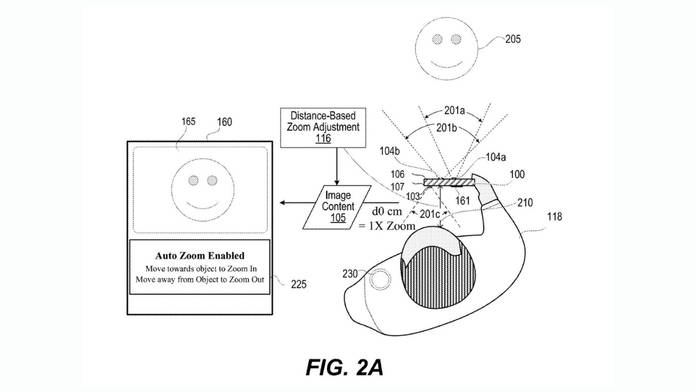
An interesting development appears to be happening over at Motorola. In a patent submitted by Motorola Mobility LLC, the company could be working on a “distance-based zoom” camera feature that automatically zooms the camera’s field of view (FOV) in or out based on how the user moves the phone closer to or farther from their face. While the patent states the function can be carried out on a “handheld electronic device”, it’s safe to assume the camera zoom system in question pertains to smartphones.
The patent was published in the United States Patent Application Publication on March 26th, 2026, while the actual technology was developed in Bangalore by Kolli Kishor, Rajesh Kumar, Jilji N. Elayath, and Satheesh Thotasagara Vishakantappa.
Table of Contents
How the distance-based zoom feature works
From the provided diagrams and images, it appears that in order for the feature to work, the device should be equipped with sensors like ultra-wideband (UWB), motion sensors, or other ranging tech to detect lateral/forward-backwards movement and distance to the user’s face or subject.
Activation: After opening the front or rear camera, the user must select the distance-based zoom or auto-zoom feature from the camera viewfinder options. Once the feature is activated, it starts measuring the electronic device’s distance to the user’s face or the main subject.
Show Full Article
Post-activation: Once the feature is enabled, the device continuously tracks the changes in distances caused by the user moving the phone. The idea behind this is to increase or decrease the zoom level in the camera preview based on how close or far the subject is from the device.
The main process: After tracking the distance in real-time, the device follows the rules predefined in the algorithm. For instance, if the user moves closer to or towards the subject, the camera preview should zoom in, resulting in higher magnification.
Similarly, if the user is farther away from the subject, the device should start zooming out to offer a wider field of view. Simply put, the closer the device is to the subject, the focal length automatically increases, while moving further away or backwards decreases the focal length.
Once the camera preview displays the desired result according to the user, the image can be clicked. As stated in the patent, the feature can use optical zoom (if available), digital zoom, or a combination via the image processing pipeline, taking advantage of the telephoto lens, if any.
What the patented feature aims to solve
Camera zoom on phones often requires two-handed pinch gestures or awkward thumb movements, which can cause shaky previews or be inconvenient (e.g., one-handed selfies, quick shots while walking). This invention provides a more natural, movement-based interaction that leverages the device’s position for intuitive control, improving usability and reducing the need for precise touch inputs.
Will the auto-zoom feature make its debut anytime soon?
While the patent doesn’t reveal anything about the auto-zoom feature’s release, given the functionality, the feature could act as one of the camera modes on Motorola smartphones (or other smartphones, too, for that matter) and position it as a standout feature. Since the feature ditches the use of pinch-to-zoom in or out, it could end up being highly beneficial for framing the right composition of moving subjects like pets or children playing.
Similarly, when taking close-up shots or macros, the device can optimally decide the required zoom level to click the ideal shot without the user needing to fiddle around with the manual zoom slider. Previously, we have seen multiple manufacturers offering innovative camera controls, such as gesture controls, voice commands, palm detection to click selfies, and more. The patent filed by Motorola shows its effort to move beyond traditional touch-based interactions and offer an alternative way to zoom in or out.
How different is Motorola’s patented auto-zoom feature from Apple’s Center Stage
Motorola’s auto-zoom feature lets you zoom the camera in or out naturally by simply moving the phone closer to or farther from what you’re photographing (like leaning in for a closer shot), while Apple’s Center Stage keeps the person centred in the video frame automatically during FaceTime (or video calls) if you start moving out of the frame.
Motorola patent focuses on depth movement, which involves moving forward or backwards to or fro from the subject you’re about to capture. On the other hand, Center Stage focuses more on lateral movement (sideways) and vertical movement within the room, while keeping the framing stable.