Review Summary
Expert Rating
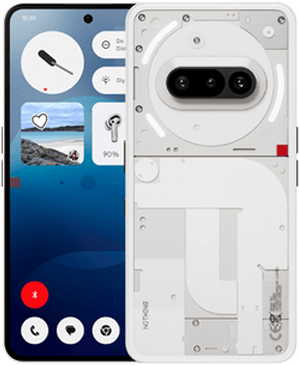
It was only a matter of time before Nothing pushed beyond its signature glowing design and clean OS to capture a younger audience. Enter the Nothing Phone (3a) series – a bold attempt to shake up the sub-Rs 25K segment. We recently reviewed the Phone (3a) Pro, packed with some seriously cutting-edge features (telephoto camera, Essential button, AMOLED display, and so on). Surprisingly, the regular Phone (3a) offers the same at a more affordable sticker price.
But does that also mean some hidden compromises? Or can it still be the best bang for your buck in a segment where brands like Motorola are coming in hot with the new Edge series? Let’s find out.
Table of Contents
Verdict
The Nothing Phone (3a), like its predecessor, stands out with its unique design in the sub-Rs 25K segment. It offers a tall, vibrant display and one of the cleanest OS experiences, which many users will appreciate. The camera performance is also reliable, and the Phone (3a) holds up well against some notable competitors and its predecessor. However, its distinctive design and latest hardware additions add to the thickness, and hopefully, its future iterations will become slimmer.
Design and display
While the Phone (3a) Pro gets the major design upgrades, the regular Phone (3a) features a bunch of new additions as well. There’s a new Essential button below the power button to launch Nothing AI-backed “Essential Space”. Although the Essential Button can be significantly useful to boost productivity, it can take a few attempts to get used to its placement.

Otherwise, all the port and button selections remain unchanged, which include the USB-C port and volume rockers. Of course, the pill-shaped camera module now houses an additional telephoto camera. It does add a noticeable protrusion, causing the phone to wobble on flat surfaces, but it’s not a deal-breaker for me.
| Smartphone | Weight | Thickness | IP Rating |
| Nothing Phone (3a) | 201 grams | 8.4mm | IP64 |
| POCO X7 | 190 grams | 8.4mm | IP66 + IP68 + IP69 |
| Motorola Edge 50 Neo | 171 grams | 8.1mm | IP68 |
As mentioned, the Glyph interface remains intact, making the phone stand out across any segment. Nothing also deserves credit for fine-tuning the experience with each new generation.
For instance:
- The LED lights provide visual cues for new notifications whenever you place the phone face down. The Glyph interface, along with ringtones, is customisable, allowing you to tailor the experience to your preference.
- Similarly, enabling the “music visualisation” option syncs the lights to respond to the music on your phone, creating a dynamic visual effect.
- You can set a timer and flip your device face down to start a countdown using the Glyph lights.
- The lights even serve as a guide when adjusting audio levels, which can be a bit of flex, but surely, users will appreciate it.
While the Glyph interface is still a standout feature, most of these functions have been around since the last generation. Nothing could have focused on reducing the phone’s thickness and weight, especially since the Glyph system and new cameras make it noticeably bulkier. It might be a deal-breaker for some users, particularly as slimmer phones are becoming more common in this segment.
| Smartphone | Display | Peak brightness |
| Nothing Phone (3a) | 6.77-inch AMOLED (120Hz) | 3,000 nits |
| POCO X7 | 6.67-inch AMOLED (120Hz) | 3,000 nits |
| Motorola Edge 50 Neo | 6.4-inch pOLED (120Hz) | 2,800 nits |
Additionally, competitors like Realme and POCO have raised the bar by offering superior durability with IP68 and IP69 certifications. In comparison, the Phone 3a’s IP64 certification feels modest.

The same applies to the display, as Nothing could’ve improved display durability by opting for high-grade Gorilla Glass by Corning (currently uses Panda Glass).
Otherwise, there’s no complaint about the display quality. The 6.77-inch Full-HD+ AMOLED display on Nothing Phone (3a) is sufficient for reading or watching videos on different platforms. Its evenly spaced bezels further provide a premium look and feel.
Cameras
Looking at the Phone 3a’s on-paper specifications, one may have mixed feelings compared to the Phone (2a) (review). The standout addition is the new 50MP telephoto camera (periscope lens on the Pro model), but the primary 50MP OIS-enabled sensor is slightly smaller. The ultra-wide lens has also been downgraded to 8MP, while the 32MP selfie camera remains unchanged.

However, real-world performance tells a different story. The Phone (3a) outperformed its predecessor on nearly all fronts in our camera comparison. It handles exposure better in daylight, and the telephoto camera (2x instead of 3x on the Pro model) adds more versatility for portrait shots. The selfie camera has also been fine-tuned for Indian skin tones, delivering a balanced brightness and contrast, even in low-light conditions.


Video quality remains solid, though I would’ve liked to see 4K at 60FPS with the main camera – a feature that’s becoming more common in the sub-Rs 30K segment. There’s still scope for improvement in terms of details in both still shots and videos, but that’s a common challenge faced by almost all smartphones in this category.
Beyond its predecessor, the Phone (3a) held its own against the Realme P3 Ultra (review) in our blind camera test, where readers voted on the best shots across different lenses. However, it didn’t perform as well as the iQOO Neo 10R (review), which is fair, given the price difference.
Compared to its direct rival, the POCO X7 (review), the Phone (3a) falls short in gaming and durability. Let’s break down how they differ based on camera performance.
Daylight
Both smartphones offer similar levels of detail, but there’s a slight difference in their colour science. The Phone 3a opts for a natural approach, while the POCO X7 prioritises slightly warmer tones.


The former also strikes a good balance between exposure and contrast, offering a more aesthetically appealing shot.
Ultra-wide
The ultra-wide shots from both smartphones may look similar at first glance, but there are noticeable differences in how they handle details.


For instance, the Phone (3a) captures sharper foreground elements, while the POCO X7 does a better job of preserving background details.
Additionally, the POCO X7 offers a wider dynamic range, making details near the trees on the right more visible.
Portrait
We are accessing portrait shots with the primary camera since the POCO X7 skips a telephoto lens.


The POCO X7 handles edge detection better, but the Phone (3a) captures superior facial details. Additionally, the Phone 3a does a better job balancing colours, including skin tones, even under harsh brightness.
Selfie
The Phone (3a) continues to do a better job capturing more facial details with the front camera, but the POCO X7’s image looks more aesthetically pleasing.


In this case, the Phone (3a)’s shot looks a bit flat as it lacks depth and contrast.
Low-light (with night mode)
Finally, both smartphones capture a decent shot in low light with night mode enabled. While they offer similar levels of detail, the POCO X7 has a slight edge in handling lens flare.


It also does a better job of balancing exposure, especially with the background lights.
Essential Space
Nothing’s latest attempt to stand out in the market is the AI-backed Essential Space, accessible via the dedicated Essential button next to the power button. While the placement could have been more ergonomic, the Essential key is undoubtedly one of the finest additions to a smartphone in a long time.

At first glance, its functionality might seem basic, allowing you to store screenshots, quick text notes, and voice memos. But Nothing is leveraging AI to organise files, provide descriptions, and even remind you of upcoming events. Stored notes and voice memos are analysed, creating a personalised diary that helps you revisit things you’ve looked up online.
For anyone who tends to forget things or juggles multiple tasks daily, Essential Space could be a game-changer. While it’s still in its early stages, Essential Space has endless possibilities. For instance, the next step could include scanning notifications and emails for even more custom reminders and to-do lists.

Apart from the Essential Space, the Phone (3a) provides basic AI tools like Object Remover, AI Unblur, and Google’s Circle to Search (with Android 15).
Performance and software
The regular and Pro models of the Phone (3a) series both feature Qualcomm’s Snapdragon 7s Gen 3 SoC. While the wait continues for Nothing to utilise MediaTek or Qualcomm’s flagship chipsets, the Snapdragon 7s Gen 3 SoC is a modest choice for productivity-focused phones. The brand has also worked closely with Qualcomm to fine-tune the experience, particularly gaming and AI. Additionally, the AI-backed features like Essential Space will appeal to many users, myself included.

Of course, if we look at the numbers, the Phone (3a) secures a lower position against immediate rivals like the Realme P3 Pro (also powered by SD 7s Gen 3) and Vivo T3 Pro (SD 7 Gen 3). Its performance in the throttle test is also decent, if not the best.

For daily work, the particular Snapdragon chipset is sufficient for browsing and even multitasking. You might notice some lags here and there, though it did not affect my general workflow.
Even for gaming, the Phone (3a) supports Extreme+ FPS and Ultra HDR graphics in BGMI. With HDR and Ultra settings, it achieves an average FPS of 39, which is quite impressive, even better than the Realme P3 Pro at 37.5 FPS and the Vivo T3 Pro at 36.6 FPS. I noticed a similar smooth gaming experience while playing COD Mobile at Max settings. Based on our lab test, the phone also managed heat somewhat efficiently.

For me, Nothing phones have always been about the software experience, which remains one of the cleanest in any segment – second only to Pixel devices. The Phone (3a) doesn’t have any third-party apps, which is impressive since even some flagship models priced over a lakh cannot provide the cleanest Android experience.
| Smartphone | Pre-installed apps | Software updates (OS + security) |
| Nothing Phone 3a | 27 (0 third-party) | 3 years + 6 years |
| POCO X7 | 65 (17 third-party) | 3 years + 4 years |
| Realme P3 Pro | 65 (12 third-party) | 2 years + 3 years |
Nothing has also stepped up its software update cycle, promising up to six years of updates. While Moto and Samsung still lead the way with better long-term support, Nothing is moving in the right direction.
Battery and charging
The Phone 3a retained a 5,000mAh battery, now supported by a slightly faster 50W wired charging. However, there’s still no charger in the box, and buying the proprietary adapter costs over Rs 2,000 on Flipkart, which some users might find frustrating.

That said, battery life holds up well, and most users won’t face major issues. With the highest settings enabled, the Phone 3a lasts almost a full day. Based on our lab tests, which included gaming and YouTube streaming, it performed on par with the POCO X7 and Edge 50 Neo, if not slightly better.

However, charging speeds aren’t the best in the segment. Compared to the Realme P3 Pro and Edge 50 Neo, the Phone 3a’s charging performance is modest.
| Smartphone | Battery (charging speed) | Charging time (20 to 100 percent) |
| Nothing Phone (3a) | 5,000mAh (50W) | 52 minutes |
| POCO X7 | 5,500mAh (45W) | 51 minutes |
| Realme P3 Pro | 6,000mAh (80W) | 39 minutes |
Final verdict
To answer the simple question: Is the Nothing Phone (3a) the best smartphone under Rs 25,000? The answer depends on your priorities.
If you value clean software, a great display, and capable cameras, it ticks all the boxes. Nothing has also optimised the Snapdragon 7s Gen 3 well for smooth everyday performance, handling tasks like calling, browsing, and multitasking effortlessly. Moreover, it stands out with the Glyph interface and Essential Key, but the next iteration could benefit from a lighter and slimmer design.
Durability is another area for improvement, especially since rivals like the POCO X7 offer an IP69-rated build. If that’s not a deal-breaker, the Phone (3a) is definitely a great choice worth considering.
Editor’s rating: 8.1 / 10
Reasons to buy:
- The Phone (3a) stands out with the Essential Button and Glyph interface.
- It features a tall, vibrant display.
- The Phone (3a) also offers reliable cameras, performing well in different lighting conditions.
- Its battery backup is solid.
Reasons not to buy:
- The Phone (3a) is bulky to carry.
- It continues to skip the charger in the box.