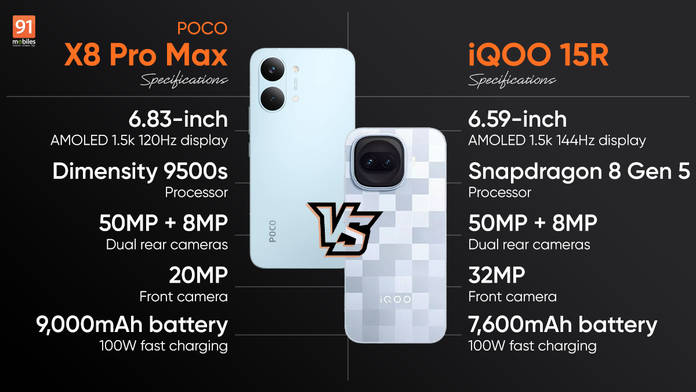
The POCO X8 Pro Max and iQOO 15R (review) stand out as two of the most spec-loaded smartphones in their segment, and even beyond. Both devices are clearly built with performance in mind, but they take slightly different routes to get there. The iQOO 15R leans towards a more compact form factor, pairing it with a sub-flagship Snapdragon chipset and up to a 144Hz refresh rate display. The POCO X8 Pro Max, in contrast, takes a no-compromise approach to size and endurance. It’s larger, which could be attributed to its massive 9,000mAh battery, more aggressively priced, and is powered by a MediaTek chipset.
If you’re trying to decide between the two, this comparison should give you a clear direction. It focuses purely on specifications, keeping things largely objective. For a deeper, real-world perspective, stay tuned for the full POCO X8 Pro Max review.
Table of Contents
Design: slim and handy vs big and bold
If you prefer your gaming phone to be handy, the iQOO 15R might be a better pick. The handset measures 157.6 x 74.42 x 7.90/ 8.10mm in dimensions and weighs 202/ 206 grams. While reviewing the device, I found it pocketable and comfortable to hold for prolonged usage. Furthermore, its flat edges give you a solid grip over the smartphone and make it comfortable to reach far corners.
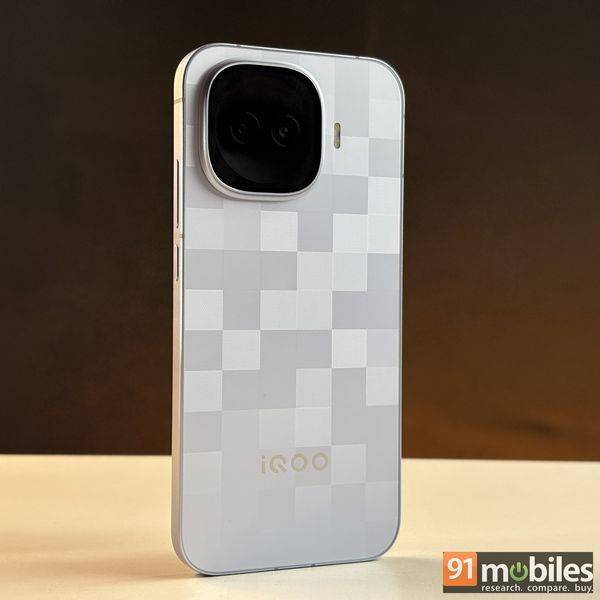
The iQOO 15R comes in Triumph Silver and Dark Knight colourways. The latter is pretty straightforward in design and has a square camera module, while the Triumph Silver has a bit of character with a checkered back. The handset is IP68 and IP69 water and dust resistance certified, protecting it against water and dust.
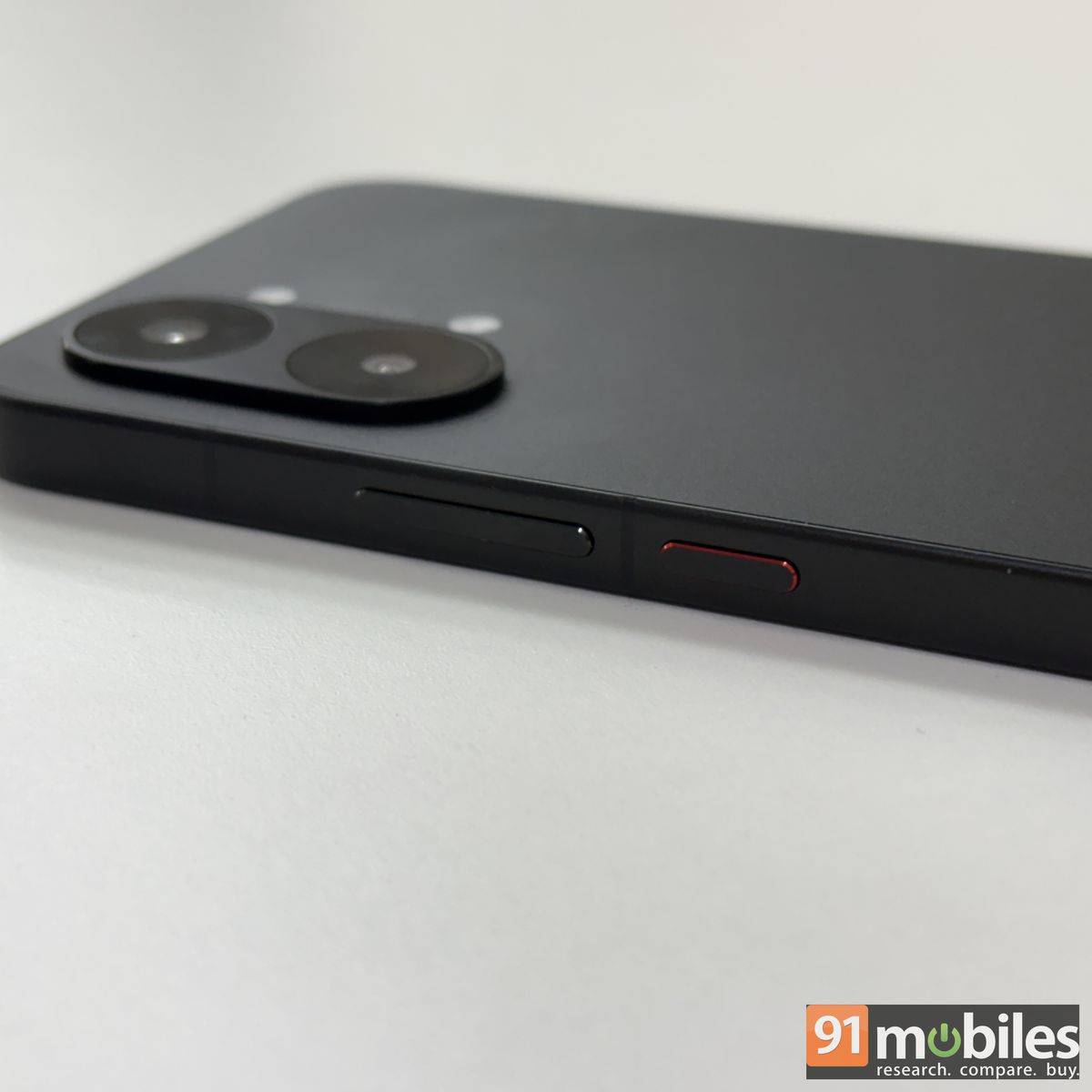
That said, the POCO X8 Pro Max might just be more durable with an additional IP69K rating, protecting it from high-pressure and temperature jets as well. None of its colour variants: white, blue, and black, have a checkered pack panel, but you do get glowing RGB LED lights around the camera rings (mounted in a pill-shaped module) that light up notifications, alerts, gaming, and more.
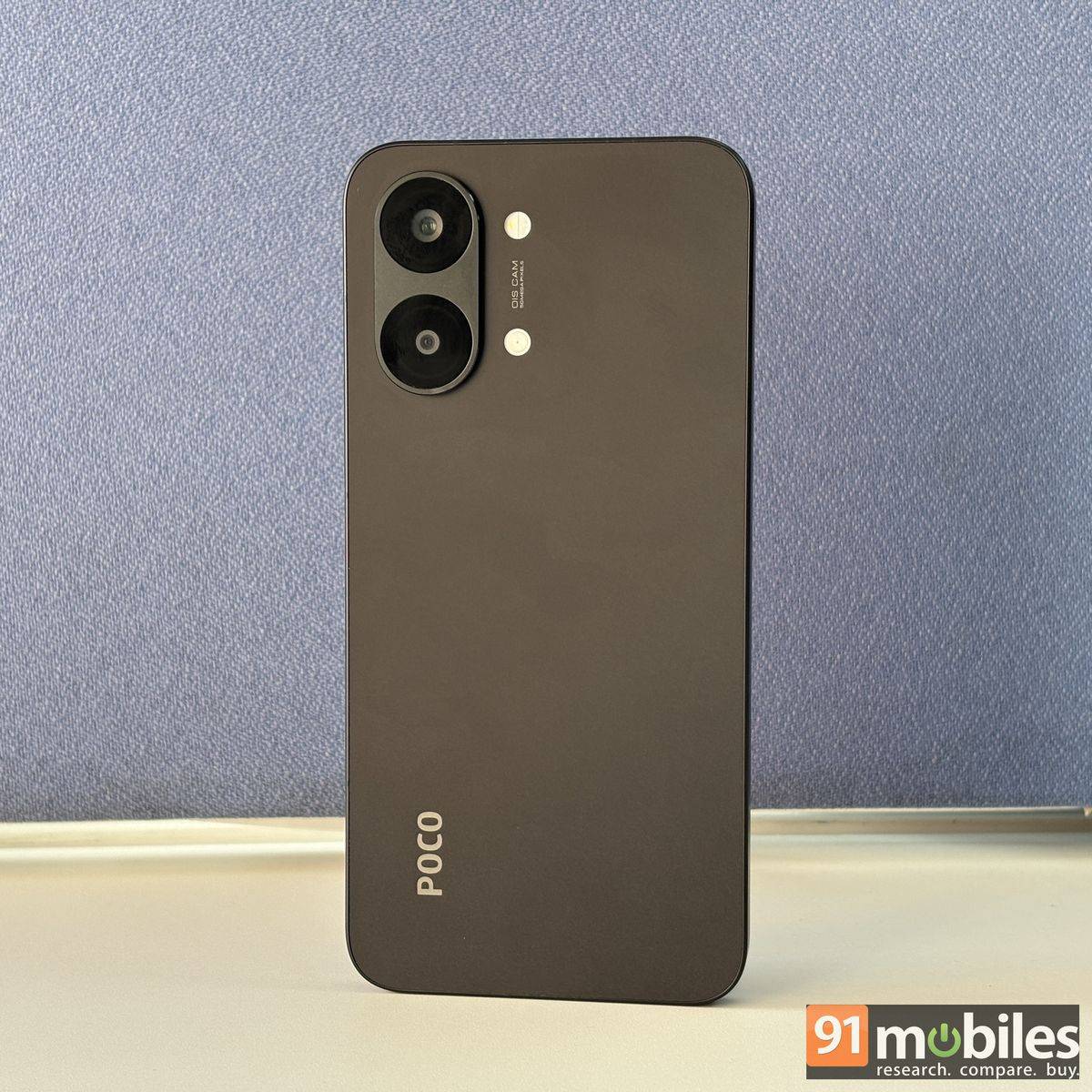
The handset also boasts flat edges, but its dimensions are relatively bigger, measuring 162.9 x 77.9 x 8.2mm, making it less convenient to use with one hand. Furthermore, with a weight of 220 grams, the POCO X8 Pro Max can be slightly hefty.
Battery: 9,000mAh vs 7,600mAh
Both smartphones come with silicon-carbon batteries. But the bigger form factor of the POCO X8 Pro Max allows it to pack a 9,000mAh battery as opposed to 7,600mAh on the iQOO 15R. It should give the POCO smartphone an edge in endurance, making it last longer than its counterpart. However, with identical 100W fast charging support, the POCO X8 Pro Max may take marginally longer to juice up than the iQOO 15R. To give you a context, the iQOO smartphone achieved a full charge to 100 percent from 20 percent in 45 minutes.
A compatible charger is bundled with both smartphones, calling this around effectively a tie.
AMOLED displays, but one is relatively compact and brighter
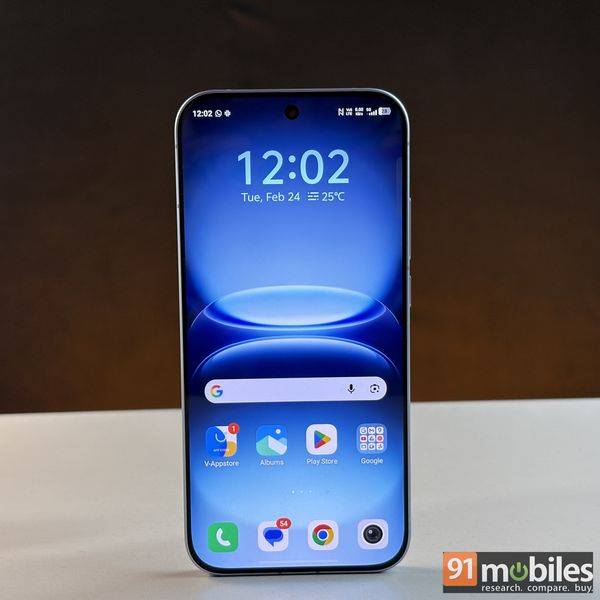
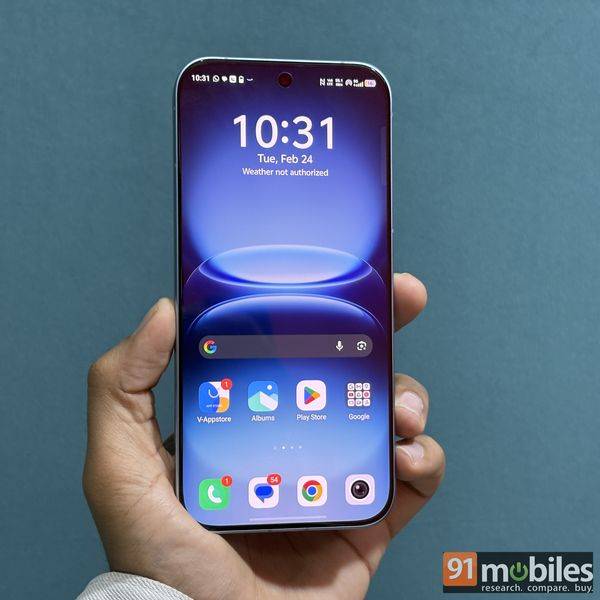
The POCO X8 Pro Max sports a 6.83-inch LTPS AMOLED display with 1.5k resolution, adaptive 120Hz refresh rate display, 3,500 nits peak brightness, and HDR10+ support. The iQOO 15R, on the other hand, features a 6.59-inch AMOLED display with identical resolution and HDR support but with a higher 144Hz adaptive refresh rate and 5,000 nits peak brightness.
That said, iQOO limits the 144Hz refresh rate to a handful of supported games. In all other situations, the 15R operates at 120Hz, the same as the X8 Pro Max. Unless you specifically prefer a larger display, the iQOO 15R pulls ahead with its higher peak brightness.
Sub-flagships chipsets
The POCO X8 Pro Max is powered by MediaTek’s Dimensity 9500s SoC. It’s a newer chip that sits just below the flagship Dimensity 9500, with slightly lower clock speeds, topping out at 3.73GHz compared to 4.21GHz. Paired with up to 12GB of LPDDR5X Ultra RAM and 512GB of UFS 4.1 storage, the hardware is well-equipped to handle everyday use with ease, while still delivering smooth, reliable performance in demanding tasks like high-end gaming.
The iQOO 15R, on the contrary, rocks Qualcomm’s Snapdragon 8 Gen 5 chipset under the hood. It’s also a sub-flagship chipset with up to 12GB of LPDDR5X Ultra RAM and 512GB UFS 4.1 storage. The Qualcomm Snapdragon 8 Gen 5 and MediaTek Dimensity 9500s seem equally capable of handling demanding activities. But reports suggest that the MediaTek chipset is designed to run cooler during long gaming sessions. The Snapdragon chipset prioritises peak gaming performance, which was the case when we reviewed the iQOO 15R.
How capable the POCO X8 Pro Max is in terms of performance is something you’ll have to wait for our full review to find out.
Respectable camera setups
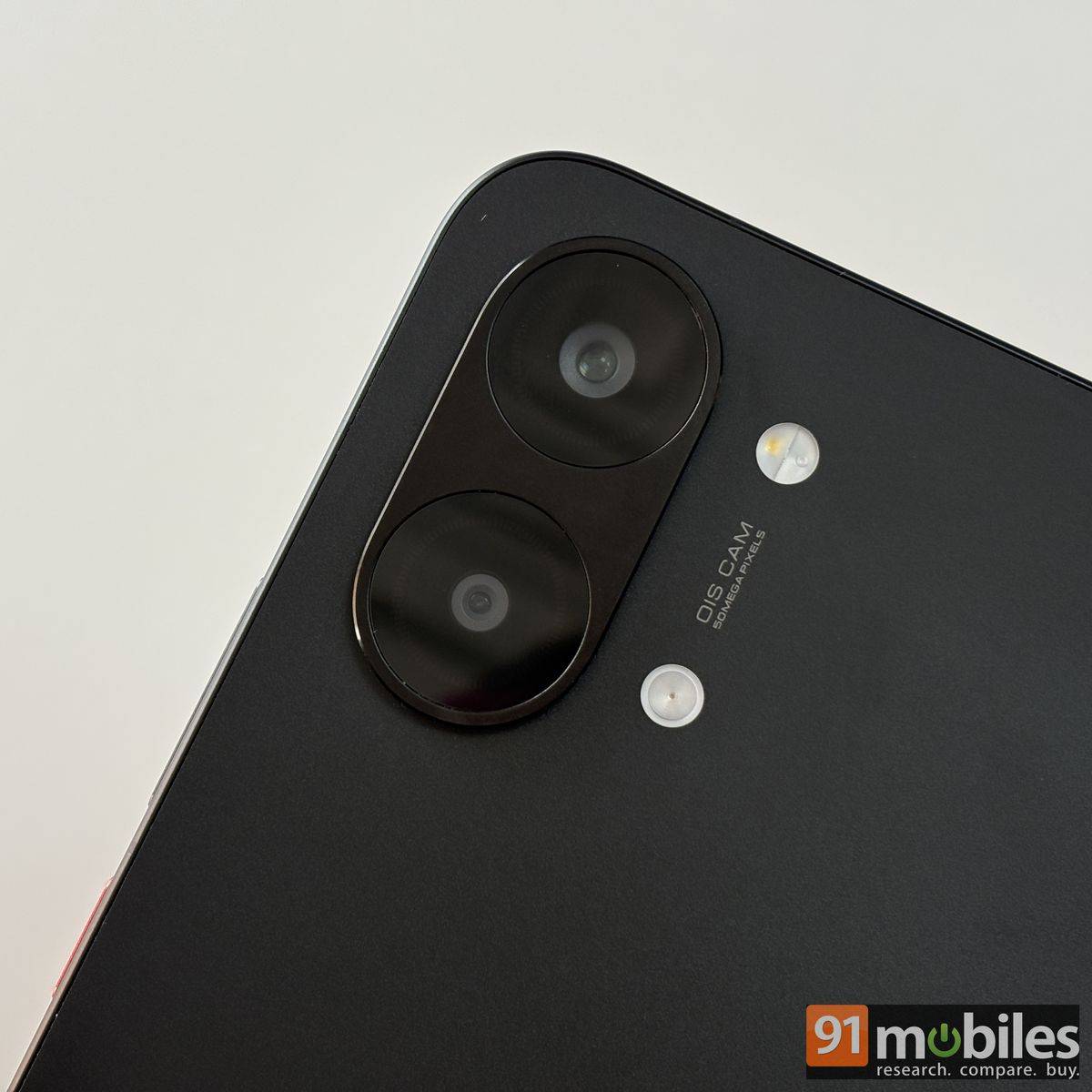
Cameras are not the priority of either smartphone, but they still pack some decent hardware. The POCO X8 Pro Max sports dual rear cameras comprising a 50MP OIS Lightfusion 600 primary sensor and an 8MP ultrawide lens. The front camera is a 20MP sensor for selfies and video calling. Speaking of videos, the 4K 60fps recording is only available with the primary camera. The selfie camera is limited to 1080p at 60fps.
The iQOO 15R also boasts a dual-rear camera setup, but with a 50MP Sony LYT700V primary sensor and an 8MP ultrawide lens. The front camera is a superior 32MP snapper for selfies and video calling. Both front and rear cameras of this phone support 4K recording at 60fps for sharp and detailed footage.
Custom Android skins
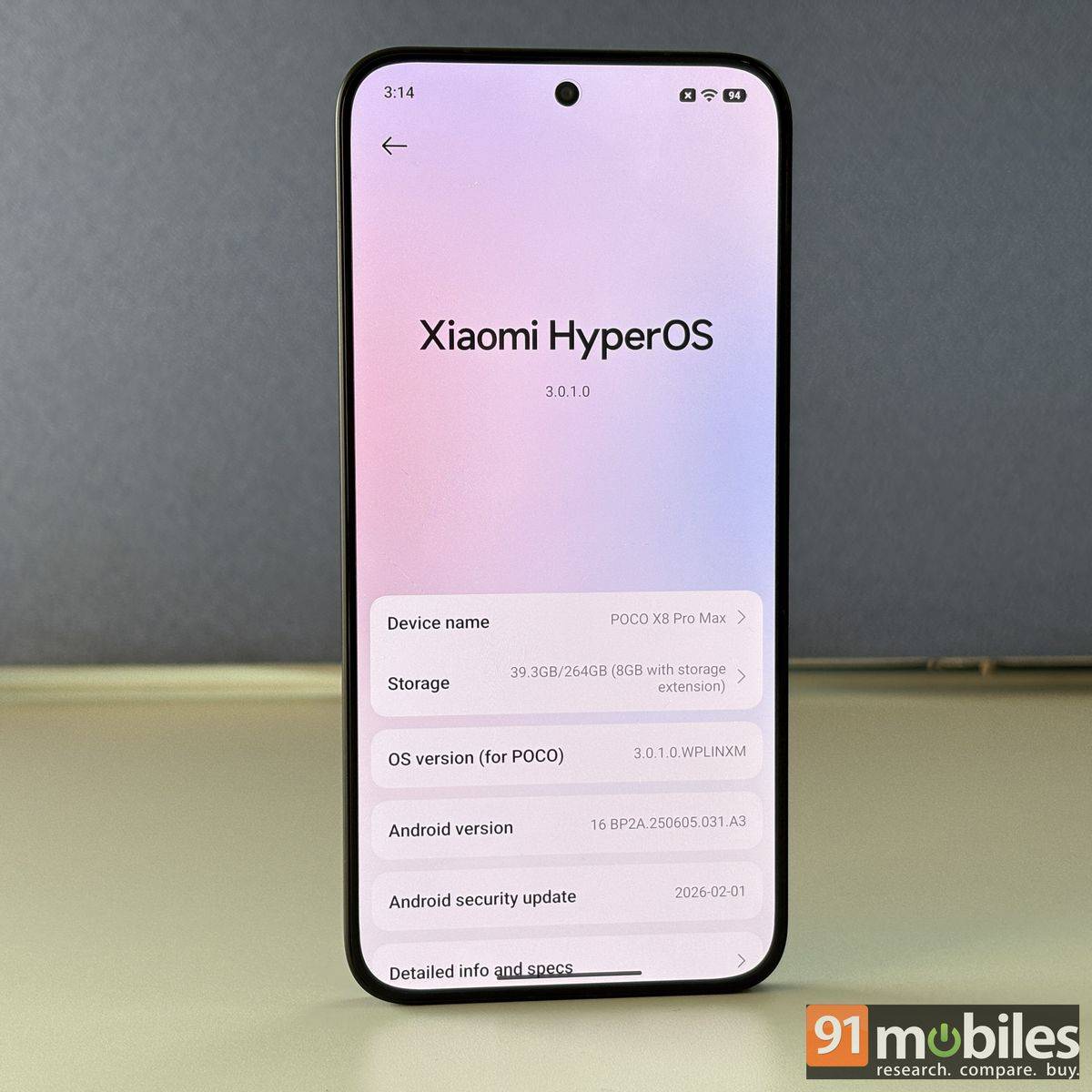
Both smartphones boot Android 16 out of the box, but the POCO X7 Pro Max customises the experience with the HyperOS 3.0. The iQOO 15R boots the OriginOS 6. There is an array of pre-installed apps and personalisation options on both devices. Furthermore, you get four major OS upgrades and six years of security updates with both smartphones.
Extras
POCO X8 Pro Max
- 5,800mm2 vapour chamber area and 11,000mm2 graphite layer area
- Wildboost Optimisation for gaming
- TUV-certified six-year battery durability
- Stereo Speakers with Dolby Atmos
iQOO 15R
- 6,500mm2 vapour chamber area
- Monster mode for gaming
- Stereo speakers with Dolby Atmos
Price and availability
The POCO X8 Pro Max is priced in India at Rs 42,999 for the base 12GB RAM and 256GB storage variant. The top-end 512GB storage option costs Rs 46,999. The handset is available via Flipkart and stays true to the company’s value-for-money, high-spec philosophy. However, the smartphone competition is steep from the iQOO smartphone.
The iQOO 15R is retailing at Rs 44,999 for the 8GB RAM and 256GB storage variant. The higher variants, with 12GB + 256GB and 12GB + 512GB configurations, are priced at Rs 47,999 and Rs 52,999, respectively. The iQOO smartphone is an Amazon exclusive.
| Smartphone | Buy it for |
| POCO X8 Pro Max |
|
| iQOO 15R |
|