Review Summary
Expert Rating

After launching the budget-friendly Realme 14X 5G (review) in India exactly a month ago, Realme has turned its attention to its prime “Pro” lineup. Like its predecessor, the new lineup includes two models: the Realme 14 Pro+, which offers more premium features at a higher price, and its toned-down sibling, the Realme 14 Pro.
I’ve been using the latter for a few days, and I can confidently say that the Realme 14 Pro is among the most attractive Realme smartphones yet. It also offers cutting-edge features, including IP69 certification for improved durability and a huge 6,000mAh battery with moderately fast charging support. However, Realme has omitted the ultra-wide camera, which is a strange decision, given that almost all competitors in the segment offer this. Is there more to the Realme 14 Pro than meets the eye? Let’s dive in.
Table of Contents
Verdict
The Realme 14 Pro won’t disappoint if looks, durability, performance, and battery matter to you. The custom UI has some fun features baked into it, while Android 15 introduces “Circle to Search” in the sub-Rs 30K category. The smartphone also offers a reliable 50MP primary camera but skips the ultra-wide shooter, which is unsettling at this price range.
Design and display
The Realme 14 Pro truly stands out as one of the slimmest and lightest smartphones with a 6,000mAh battery across any segment. That makes it much more portable than its predecessor, the Realme 13 Pro, which measured 8.23mm (in thickness) and weighed 188 grams.

| Smartphone | Realme 14 Pro | OnePlus Nord 4 | POCO X7 Pro |
| Thickness | 7.5mm | 8mm | 8.45mm |
| Weight | 179 grams | 199 grams | 203.5 grams |
| IP rating | IP66 + IP68 + IP69 | IP65 | IP66 + IP68 + IP69 |
As mentioned, I found the Realme 14 Pro, particularly the Jaipur Pink edition, one of the best-looking Realme smartphones yet. While it features a plastic build, this particular finish offers a sophisticated and elegant finish, which I am sure customers value. It is also among the least flashy Realme smartphones I’ve seen in a long time. The clean design carries over to the Suede Grey variant, which retains the same weight. If you choose the Pearl White option with its unique colour-changing technology, the thickness remains unchanged, but the weight goes up to 181.5 grams.
Perhaps the key design highlight is the industry-leading durability with IP66, IP68, and IP69 certifications for resistance against dust and water. The brand also states that the Realme 14 Pro boasts “military-level shock resistance certification,” though there isn’t any substantial information about it. In my test, I accidentally dropped the smartphone a few times, and it survived without a dent. For clarity, its display is protected by Panda glass, while the 14 Pro+ mode incorporates Corning’s high-end Gorilla Glass 7i protection.

| Smartphone | Display size | Peak brightness |
| Realme 14 Pro | 6.77-inch AMOLED | 4,000 nits |
| OnePlus Nord 4 | 6.74-inch AMOLED | 2,150 nits |
| POCO X7 Pro | 6.67-inch AMOLED | 3,200 nits |
Realme could’ve improved the stereo speaker setup, which offers loud output but lacks balance. The bass of the speakers also could’ve been punchier.
Cameras
Realme’s “Pro” models’ strength typically lies in the camera department, but that only seems to be the case with the 14 Pro+ variant in the current lineup. The Realme 14 Pro lacks an ultra-wide camera, which is unusual in this segment. The main attraction here is the 50MP primary camera leveraging the IMX882 sensor with f/1.8 aperture and OIS support. The front gets the same 16MP camera with only 1080p30fps recording support as the last iteration.






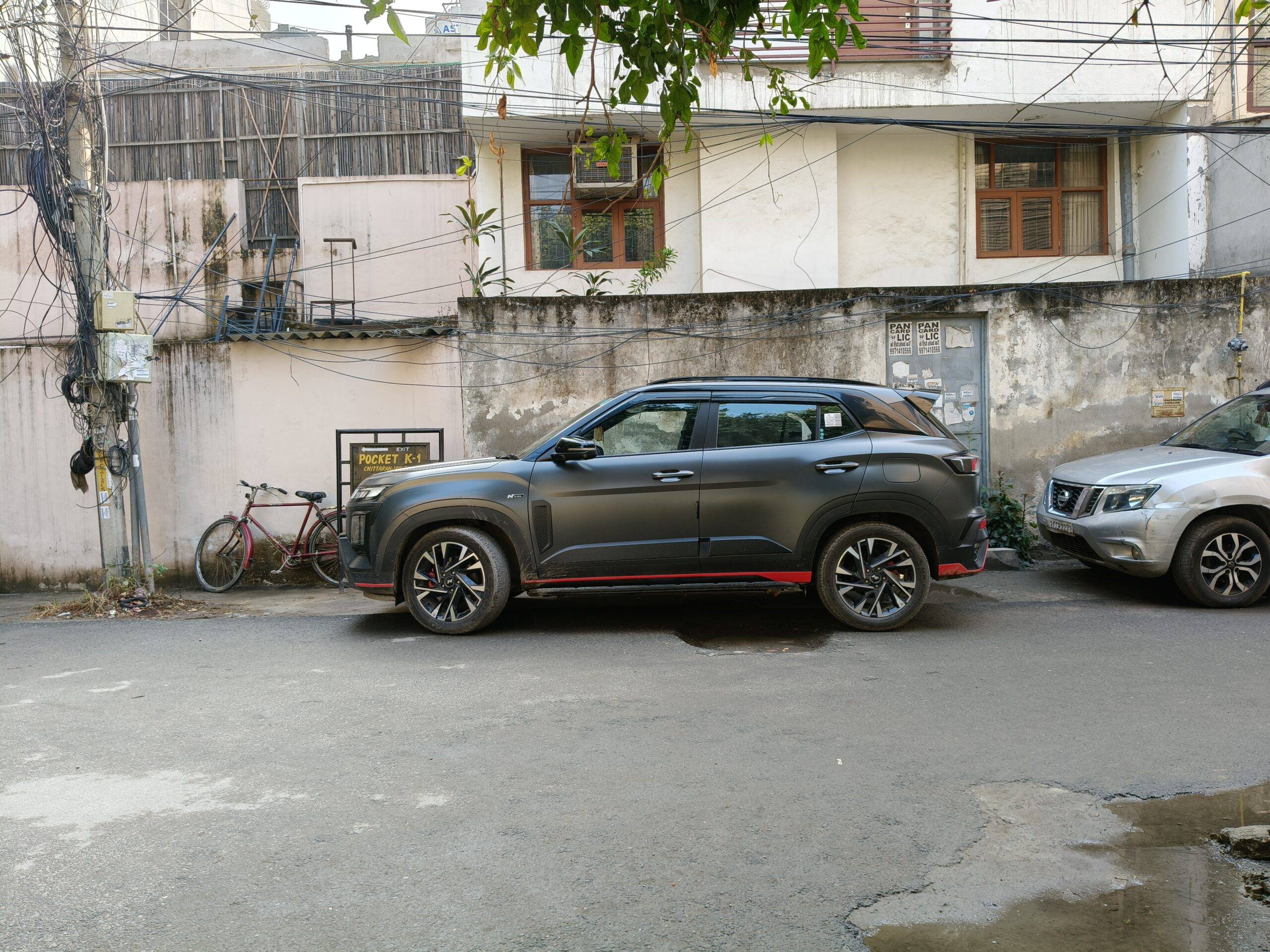




The IMX882 sensor also excels at capturing finer details, while the software is well-optimised to deliver a balanced dynamic range. There’s room for improvement in images with human subjects involved, as the Realme 14 Pro often fails to detect the accurate skin complexion. Even the portrait mode needs some improvement since the edge detection shows a few inconsistencies.
To be fair, these are common issues across several smartphones in the segment and don’t isolate the Realme 14 Pro. Here’s a detailed camera comparison against notable rivals, like the OnePlus Nord 4 (review) and POCO X7 Pro (review), for reference.
Daylight
You will notice that the Realme 14 Pro offers more vibrant colours than its rivals in the daylight test. Its image also features a slightly higher contrast, making the photo appear more dramatic without ruining the aesthetics.


The OnePlus Nord 4’s image also looks decent but appears slightly dull in comparison. The Realme 14 Pro delivers more details, both in the foreground and background, achieving this clarity without introducing noticeable noise – something apparent when zooming into different areas of the image.

The POCO X7 Pro adopts a similar approach to the Realme 14 Pro, though shadows in its image are more pronounced. Once again, the Realme 14 Pro excels, offering a better definition of the trees in the background.
Portrait
Since the Realme 14 Pro skips the ultra-wide camera, we are directly moving to the portrait test.


With the primary camera, the OnePlus Nord 4 offers the best edge detection followed by Realme 14 Pro. The POCO X7 Pro showed inconsistencies if you look closely near the subject’s right ear.
The Realme 14 Pro and the OnePlus Nord 4 share a similar colour science, but the latter details are slightly better.

Based on colour science, I found the POCO X7 Pro’s output the best. Its bokeh effect at f/2.2 looks the most natural. As mentioned, its edge detection remains inconsistent, which may irk users from time to time.
Selfie
All smartphones capture decent selfies if not the best. The Realme 14 Pro evidently brightens the subject’s complexion, but not in a bad way. The smartphone also maintains pronounced details across the face. However, its edge detection near the spectacles is poor.


The OnePlus Nord 4 also struggles with edge detection near the same area, and its details are a little washed out.

The POCO X7 Pro plays around with shadows the most, resulting in a dull selfie. It exhibited maximum inconsistencies in edge detection with the front camera.
Low-light
Since OnePlus automatically increases exposure in low-light settings, we are directly comparing images with night mode enabled. The other two smartphones also boost exposure, though it remains relatively easier to disable this option on them.


Almost all smartphones exhibit similar performance in low-light conditions with night mode. The Realme 14 Pro gains a slight edge with its superior details in the image. The OnePlus Nord 4 comes next.

The image captured by the POCO X7 Pro has the same colour science as its opponents, but the details aren’t the best.
Interestingly, the Realme 14 Pro series also introduces a unique “MagicGlow Triple Flash”, inspired by Vivo’s Smart Aura light in the V-series. Users can adjust the light temperature from cool to warm, providing extra flexibility in dim conditions. The results are impressive and offer versatility for different shooting scenarios.
AI features
Like its predecessor, the Realme 14 Pro leverages AI for the object eraser tool and enhancer to improve the overall quality. These are the bare minimum AI tools, which we find across most smartphones in the segment.
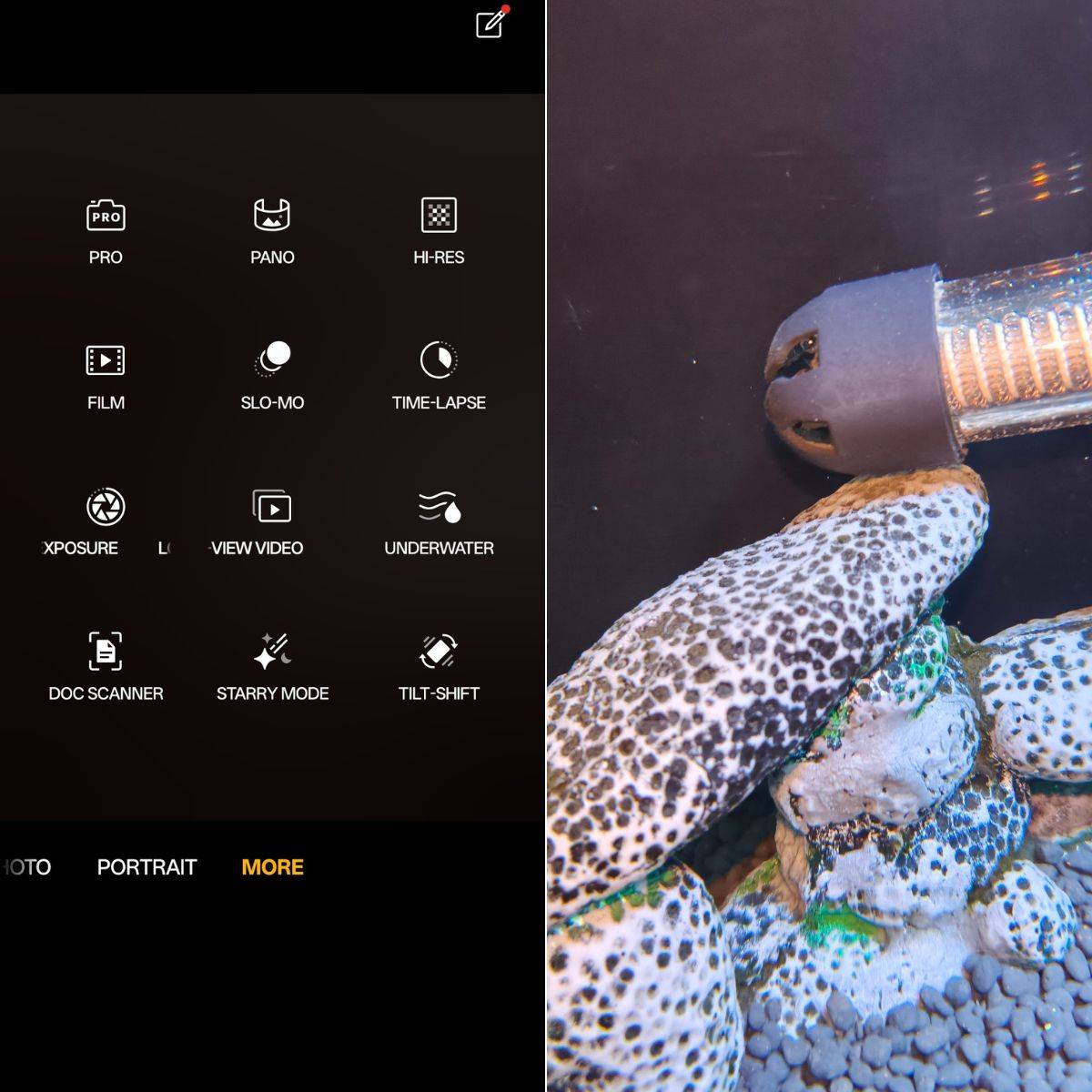
My favourite feature is the AI-backed “Underwater” mode, which allows you to capture sharp and clear images while in a pool. It may not be something you use every day, but it definitely adds a fun touch to the overall camera experience.
Performance and software
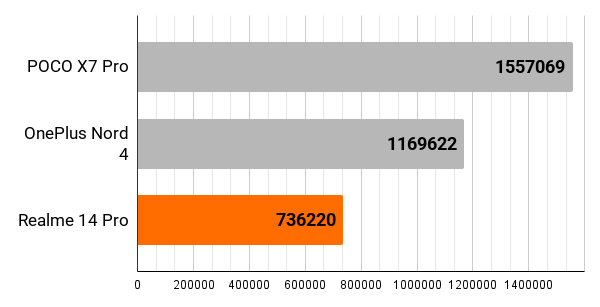
The Realme 14 Pro features MediaTek’s Dimensity 7300 SoC, which powers several smartphones, like the budget-friendly Nothing CMF Phone 1 (review) or camera and AI-focused OPPO Reno12 Pro (review). The base variant has 128GB of UFS 3.1 storage (Rs 24,999), while the top model gets 256GB storage (Rs 26,999). Both options have 8GB of LPDDR4X RAM.
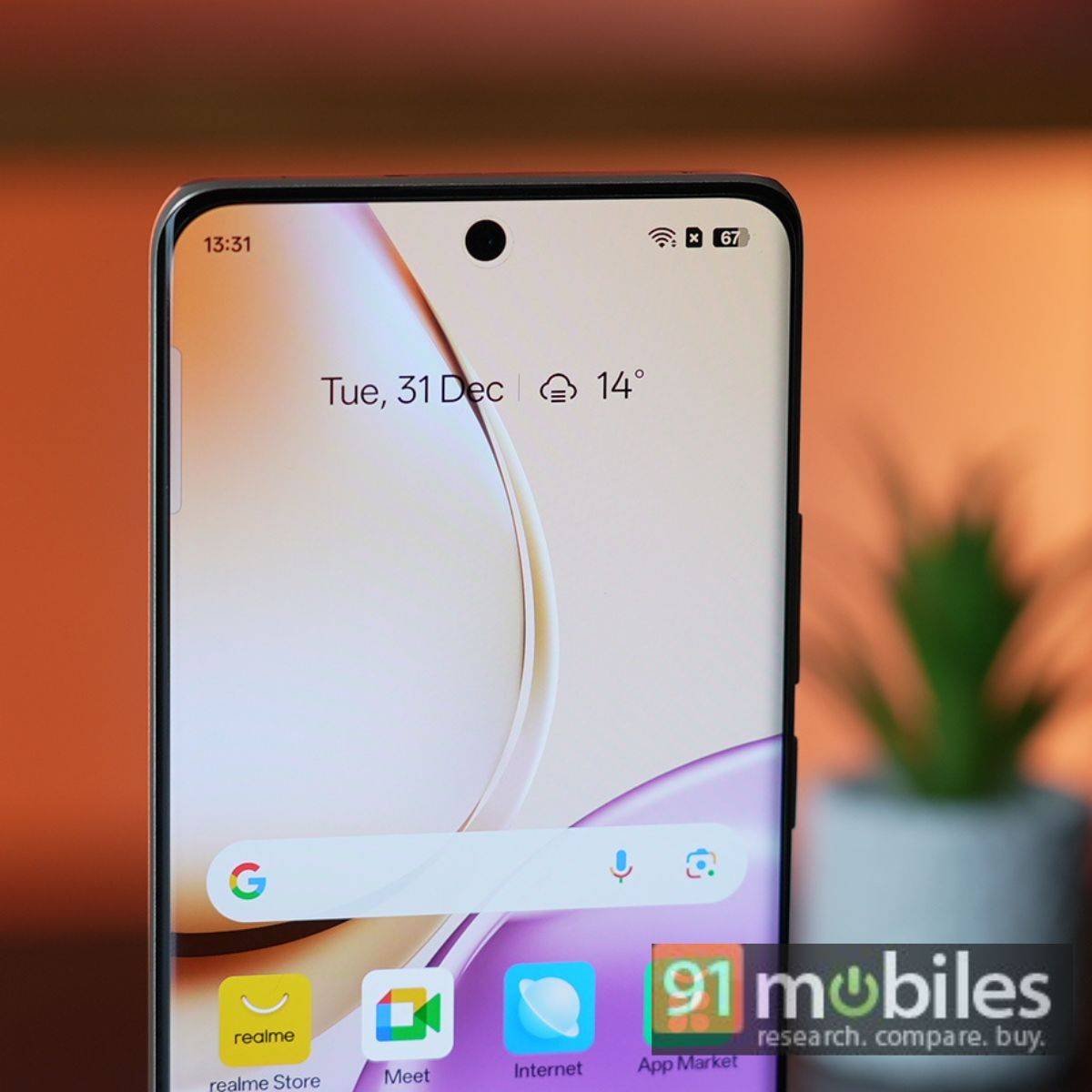
The phone ships with Android 15-based Realme UI 6, which introduces new “anti-theft” features and Google’s Circle to Search. The former includes “verify for power-off” and “location and network” settings, providing useful features to track the phone’s location in case of theft.
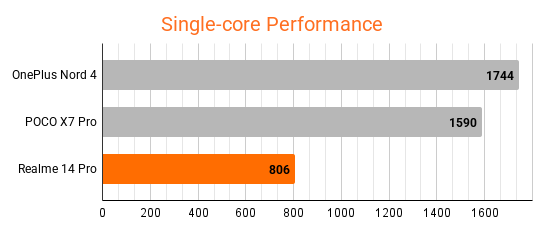
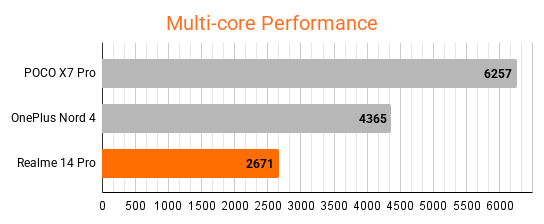
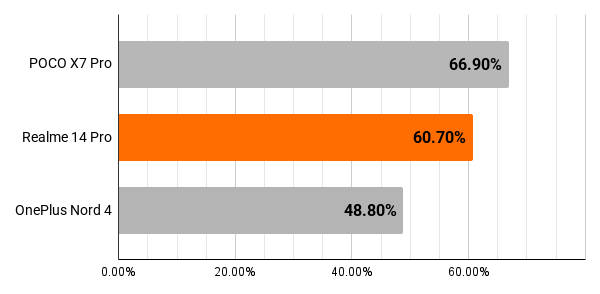
However, Realme must consider improving the user interface by reducing pre-installed apps.
| Smartphones | Pre-installed apps | OS updates (Android + security) |
| Realme 14 Pro | 64 | 2 years + 3 years |
| OnePlus Nord 4 | 48 | 4 years + 6 years |
| POCO X7 Pro | 64 | 3 years + 4 years |
Battery and charging
As mentioned, the key highlight here is the new 6,000mAh battery with 45W charging. Realme has also provided the charger in the box, which customers will appreciate.

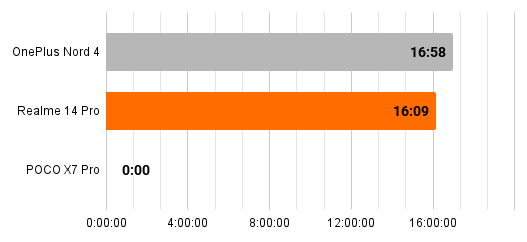
On the other hand, its charging speed is decent, if not the best in the segment. The Realme 14 Pro utilises a single-cell battery with a 6,000mAh capacity, and it takes nearly an hour to go from 20 to 100 percent.
| Smartphones | Battery | Charging time |
| Realme 14 Pro (45W) | 6,000mAh | 57 minutes |
| OnePlus Nord 4 (100W) | 5,500mAh | 23 minutes |
| POCO X7 Pro (90W) | 6,550mAh | 34 minutes |
Final verdict
At starting Rs 24,999, the Realme 14 Pro is a decent choice for those prioritising looks, display, battery, and reliable performance on a smartphone. Its primary camera is one of the best in the segment, but the phone skips the ultra-wide camera, which surely will matter (and irk) to many customers.
If you’re looking for gaming-focused smartphones, the new POCO X7 smartphones are a better choice for their graphics and battery management. Realme must also consider improving the speakers with a punchier bass and more clarity in vocals.
Otherwise, the Realme 14 Pro is perfect for looks-conscious users seeking a reliable, high-performing rugged smartphone.
Editor’s rating: 7.5 / 10
Reasons to buy:
- The Realme 14 Pro boasts a lightweight and stylish design.
- It offers superior durability with IP68 and IP69 certifications.
- The display also delivers punchy colours in high brightness.
- The phone boasts a 6,000mAh battery that delivers a solid backup.
Reasons to not buy:
- The phone skips the ultra-wide camera.
- It ships with several pre-installed apps.