


Review Summary
Expert Rating
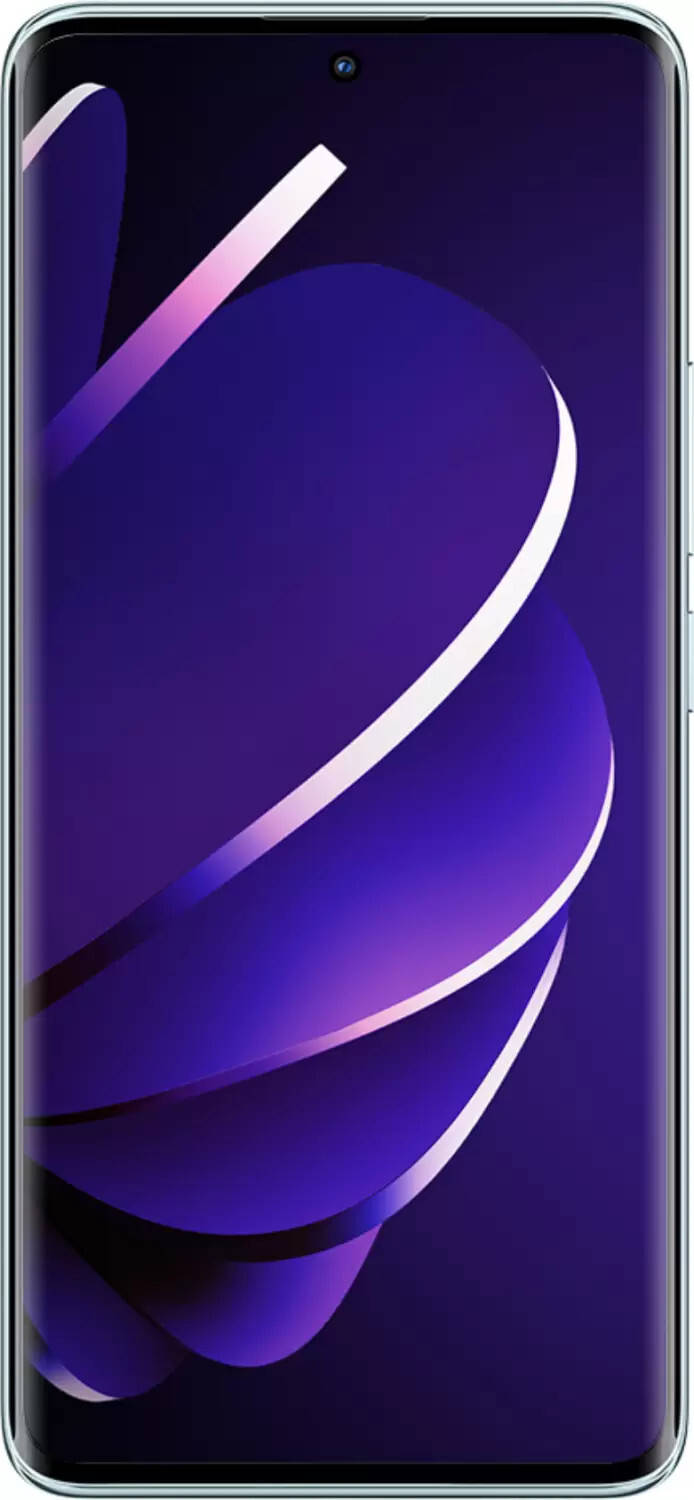
Xiaomi continues to push the boundaries with its most popular and highest-selling Note series, and the story remains the same with the new Redmi Note 14 Pro+. As the torch bearer of the latest Note lineup, the “Pro Plus” model incorporates several upgrades – the most “note”-worthy being a 6,200mAh battery without significantly increasing the size or weight of the smartphone. Other updates involve changes in the camera department, overall durability, and processing unit with the Qualcomm Snapdragon 7s Gen SoC.
Even more impressive is that the new features come with the same starting price as the previous-generation Redmi Note 13 Pro+ (review). That said, the Redmi Note 14 Pro+ still holds the title of the most expensive Redmi Note phone to date. The bigger question is; are these upgrades enough to take on competitors like the Realme 13 Pro+ (review), Motorola Edge 50 Pro (review), and others? Let’s find out.
Table of Contents
Verdict
The Redmi Note 14 Pro+ is a solid choice if aspects like battery, vibrant display, and cameras matter to you. The phone is also among the most stylish devices in the segment. However, the company still needs to refine the UI by reducing the number of pre-installed third-party apps. While the handset’s performance is well-suited for productivity tasks, the gaming experience is decent, though there are slightly more powerful options available in the market.
Design and display
One of the most standout features of the Redmi Note 14 Pro+ is its 6,200mAh battery, which is the largest ever in a Redmi smartphone. Xiaomi thoughtfully incorporates this while maintaining a highly portable design. The weight distribution and curved edges also ensure a comfortable in-hand feeling. It might initially seem heavy, but that didn’t bother me in my daily usage.

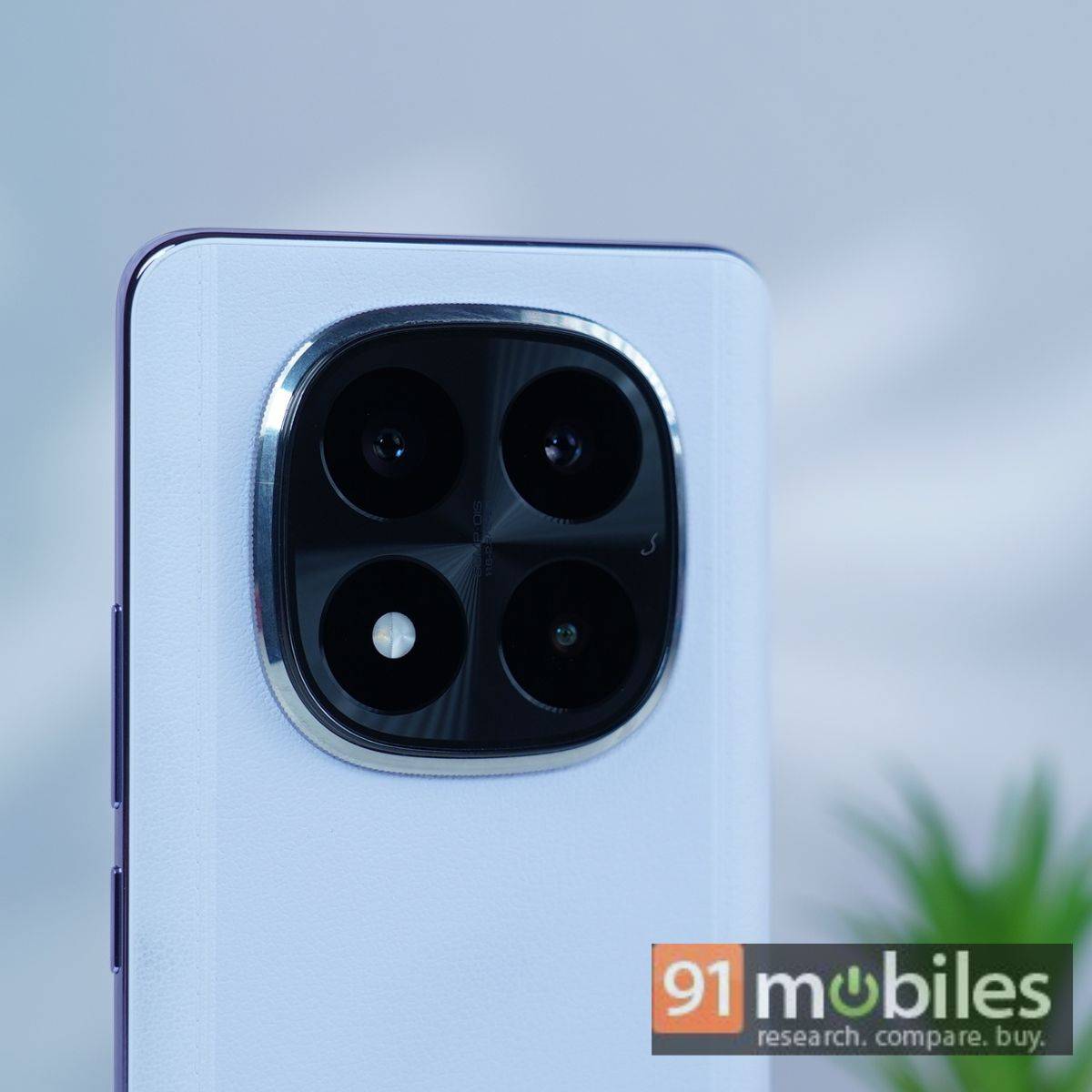
Another noticeable design change is the square-shaped camera module, now centred at the top. Interestingly, each model in the new Redmi Note 14 lineup sports a distinct design, which I see as a positive since it allows one to differentiate between the regular and Pro variants easily. This approach contrasts with Samsung’s tendency to maintain a uniform design across various price ranges unless you opt for the “Ultra” model. Unsurprisingly, the Note 14 Pro+ stands out as the most refined and polished among its siblings.
| Smartphone | Redmi Note 14 Pro+ | Motorola Edge 50 Pro | Realme 13 Pro+ |
| Thickness | 8.85mm | 8.19mm | 8.2mm |
| Weight | 210 grams | 186 grams | 190 grams |
| IP rating | IP68 | IP68 | IP65 |
Apart from the modern look, the Redmi Note 14 Pro+ boasts top-notch durability with an IP68 certification and Gorilla Glass Victus 2 protection for the front panel, a rare combination in the sub-Rs 40,000 segment. Generally, I advise users to add a layer to the display for extra durability. In this case, the Pro Plus model already has a pre-applied film to protect the panel from scratches. You will find the same on the more affordable Redmi Note 14.
Xiaomi also continues to offer a black silicone case in the box for added durability. The button and port selection remains the same as its predecessor, meaning the Pro+ variant skips the 3.5mm audio jack.

| Smartphones | Display size | Peak brightness |
| Redmi Note 14 Pro+ | 6.67-inch AMOLED | 3,000 nits |
| Motorola Edge 50 Pro | 6.7-inch AMOLED | 1,600 nits |
| Realme 13 Pro+ | 6.7-inch AMOLED | 2,000 nits |
In nearly all my Xiaomi phone reviews, I’ve highlighted that the “Reading Mode”, which comes natively with custom software, remains one of my favourites. The feature can be handy for those who read a lot on their smartphones, myself included.
Cameras
The Redmi Note 14 Pro+ has a new 50MP Light Fusion 800 sensor with “HyperOS” and a 20MP front camera. It also has a new 50MP telephoto camera with 2.5x zoom for crisp portraits. The rear camera system houses an 8MP ultra-wide lens.
My favourite smartphone feature is its video recording capabilities, despite the absence of 4K recording at 60fps. Xiaomi’s “HyperOS” technology plays a significant role in delivering stable and smooth footage, as showcased in our detailed video review. The audio quality is equally impressive, enabling you to record clear, high-quality videos suitable for social media.














Xiaomi has also made the overall camera experience playful with AI-enabled editing tools. I found the AI Image Expansion feature to be a thoughtful addition, allowing users to seamlessly extend scenes to fit different aspect ratios.
I compared the camera performance of the Note 14 Pro+ with the Edge 50 Pro, Realme 13 Pro+, and Vivo T3 Ultra. Let’s take a look.
Daylight
If you look closely at the shots captured by Redmi Note 14 Pro+ and Realme 13 Pro+, you will spot more similarities than differences. Both phones capture similar details, though the former offers a better dynamic range.


The shot by Edge 50 Pro looks punchier in comparison, but the details become sketchy as you zoom in. The Note 14 Pro+ also detects the accurate shade of the sky.

The colours get even punchier in Vivo T3 Ultra’s shot. Details captured by Redmi and Vivo are mostly similar.

Personally, I prefer Note 14 Pro+’s output. However, the Realme 13 Pro+’s default image looks most balanced and detail-rich.
Ultra-wide
All smartphones maintain the same colour science across their respective shots captured with the ultra-wide lens. The Realme 13 Pro+ continues to have the best dynamic range against the three rivals. The Redmi Note 14 Pro+ plays with shadows and contrast for a dramatic appeal.


The shot by the Edge 50 Pro continues to be punchy and vibrant.

The Vivo T3 Ultra struggles to maintain consistent saturation, while the Redmi Note 14 Pro+ excels in accurately detecting and reproducing the shades of the sky.

Portraits
As mentioned, the Redmi Note 14 Pro+ introduces a new telephoto camera, which also features the Edge 50 Pro and Realme 13 Pro+. The Vivo T3 Ultra utilises the primary camera for portrait shots.


Among the four smartphones, the Note 14 Pro+ was the only one to balance the harsh sunlight on the subject’s face. Its facial details are decent, if not the best. The Realme 13 Pro+ struggles to detect the accurate skin tone and balance the bokeh between the subject and the background.

On the other hand, the Edge 50 Pro fails to add depth to the photo, likely due to a software bug.

The Vivo T3 Ultra overlays an orangish hue on the photo since it’s still relying on the primary camera’s colour science. Notably, it also captures the best facial details.
Selfie
However, all smartphones struggle to capture pleasing selfies with portrait mode in super bright conditions.


The Redmi Note 14 Pro+ struggles with the subject’s complexion, while the Realme 13 Pro+’s shot looks the best in comparison.
The Edge 50 Pro’s colour toning is also respectable,

The Vivo T3 Ultra shot resembles Redmi’s selfie, though its bokeh looks unnatural. Vivo still captures the best facial details.

Low light
The low-light images shot by Redmi and Realme look alike with similar colour science and light control. Both also capture similar details, but the Realme 13 Pro+ is a notch above.


The Edge 50 Pro again reproduces vibrant colours with high contrast.

The Vivo T3 Ultra’s shot looks equally aesthetically pleasing though it struggles with detecting the right shade of the sky.

Night mode
With night mode enabled, the Redmi Note 14 Pro’s shot looks the best in terms of details and colours. The Realme 13 Pro+ struggles to detect the right shades of red.


The Edge 50 Pro looks relatively more balanced with night mode enabled, though I still find Redmi’s shot more pleasing.

The Vivo T3 Ultra finally detects the right shade of the sky. Its image is also visibly brighter, though it struggles to balance excess light.

Performance and software
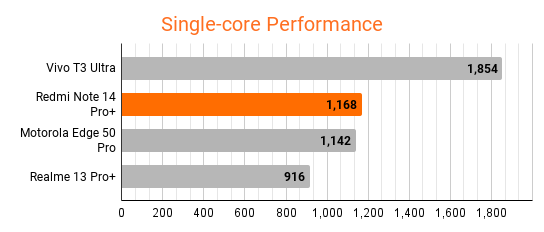
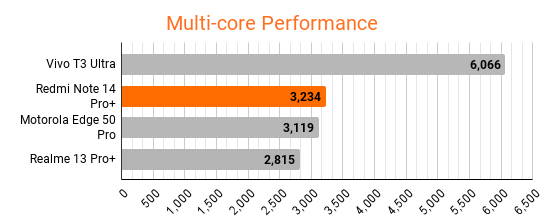
The Note 14 Pro+ features the new Qualcomm Snapdragon 7s Gen 3 SoC, which sits below the Snapdragon 7 Gen 3 SoC powering the Motorola Edge 50 Pro, also occupying the same price segment. The key difference between the two chipsets lies in the GPU performance, whereas the CPU performance remains more or less the same.
In my daily usage, the Redmi Note 14 Pro+ easily handled basic tasks (browsing, social media, and app load) without any stutters and lags. I also didn’t notice any signs of heating during my review, though Delhi’s dropping temperature also plays a part.

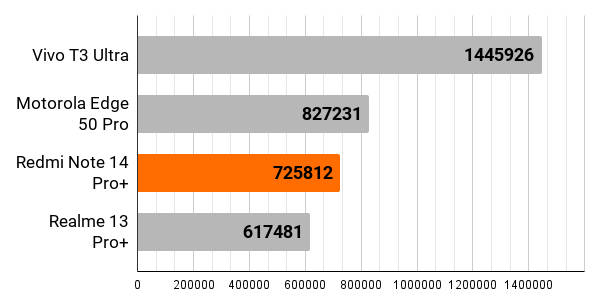
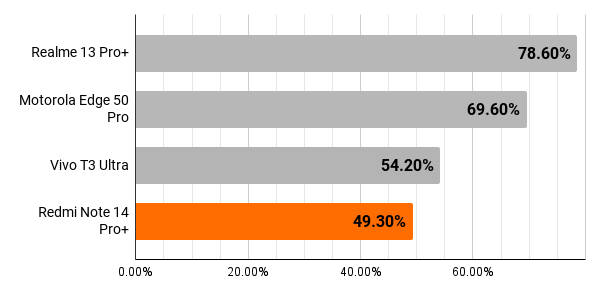
On the upside, the gaming experience was impressive, with consistently high frame rates during BGMI and Call of Duty Mobile tests. Its thermal management compared to peers is decent, if not better. While I did not face any throttle issues, the phone may struggle to maintain a consistent performance under severe workload, as suggested in the CPU Throttle test with the Burnout app.
In my Note 13 Pro+ review, I mentioned that Xiaomi would need to expand AI, particularly Gen AI features to its Note series, to keep up with its rivals. The new iteration, with the latest Android 14-based HyperOS 1.0, incorporates AI (part of the AIMI umbrella) into the Notes app as well as the recorder, which I find quite useful for daily productivity. There’s a Live Interpreter, which worked quite efficiently, though its usage could be restricted to some specific situations.
My favourite is the “Circle to Search”, which is gradually finding its way to the mid-premium smartphone segment. This search feature is enabled by default and can be highly useful for quick online results.
Overall, the Note 14 Pro+ is a decent choice for productivity and gaming-focused users with room for improvement. For instance, the UI could benefit from fewer third-party apps for a refined user experience. Its three-year OS update promise is decent, but Xiaomi could’ve considered shipping the device directly with Android 15 out-of-the-box, which includes a couple of new security-focused tools.
| Smartphones | Pre-installed apps | OS updates (Android + security) |
| Redmi Note 14 Pro+ | 66 | 3 years + 4 years |
| Motorola Edge 50 Pro | 41 | 3 years + 4 years |
| Realme 13 Pro+ | 55 | 2 years + 3 years |
Battery and charging
The new wave of Android smartphones is utilising silicon-carbon tech for batteries, which is helping OEMs reduce the size and increase capacity. Recently, OPPO introduced the Find X8 Pro with a 5,910mAh battery. Xiaomi raises the bar with a 6,200mAh capacity on the Redmi Note 14 Pro+ while ensuring an ergonomic design.

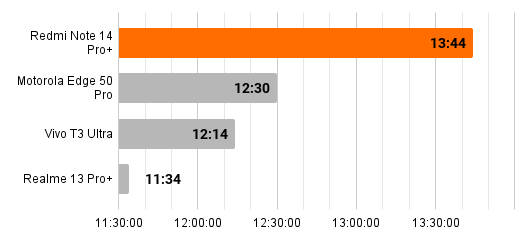
However, the 90W charging is not slow by any means. Xiaomi continues to ship the charger in the box, which customers will surely appreciate.
| Smartphones | Charging speeds | Charging time (20 to 100 percent) |
| Redmi Note 14 Pro+ | 90W | 53 minutes |
| Motorola Edge 50 Pro | 125W | 16 minutes |
| Realme 13 Pro+ | 80W | 38 minutes |
Final verdict
The Redmi Note 14 Pro+ continues to embody Xiaomi’s value-for-money ethos. The latest iteration offers dependable cameras and performance, while significantly improving durability and design. I also like its new design, which remains sleek and highly portable despite housing a massive battery.
I appreciate Xiaomi’s efforts to enhance the UI with the latest HyperOS skin, though further improvements are necessary to make the experience less cluttered by reducing the number of pre-installed third-party apps. As noted, the Snapdragon 7s Gen 3 delivers reliable performance, although its synthetic benchmark scores are modest compared to rivals like the Edge 50 Pro and the Dimensity 9200+-powered Vivo T3 Ultra.
If the synthetic benchmark numbers don’t matter, and you want a reliable smartphone with a great battery and punchy display, the Redmi Note 14 Pro+ is worth considering.
Editor’s rating: 8 / 10
Reasons to buy
- The Redmi Note 14 Pro+ boasts a stylish design.
- It also provides a highly durable build.
- The Redmi Note 14 Pro+ offers a solid battery performance.
- The camera performance is decent in both bright and dim conditions.
Reasons to skip
- The Redmi Note 14 Pro+ comes with several third-party apps.
- Its performance is decent, but synthetic scores are modest against direct rivals.
 | vs |  |
| vs |  |