Samsung India’s Aditya Babbar on the Galaxy S25 FE, democratising AI, ecosystem strategy, and more


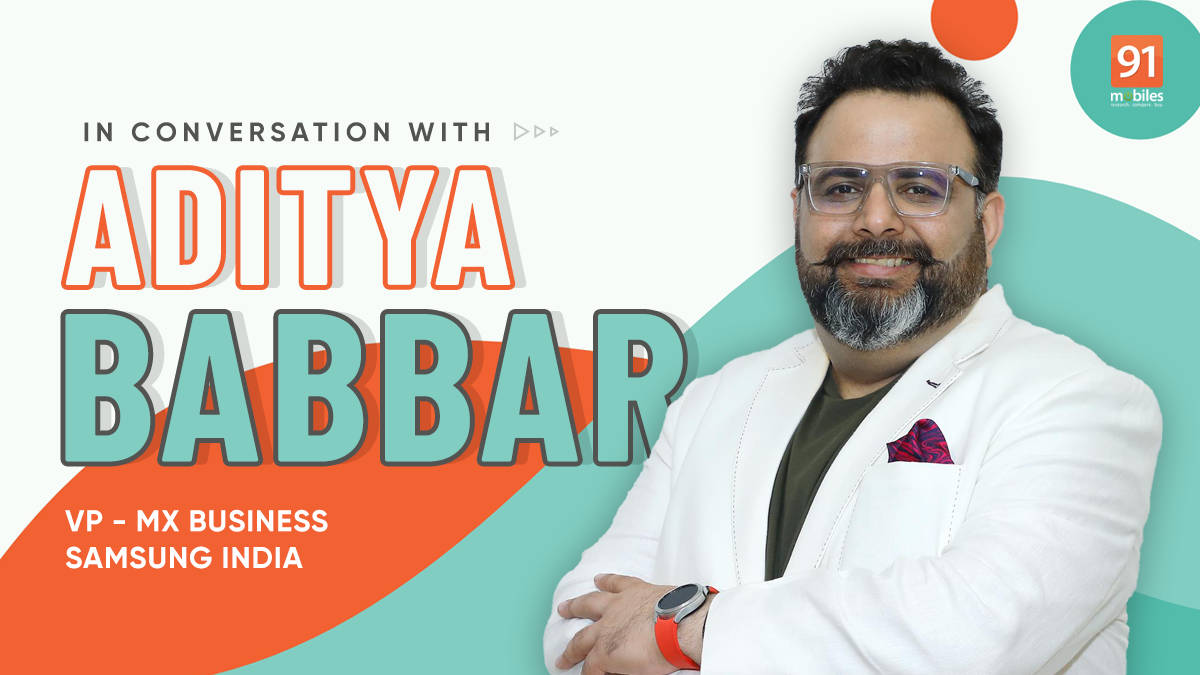
Close on the heels of the launch of the Galaxy Fold7 and Flip7, Samsung is diving into the festive season by introducing the Galaxy S25 FE and new tablets in the form of the Galaxy Tab S11 Ultra and the Tab S11. We sat down with Aditya Babbar, Vice President, MX Business, Samsung India, to discuss how the next few months are looking, the new devices, and how the brand is democratising AI for the masses. As Aditya fielded questions from members of the Indian tech media, the discussion mainly focused on AI and ecosystem — two areas where Samsung is especially strong. Excerpts:


Q.
Samsung has launched the Galaxy S25 FE just at the beginning of the festive season. What are the plans going forward?
Aditya:
Since July, Samsung has had an exciting period. The Galaxy Fold7 launch was a huge success, with over 210,000 devices booked—an outstanding adoption of a new form factor. We’re not just launching phones, but also ecosystem devices, such as buds, tablets (Tab S11 Ultra, Tab S11), and the new Galaxy S25 FE and A17.
A common thread in all these is AI. Whether it’s buds, tablets, or phones, AI is planned and customised to consumer needs, segmentation, and price points—like Circle to Search and Gemini prioritised for A17, or camera-first AI for S25 FE. AI will play a major role this festive season as we democratise and make it more accessible.
Q:
Galaxy AI features are everywhere—phones, tablets, buds, watches—and many features, like Circle to Search and Gemini, debuted first on Samsung devices before Google’s own devices. Could you share how this partnership with Google is progressing?
Aditya:
Our vision is for AI to be everywhere—on device and in the cloud—based on consumer needs. With Google, we’re democratising AI, and there’s a joint focus both on privacy and generative capabilities, especially for on-device AI to empower consumers while prioritising privacy. Many camera innovations use both Google’s partnership and Samsung’s in-house AI. The goal is to make AI available at every touchpoint and give consumers control over whether processing happens on-device or in the cloud.
Q:
Are you open to partnering with other AI tools, beyond Google, for Samsung platforms?
Aditya:
While I can’t share future plans, our principle as a brand is openness. Google remains a close strategic partner, and we continue to develop AI-first solutions together, but we’re always open to exploring other partnerships.
Q:
With brands like Samsung offering multiple AI features, it can sometimes be confusing for consumers. Galaxy AI seems easier to use compared to some competitors. Would you say using Galaxy AI is straightforward? What’s Samsung’s narrative on this?
Aditya:
Our approach is always consumer-first, segmenting features based on communication, productivity, and creativity needs. For example, the call feature’s primary purpose is calling, but now with AI, you can translate or transcribe. Camera is about taking photos, but AI enhances editing and shareability in real time. We focus on giving consumers control—processing can happen on-device for privacy and convenience. Generative AI allows complex edits, such as erasing or enhancing images, even offline.

Q:
Do AI features differ from device to device, or are they the same across Galaxy products?
Aditya:
Feature segmentation depends on form factor and user behaviour. Foldables, for example, are key for content consumption in transit, while flip devices see higher camera-related usage. Tablets, especially post-AI, have become important tools for creation and productivity, such as sketch-to-image and large PDF summarisation. The core needs—consumption vs. creation—dictate which AI features are prioritised.
Q:
Samsung offers many AI features, but how do you educate users on which AI tool to use and when, especially in Tier 2 and Tier 3 cities where awareness may be low?
Aditya:
Education happens at every touchpoint: retail, electronic, and through our partners in the media. We highlight the “four blue stars” icon on all communications and devices to indicate AI-powered features. In stores, we have Wi-Fi and trained staff for live demos and consumer education, ensuring accessibility even in Tier 2 and Tier 3 cities. Our festive season plans include further empowerment through these programs.

Q:
Samsung’s ecosystem approach is impressive. Features like advanced health data work best within the Samsung ecosystem: phones with watches, tablets, and TVs. Can you explain the philosophy behind this ecosystem design and future plans for it?
Aditya:
Our ecosystem is built on three pillars: connectivity, continuity, and convenience. We solved Bluetooth connectivity frustrations with intelligent multi-device protocols. Continuity enables seamless transition of activities across devices, such as reading, creating, or sharing. Security is integral throughout. Convenience comes from a unified experience, like health data shared across devices, and programs like Samsung Health and Samsung Wallet working as part of the ecosystem.
Q:
Is there a Samsung loyalty program for customers who buy multiple devices?
Aditya:
Yes, we have Samsung Rewards. Consumers get discounts, such as 25 percent off a Galaxy Watch when buying a Galaxy phone, and similar offers for tablets and Buds. These are available at any outlet, not just Samsung stores. Tablets also have upgrade programs and CRM-based offers across locations.
Q:
With technology costs rising — AI, software, long-term support — do you foresee a future where consumers pay for software as well as hardware?
Aditya:
Our approach is to make technology affordable and accessible. While the cost of building differentiated technology is rising, the primary goal is adoption. We don’t currently foresee charges for software, but we monitor industry trends. Our focus remains on helping millions adopt technology through programs like no-interest down-payment schemes and affordable EMI plans, especially for Tier-2 and -3 city customers.