


Review Summary
Expert Rating
The promise of AI has been around for a while, and while not everyone might be clued in with respect to what it can do for us in real life or its true implications, the various stakeholders have kept the buzz going. As one of the first AI-first smartphones, the Samsung Galaxy S24 Ultra (review) attempted to make good on the AI promise and given everything it brought to the table, it succeeded to a large extent too. After that, the floodgates opened, so to speak, and consumer-grade AI features are now a staple across different price points in the smartphone segment. AI use cases are becoming clearer and as the one tasked with carrying the legacy forward, the new Galaxy S25 Ultra has some big shoes to fill.
Table of Contents
Verdict
The Galaxy S25 Ultra builds upon the AI capabilities of its predecessor and comes across as a more refined and polished flagship. It doesn’t break the mould and seems like an incremental upgrade, but that doesn’t take away anything from the fact that the S25 Ultra is still the most loaded Android flagship money can buy, delivering on everything from performance, camera, battery life, software and more. The S Pen and the ecosystem features remain notable highlights.
Design and display
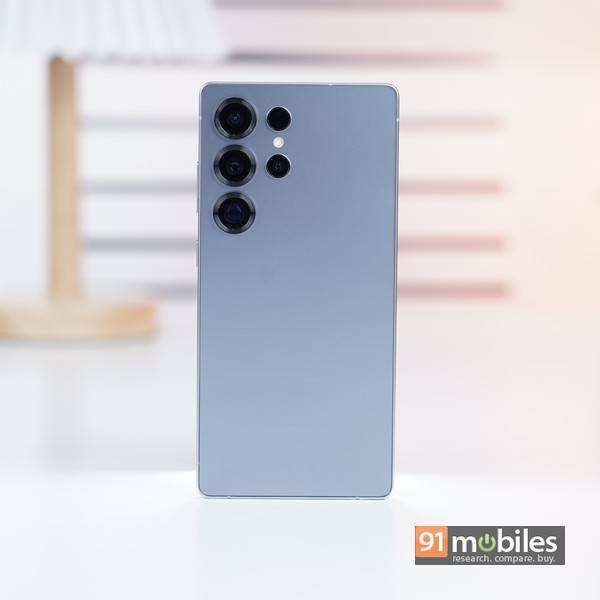
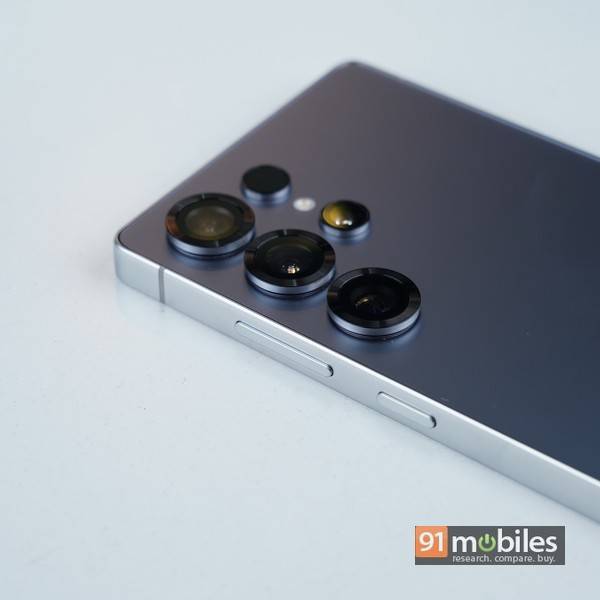
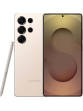
The Galaxy S24 Ultra was a big smartphone, and truth be told, it was a tad bit unwieldy to use just because of its sheer bulk. The new Galaxy S25 Ultra sticks to the same overall design language but shaves off a few millimetres and grams. It’s not a drastic reduction, but it helps make the phone much more usable from a size and weight standpoint. The new flagship also has flatter edges and rounded corners as compared to its predecessor, giving the S25 Ultra a better in-hand feel. Continuing the refinements, the bezels around the screen seem slimmer too. Other than these, the S25 Ultra bears a familiar design, with the ports, controls, and other elements remaining similar to the previous iteration. The design is minimalist and industrial, with the most prominent aspect being the discrete camera lenses on the rear. These protrude more than before ever so slightly I think. The Ultra’s mainstay, the S Pen, gets its own silo on the left side of the bottom edge as usual.
| Smartphone | Thickness | Weight | IP rating |
| Galaxy S25 Ultra | 8.2mm | 218 grams | IP68 |
| Galaxy S24 Ultra | 8.6mm | 232 grams | IP68 |
| Vivo X200 Pro | 8.2mm | 223 grams | IP68 |
| iPhone 16 Pro Max | 8.3mm | 227 grams | IP68 |
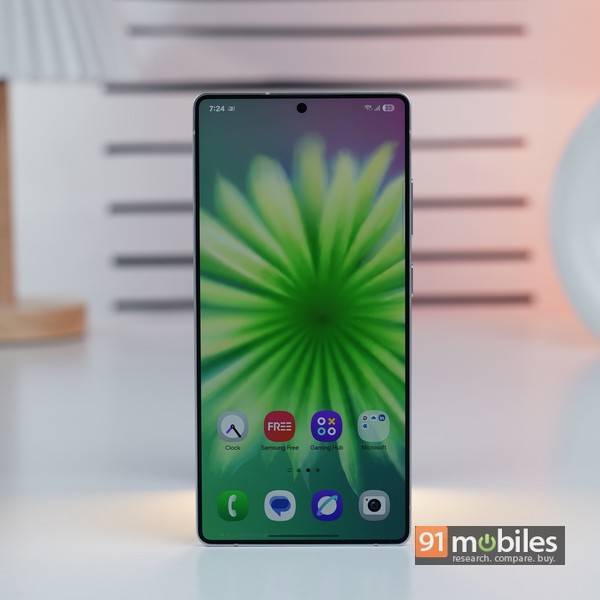
The display is typical Samsung. 6.9-inch of pure visual delight, and carrying the expected but still impressive specs – LTPO AMOLED tech with up to 120Hz refresh rate, HDR10+ support and up to 2,600 nits brightness. There’s an anti-reflective coating this time, however, which makes it even better… cutting glare without impacting the vibrancy of the colours.
| Smartphone | Display size | Peak brightness |
| Galaxy S25 Ultra | 6.9-inch AMOLED | 2,600 nits |
| Galaxy S24 Ultra | 6.8-inch AMOLED | 2,600 nits |
| Vivo X200 Pro | 6.8-inch AMOLED | 4,500 nits |
| iPhone 16 Pro Max | 6.9-inch AMOLED | 2,000 nits |
AI, ecosystem and software
The headlining aspect of the S25 Ultra (and its two siblings) is the AI story, which continues where the S24 Ultra left off. The previous model was big on AI, and the successor doubled down, improving upon existing features and adding new ones. There are quite a few worth mentioning, and I’ll try to give you a gist of the more noteworthy and interesting ones here. 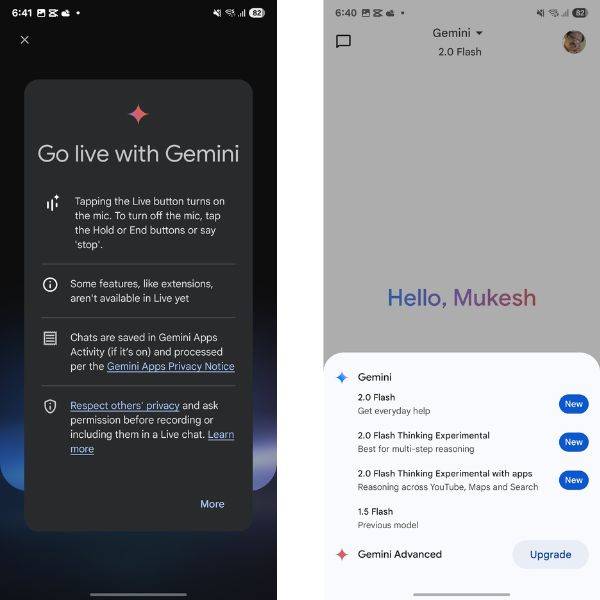
The Galaxy S25 Ultra features Gemini Live from Google, and this works as a smart assistant on steroids. Gemini Live can be invoked by long-pressing the side key and then you can interact with it using voice and text. Not only can it handle regular queries, Gemini Live is also capable of recognising complex commands involving cross-platform action. For example, you can ask it to search for an Italian restaurant in the vicinity and send the details to a contact. Or find the date of an upcoming concert and add it to your calendar. Or translate a restaurant menu from a different language and shortlist a dish below a certain price. This multi-app action promises to be a game-changer if used to its full potential.
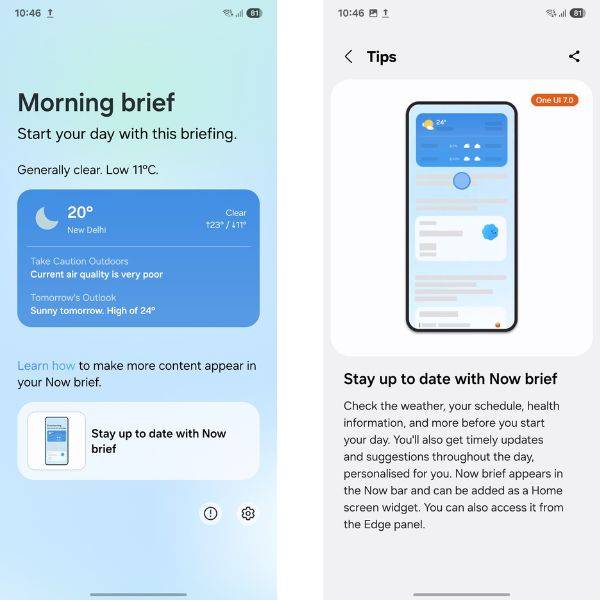
There are a bunch of other AI goodies. With an AI feature called Browsing Assist, for instance, you get the option to get key highlights of a web page read out to you. As part of Writing Assist, you can not only summarise text but also organise it into a table or bullet points. A lot more can be accomplished while playing with images, audio and video now. Generative Edit in the Photo Assist tools has received a major refresh and is much more adept at removing unwanted objects in images now. 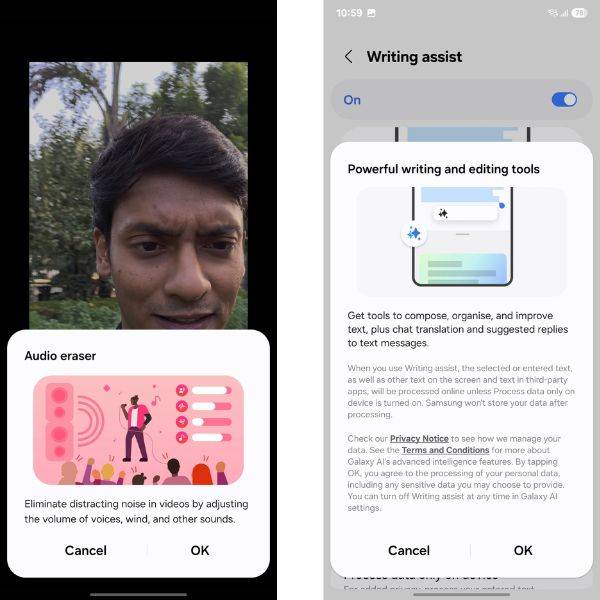
There’s Audio Eraser, which can isolate different types of sounds (such as background music, noise etc) in a recorded video, and gives you the option to tweak and even eliminate them. Among the most notable features is Now Brief, which displays useful info periodically. You can choose the content it displays, and it can include stuff like weather, news, events, memories, and more. There’s AI Select, which is an upgraded version of what used to be called Smart Select before. It can analyse the content on screen and then lets you perform actions or provide additional info. You can even create GIFs by using AI Select on playing videos. Overall, the upgrades to the Galaxy AI are not only substantial, they feel more cohesive and easier to use as well. 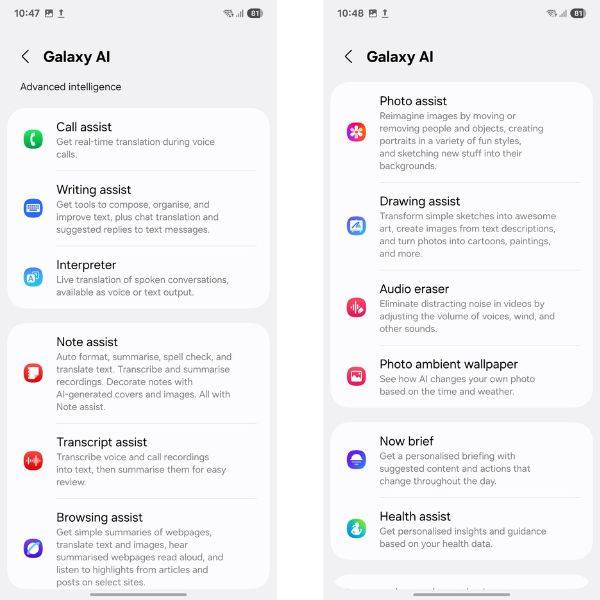
As far as the OS is concerned, you get Android 15 with Samsung’s One UI 7 on top. Truckloads of AI features aside, the latest platform also includes goodies such as separate panels for notifications and quick settings, revamped widgets, and more. There’s Now Bar, which is Samsung’s take on Apple’s Live Activities and shows info and controls up on the lockscreen as stacked cards which you can flick through. 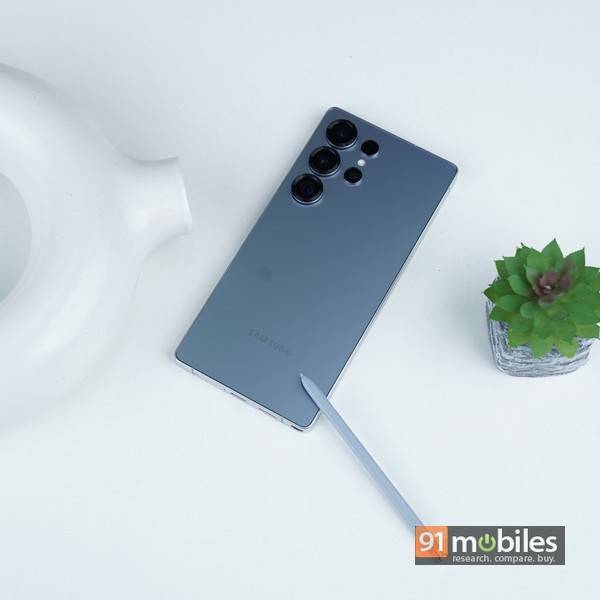
Moving on to the ecosystem side of things, I’ve always maintained that Samsung is the only Android smartphone brand that has gotten the ecosystem game right. And nothing showcases it better than the brand’s flagship smartphone range. The Galaxy S25 Ultra is right up there on the top of the list too. If you have a Samsung tablet and / or laptop for instance, the Galaxy phone can be your central hub that ties everything together. You can continue using apps like Samsung Notes, etc from one device to another, copy and paste content across devices, handle calls and SMS messages, use the same keyboard and mouse to control all of them, and more. And if you’re the proud owner of a Samsung smartwatch or a Galaxy Ring, your Samsung phone (in this case, the S25 Ultra) can give you access to all the features and capabilities in a seamless manner, without any limitations. DeX deserves special mention – this is the feature that gives you a desktop-like interface on a large screen, with your smartphone connected using a cable or wirelessly. In essence, the phone becomes your PC, and you can even use a keyboard / mouse combo to get the most out of it. 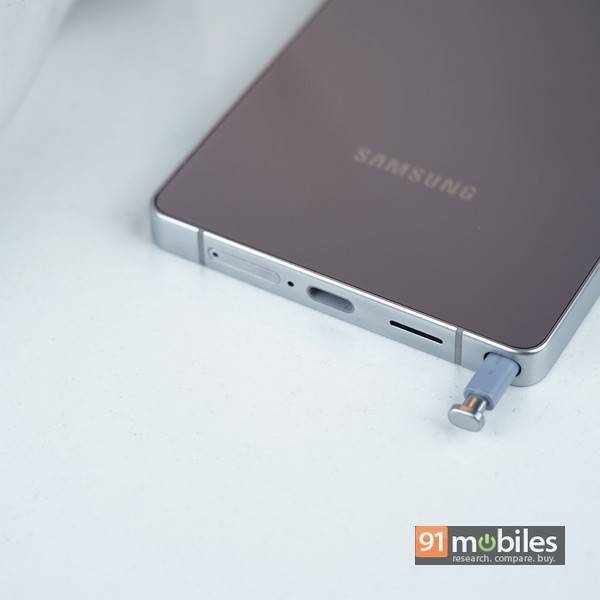
And how can we forget the S Pen? Samsung’s stylus which gets its own silo and living quarters inside the phone’s chassis is inherited from the erstwhile Note series and is one of the features that helps differentiate the Ultra models of the S Series from its other siblings in the family. The Galaxy S25 Ultra comes with an S Pen as usual, but for some reason, Samsung has removed its Bluetooth capabilities, which means you can’t use it for Air Actions and as a remote camera shutter. The brand’s reasoning behind this is that not many folks use these S Pen features, but given that this is the super-premium league of smartphones, removing features that existed on previous-gen models seems odd. That apart, the S Pen works well for drawing, doodling and note-taking tasks as usual, and at the risk of sounding like a broken record, I’d want to reiterate that the S Pen can help add immensely to productivity if used to its fullest potential.
Cameras
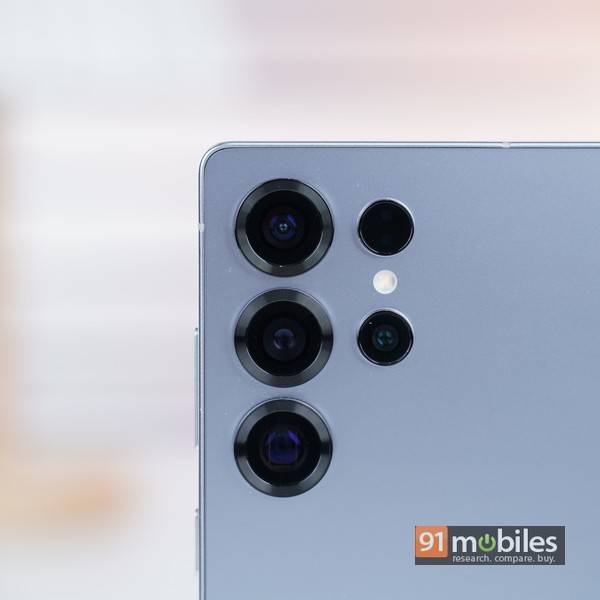
From a camera perspective, the Galaxy S25 Ultra takes its predecessor’s legacy forward, adding a 50MP ultra-wide sensor in place of the 12MP one in the S24 Ultra. The main camera retains the 200MP sensor, and the telephoto cameras are also the same at 50MP + 10MP, offering 5x optical zoom. The S24 Ultra was already an extremely capable and versatile performer in the camera segment, and the new model continues on the same path. We have a detailed camera comparison pitting the Galaxy S25 Ultra against the iPhone 16 Pro Max and the Vivo X200 Pro. It’s a bit of a mixed bag overall, as you can imagine. Each phone has its strengths, and the difference is marginal at best. However, the long and the short of it is that after comparing results from the three flagships, shot across a variety of different scenarios and lighting conditions, the Galaxy S25 Ultra does come out on top, taking a small lead over its closest rivals. Needless to say, you won’t be disappointed in any way with the photo quality it offers.
Here are a few camera samples.










Daylight
When the daylight output from the S25 Ultra is compared to Vivo’s X200 Pro, the latter’s image looks more aesthetically appealing. However, the image shot using the Galaxy S25 Ultra is closer to the actual scene.


Additionally, the Galaxy S25 Ultra is better than the Vivo X200 Pro in terms of the details.
Ultrawide
Here, the iPhone 16 Pro Max captures the most accurate shade of the sky and red building. Samsung’s image leans towards warm tones without compromising the aesthetic appeal.


The Galaxy S25 Ultra’s upgraded 50MP ultra-wide camera shows better detail here, and fares better in terms of handling and minimising the distortion at the corners of the frame too.
Portrait
In portrait shot comparisons, the Vivo X200 Pro shows better facial details, even though it struggled somewhat with capturing accurate skin tones. It also falls behind in terms of the distortion around the subject and the overall bokeh effect.


Selfie
The Vivo X200 Pro has applied a red tint on the face, taking away from the natural appearance of the subject.


However, the Samsung S25 Ultra is able to deliver more realistic-looking selfies, with the latter having a slight lead based on clarity and details.
Low light
The Samsung Galaxy S25 Ultra handles the light flare well in low-light conditions, though the colour accuracy isn’t the best. This is evident in the colour of the sky and buildings in the background. Samsung does seem better in maintaining exposure levels though.


Performance and software



The Galaxy S25 Ultra is in a league that simply has to offer top-notch performance, and the phone does that quite admirably. Thanks to Qualcomm’s flagship Snapdragon 8 Elite, said to be customised especially for Samsung, the smartphone offers solid performance across the board. In conjuction with 12 gigs of RAM, it handles everything thrown at it with aplomb, including intensive gaming, without breaking into a sweat. Benchmark figures are solid – while the S25 Ultra doesn’t top the charts in terms of Antutu scores, it rules the roost when it comes to Geekbench multi-core numbers. Similarly, gaming performance is quite high.
| Smartphone | Battery and charging speed | Charging time (20-100 percent) |
| Galaxy S25 Ultra | 5,000mAh (45W) | 44 minutes |
| Galaxy S24 Ultra | 5,000mAh (45W) | NA |
| Vivo X200 Pro | 6,000mAh (90W) | 42 minutes |
| iPhone 16 Pro Max | 4,685mAh (NA) | 96 minutes |
The 5,000mAh battery delivers solid performance, easily lasting a day of heavy use. The phone showed a runtime of almost 14 hours in the PCMark battery test, which shows how good it is. The 45W wired charging speed isn’t the fastest by any means, but one can’t really expect a lot in this area from Samsung. And it’s still faster than what other biggies like Apple and Google are offering on their flagships, so there’s isn’t much to complain about here. It takes about 44 minutes to juice up the phone from 20 to 100 percent using a compatible charger – there’s none in the box, so you have to find your own.
Final verdict
The 12GB / 256GB model of the Galaxy S25 Ultra will set you back by Rs 1,29,999, while the top-end 1TB model costs a cool Rs 1,65,999. One thing that’s clear is that if you already use the Galaxy S24 Ultra, upgrading to the new model might not be worth it. From a competition perspective, the Galaxy S25 Ultra has to contend with the likes of the Vivo X200 Pro (review) and the OPPO Find X8 Pro, which are both very compelling in their own right, especially in the camera department. The new Xiaomi 15 Ultra looks quite promising too. And if you’re considering spending the kind of money Samsung is asking for the Galaxy S25 Ultra, you can’t ignore the iPhone 16 Pro Max (review). Foldables like Samsung’s own Galaxy Z Flip 6 (review) are also in the same ballpark in terms of the outlay. So the question then is, whether the Samsung Galaxy S25 Ultra makes for a worthy buy or not.
Solid performance and battery life, extremely capable cameras, a gorgeous display and a loaded feature set, all work in its favour. Truth be told, most of these are aspects that can be expected from any flagship smartphone. For me though, the areas where the S25 Ultra stands out include the S Pen, ecosystem features, and above all, the AI goodies it comes with. And these make all the difference.
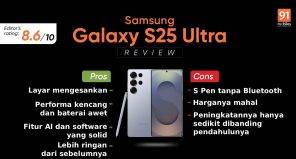
Editor’s rating: 8.6 / 10
Reasons to buy
- That display is a beauty. The new anti-reflective coating makes it even better.
- The phone delivers on key aspects like performance and battery life.
- New AI features have been added, and older ones improved, making it more compelling.
- The phone is lighter than its predecessor and less unwieldy.
Reasons not to buy
- The S Pen doesn’t have Bluetooth this time and loses out on Air Actions.
- The S25 Ultra doesn’t come cheap.
- It comes as an incremental upgrade over its predecessor.
 | vs |  |
| vs |  |