Competitors for Samsung Galaxy Z Fold6
| Samsung Galaxy Z Fold6 | vs | vivo X Fold 3 Pro |
| Samsung Galaxy Z Fold6 | vs | OnePlus Open |
The Galaxy Z Fold6 is a foldable that offers a complete package. Almost

The new Galaxy Z Fold6 from Samsung doesn’t break any new ground per se, at least at first glance. The new foldables from the brand shared the launch stage at the recent Unpacked event with the new Galaxy Ring (first impressions) and the Galaxy Watch Ultra, and these wearables managed to grab most of the limelight. That said, a closer look at what all the Galaxy Z Fold6 offers — hardware, software, AI, S Pen support and ecosystem benefits — shows it’s quite compelling overall. The Z Fold6 can’t really be overlooked by anyone looking to buy a full-featured foldable, and over the course of this review, I’ll explain why.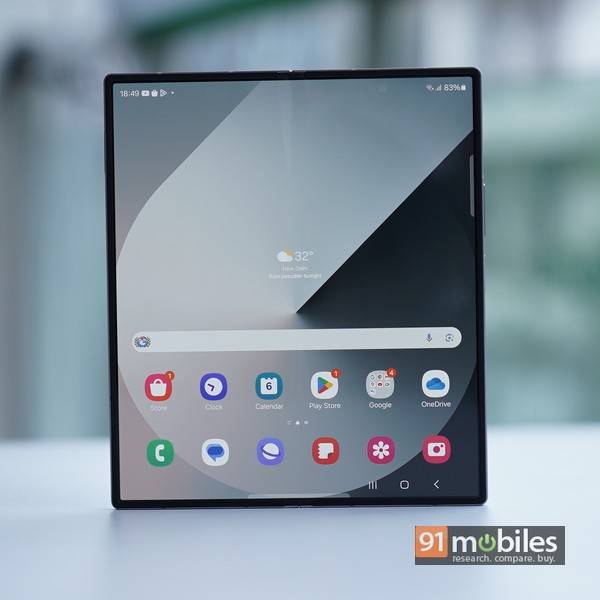
Table of Contents
The Galaxy Z Fold6 builds upon its predecessor and offers better build quality along with lots of AI features, and scores high on performance, battery life and usability. It doesn’t really impress when it comes to aspects like cameras and charging speeds. However, thanks to its software experience, features like DeX and S Pen support and the power of its ecosystem, the Samsung Galaxy Z Fold6 appears to be the one to go for if you covet a premium book-style foldable.
| Samsung Galaxy Z Fold6 | Vivo X Fold3 Pro | OnePlus Open | |
| Thickness (folded) | 12.1mm | 11.2mm | 11.7mm |
| Thickness (unfolded) | 5.6mm | 5.2mm | 5.8mm |
| Cover screen | 6.3-inch | 6.53-inch | 6.31-inch |
| Main screen | 7.6-inch | 8.03-inch | 7.82-inch |
| Weight | 239 grams | 236 grams | 239 grams |
| IP rating | IP45 | IPX8 | IPX4 |
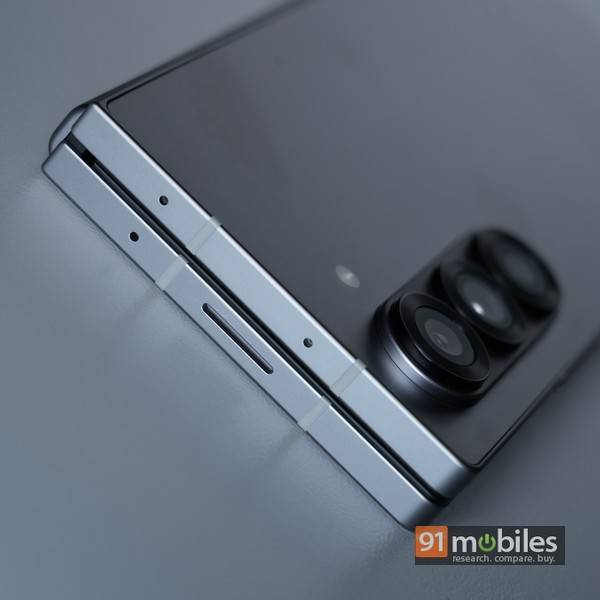
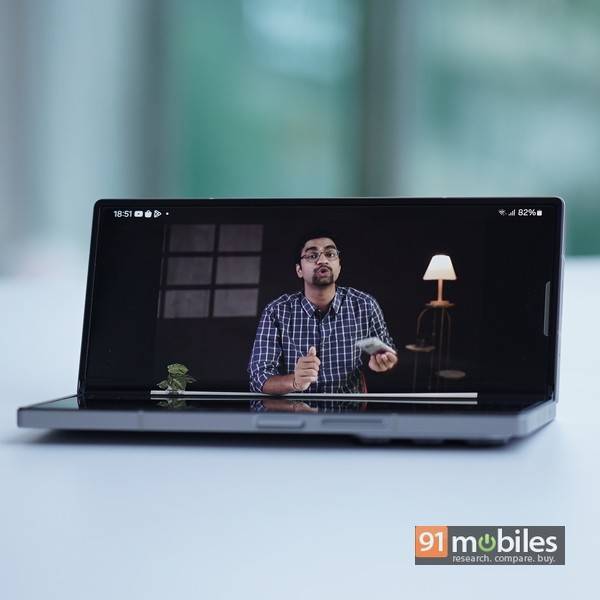
The Z Fold6 shaves off a few millimetres and grams as compared to the previous model, and while the difference looks marginal on paper, the reduction does impact usability in a significant way… positively of course. When folded, the Fold5 is 13.4mm thick, while the newer model is 12.1mm. The older model tips the scales at 253g, while the new one weighs 239g. Comparing this with Samsung’s own Galaxy S24 Ultra which weighs 232g, it becomes clear that the weight has moved closer to that of a regular phone. This, combined with the tweaked design which includes a blockier profile and flat edges, makes the Z Fold6 easier to hold and use over prolonged periods. Samsung is calling it the thinnest and lightest Fold yet, and also the most durable. Worth noting that apart from using Armor Aluminium, Gorilla Glass Victus 2, and a dual rail hinge structure, the Z Fold6 boasts an improved IP rating of IP48 as compared to IPX8 on the predecessor, indicating added resistance to dust, apart from water. The crease on the main screen feels less pronounced as well, though it’s still there. 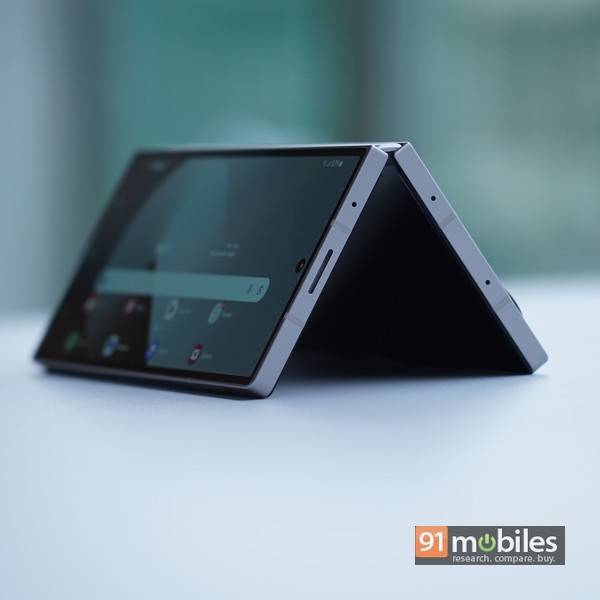
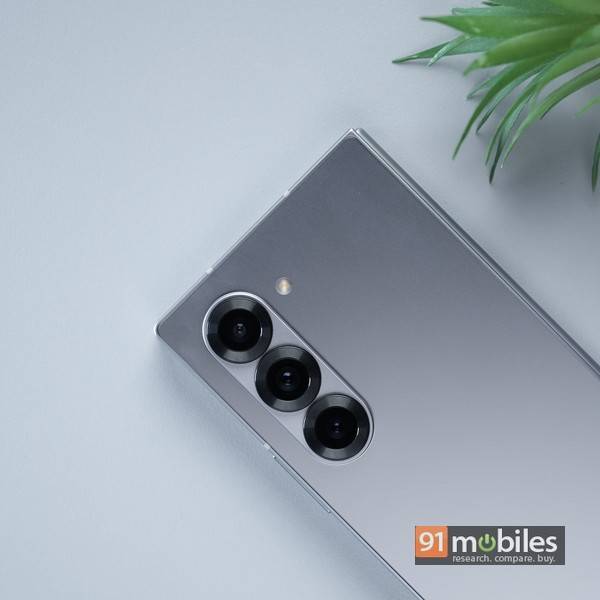
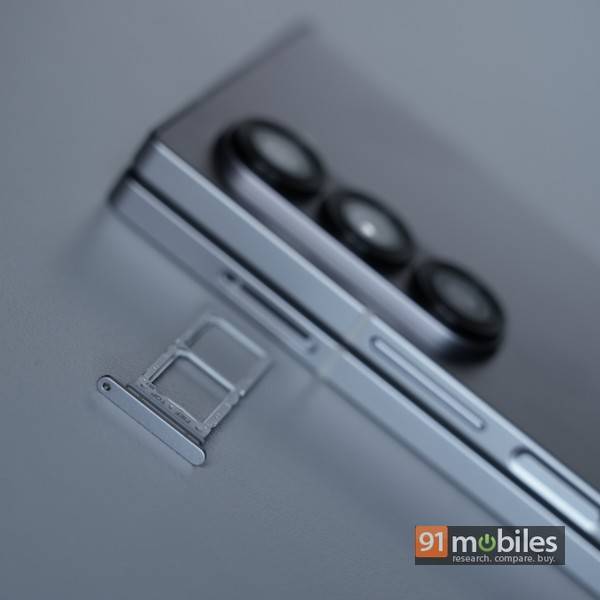
Apart from the blocky shape and flat sides though, the overall design language is as expected — cover screen with a front camera inside the punch hole on the front, hinge in the middle, a gapless fold that opens up to reveal the larger main screen that has its own in-display camera towards the right, and three vertically-aligned snappers on the back panel. The fingerprint scanner is integrated into the power button as before, and it works quickly and accurately to give you access to the phone. One niggle related to a side-mounted fingerprint scanner as compared to an in-display one is that one’s fingers usually tend to brush against the sensor during regular handling, and those touches get recognised as attempts to unlock. And after five ‘wrong’ attempts, the phone prompts you to enter your PIN or password when you really want to access it. 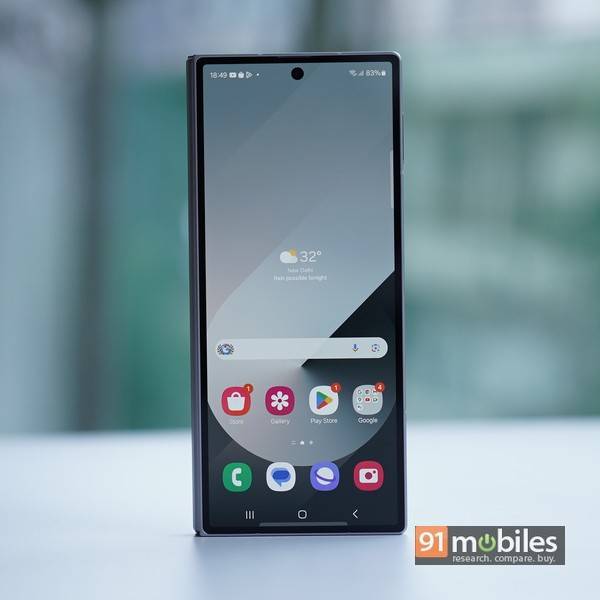
The 22.1:9 aspect ratio of the cover screen still makes it narrower than conventional bar phones, which means that the screen does feel a tad bit cramped at times, especially when you’re using the keyboard to type something. That said, combined with the flat edges and the lighter weight, the Z Fold6 is easy to hold, and the narrow form factor can work in its favour when you want to type out a quick message one handed. The cover screen measures 6.3 inches, and uses a 120Hz Dynamic LTPO AMOLED panel layered with Gorilla Glass Victus 2 for protection. Boasting 2,600 nits of peak brightness, it gets sufficiently bright and is a visual treat as expected.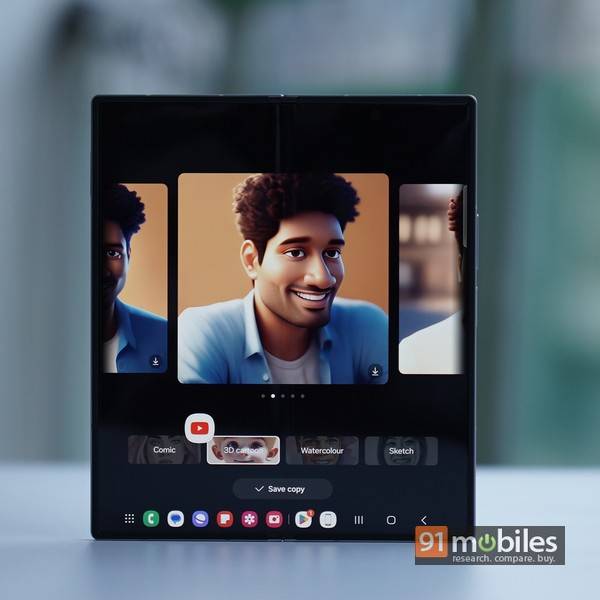
Inside, the main display is 7.6 inches and uses a foldable LTPO AMOLED panel, also going up to 120Hz refresh rate and 2,600 nits peak brightness. The crease in the middle is still there, though it feels more subtle as compared to the previous-gen Fold. The main screen is lovely in terms of visuals and works especially well for browsing the web and productivity-based tasks like working with documents and spreadsheets. Its aspect ratio, however, doesn’t work too well for videos, which display wide black bars on the top and bottom. In fact, I found the cover screen a tad better for watching OTT content while commuting to and from work. 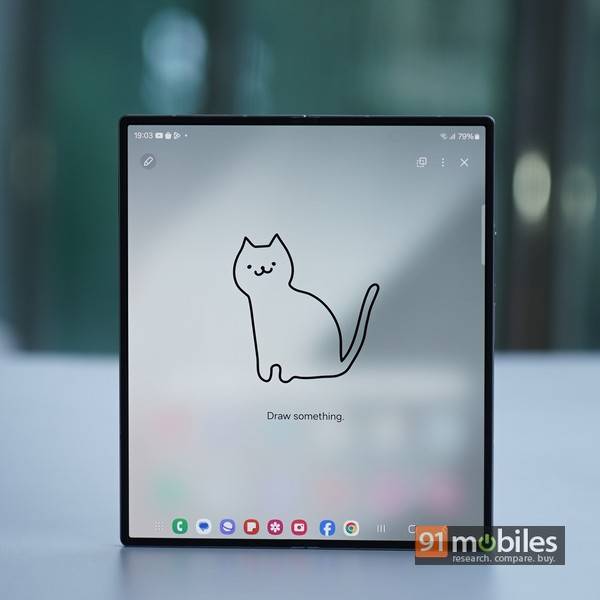
Also worth mentioning is that the Z Fold6 still offers S Pen support on its main screen, and that is a solid differentiator that works in favour of this device. I do wish Samsung had found a way to integrate the S Pen with the Z Fold6 design and included one in the retail box, but the fact that an S Pen can be used on the main screen of the foldable could be something that tips the scales in its favour for those who’d want to make use of this.
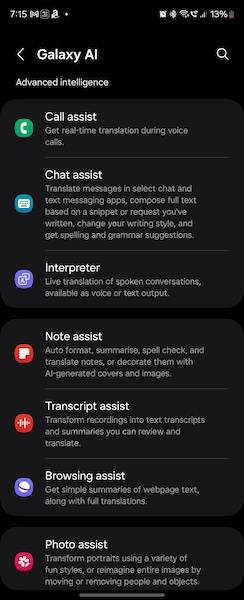
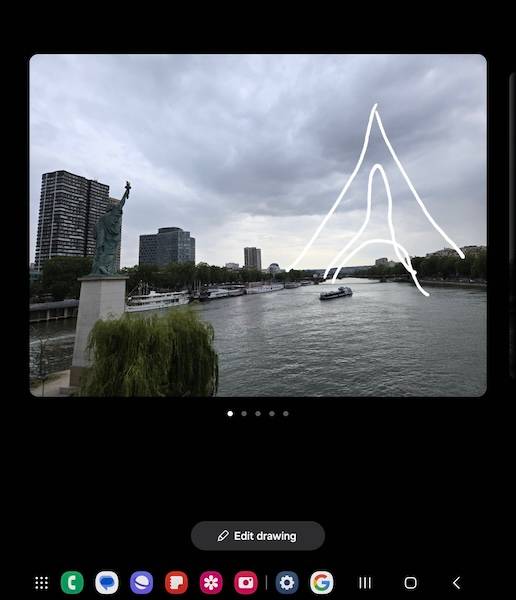
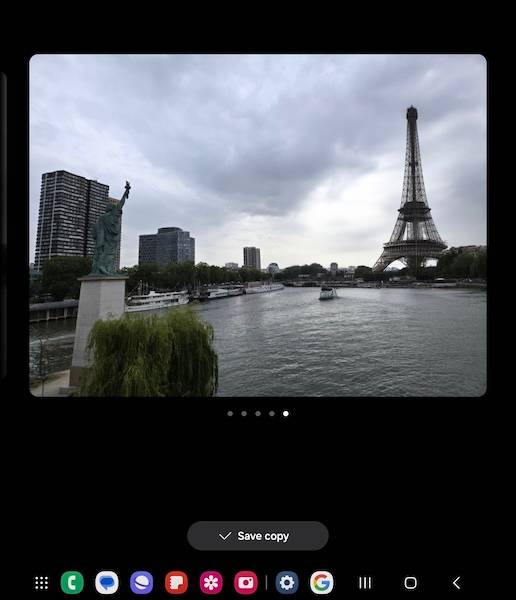
| Model | Pre-loaded apps | Software updates (in years) | Security updates (in years) |
| Samsung Galaxy Z Fold6 | 48 | 7 | 7 |
| Vivo X Fold3 Pro | 46 | 3 | 4 |
| OnePlus Open | 40 | 4 | 5 |
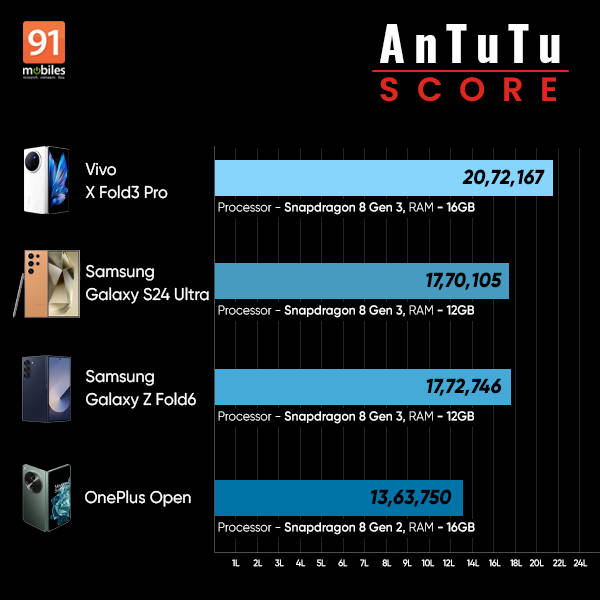
With the top-of-the-line Qualcomm SoC, the Snapdragon 8 Gen 3 at the helm, mated to 12 gigs of RAM, the Samsung Galaxy Z Fold6 delivers butter-smooth performance across the board. Storage options range from 256GB to 512GB, going all the way up to 1TB. Everything from productivity tasks to entertainment and gaming, flies on the device, with nary a stutter getting in the way. The high performance is reflected in the benchmark numbers, though when you compare these with the Vivo X Fold3 Pro, the latter’s figures look better in some instances, like the Antutu scores for instance.
Moving on to Geekbench, it’s the Z Fold6 that takes a small lead. But the Vivo X Fold3 Pro performs better when it comes to offering sustained performance for longer, as it throttles to 59.9 percent of its peak performance as compared to 49.1 percent shown by the Z Fold6. Realistically speaking though, the differences in these synthetic benchmark figures are inconsequential, because thanks to Qualcomm’s flagship SoC, the real-life usage delivered by both is extremely smooth and jitter-free.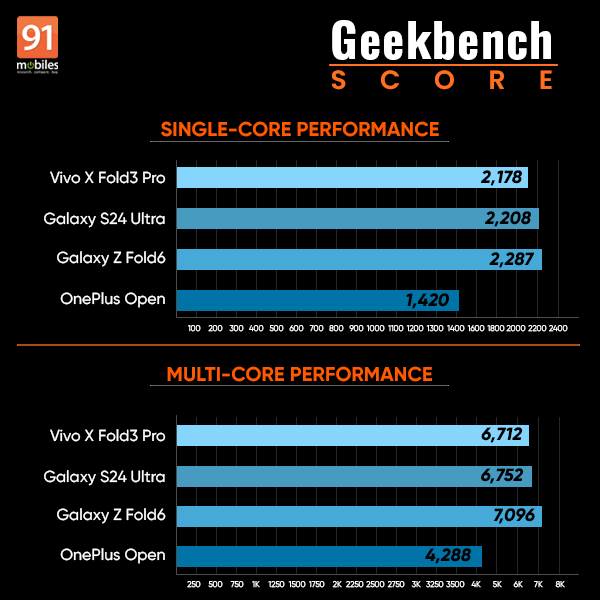
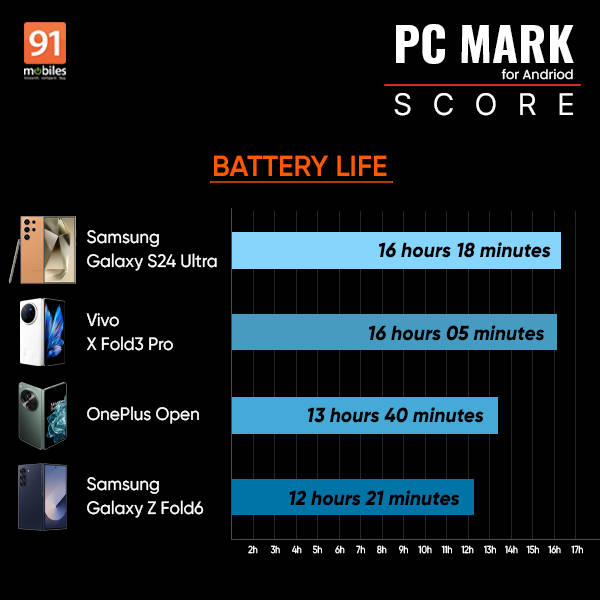
The 4,400mAh battery delivers reasonable battery life, and you can expect the Galaxy Z Fold6 to last a day with medium usage. However, your mileage could vary depending upon how long you use the device unfolded. The larger main screen does impact battery life, which is indicated by the PCMark battery test numbers. When we ran the benchmark with the device folded, we got a battery life of 12 hours 21 minutes (draining from 100 percent to 20 percent), but with the device open, the same test showed just 8 hours 17 minutes.
The wired charging speeds supported by the Galaxy Z Fold6 do leave a bit to be desired, as the 25W support doesn’t really match rivals. The device takes 78 minutes to charge to full from 20 percent battery level (about 90 minutes to charge from 0 to 100), which is much longer than rival foldables. You also get wireless charging to 15W, along with 4.5W reverse wireless charging. 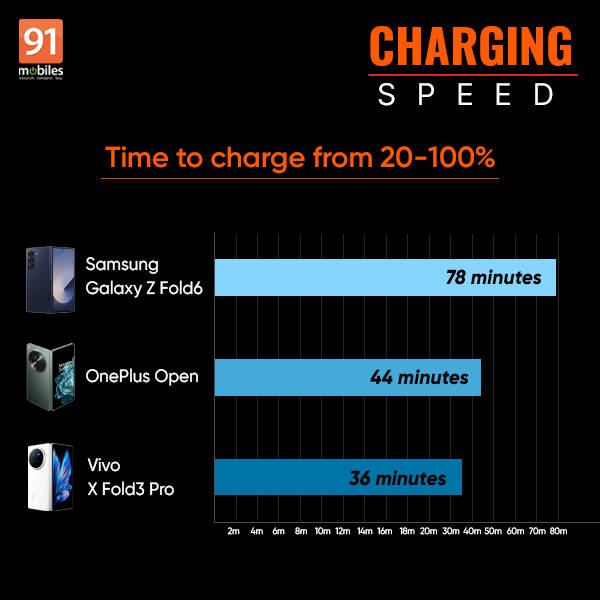
| Charging time | Battery percentage |
| 15 minutes | 17 percent |
| 30 minutes | 37 percent |
| 45 minutes | 57 percent |
| 90 minutes | 100 percent |
If you haven’t used a foldable smartphone before, getting used to the new form factor takes a bit of time. But once you’ve made up your mind, available options for a book-style foldable include the Galaxy Z Fold6, the Vivo X Fold3 Pro (review), and last year’s OnePlus Open (review). The starting price for the Z Fold6 is Rs 1,64,999, the Vivo X Fold3 Pro starts at Rs 1,60,000, while the OnePlus Open is listed at Rs 1,39,998. When you’re spending that kind of money, I’d say that the difference in price doesn’t really matter. OnePlus’ contender is a strong one and can’t be ignored, but is tough to recommend at this time, and at its current price, just because it uses an older chipset. Which brings us to Vivo. Vivo’s X Fold3 Pro offers stiff competition to the Galaxy Z Fold6, and the two one-up each other in different aspects. The Vivo X Fold3 Pro shines in aspects like camera and charging speeds, while the two are at mostly at par in terms of other basics like performance and battery life. Design is subjective of course, and while Vivo is slimmer, I think the Z Fold6’s flat edges help while holding it, whether it’s being used folded or unfolded. 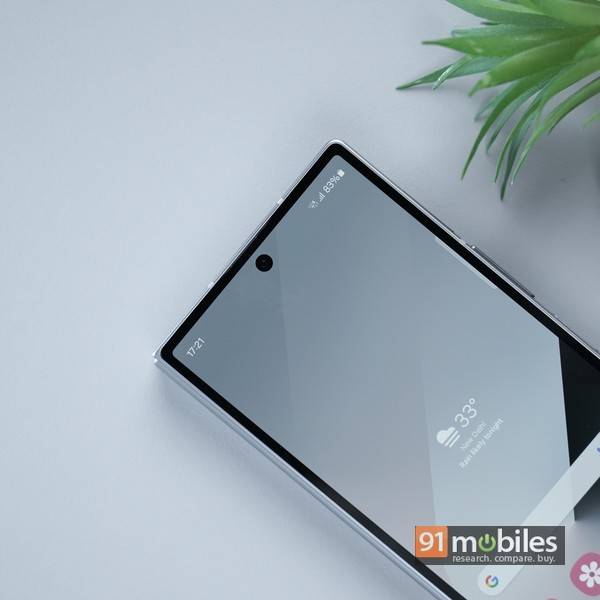
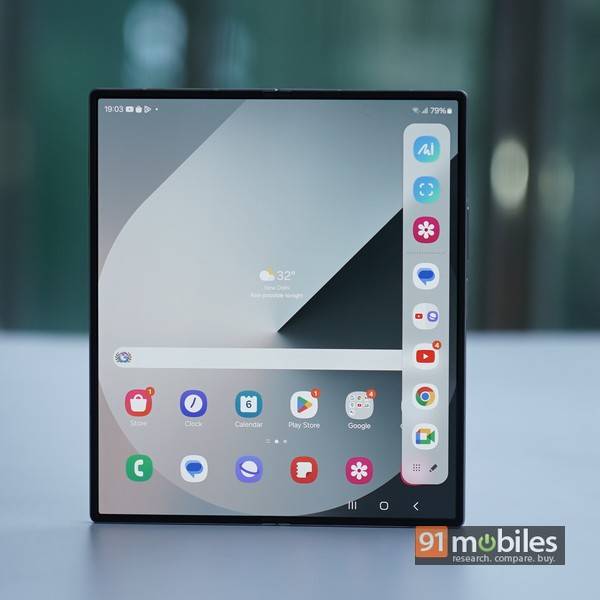
In terms of AI features, the Galaxy Z Fold6 takes the lead I’d say, but aspects where the Samsung device truly shines is the overall software experience and the ecosystem. One UI, despite the barrage of apps it comes pre-installed with, offers a better software experience overall. Things lean stronger in favour of Samsung when you consider the power of its ecosystem, as over the years, the brand has been adding more features, and ensuring its customers get to the reap the benefits of staying loyal. Features like DeX and S Pen support make the Samsung foldable even more compelling. 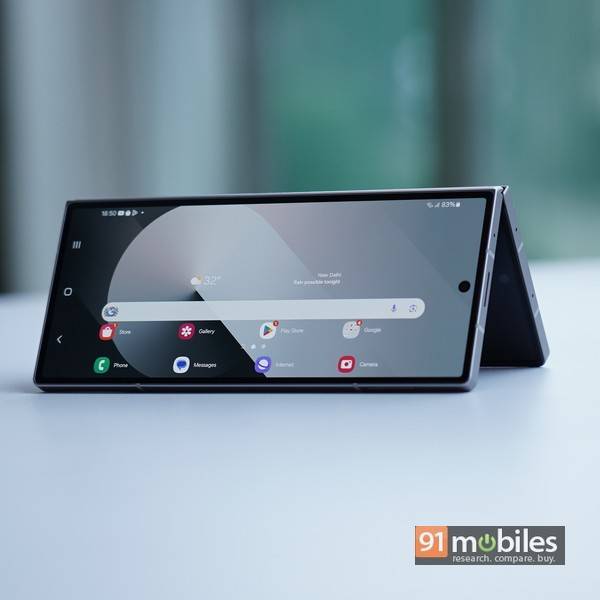
Compared to the first half of last year when Samsung barely had any competition in the foldable segment in India to now, things have changed drastically. Brands like Vivo are offering stiff competition, and even Google is lining up its own contender. This means Samsung can’t really afford to twiddle its thumbs, and ensure it keeps the bar high enough in the foldable segment. For the here and now, I’d say the Galaxy Z Fold6 gets a thumbs up from me and is highly recommended if you’e eying a book-style foldable.
Samsung has improved the device’s design and durability as compared to the predecessor
The foldable is lighter than before, and easier to hold thanks to the flat edges
The AI features are interesting and useful, and ecosystem features are good to have
The device delivers good performance, and the cameras are capable too
The crease on the main screen, while more subtle than before, is still visible
25W charging speeds are quite slow, relatively speaking
The asking price of the smartphone is quite high, which is to be expected, really
| Samsung Galaxy Z Fold6 | vs | vivo X Fold 3 Pro |
| Samsung Galaxy Z Fold6 | vs | OnePlus Open |