Tata Sierra EV is India’s first car to get Dolby Atmos via wireless Apple CarPlay


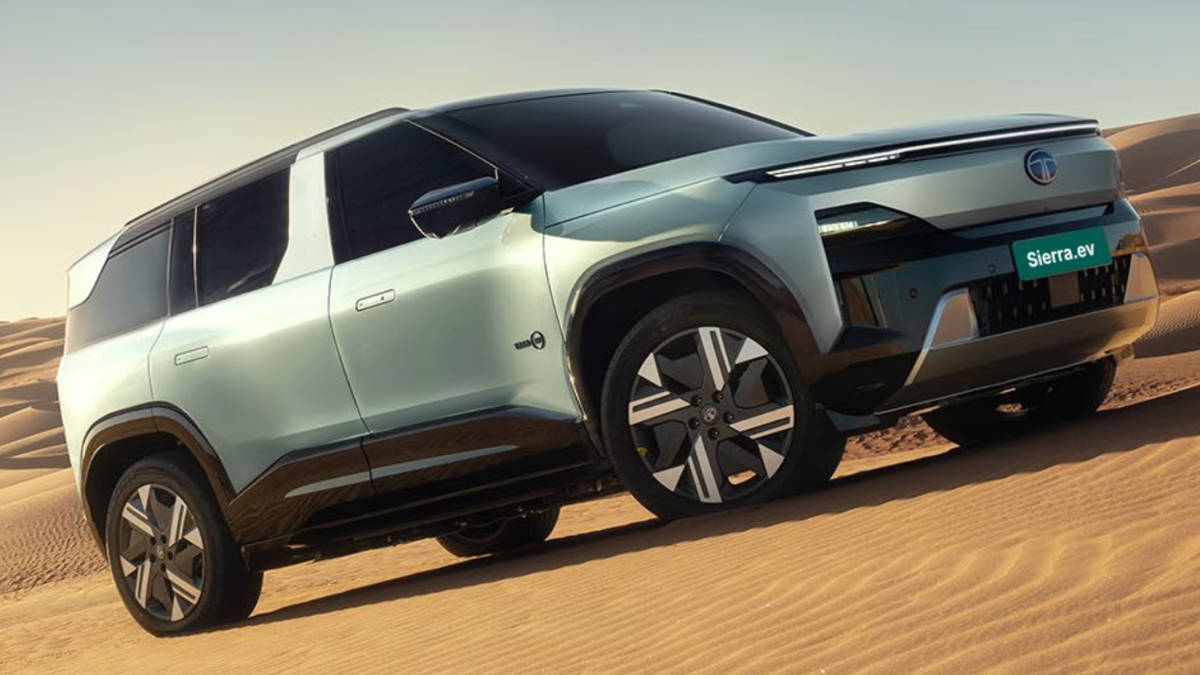
Re-launching an icon and doing it right is what Tata has done with the Sierra EV. Prices start at an aggressive introductory tag of Rs 18.79 lakh ex-showroom for the base 63 kWh model and climb up to Rs 25.99 lakh ex-showroom for the 75 kWh top-spec all-wheel-drive performance variant. The Sierra EV pulls no punches when it comes to cutting-edge tech either. It is the first car in India where Dolby Atmos content can be streamed wirelessly over Apple CarPlay and actually rendered as 5.1 Dolby Atmos, rather than folded down to a stereo presentation distributed across multiple speakers. That distinction is easy to miss since several Indian cars already wear the “Dolby Atmos” badge, including models from Mahindra, Mercedes, Maruti and Tata’s own ICE-powered Sierra, which got the same 12-speaker JBL Black system back in November 2025.


But instead of relying on native apps that require logins via the car’s media system, the Sierra EV does so through Dolby’s DCX 2 platform, the automotive counterpart to the CarPlay SDK. Apple built this specifically to carry genuine Dolby Atmos metadata from phone to car. It’s a two-ended system where Apple supplies the transport and DCX 2 supplies the in-car rendering. Skip that renderer and what you get over CarPlay is merely Apple’s “Spatial Audio”, a broader, looser term for any immersive processing, not the studio-approved Dolby Atmos mix that the artist signed off on.
The Sierra EV supports four Dolby Atmos-certified sources: Apple Music, Amazon Music, Gaana, and Audible, accessible straight off CarPlay once your smartphone is paired. Of these, Gaana and Amazon Music are particularly big India-focused wins that aren’t available anywhere else. Supporting that signal is a 12-speaker JBL Black array, Harman’s premium automotive tier, split across four door speakers, four A- and B-pillar units, a boot-mounted subwoofer, and a two-speaker SonicShaft sound bar set within the dashboard beneath the AC vents. The centre channel anchors the image with vocals while the pillar-mounted drivers build height and width.
But the Sierra EV has more tech tricks up its sleeve. Here are the eight top ones:


Power and Acceleration
The flagship performance version features a dual-motor Quad Wheel Drive layout churning out 306hp and a massive 504Nm of peak torque. Engaging Boost Mode unleashes all the available power to rocket the mid-size SUV from 0 to 100 km/h in a sportscar-like 5.8 seconds, paired with six selectable terrain modes for off-road capability.


540-Degree Camera with Park Assist
Manoeuvring this mid-size SUV in cramped urban spaces is simplified via an advanced 540-degree high-definition camera network. The system features a unique transparent underbody mode, giving drivers a clear view of obstacles beneath the vehicle, a trick borrowed from big brother Range Rover models. It works alongside an automated park assist suite containing summon and reverse assistance features for stress-free parking.


Charging Speeds
When plugged into a 120kW DC fast charger, the Sierra EV can juice its battery from 20 to 80% in just 26 minutes. For quick highway top-ups, the system supports high-rate charging that adds 263 km of range in 15 minutes. Home charging uses a 7.2kW AC wall box taking roughly 10.5 hours. In real-world highway and urban conditions, expect a realistic driving range of 510 to 530 km on a single charge.


Advanced Driver Assistance Systems (ADAS)
Safety is anchored by a comprehensive Level 2+ ADAS suite designed to tackle chaotic Indian traffic conditions. This proactive setup integrates smart features like an augmented-reality-enabled head-up display, autonomous emergency braking, adaptive cruise control, and lane-keep assist. It combines this with structural safety, six standard airbags, and frequency-dependent dampers to offer stable and secure high-speed highway cruising.


V2L and V2V Charging
Emphasising its role as a mobile powerhouse, the Sierra EV includes bidirectional charging features out of the box. Vehicle-to-Load (V2L) lets you power external electrical appliances directly from the vehicle’s charge port during camping trips. Vehicle-to-Vehicle (V2V) allows the car to bail out stranded electric vehicles by sharing its own battery power at 5kVA.


DrivePay (ToneTag Payments)
The Sierra EV introduces DrivePay, an on-the-go payment system operated directly from the central infotainment screen. Developed using UPI frameworks and leveraging ToneTag sound-wave technology, it allows you to authorise merchant transactions on the move via voice navigation. Whether you are clearing toll bills or paying for a public fast-charging session, it is authenticated securely through an NPCI-linked digital platform. What this really means is no more pulling out your smartphone or launching individual apps at a busy charging station; your vehicle handles the financial transfer entirely from the dashboard.


AirConsole In-Car Gaming
The cabin entertainment moves way past basic video streaming into interactive engagement. Debuting AirConsole, the Sierra EV marks India’s first natively integrated in-car gaming console housed inside the 30-plus app Arcade.ev suite. While the vehicle is stationary or hooked up to a charger, occupants simply scan a screen code to turn their personal smartphones into wireless controllers. The system accommodates friendly multiplayer competition using the central and passenger displays, running curated titles like Mattel’s UNO and Kaun Banega Crorepati.


Android Auto EV Route Planner
Range anxiety gets a massive reality check with India’s first vehicle implementation of the Google EV Route Planner over wireless Android Auto. Instead of forcing you to guess power consumption, Google Maps syncs directly with the Sierra’s live battery telemetry. When mapping out long-distance road trips to destinations like Satara, the screen layout instantly projects exact toll road costs, your state-of-charge percentage upon arrival, and your remaining battery for the return leg. It removes the guesswork from highway touring by managing your active range, making interstate drives genuinely predictable.