Vivo V80 vs Vivo V70: what are the upgrades and which phone offers more value?


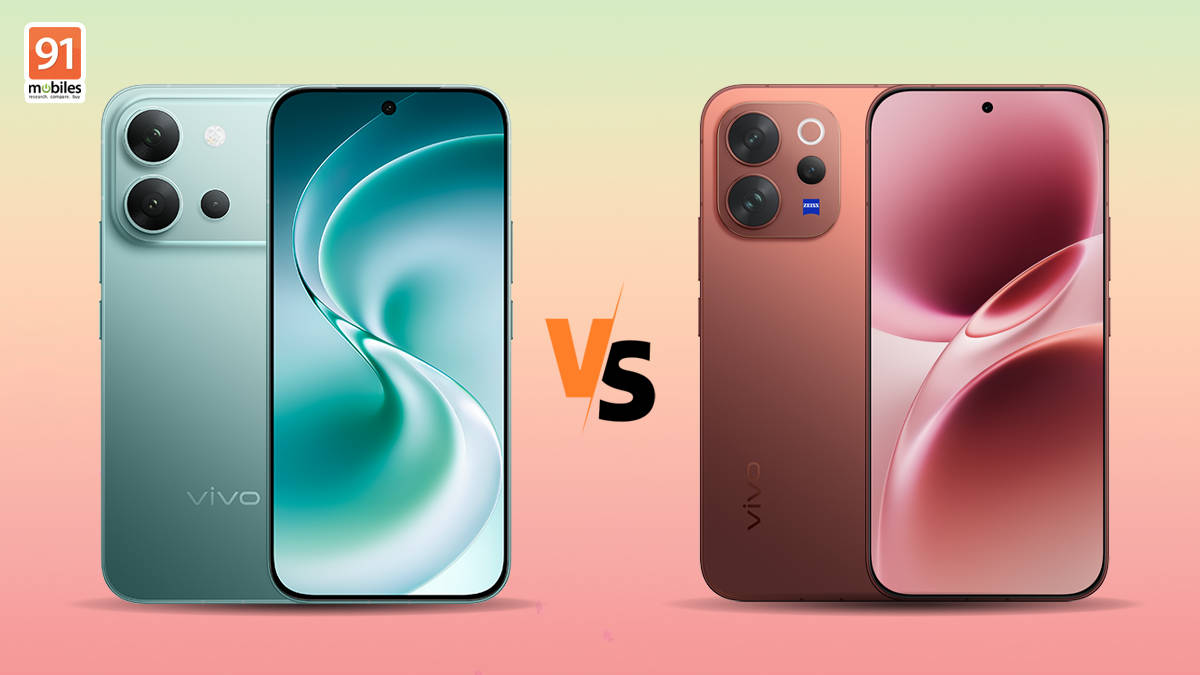
The Vivo V80 is the latest addition to the company’s V-series in India and brings a larger battery, a higher refresh rate display, and a refreshed design over its predecessor, the Vivo V70. Both phones follow Vivo’s camera-focused approach, featuring Zeiss-branded optics setups and creative AI features. However, the V80 comes at a significantly higher starting price. So, is it worth spending more on the newer model, or does the Vivo V70 still offer better value? Let’s find out.
Table of Contents
Vivo V80 vs Vivo V70: price in India
The Vivo V80 starts at Rs 62,999 for the 8GB RAM + 128GB storage variant. The 8GB + 256GB model costs Rs 69,999, while the top-end 8GB + 512GB version is priced at Rs 79,999.
In comparison, the Vivo V70 starts at Rs 59,999 for 8GB RAM + 256GB storage, while the 12GB + 256GB variant costs Rs 64,999. This gives the older V70 a significant price advantage, while also offering more storage and RAM.
| Variant | Vivo V80 price | Vivo V70 price |
| 8GB + 128GB | Rs 62,999 | NA |
| 8GB + 256GB | Rs 69,999 | Rs 59,999 |
| 8GB + 512GB | Rs 79,999 | NA |
| 12GB + 256GB | NA | Rs 64,999 |
Vivo V80 vs Vivo V70: design, display
Both phones feature a premium design with flat edges, rounded corners, and IP68/IP69 ratings for dust and water resistance. However, the V80 gets a refreshed look with Vivo’s new ‘Floating Camera’ module, which gives it a more distinctive appearance than the V70’s square-shaped camera module. The V80 is also available in three colours, while the V70 comes in Passion Red and Lemon Yellow.


The display size remains unchanged at 6.59 inches, with both phones featuring a 1.5K AMOLED panel and up to 5,000 nits of peak brightness. However, the V80 gets a 144Hz refresh rate compared to 120Hz on the V70. The higher refresh rate should make scrolling and supported games feel smoother, although the difference may not be particularly noticeable during everyday use.
Overall, the V80 has the edge for buyers looking for a newer design and a higher refresh rate, but the V70 still offers a similarly sharp and bright display.


Vivo V80 vs Vivo V70: chipset, battery
The Vivo V80 and V70 are powered by the same Qualcomm Snapdragon 7 Gen 4 chipset. This means there is no major generational performance upgrade with the newer model. Both phones should be capable of handling everyday tasks, social media, streaming, and moderate gaming, although neither is particularly strong for buyers seeking the best performance in this price range.
The biggest hardware upgrade on the V80 comes in the battery department. It packs a 7,200mAh battery compared to the V70’s 6,500mAh unit. Both phones support 90W fast charging, so the newer model should offer longer endurance without sacrificing charging speeds. Both phones also support bypass charging, which is useful during gaming and other intensive tasks.
If battery life is your priority, the V80 is the clear winner. However, since both phones use the same chipset and charging speed, the V70 should still offer similar core performance and charging experience at a much lower price.


Vivo V80 vs Vivo V70: cameras
Camera hardware is one area where the two phones remain fairly similar. The V80 features a 50MP OIS main camera, a 50MP Zeiss Night Telephoto camera, an 8MP ultra-wide lens, and a 50MP front camera. The V70 also has a 50MP Zeiss OIS main camera, a 50MP telephoto camera, an 8MP ultra-wide camera, and a 50MP selfie camera.
The V80 does bring some newer camera features, including more than 30 AI-powered creative features, AI Diwali Portrait 2.0, and 4K Cinematic video recording. The V70 also has several AI photography tools, including AI Floral, AI Weather Magic and AI Holi Portrait, along with 4K 60fps video recording.
On paper, therefore, the V80 offers a more feature-rich camera experience, but the underlying hardware is broadly similar. Buyers primarily interested in camera hardware may not see a substantial enough upgrade to justify the V80’s much higher price.
Vivo V80 vs Vivo V70: software
The Vivo V80 runs OriginOS 7 based on Android 17 out of the box, while the V70 ships with OriginOS 6 based on Android 16. The newer software brings a refreshed interface, additional customisation, and features such as Dynamic Glow and interactive Pet Pals themes.
Both phones receive six years of security updates and four OS upgrades. The V70 also benefits from Vivo’s six-year software support promise, making it a reasonably future-proof option despite being the older phone. The V80 gets an edge with an additional OS upgrade and running the latest software version.
If having the latest Android version and newer software features is important, the V80 has the advantage. However, the V70 still offers strong long-term software support for its price.
Summing up
The Vivo V80 brings meaningful improvements in design, battery capacity, display refresh rate, and software. However, at a starting price of Rs 62,999, it is significantly more expensive than the Vivo V70, while retaining the same Snapdragon 7 Gen 4 chipset and broadly similar camera hardware. The V80 makes more sense for buyers who want the latest design, longer battery life, newer software, and additional camera features.
On the other hand, the Vivo V70 offers better value, especially at its Rs 59,999 starting price. It retains the same chipset, a similar display, a 6,500mAh battery, 90W charging, and a versatile Zeiss camera setup. If you’re okay skipping the V80’s newer design, 144Hz display, and larger battery, the V70 might be the more sensible choice for buyers looking to get the most value for their money.