Xiaomi Redmi Y1 32GB
+ Compare-
Design4
-
360° View
-
Videos5
Key Specs
Performance
-
Qualcomm Snapdragon 435 -
Octa Core, 1.4 GHz -
3 GB / 4 GB RAM
Display
-
5.5 inches (13.97 cm); IPS LCD -
720x1280 px (HD) -
Gorilla Glass Protection
Rear Camera
-
Single Camera Setup - 13 MP Primary Camera
-
LED Flash -
Full HD @30 fps Video Recording
Front Camera
-
16 MP
Battery
-
3080 mAh
General
-
SIM1: Nano, SIM2: Nano -
5G Not Supported -
32 GB / 64 GB Storage, Expandable upto 128 GB
Xiaomi Redmi Y1 32GB Prices in India
Xiaomi Redmi Y1 32GB Expert Review Summary
Expert Rating:
3.5/5
Verdict
In our time with the Xiaomi Redmi Y1, the question of why someone would want to buy this phone popped up a number of times. Besides what the competition has to offer, Xiaomi itself has the Redmi 4, available for the same price, offering the same specification set, but in a metal body. It is a slightly smaller form factor (5-inch) with the same 720p display as the Y1. The Redmi 4 also offers a larger 4,000mAh battery in comparison to the 3,080mAh battery on the Y1. Interestingly, even though the two phones may be incredibly similar, they would ideally appeal to very different audiences. The Y1...
Read Full Verdict
In our time with the Xiaomi Redmi Y1, the question of why someone would want to buy this phone popped up a number of times. Besides what the competition has to offer, Xiaomi itself has the Redmi 4, available for the same price, offering the same specification set, but in a metal body. It is a slightly smaller form factor (5-inch) with the same 720p display as the Y1. The Redmi 4 also offers a larger 4,000mAh battery in comparison to the 3,080mAh battery on the Y1. Interestingly, even though the two phones may be incredibly similar, they would ideally appeal to very different audiences. The Y1 is squarely aimed at people who put the selfie experience before most other things. For those who prefer a metal built phone, the Redmi 4 may be a better option, albeit with a smaller screen. Performance wise, both phones are on par in terms of their hardware, but it’s the feature set that varies. Having said that, for Rs 8,999, you finally get a Xiaomi smartphone which plays the selfie game well. If you ever felt that the OPPO or Vivo`s portfolio of devices were out of your budget, there’s now a viable option even in the sub-Rs 10K price range.
Pros
- Selfie camera is impressive
- Good battery life
- Stable and reliable software
Cons
- Average display
- No fast charging
- Dated design
Specs at a glance
+
Design and build quality: simple, but reliable
+
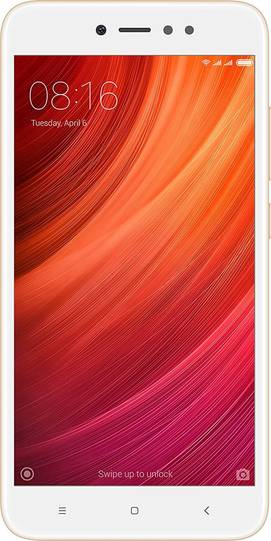
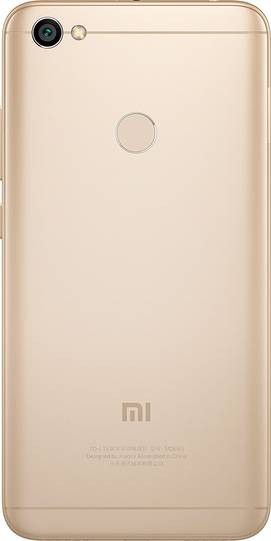
The first thing you ever take notice of in a smartphone is its design, followed by the feel of the device in your hands. The two are more or less synonymous with each other, with a poor design resulting in a sub-par handling experience. With the Xiaomi Redmi Y1, things are a little bit of a mixed bag. The Xiaomi Remi Y1 is unmistakably made of plastic, and not that super sturdy polycarbonate kind. The design is fairly generic, with a soft gold smooth finish on the back and a white bezel on the front. The only break in the design language is the singular 13-megapixel sensor on the back and a fingerprint sensor. The front, on the other hand, has the front-facing camera, an ambient light sensor and a soft LED flash, all in the form of three black circles. They do tend to stand out a little bit, but it’s not a deal breaker.
Read More
Imaging: where front camera comes first
+
The Xiaomi Redmi Y1 is the company’s first selfie-centric phone. It has a fairly standard 13-megapixel rear camera with PDAF and a single LED flash, but the front camera is a 16-megapixel shooter accompanied by a soft light LED. The primary camera shoots images that are average at best, with the weakest point being dynamic range. Don’t expect a perfect exposure if you’re shooting a subject in harsh light, however, if you are in more forgiving illumination such as indoors or outdoors during a cloudy day (or even shooting in shade) you should able to get good looking photos. One thing you shouldn’t expect out of these photos is a great level of detail as Xiaomi uses some very aggressive JPG compression algorithms. It was a little disappointing to take a photo of a beautiful flower and find very little detail in the texture of the leaves and petals.
Read More
Software: MIUI 9 is predictable, but stable
+
Our review unit of the Xiaomi Remi Y1 came preloaded with a beta build of MIUI 9, which is a result of Xiaomi’s own layer running on top of Android Nougat. MIUI 9 was announced the same day as the Redmi Y1, but it seems that the final version is yet to be rolled out. We did face minor hiccups on the Redmi Y1 in terms of performance, all of which could easily be attributed to the fact that our unit was running a beta build. Among the few things that worked well was the split-screen feature which didn’t stutter at all. The newly redesigned notification pane is also nice, but that would be a personal preference more than anything else. While most of the aspects of MIUI 9 worked smooth, there were some minor issues that can be attributed to the beta build of the OS. For starters, we occasionally faced issues with the keyboard not popping up for a few seconds. This problem was only intermittent and only presented itself arbitrarily. Occasionally the camera app would lock us out too, but it was again arbitrary and it is possible that all of this would go away once the final build of MIUI 9 is released for the Y1.
Read More
Performance: Get what you mostly expect
+
Powered by the Qualcomm Snapdragon 435 processor and 3GB of RAM, the Xiaomi Redmi Y1 isn’t the smartphone to offer the most cutting-edge specifications for the price bracket. The similarly-priced Xiaomi Redmi 4 (review) has the same specs as the Y1 or the most part as well, although, for a little more money, you could get yourself the Redmi Note 4 with the Snapdragon 625 processor.
Read More
Battery Life: slow to die, and slow to charge
+
The Xiaomi Redmi Y1 is powered by a 3,080mAh battery, a pretty standard number for most smartphones today. What you don’t get, however, is fast charging, which is a feature missing from this entire price bracket for the most part anyway. The phone ends up taking a little over two hours to charge from zero to 100, so the best time to charge the phone would most likely be while going to bed, or like me, you can charge it at work, with the small caveat that you’re going to be glued to your seat till the battery reaches 100 percent.
Read More
Read full Review
3.5/5
Verdict
In our time with the Xiaomi Redmi Y1, the question of why someone would want to buy this phone popped up a number of times. Besides what the competition has to offer, Xiaomi itself has the Redmi 4, available for the same price, offering the same specification set, but in a metal body. It is a slightly smaller form factor (5-inch) with the same 720p display as the Y1. The Redmi 4 also offers a larger 4,000mAh battery in comparison to the 3,080mAh battery on the Y1. Interestingly, even though the two phones may be incredibly similar, they would ideally appeal to very different audiences. The Y1... Read Full Verdict
In our time with the Xiaomi Redmi Y1, the question of why someone would want to buy this phone popped up a number of times. Besides what the competition has to offer, Xiaomi itself has the Redmi 4, available for the same price, offering the same specification set, but in a metal body. It is a slightly smaller form factor (5-inch) with the same 720p display as the Y1. The Redmi 4 also offers a larger 4,000mAh battery in comparison to the 3,080mAh battery on the Y1. Interestingly, even though the two phones may be incredibly similar, they would ideally appeal to very different audiences. The Y1 is squarely aimed at people who put the selfie experience before most other things. For those who prefer a metal built phone, the Redmi 4 may be a better option, albeit with a smaller screen. Performance wise, both phones are on par in terms of their hardware, but it’s the feature set that varies. Having said that, for Rs 8,999, you finally get a Xiaomi smartphone which plays the selfie game well. If you ever felt that the OPPO or Vivo`s portfolio of devices were out of your budget, there’s now a viable option even in the sub-Rs 10K price range.
- Selfie camera is impressive
- Good battery life
- Stable and reliable software
Pros
- Average display
- No fast charging
- Dated design
Cons
The first thing you ever take notice of in a smartphone is its design, followed by the feel of the device in your hands. The two are more or less synonymous with each other, with a poor design resulting in a sub-par handling experience. With the Xiaomi Redmi Y1, things are a little bit of a mixed bag. The Xiaomi Remi Y1 is unmistakably made of plastic, and not that super sturdy polycarbonate kind. The design is fairly generic, with a soft gold smooth finish on the back and a white bezel on the front. The only break in the design language is the singular 13-megapixel sensor on the back and a fingerprint sensor. The front, on the other hand, has the front-facing camera, an ambient light sensor and a soft LED flash, all in the form of three black circles. They do tend to stand out a little bit, but it’s not a deal breaker.
Read MoreThe Xiaomi Redmi Y1 is the company’s first selfie-centric phone. It has a fairly standard 13-megapixel rear camera with PDAF and a single LED flash, but the front camera is a 16-megapixel shooter accompanied by a soft light LED. The primary camera shoots images that are average at best, with the weakest point being dynamic range. Don’t expect a perfect exposure if you’re shooting a subject in harsh light, however, if you are in more forgiving illumination such as indoors or outdoors during a cloudy day (or even shooting in shade) you should able to get good looking photos. One thing you shouldn’t expect out of these photos is a great level of detail as Xiaomi uses some very aggressive JPG compression algorithms. It was a little disappointing to take a photo of a beautiful flower and find very little detail in the texture of the leaves and petals.
Read MoreOur review unit of the Xiaomi Remi Y1 came preloaded with a beta build of MIUI 9, which is a result of Xiaomi’s own layer running on top of Android Nougat. MIUI 9 was announced the same day as the Redmi Y1, but it seems that the final version is yet to be rolled out. We did face minor hiccups on the Redmi Y1 in terms of performance, all of which could easily be attributed to the fact that our unit was running a beta build. Among the few things that worked well was the split-screen feature which didn’t stutter at all. The newly redesigned notification pane is also nice, but that would be a personal preference more than anything else. While most of the aspects of MIUI 9 worked smooth, there were some minor issues that can be attributed to the beta build of the OS. For starters, we occasionally faced issues with the keyboard not popping up for a few seconds. This problem was only intermittent and only presented itself arbitrarily. Occasionally the camera app would lock us out too, but it was again arbitrary and it is possible that all of this would go away once the final build of MIUI 9 is released for the Y1.
Read MorePowered by the Qualcomm Snapdragon 435 processor and 3GB of RAM, the Xiaomi Redmi Y1 isn’t the smartphone to offer the most cutting-edge specifications for the price bracket. The similarly-priced Xiaomi Redmi 4 (review) has the same specs as the Y1 or the most part as well, although, for a little more money, you could get yourself the Redmi Note 4 with the Snapdragon 625 processor.
Read MoreThe Xiaomi Redmi Y1 is powered by a 3,080mAh battery, a pretty standard number for most smartphones today. What you don’t get, however, is fast charging, which is a feature missing from this entire price bracket for the most part anyway. The phone ends up taking a little over two hours to charge from zero to 100, so the best time to charge the phone would most likely be while going to bed, or like me, you can charge it at work, with the small caveat that you’re going to be glued to your seat till the battery reaches 100 percent.
Read MoreCompetitors For Xiaomi Redmi Y1 32GB
View Alternatives

Xiaomi Redmi Y1 32GB Specifications
General |
|
|---|---|
| Launch Date | November 8, 2017 (Official) |
| Operating System | Android v7.1.2 (Nougat) |
| Custom UI | MIUI |
Performance
(Avg)
|
|
|---|---|
| Chipset | Qualcomm Snapdragon 435 MSM8940 |
| Processor | Octa core, 1.4 GHz, Cortex A53 |
| Architecture | 64 bit |
| Graphics (GPU) | Adreno 505 |
| RAM | 3 GB / 4 GB |
Display
(Excellent)
|
|
|---|---|
| Display Type | IPS LCD |
| Screen Size | 5.5 inches (13.97 cm) |
| Resolution | 720x1280 px (HD) |
| Pixel Density | 267 ppi |
| Screen to Body Ratio (calculated) | 71.36 % |
| Screen Protection | Corning Gorilla Glass |
Design |
|
|---|---|
| Height | 153 mm |
| Width | 76.2 mm |
| Thickness | 7.7 mm |
| Weight | 153 grams |
| Build Material |
Frame: Metal Back: Metal |
|
Click to View
|
Rear Camera
(Good)
|
||||||||||
|---|---|---|---|---|---|---|---|---|---|---|
| Resolution | ||||||||||
|
||||||||||
| Autofocus | Yes, Phase Detection Autofocus | |||||||||
| OIS | No | |||||||||
| Flash | Yes, LED Flash | |||||||||
| Image Resolution | 4128 x 3096 Pixels | |||||||||
| Settings | Exposure compensation, ISO control | |||||||||
| Shooting Modes |
Continuous Shooting High Dynamic Range mode (HDR) Burst mode |
|||||||||
| Camera Features |
Digital Zoom Auto Flash Face detection Touch to focus |
|||||||||
| Video Recording | Full HD @30 fps |
Front Camera
(Very Good)
|
||||||
|---|---|---|---|---|---|---|
| Resolution | ||||||
|
||||||
| Camera Features | Wide Angle Selfie |
Battery
(Very Good)
|
|
|---|---|
| Capacity | 3080 mAh |
| Battery Type | Li-Polymer |
| TalkTime | Up to 32 Hours(3G) |
Storage |
|
|---|---|
| Internal Storage | 32 GB / 64 GB |
| Expandable Storage | Yes, Up to 128 GB |
Network & Connectivity |
||||||
|---|---|---|---|---|---|---|
| SIM Slot(s) | Dual SIM | |||||
| SIM Type | SIM1: Nano, SIM2: Nano | |||||
| Network Support | 5G Not Supported, 4G | |||||
| VoLTE | Yes | |||||
| SIM 1 |
4G bands
Expand
|
|||||
|
||||||
| SIM 2 |
4G bands
Expand
|
|||||
|
||||||
| SAR Value | Head: 1.092 W/kg, Body: 1.440 W/kg | |||||
| Wi-Fi | Yes, Wi-Fi 4 (802.11 b/g/n) | |||||
| Wi-Fi Features | Wi-Fi Direct, Mobile Hotspot | |||||
| Bluetooth | Yes, v4.2 | |||||
| GPS | Yes with A-GPS, Glonass | |||||
| NFC | No |
Multimedia |
|
|---|---|
| Audio Jack | 3.5 mm |
Sensors |
|
|---|---|
| Fingerprint Sensor | Yes |
| Fingerprint Sensor Position | Rear |
| Other Sensors | Light sensor, Proximity sensor, Accelerometer, Compass, Gyroscope |
Recent Stories
Xiaomi Redmi Y1 32GB User Reviews
Xiaomi Redmi Y1 32GB Key Highlights
| Processor | Qualcomm Snapdragon 435 MSM8940 |
| RAM & Storage | 3 GB RAM + 32 GB 4 GB RAM + 64 GB |
| Display | 5.5", 720 x 1280 Resolution |
| Rear Camera | 13 MP |
| Front Camera | 16 MP |
| Battery | 3080 mAh |
Xiaomi Redmi Y1 Price In India
| Product Name | Price |
|---|---|
| Xiaomi Redmi Y1 (3 GB + 32 GB) | ₹8,468 |
| Xiaomi Redmi Y1 (4 GB + 64 GB) | ₹10,999 |
Popular Links
- All Upcoming Phones
- Upcoming Xiaomi Phones
- Xiaomi phones under 10k
- Xiaomi phones under 20k
- vivo X300 FE
- OnePlus Nord CE 6 Lite 5G
- OPPO Find X9 Ultra
- vivo X300 Ultra
- realme 16T 5G
- Best Phones Under 10,000
- Best Phones Under 15,000
- Best Phones Under 20,000
- Best phones in any price range
- Samsung Mobiles
- Moto Mobiles
- vivo Mobiles
- OPPO Mobiles
- Tecno Mobiles
- OnePlus Mobiles
- realme Mobiles