
realme 14T
+ Compare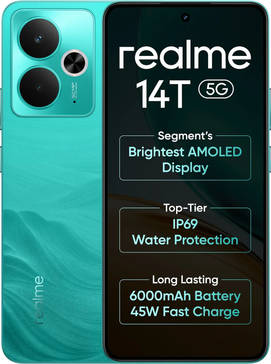
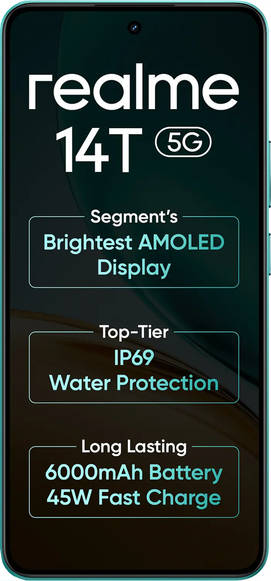
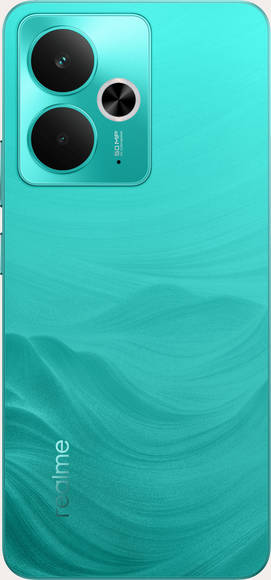




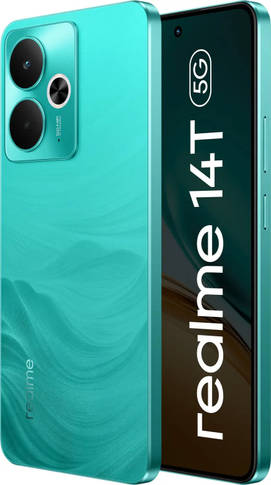
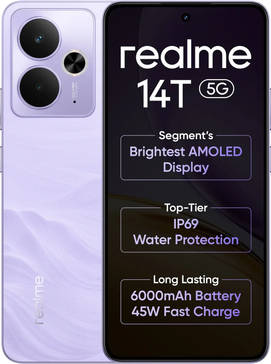
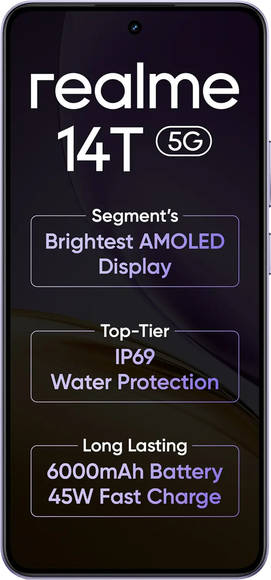
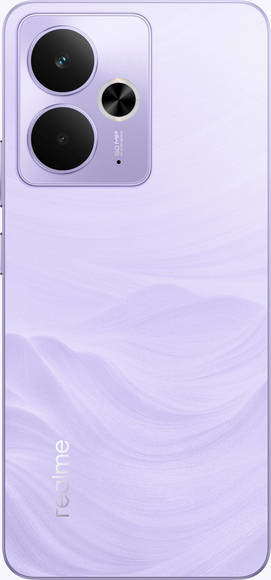




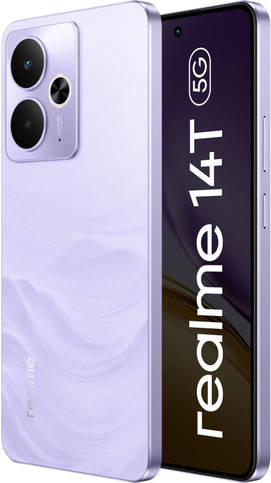




-
Design33

-
Rear Camera14

-
Front Camera4

-
360° View
![360° View]()
-
UI Screenshot17
![UI Screenshot]()
-
Videos2
![Videos]()



Key Specs
Performance
-
MediaTek Dimensity 6300 -
Octa core (2.4 GHz, Dual Core + 2 GHz, Hexa Core) -
8 GB RAM, LPDDR4X
Display
-
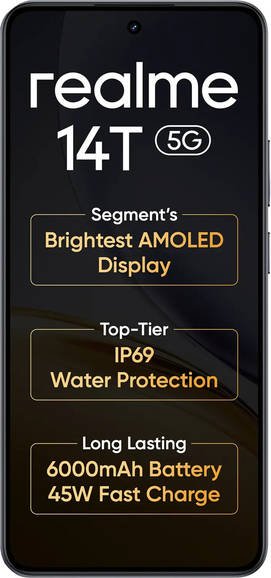
6.67 inches (16.94 cm); AMOLED -
1080x2400 px (FHD+) -
120 Hz Refresh Rate -
Bezel-less with punch-hole display
Rear Camera
-
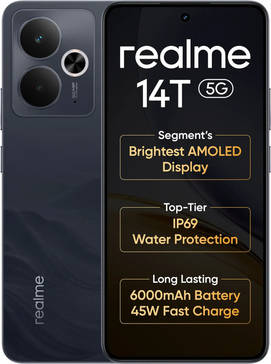
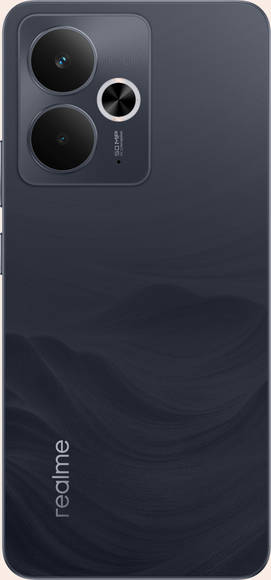
Dual Camera Setup - 50 MP (upto 10x Digital Zoom) Wide Angle Primary Camera
- 2 MP Mono Camera
-
LED Flash -
Full HD @60 fps Video Recording
Front Camera
-
16 MP Wide Angle Lens -
Screen flash -
Full HD @30 fps Video Recording
Battery
-
6000 mAh, Li-Polymer -
45W Super VOOC Charging; USB Type-C port
General
-
SIM1: Nano, SIM2: Nano (Hybrid) -
5G Supported -
128 GB / 256 GB Storage, Expandable upto 2 TB -
Dust Resistant, Water Resistant
realme 14T Prices in India
 Amazon
realme 14T Compare Camera Samples










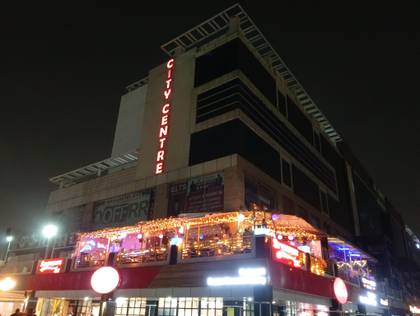


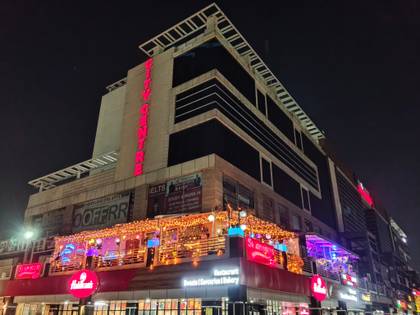






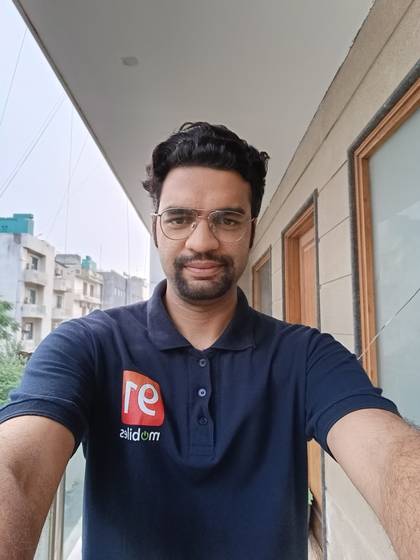
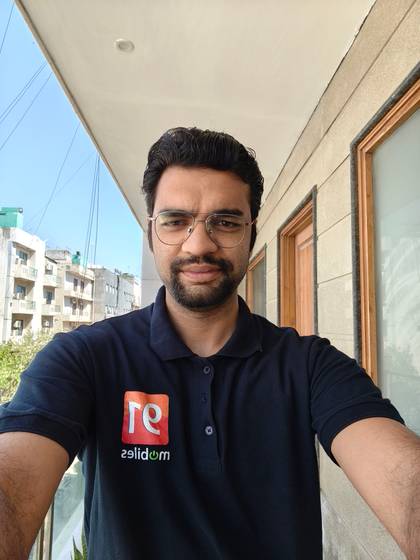

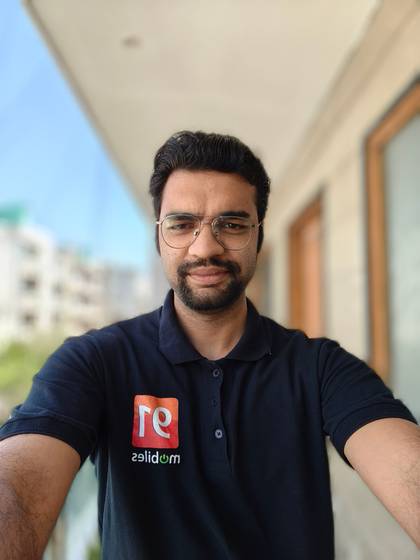

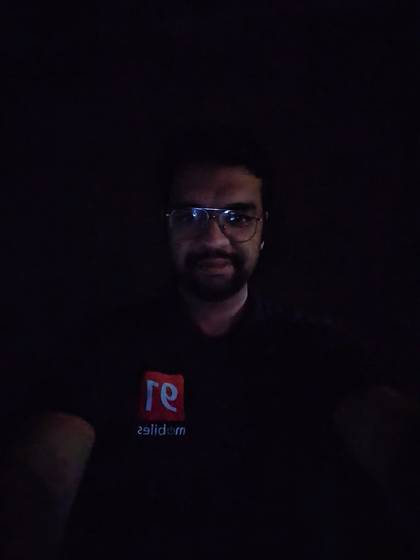


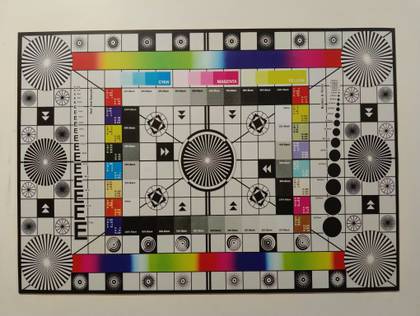
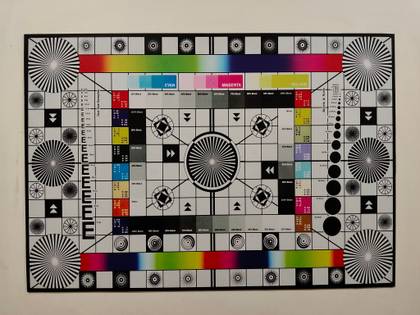








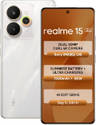
realme 14T Expert Review Summary
Expert Rating:
![Dhruv Joshi]()
Verdict
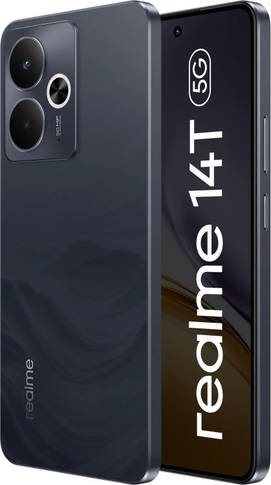
The Realme 14T offers a good overall experience with its IP69-rated sleek design, vibrant display, solid thermals, and decent battery life. While it handles everyday tasks well, its performance could be better, and the cameras struggle in low light. If you are looking for a reliable phone that covers all the basics, especially multimedia and battery life, the Realme 14T is definitely worth considering.
Pros
- Sleek design with IP69 rating
- Rich multimedia experience
- Good thermals
- Decent battery life
Cons
- Performance could be better
- Average low light photography
- Pre-installed apps
Design and display
+
SmartphonesThicknessWeightIP RatingRealme 14T7.8 mm196 gramsIP66 + IP68 + IP69Redmi Note 147.99 mm190 gramsIP64Infinix Note 50s7.6 mm180 gramsIP65
Read More
Cameras
+
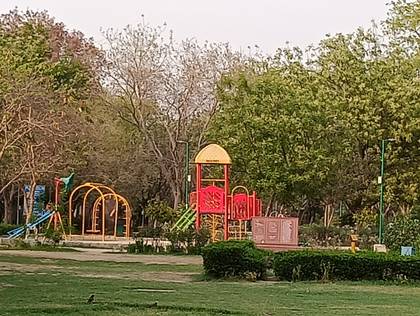
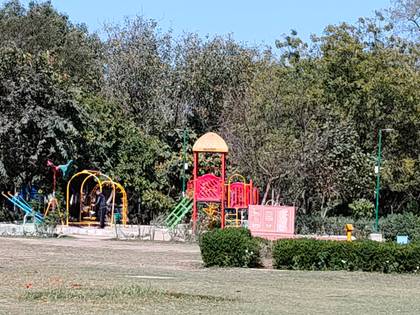
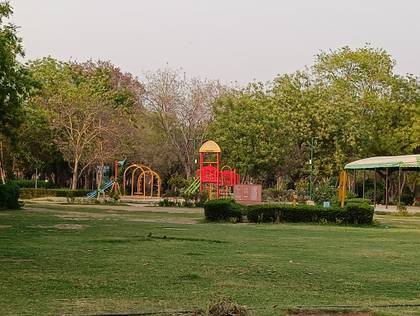
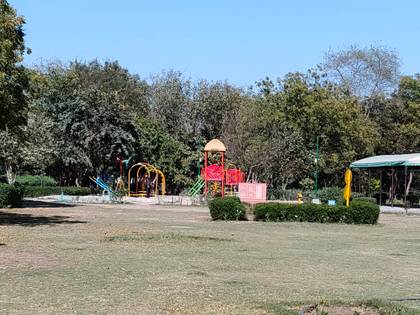
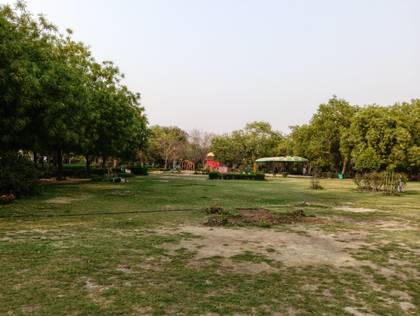
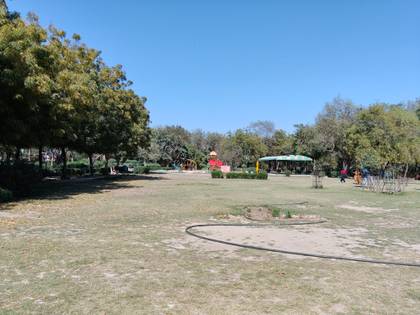
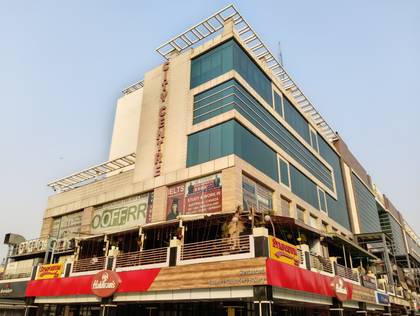
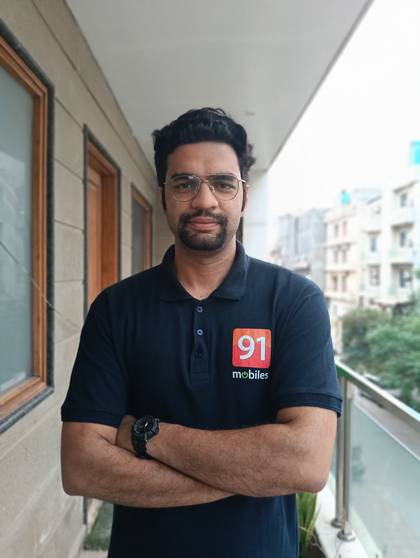
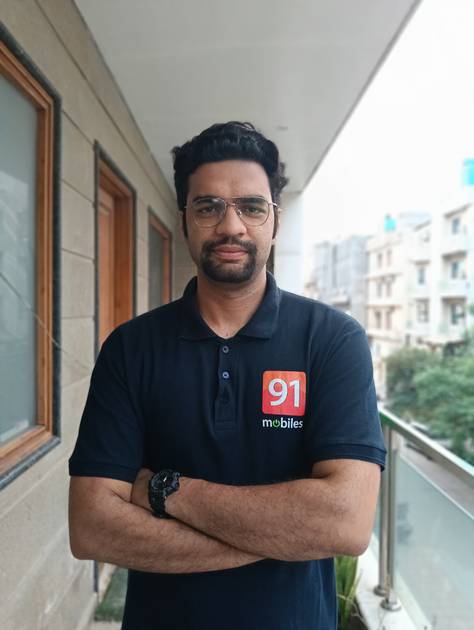
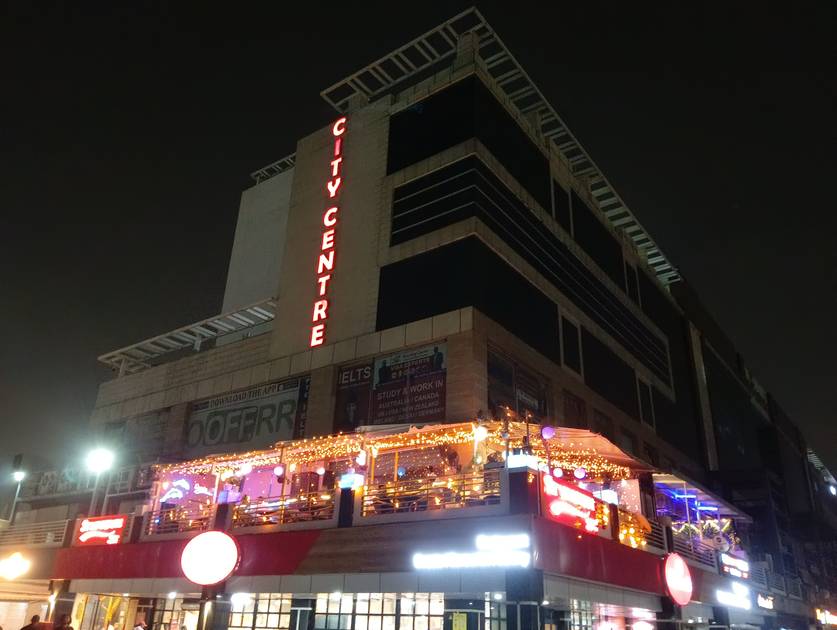
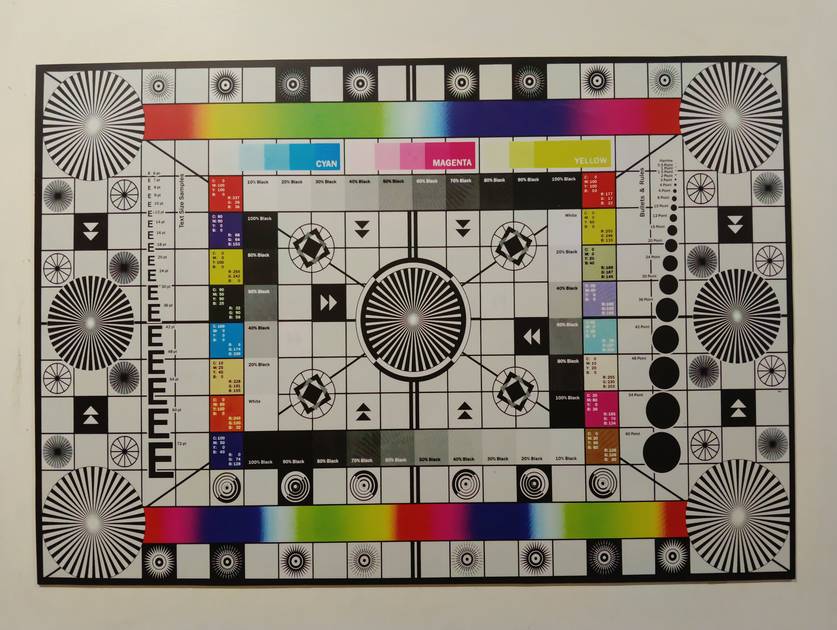
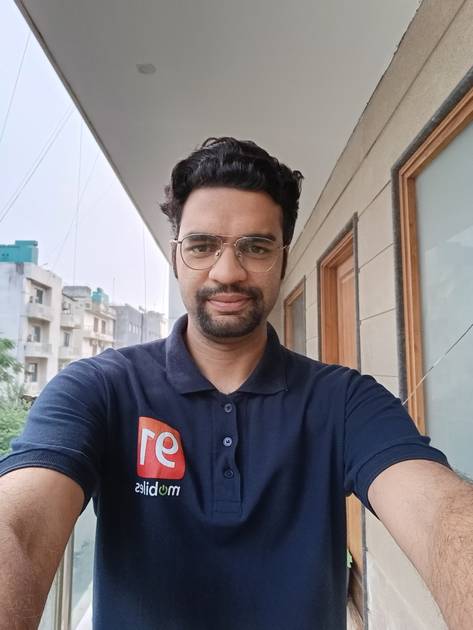
The Realme 14T packs a 50MP main camera and a 2MP monochrome sensor, while a 16MP front camera handles selfies. An ultra-wide would've been more useful than the monochrome, and the lack of OIS means videos aren't as stable.In daylight, the main camera captures detailed, vibrant shots with slightly boosted colours and contrast, ideal for social media. You can also shoot live photos, which is a neat extra. The selfie camera performs well in good lighting, but both sensors struggle in low light. Even with Night Mode, shots appear soft and noisy, though this is expected at this price.I tested the Realme 14T's camera against some of its key rivals including the Redmi Note 14 (review) and the new Infinix Note 50s. Here's how it compares:DaylightThere are a few key differences between the daylight shots of the Realme 14T and the Redmi Note 14. The Realme 14T's colour science leans towards cooler hues, while the Redmi Note 14 tends to skew towards warmer tones. In terms of detail level, the former also does a slightly better job, as it has more defined objects like the trees in the background, the ground detail level, etc. The Redmi Note 14 also overexposes the shadows, which makes the image appear flat in comparison to its competitor. The Infinix Note 50s's colour science is quite similar to the Realme 14T's, but where it differs is its contrast level. The former's contrast is higher and with its boosted colours, it makes for a more appealing result. Details are on par in both images, although the Note 50s shows noise in the darker areas of the image, while the Realme 14T's image stays clean. Both phones are pretty aggressive in their colour tuning and put out vibrant, social-media-ready images. PortraitIn portrait shots, the Realme 14T delivers a more accurate skin tone reproduction, while the Redmi Note 14 brightens the subject's skin tone. They both have a decent amount of facial detail, but the Realme 14T's clarity level is just a smidge better. The Redmi Note 14 handles edge detection better than its competitor, but its overall image has slightly high exposure, which makes the colours appear washed out. Notably, both phones heavy boost the surrounding colours, providing an unnatural result, but in a pleasing way.The Realme 14T outperforms the Infinix Note 50s in portraits for mostly the same reasons. Realme's colours are relatively closer to reality, and it handles exposure better than the Infinix Note 50s. The Note 50s, however, has better sharpness and clarity, but its edge detection is a notch below the Realme 14T. SelfieThe Realme 14T takes good selfies with accurate skin tone reproduction. It also has excellent sharpness, even when compared to the Redmi Note 14. One drawback, however, is that it tends to smooth out the facial details, which the Note 14 preserves better. The Realme 14T also adds a slight bokeh effect to its selfies, which leads to a loss of detail in the background, while the Redmi Note 14 preserves both foreground and background detail.The Infinix Note 50s gives some tough competition to the Realme 14T when it comes to selfies. The former's sharpness level is just as good and it makes the colours more vibrant, which makes the shot look more appealing. The Realme 14T, in comparison, preserves facial details better, as the Note 50s tends to smooth them out. Low-lightAt night, both the Realme 14T and Redmi Note 14 struggle to capture decent shots, even with night mode enabled. The Realme 14T turns up the contrast and preserves the scene, but its image, when looked at closer, is quite soft with blurry objects. The Redmi Note 14, on the other hand, manages objects slightly better, but the difference is quite marginal. Both phones also struggle with light sources equally. While the Infinix Note 50s does a commendable job with details, sharpness and objects at night, it ends up with an overexposed image that looks a little hazy. While the Realme 14T's shot isn't as detailed or sharp, it does a much better job with exposure control and balancing colours, which makes the image look more appealing in comparison.
Read More
Performance and software
+
The Realme 14T is powered by the MediaTek Dimensity 6300, paired with up to 8GB of LPDDR4X RAM and 256GB of UFS 2.2 storage, expandable up to 1TB via microSD. It is a strange choice for this price, given that the chipset is now widely seen in budget phones at around the Rs 10,000 mark.As expected, performance isn't the phone's strongest suit. It handles basic tasks like browsing, chatting, and streaming reasonably well, but there's some delay when opening apps. You may also notice occasional stuttering while heavy multitasking.Still, the phone managed to surprise me when it came to gaming. Despite its modest chipset, it delivered stable performance in COD: Mobile and BGMI—running at 60 fps and 30 fps, respectively, on medium graphical settings. You can also drop the settings in BGMI to improve frame rates even further, which makes it quite usable for casual gaming. The heat management is excellent, with an average increase of just 4.5 degrees Celsius over 30 minutes of gaming. On the software front, it runs Realme UI 6 based on Android 15. The interface is smooth for the most part, but the preloaded apps and services do make it feel quite cluttered. However, Realme has provided the option to disable some features, such as the Realme Glance, Hot Apps, and Hot Games, for a smoother and cleaner user experience.Software support is in line with what you'd expect at this price, but it is still nice to have the latest Android version out of the box. There's not much in the way of AI features, but you still get basics like Circle to Search and Gemini support as a part of the Android 15 OS. SmartphonesPre-installed appsSoftware supportRealme 14T712 OS upgrades + 3 years securityRedmi Note 14662 OS upgrades + 4 years securityInfinix Note 50s482 OS upgrades + 3 years security
Read More
Battery and charging
+
The phone packs a 6,000mAh battery with support for 45W fast charging, and you also get a compatible charger in the box. The phone scored well above average in our battery benchmark and its actual performance is pretty spot on as well. It registered a total battery drop of 20 percent over 2 hours of heavy testing, including gaming and streaming.The result is substantially better than the segment average of 25 percent, although competitors with similar batteries or bigger cells, like the OPPO K13 (review), do give it tough competition. Despite its large battery, charging time is pretty minimal at just a little over an hour. So if you like speedy charging, you've got it. SmartphonesBatteryCharging timeRealme 14T6,000 mAh65 minutes (45W)Redmi Note 145,110 mAh65 minutes (45W)Infinix Note 50s5,500 mAh65 minutes (45W)
Read More
Read full Review

Verdict
The Realme 14T offers a good overall experience with its IP69-rated sleek design, vibrant display, solid thermals, and decent battery life. While it handles everyday tasks well, its performance could be better, and the cameras struggle in low light. If you are looking for a reliable phone that covers all the basics, especially multimedia and battery life, the Realme 14T is definitely worth considering.
- Sleek design with IP69 rating
- Rich multimedia experience
- Good thermals
- Decent battery life
Pros
- Performance could be better
- Average low light photography
- Pre-installed apps
Cons
Design and display
+SmartphonesThicknessWeightIP RatingRealme 14T7.8 mm196 gramsIP66 + IP68 + IP69Redmi Note 147.99 mm190 gramsIP64Infinix Note 50s7.6 mm180 gramsIP65
Read MoreCameras
+The Realme 14T packs a 50MP main camera and a 2MP monochrome sensor, while a 16MP front camera handles selfies. An ultra-wide would've been more useful than the monochrome, and the lack of OIS means videos aren't as stable.In daylight, the main camera captures detailed, vibrant shots with slightly boosted colours and contrast, ideal for social media. You can also shoot live photos, which is a neat extra. The selfie camera performs well in good lighting, but both sensors struggle in low light. Even with Night Mode, shots appear soft and noisy, though this is expected at this price.I tested the Realme 14T's camera against some of its key rivals including the Redmi Note 14 (review) and the new Infinix Note 50s. Here's how it compares:DaylightThere are a few key differences between the daylight shots of the Realme 14T and the Redmi Note 14. The Realme 14T's colour science leans towards cooler hues, while the Redmi Note 14 tends to skew towards warmer tones. In terms of detail level, the former also does a slightly better job, as it has more defined objects like the trees in the background, the ground detail level, etc. The Redmi Note 14 also overexposes the shadows, which makes the image appear flat in comparison to its competitor. The Infinix Note 50s's colour science is quite similar to the Realme 14T's, but where it differs is its contrast level. The former's contrast is higher and with its boosted colours, it makes for a more appealing result. Details are on par in both images, although the Note 50s shows noise in the darker areas of the image, while the Realme 14T's image stays clean. Both phones are pretty aggressive in their colour tuning and put out vibrant, social-media-ready images. PortraitIn portrait shots, the Realme 14T delivers a more accurate skin tone reproduction, while the Redmi Note 14 brightens the subject's skin tone. They both have a decent amount of facial detail, but the Realme 14T's clarity level is just a smidge better. The Redmi Note 14 handles edge detection better than its competitor, but its overall image has slightly high exposure, which makes the colours appear washed out. Notably, both phones heavy boost the surrounding colours, providing an unnatural result, but in a pleasing way.The Realme 14T outperforms the Infinix Note 50s in portraits for mostly the same reasons. Realme's colours are relatively closer to reality, and it handles exposure better than the Infinix Note 50s. The Note 50s, however, has better sharpness and clarity, but its edge detection is a notch below the Realme 14T. SelfieThe Realme 14T takes good selfies with accurate skin tone reproduction. It also has excellent sharpness, even when compared to the Redmi Note 14. One drawback, however, is that it tends to smooth out the facial details, which the Note 14 preserves better. The Realme 14T also adds a slight bokeh effect to its selfies, which leads to a loss of detail in the background, while the Redmi Note 14 preserves both foreground and background detail.The Infinix Note 50s gives some tough competition to the Realme 14T when it comes to selfies. The former's sharpness level is just as good and it makes the colours more vibrant, which makes the shot look more appealing. The Realme 14T, in comparison, preserves facial details better, as the Note 50s tends to smooth them out. Low-lightAt night, both the Realme 14T and Redmi Note 14 struggle to capture decent shots, even with night mode enabled. The Realme 14T turns up the contrast and preserves the scene, but its image, when looked at closer, is quite soft with blurry objects. The Redmi Note 14, on the other hand, manages objects slightly better, but the difference is quite marginal. Both phones also struggle with light sources equally. While the Infinix Note 50s does a commendable job with details, sharpness and objects at night, it ends up with an overexposed image that looks a little hazy. While the Realme 14T's shot isn't as detailed or sharp, it does a much better job with exposure control and balancing colours, which makes the image look more appealing in comparison.
Read MorePerformance and software
+The Realme 14T is powered by the MediaTek Dimensity 6300, paired with up to 8GB of LPDDR4X RAM and 256GB of UFS 2.2 storage, expandable up to 1TB via microSD. It is a strange choice for this price, given that the chipset is now widely seen in budget phones at around the Rs 10,000 mark.As expected, performance isn't the phone's strongest suit. It handles basic tasks like browsing, chatting, and streaming reasonably well, but there's some delay when opening apps. You may also notice occasional stuttering while heavy multitasking.Still, the phone managed to surprise me when it came to gaming. Despite its modest chipset, it delivered stable performance in COD: Mobile and BGMI—running at 60 fps and 30 fps, respectively, on medium graphical settings. You can also drop the settings in BGMI to improve frame rates even further, which makes it quite usable for casual gaming. The heat management is excellent, with an average increase of just 4.5 degrees Celsius over 30 minutes of gaming. On the software front, it runs Realme UI 6 based on Android 15. The interface is smooth for the most part, but the preloaded apps and services do make it feel quite cluttered. However, Realme has provided the option to disable some features, such as the Realme Glance, Hot Apps, and Hot Games, for a smoother and cleaner user experience.Software support is in line with what you'd expect at this price, but it is still nice to have the latest Android version out of the box. There's not much in the way of AI features, but you still get basics like Circle to Search and Gemini support as a part of the Android 15 OS. SmartphonesPre-installed appsSoftware supportRealme 14T712 OS upgrades + 3 years securityRedmi Note 14662 OS upgrades + 4 years securityInfinix Note 50s482 OS upgrades + 3 years security
Read MoreBattery and charging
+The phone packs a 6,000mAh battery with support for 45W fast charging, and you also get a compatible charger in the box. The phone scored well above average in our battery benchmark and its actual performance is pretty spot on as well. It registered a total battery drop of 20 percent over 2 hours of heavy testing, including gaming and streaming.The result is substantially better than the segment average of 25 percent, although competitors with similar batteries or bigger cells, like the OPPO K13 (review), do give it tough competition. Despite its large battery, charging time is pretty minimal at just a little over an hour. So if you like speedy charging, you've got it. SmartphonesBatteryCharging timeRealme 14T6,000 mAh65 minutes (45W)Redmi Note 145,110 mAh65 minutes (45W)Infinix Note 50s5,500 mAh65 minutes (45W)
Read MoreCompetitors For realme 14T
View Alternatives









Popular Comparisons
 realme 14T
 OPPO A5 Pro
realme 14T
 realme P3
realme 14T
 OPPO K13 5G
realme 14T
 vivo T4X
realme 14T
 Xiaomi Redmi Note 14 5G
realme 14T
 vivo Y39


realme 14T Specifications
General |
|
|---|---|
| Launch Date | April 25, 2025 (Official) |
| Operating System | Android v15 |
| OS Updates | 3 Years |
| Security Updates | 4 Years |
| Custom UI | Realme UI |
Performance
(Good)
|
||||||
|---|---|---|---|---|---|---|
| Chipset | MediaTek Dimensity 6300 View Details | |||||
| Processor | Octa core (2.4 GHz, Dual core, Cortex A76 + 2 GHz, Hexa Core, Cortex A55) | |||||
| Architecture | 64 bit | |||||
| Fabrication | 6 nm | |||||
| Graphics (GPU) | Mali-G57 MC2 | |||||
| RAM | 8 GB | |||||
| RAM Type | LPDDR4X | |||||
| Cooling Technology | Vapor Chamber | |||||
|
Gaming Test Results

* after 30 mins of gaming
|
||||||
Benchmark Screenshots
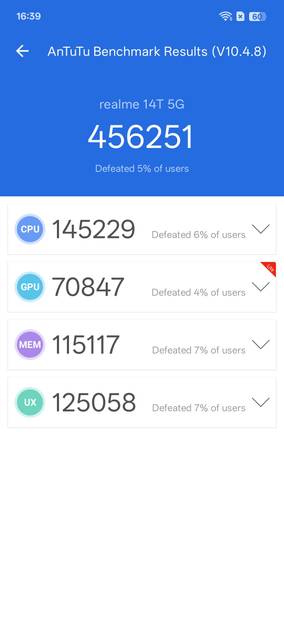
AnTuTu Benchmark
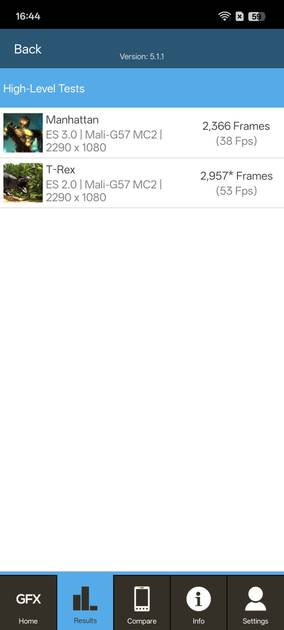
Graphics Benchmark
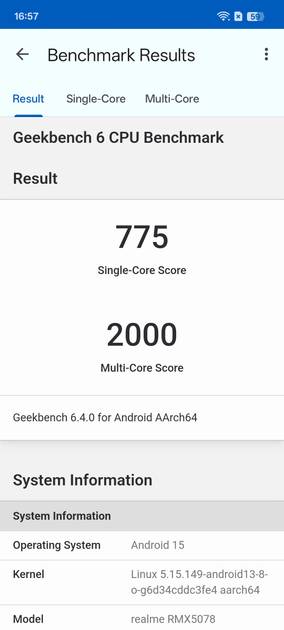
Geekbench6 Benchmark
|


Display
(Excellent)
|
|
|---|---|
| Display Type | AMOLED |
| Screen Size | 6.67 inches (16.94 cm) |
| Resolution | 1080x2400 px (FHD+) |
| Peak Brightness | 2100 nits |
| HBM Brightness | 1200 nits |
| Refresh Rate | 120 Hz |
| Touch Sampling Rate | 180 Hz |
| Aspect Ratio | 20:9 |
| Pixel Density | 395 ppi |
| Screen to Body Ratio (calculated) | 87.03 % |
| Bezel-less Display | Yes with punch-hole display |
| Screen to Body Ratio (claimed by the brand) | 92.7 % |
UI Screenshots

Lock Screen
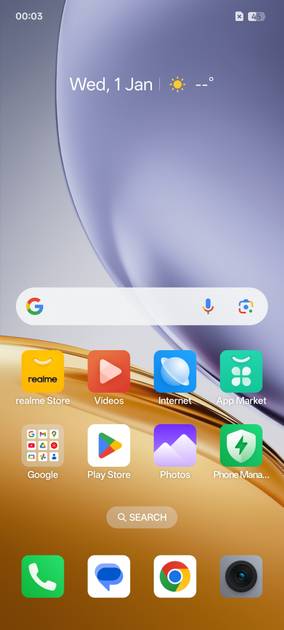
Home Screen
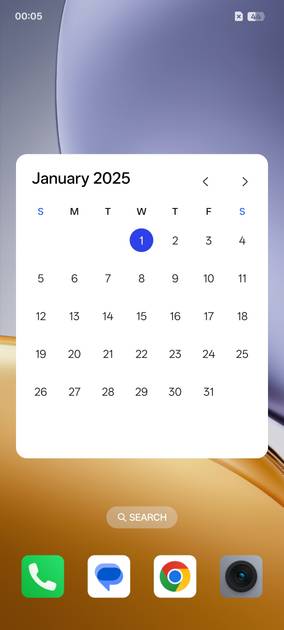
Screen With Widgets

Dialer Screen
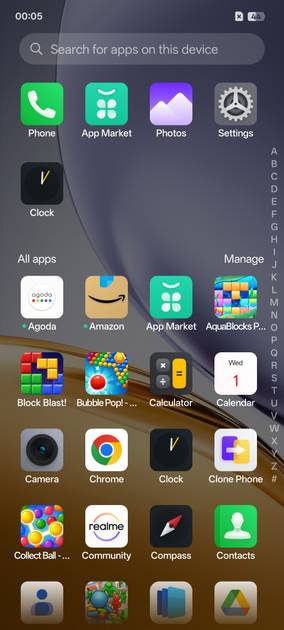
App Drawer

Notification Panel
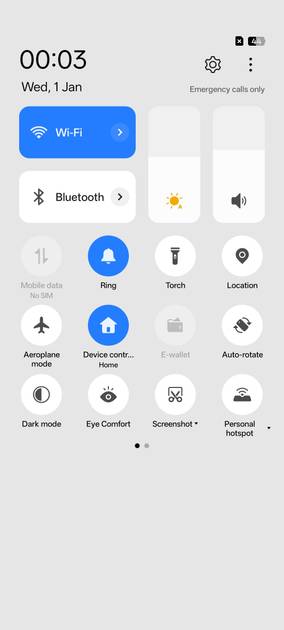
Quick Settings Panel
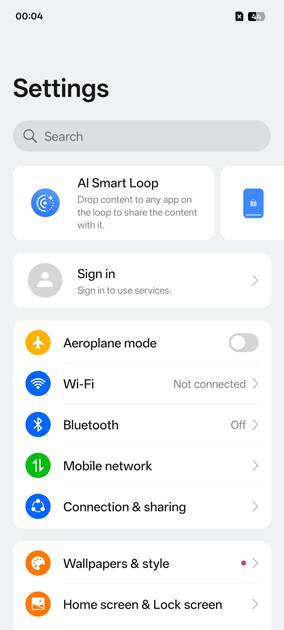
Settings Screen
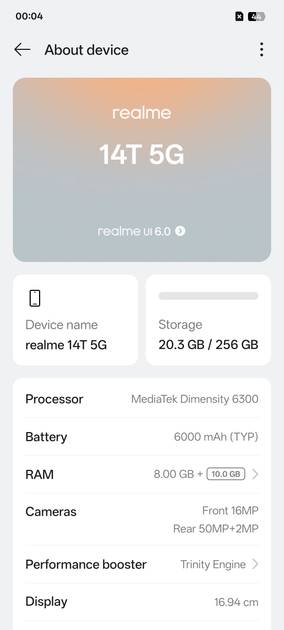
OS Version
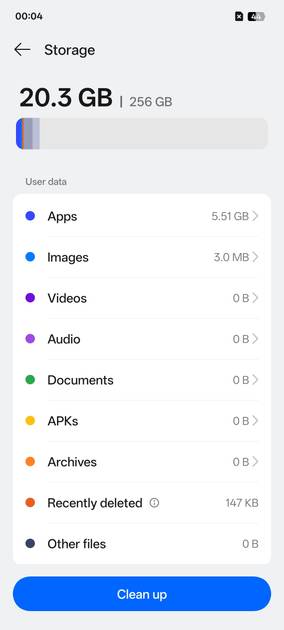
Storage
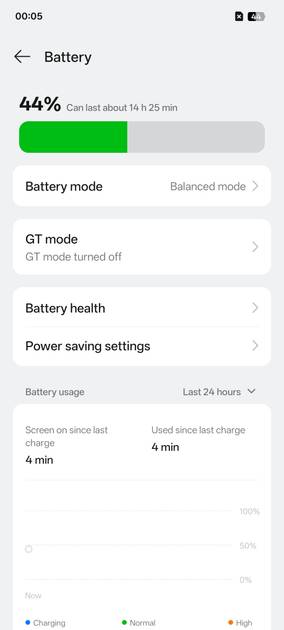
Battery

Camera On

Camera Options
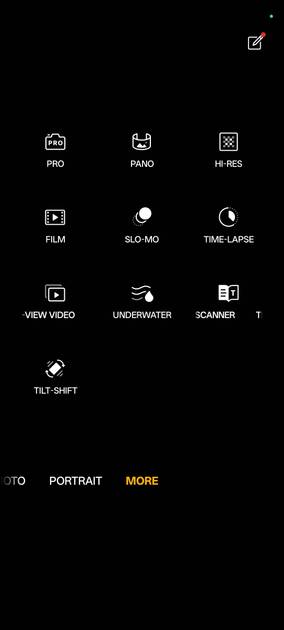
Camera Modes
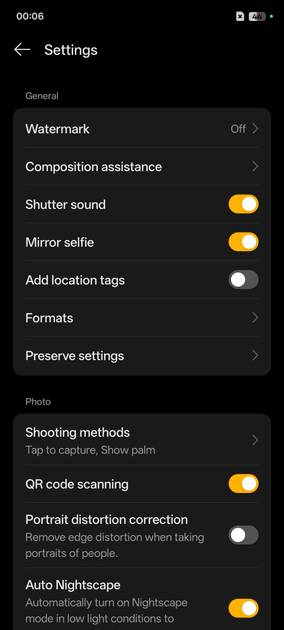
Camera Settings
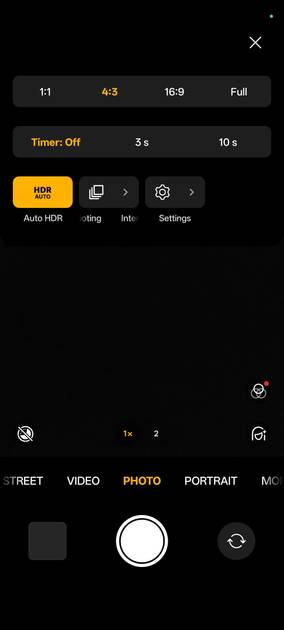
Picture Size Options
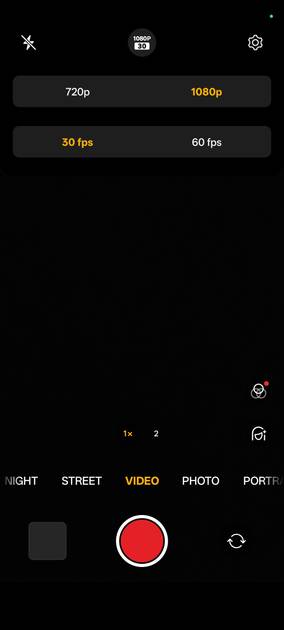
Video Size Options
|
Design |
|
|---|---|
| Height | 163.15 mm |
| Width | 75.65 mm |
| Thickness | 7.97 mm |
| Weight | 196 grams |
| Build Material | Back: Plastic |
| Water Resistance | Yes, Water resistant, IP68, IP66, IP69, (up to 30 minutes in a depth of 2.5 meter) |
| Ruggedness | Dust proof |
|
Click to View

|
Rear Camera
(Good)
|
|||||||||||||||||||||||||||
|---|---|---|---|---|---|---|---|---|---|---|---|---|---|---|---|---|---|---|---|---|---|---|---|---|---|---|---|
| Resolution | |||||||||||||||||||||||||||
|
|||||||||||||||||||||||||||
| Autofocus | Yes, Phase Detection Autofocus | ||||||||||||||||||||||||||
| Flash | Yes, LED Flash | ||||||||||||||||||||||||||
| Image Resolution | 8150 x 6150 Pixels | ||||||||||||||||||||||||||
| Settings | Exposure compensation, ISO control | ||||||||||||||||||||||||||
| Shooting Modes |
Continuous Shooting High Dynamic Range mode (HDR) |
||||||||||||||||||||||||||
| Camera Features |
10 x Digital Zoom Auto Flash Face detection Touch to focus |
||||||||||||||||||||||||||
| Video Recording |
Full HD @60 fps HD @60 fps |
||||||||||||||||||||||||||
| Video Recording Features | Dual Video Recording | ||||||||||||||||||||||||||
Rear Camera Samples

Daylight / HDR Auto

Max Zoom Supported 10x

Long Shot 10X

Long Shot 5X

Long Shot 3X
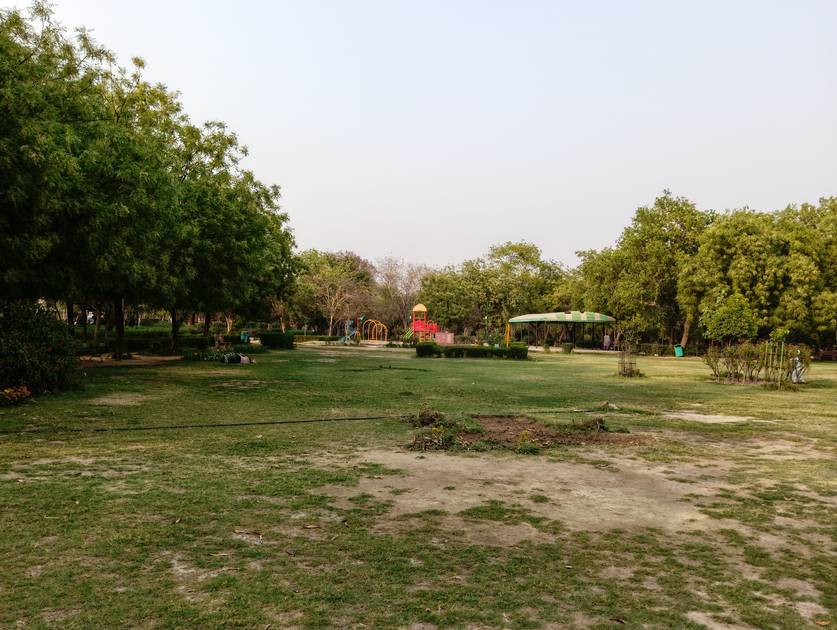
Long Shot 1X
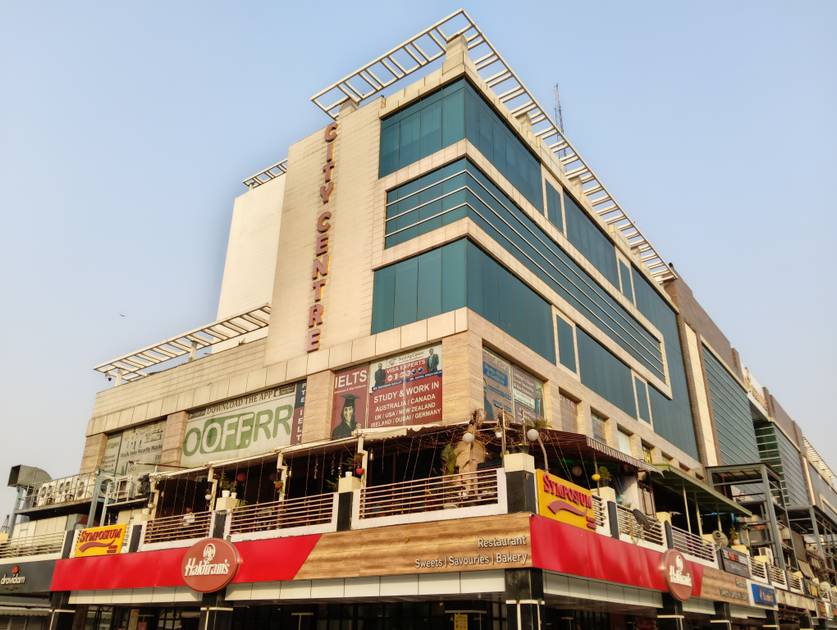
High Res
Portrait Shot
Night Mode OFF

Night Mode ON

Close Up

Low Light

Low Light With Flash
Colour Variance
|
Front Camera
(Very Good)
|
||||||||||||||||
|---|---|---|---|---|---|---|---|---|---|---|---|---|---|---|---|---|
| Resolution | ||||||||||||||||
|
||||||||||||||||
| Flash | Yes, Screen flash | |||||||||||||||
| Camera Features | Fixed Focus | |||||||||||||||
| Video Recording |
Full HD @30 fps HD @30 fps |
|||||||||||||||
Front Camera Samples
Selfie

Selfie Portrait

Selfie Low Light

Selfie Low Light With Flash
|
Battery
(Very Good)
|
||||
|---|---|---|---|---|
| Capacity | 6000 mAh | |||
| Battery Type | Li-Polymer | |||
| Quick Charging | Yes, 45W Super VOOC Charging, 50% in 30 minutes | |||
|
Battery Test Results
|
Storage |
|
|---|---|
| Internal Storage | 128 GB / 256 GB |
| Storage Type | UFS 2.2 |
| Expandable Storage | Yes, Up to 2 TB |
Network & Connectivity |
|
|---|---|
| SIM Slot(s) | Dual SIM |
| SIM Type | SIM1: Nano, SIM2: Nano (Hybrid) |
| Network Support | 5G, 4G |
| VoLTE | Yes |
| SIM 1 |
5G bands, 4G bands
Expand
|
| SIM 2 |
5G bands, 4G bands
Expand
|
| SAR Value | Head: 1.170 W/kg, Body: 0.829 W/kg |
| Wi-Fi | Yes, Wi-Fi 5 (802.11 a/b/g/n/ac) 5GHz |
| Wi-Fi Features | Mobile Hotspot |
| Bluetooth | Yes, v5.3 |
| GPS | Yes with A-GPS, Glonass |
| NFC | No |
Multimedia |
|
|---|---|
| Stereo Speakers | Yes |
| Audio Jack | USB Type-C |
Sensors |
|
|---|---|
| Fingerprint Sensor | Yes |
| Fingerprint Sensor Position | On-screen |
| Fingerprint Sensor Type | Optical |
| Other Sensors | Light sensor, Proximity sensor, Accelerometer, Compass, Gyroscope |
realme 14T User Reviews
realme 14T Key Highlights
| Processor | MediaTek Dimensity 6300 |
| RAM & Storage | 8 GB RAM + 128 GB 8 GB RAM + 256 GB |
| Display | 6.67", 1080 x 2400 Resolution |
| Rear Camera | 50 MP + 2 MP |
| Front Camera | 16 MP |
| Battery | 6000 mAh |
























realme 14T Price In India
| Product Name | Store | Price |
|---|---|---|
| realme 14T (8 GB + 128 GB) | Flipkart | ₹16,499 |
| realme 14T (8 GB + 128 GB) | Amazon | ₹25,999 |
| realme 14T (8 GB + 256 GB) | Flipkart | ₹19,999 |
Popular Links
- All Upcoming Phones
- Upcoming realme Phones
- Samsung Galaxy F70 5G
- vivo S2 FE 5G
- OPPO Find X10
- OPPO Find X10 Pro Max
- Infinix GT 50 Pro
- Samsung Mobiles
- Motorola Mobiles
- vivo Mobiles
- OPPO Mobiles
- Tecno Mobiles
- realme Mobiles
- OnePlus Mobiles