Best QLED & Mini-LED TVs in India (2026) – The right TV for you!


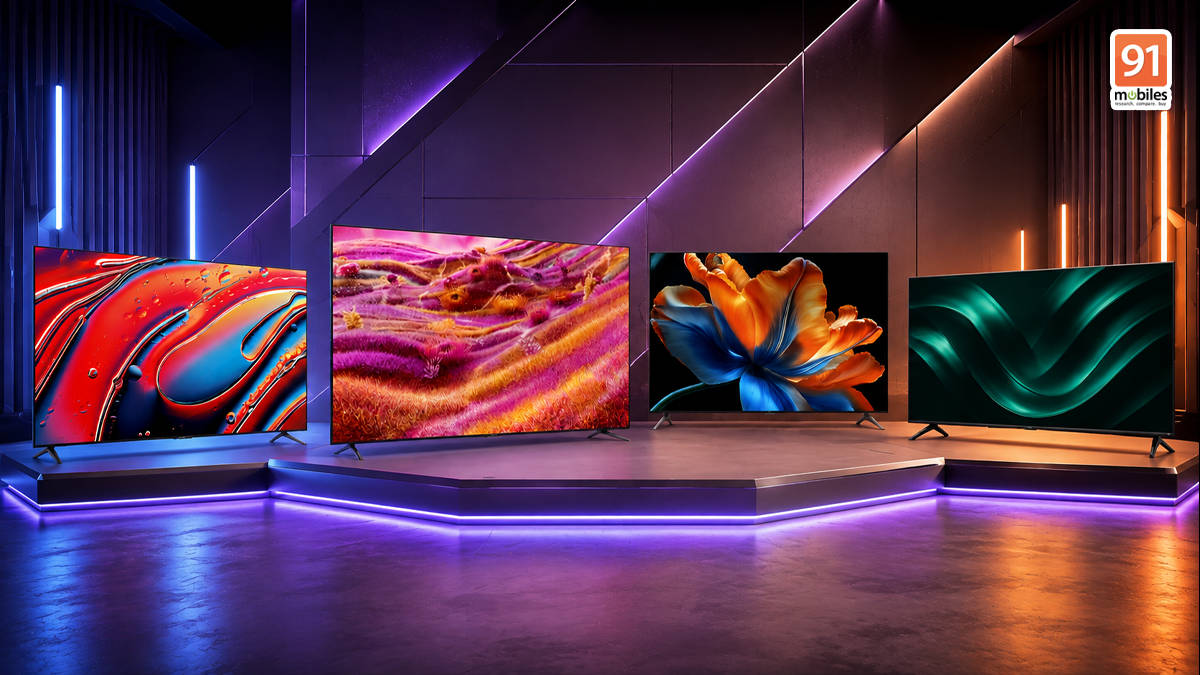
If you are in the market for a new TV but aren’t ready to invest in an OLED, don’t worry. There are other TV technologies available today that give OLED a run for its money. In some use cases, these TVs surpass OLED TVs if you consume content in a bright room or have a direct light source that may cause reflections on the TV. We won’t dive deep into tech jargon here but elaborate on what makes these TVs great for each use case.
Whether you’re a first-time buyer setting up a home theatre, an ecosystem switcher looking for better software, or an upgrader hunting for the best budget QLED, this guide cuts through the noise. It is especially useful for buyers prioritising specific strengths — cinematic HDR, gaming performance, or glare reduction for bright rooms.
While we haven’t reviewed all the TVs on this list, our long history of reviewing TVs combined with a deep understanding of the specs on offer has led us to create this list of recommendations.
The Sony Bravia 9 II emerges as our best overall TV thanks to its True RGB technology and unmatched contrast. The Samsung Neo QLED QN90F is our top premium pick for high-end gaming and glare-free viewing, while the LG QNED evo QNED85BLA handles bright, sunlit rooms effortlessly. For buyers focused on value, the TCL T8D delivers incredible gaming specs, the Xiaomi TV S Mini LED offers stunning local dimming, and the Lumio Vision 9 2026 rules the budget space with flagship-level speed.
Updated for August 2026 with the latest launches, testing data, and price changes.
Table of Contents
Sony Bravia 9 II — Best Overall TV in India
Sony’s flagship Bravia 9 II represents the pinnacle of home entertainment displays, merging cutting-edge backlight engineering with industry-leading processing. Built specifically for videophiles who demand absolute accuracy, this display bridges the gap between high-peak-brightness LED panels and infinite-contrast OLEDs. Running on Google TV with Gemini AI integrations, it serves as a seamless smart centre for any luxury living space.

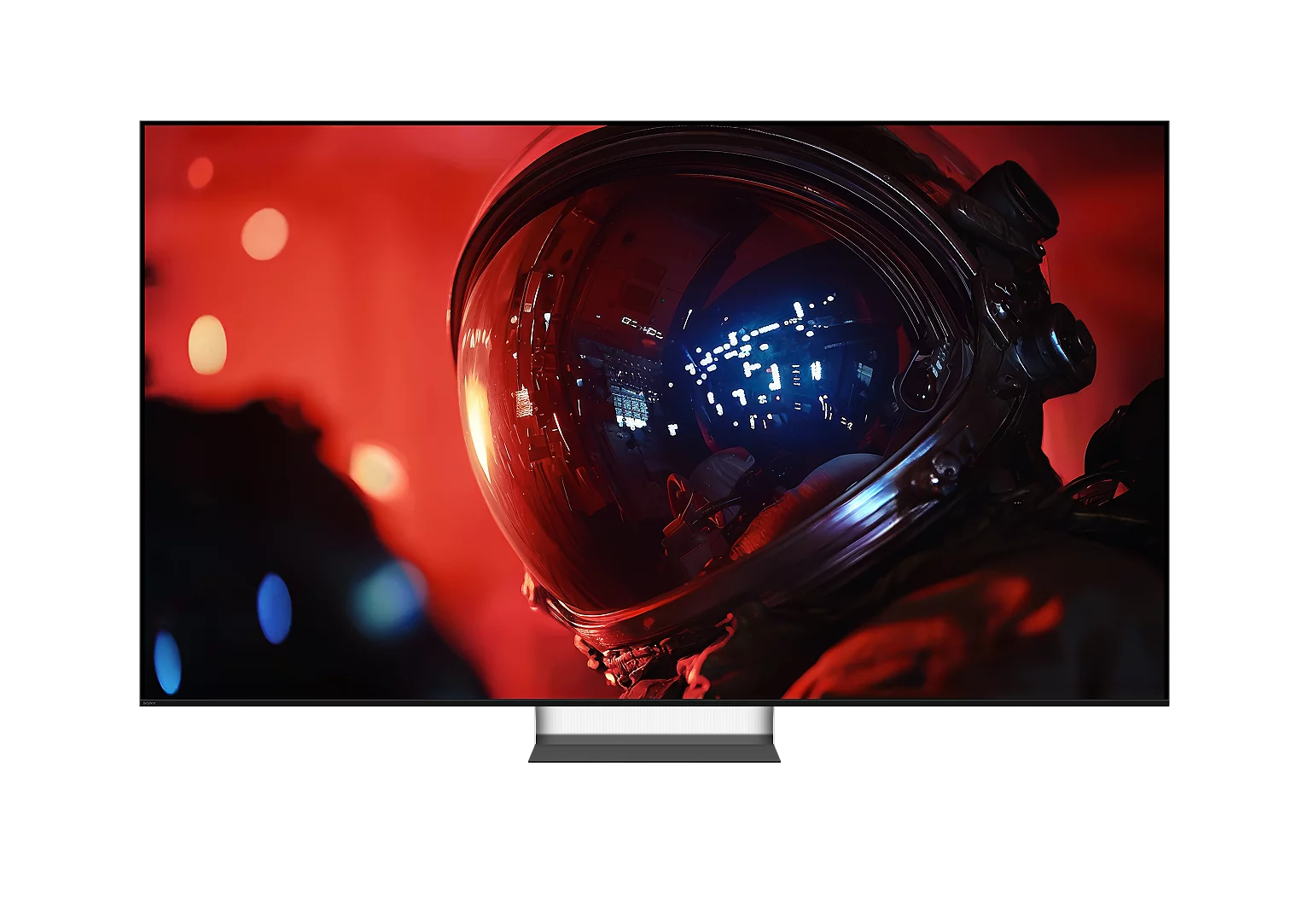
The key unique selling proposition (USP) of the Bravia 9 II is its world-first True RGB Backlight MasterDrive Pro system paired with the Cognitive Processor XR. Unlike traditional Mini-LEDs that use blue backlights with colour filters, Sony independently controls discrete red, green, and blue LEDs at the light source. This delivers the highest colour volume in Sony’s television history, wider viewing angles, and virtually eliminates haloing and blooming around bright objects.
We recommend the Sony Bravia 9 II as our Best Overall TV because it delivers the most balanced flagship experience currently available. By combining cinema-grade RGB colour rendering, zero noticeable blooming, and a massive 80W Acoustic Multi-Audio+ sound system that replaces the need for a mid-range soundbar, it offers an uncompromising cinematic experience for discerning buyers.
Key Specifications
- Processor: Cognitive Processor XR (AI XR)
- Display: 4K Ultra HD True RGB LED (75″, 85″), 120Hz Refresh Rate
- Sound: 80W 2.2.2-Channel Acoustic Multi-Audio+ (Dolby Atmos, DTS:X)
- OS/Storage: Google TV / 32GB
- Ports: 4x HDMI (2x HDMI 2.1 with 4K@120Hz/VRR/ALLM/eARC, 2x HDMI 2.0), 2x USB, Ethernet, Optical
- Key Features: RGB Backlight MasterDrive Pro, Immersive Black Screen Pro, Voice Zoom 3
Pros & Cons
Pros
- Class-leading RGB backlight control with zero blooming
- Exceptional built-in 80W audio
- Seamless PS5 Auto HDR integration.
Cons
- Premium price tag starting at Rs 5,39,990
- Limited to large 75-inch and 85-inch screen sizes
Samsung Neo QLED QN90F — Best Premium Neo QLED
Samsung’s Neo QLED QN90F is designed for modern, multifunctional living rooms where daytime viewing, sports, and intensive gaming collide. Powered by the NQ4 AI Gen3 Processor, this Neo QLED panel utilises Quantum Mini LEDs to output remarkable brightness while maintaining tight control over light leakage. It acts as a complete Smart Home hub with integrated SmartThings support and Tizen OS.


The main USP of the Samsung QN90F is its specialised Glare-Free panel coating combined with smooth 120Hz native and 144Hz high-refresh-rate VRR capabilities. The glare-free filter diffuses direct sunlight and indoor lamp reflections without dulling colours or degrading black levels, making it the most resilient display under harsh lighting conditions.
We recommend the Samsung QN90F as the Best Premium Neo QLED because it is the ultimate choice for bright living spaces and high-framerate gaming. Its sub-6ms input lag in Game Mode, combined with reflection cancellation and vast screen size availability (from 55″ up to 115″), makes it the most versatile premium TV on the market.
Key Specifications
- Processor: NQ4 AI Gen3 Processor
- Display: 4K Neo QLED Mini-LED (55″, 65″, 75″, 98″, 115″), 120Hz native (Up to 144Hz Motion Xcelerator)
- Sound: 60W Object Tracking Sound (Dolby Atmos)
- OS: Tizen OS with Samsung Vision AI
- Ports: 4x HDMI 2.1, 2x USB, Ethernet, Optical
- Key Features: Glare-Free Display, 4K AI Upscaling Pro, AI Auto Game Mode
Pros & Cons
Pros
- Industry-leading reflection and glare reduction
- Massive variety of screen sizes up to 115 inches
- Excellent 144Hz gaming performance
Cons
- Lacks native Dolby Vision support (uses HDR10+)
- Tizen UI can feel busy compared to Google TV.
TCL T8D — Best-Value QLED
The TCL T8D brings high-tier Mini-LED QLED technology and advanced gaming features down to an accessible mid-range price point. Designed for entertainment enthusiasts who want flagship specs without paying top-tier prices, the T8D features a sleek zero-bezel design, Google TV operating system, and hands-free voice control.


The standout USP of the TCL T8D is its Dual Line Gate (DLG) technology, which boosts the native 144Hz panel up to a 288Hz refresh rate at 1080p. Combined with its QD-Mini LED local dimming grid and 3GB of system RAM, it provides fluid, competitive gaming performance and fast UI speeds that outclass almost everything in its price bracket.
We recommend the TCL T8D as the best-value QLED because it delivers high-end gaming and panel performance at a fraction of the cost of legacy brands. With native 144Hz VRR support, IMAX Enhanced certification, and responsive 3GB RAM, it offers the single highest value-to-price ratio for gamers and movie lovers shopping under Rs 60,000.
Key Specifications
- Processor: 64-bit Quad-Core AIPQ Processor
- Display: 4K QD-Mini LED QLED (55″), 144Hz Native (288Hz DLG)
- Sound: 34W Speaker System (Dolby Audio)
- OS/Storage: Google TV / 3GB RAM, 32GB Storage
- Ports: 4x HDMI (including HDMI 2.1), 1x USB, LAN, Optical
- Key Features: 288Hz DLG Refresh Rate, IMAX Enhanced, 100% Colour Volume Plus
Pros & Cons
Pros
- High-end 144Hz/288Hz gaming capability
- Generous 3GB RAM
- Strong local dimming contrast
Cons
- 34W internal audio could lack deep sub-bass
- Viewing angles deteriorate quicker when seated far off-centre
Xiaomi TV S Mini LED Series — Best Mini-LED
Xiaomi’s TV S Mini LED (review) Series brings high-density local dimming technology to a broader audience, focusing on maximum picture fidelity per rupee. Encased in a premium metallic unibody frame, this TV utilises Xiaomi’s PatchWall layer over Google TV, offering rich content recommendations alongside deep hardware-level picture controls.


The primary USP of the Xiaomi TV S Mini LED Series is its high-zone local dimming array driven by a dedicated micro-LED controller. This setup precisely manages hundreds of independent dimming zones, achieving high peak contrast and deep, dark black levels that traditional QLED panels cannot replicate.
We recommend the Xiaomi TV S Mini LED as our Best Mini-LED selection because its local dimming algorithm effectively minimises backlight bleed at an aggressive price. Starting at just Rs 52,999 for true Mini-LED hardware with a 60Hz refresh rate, it provides unmatched visual depth for cinematic HDR content on a budget.
Key Specifications
- Processor: Quad-Core A55 / Mali-G52 GPU
- Display: 4K QD Mini-LED (55″), 60Hz Native (120Hz DLG Game Boost)
- Sound: Quad-Driver Stereo Speakers (Dolby Audio, DTS:X)
- OS/Storage: Google TV with PatchWall
- Ports: HDMI, USB, Ethernet, Optical
- Key Features: High-Zone Local Dimming, Ultra-Slim Metallic Unibody, Auto Low Latency Mode (ALLM)
Pros & Cons
Pros:
- Excellent Mini LED picture quality for the price
- Bright, vibrant HDR performance with strong contrast
- Surprisingly good built-in speaker setup
- Great value for a 75-inch premium-style TV
Cons:
- Not a true native 120Hz panel
- Can feel sluggish at times
LG QNED evo MiniLED TV QNED85BLA — Best for Bright Rooms
The LG QNED85BLA combines LG’s Quantum Dot and NanoCell technologies with a Precision Dimming MiniLED backlight system. Powered by the advanced Alpha 8 AI Processor 4K Gen3, it excels at upscaling standard-definition and HD cable feeds to near-4K clarity while running on LG’s refined WebOS 26 ecosystem.


The key USP of the LG QNED85BLA lies in its Dynamic QNED Colour Pro filter, certified for 100% colour volume, paired with LG’s high-sustained SDR/HDR brightness output. By filtering out unwanted light wavelengths, colours remain rich, vibrant, and completely unwashed even when direct sunlight floods the room.
We recommend the LG QNED evo QNED85BLA as the Best for Bright Rooms because of its ability to maintain high saturation and clarity against heavy ambient light. Combined with LG’s intuitive Magic Remote, full HDMI 2.1 gaming support, and reliable wide-angle colour performance, it is the ideal centrepiece for daylight-heavy Indian living rooms.
Key Specifications
- Processor: Alpha 8 AI Processor 4K Gen3
- Display: 4K QNED MiniLED (55″, 65″, 75″, 86″), 120Hz Native (VRR 144Hz)
- Sound: 20W 2.0-Channel Audio (Alpha 8 AI Sound Pro 9.1.2 Virtual Up-mix)
- OS/Storage: WebOS 26 with AI Magic Remote
- Ports: 4x HDMI 2.1 (4K@120Hz/144Hz, eARC), 2x USB, Wi-Fi, Bluetooth 5.3
- Key Features: Dynamic QNED Color Pro, Precision Dimming, AI Picture Pro, FreeSync
Pros & Cons
Pros
- High sustained peak brightness resists ambient room glare
- Highly intuitive WebOS 26 interface with Magic Remote
- Excellent upscaling for regular TV channels.
Cons
- The standard 20W built-in audio setup lacks punch
- Black levels in pitch-black rooms don’t match OLED performance.
Lumio Vision 9 2026 — Best Budget QLED
The Lumio Vision 9 2026 (review) is engineered as a “flagship killer”, offering top-spec display and audio hardware at an accessible price point. Running on Android 14 with a clean Google TV layer, Lumio targets tech-savvy Indian consumers who prioritise rapid UI responsiveness and high gaming framerates.

The standout USP of the Lumio Vision 9 is its combination of a MediaTek Pentonic 700 processor with 3GB of RAM, 32GB of internal storage, and a 50W 2.2 Hexa-Driver speaker array. This high-performance chip and memory pairing makes it one of the fastest budget smart TVs available, completely eliminating menu lag while outputting room-filling sound with dedicated bass drivers.
We recommend the Lumio Vision 9 (2026) as the Best Budget QLED because it delivers premium features—such as a 144Hz QD-MiniLED panel, good peak brightness, and 50W built-in Dolby Atmos sound—at a fraction of legacy market prices. It is an ideal pick for buyers looking for extreme performance on a budget without needing an external soundbar.
Key Specifications
- Processor: MediaTek Pentonic 700 (Quad-Core BOSS Engine)
- Display: 4K QD-MiniLED (55″, 65″), 144Hz Native (240Hz at 1080p)
- Sound: 50W DGS 2.2-Channel Hexa-Driver with Dual Subwoofers (Dolby Atmos)
- OS/Storage: Android 14 (Google TV) / 3GB RAM, 32GB Storage
- Ports: HDMI 2.1 (48Gbps), 3x USB, Wi-Fi 5, Ethernet
- Key Features: 9.7ms Input Lag, fluid UI
Pros & Cons
Pros:
- Superb SDR performance
- Two full HDMI 2.1 ports with support for 4K/144Hz or 1080p/240Hz
- The TLDR app is a great USP
- Punchy audio output
- Super smooth UI
Cons:
- Real-world HDR brightness could be better
- Local dimming deactivates on console inputs
- PS5 HDR needs manual tuning
Comparison table
Model | Price (INR) | Screen Sizes Available | Display Tech | Refresh Rate | OS | Sound Output |
Sony Bravia 9 II | From Rs 5,39,990 | 75″, 85″ | True RGB LED | 120Hz | Google TV | 80W |
Samsung QN90F | From Rs 1,14,690 | 55″, 65″, 75″, 98″, 115″ | Neo QLED Mini-LED | 120Hz / 144Hz | Tizen OS | 60W |
TCL T8D | Rs 53,990 | 55″, 65″, 75″, 85″, 98″ | QD-Mini LED QLED | 144Hz / 288Hz | Google TV | 34W |
Xiaomi TV S Mini LED | Rs 52,999 | 55″, 65″, 75″ | QD Mini-LED | 60Hz / 120Hz DLG | Google TV | Quad Speakers |
LG QNED85BLA | From Rs 77,990 | 55″, 65″, 75″, 86″ | QNED MiniLED | 120Hz / 144Hz | WebOS 26 | 20W |
Lumio Vision 9 (2026) | From Rs 54,999 | 55″, 65″ | QD-MiniLED | 144Hz / 240Hz | Android 14 | 50W |
FAQs
- Which is the absolute best TV in India right now?
The Sony Bravia 9 II is the overall best TV in India. Its True RGB LED backlight system and AI XR Processor produce unprecedented colour accuracy, deep contrast, and class-leading brightness.
- Which TV is best for a bright living room with direct sunlight?
The LG QNED evo MiniLED TV QNED85BLA and Samsung Neo QLED QN90F are the top choices for bright rooms. Both feature high sustained peak brightness and anti-glare panel coatings that eliminate reflections.
- What is the difference between QLED and Mini-LED?
QLED uses Quantum Dots to enhance picture colours and saturation. Mini-LED refers to the physical backlight, using thousands of tiny LEDs for precise local dimming zones. High-end TVs like the Samsung QN90F and Lumio Vision 9 combine both technologies for optimal performance.
- What is the best budget QLED TV to buy in India?
The Lumio Vision 9 (2026) and TCL T8D offer the best budget value. Both cost under ₹60,000 while delivering 144Hz high refresh rates, local dimming, and quick user interfaces.
- Do I need a 120Hz or 144Hz TV for normal DTH television and movies?
No, traditional DTH television, cable, and streaming services broadcast at 24fps, 30fps, or 60fps. However, a 120Hz or 144Hz display is essential if you plan to connect a PlayStation 5, Xbox Series X, or gaming PC.
- Why does the Sony Bravia 9 II cost significantly more than other TVs?
The Sony Bravia 9 II uses a True RGB LED backlight system that controls red, green, and blue LEDs independently. It also includes an 80W built-in acoustic setup and is sold in large 75-inch and 85-inch screen sizes.
- Do I need to buy a separate soundbar for these TVs?
For models like the LG QNED85BLA (20W) or TCL T8D (34W), adding a soundbar improves the home cinema experience. However, models like the Sony Bravia 9 II (80W) and Lumio Vision 9 (50W) feature robust internal audio that negates the need for an entry-level soundbar.
- Which operating system is best: Google TV, WebOS, or Tizen?
Google TV (Sony, TCL, Xiaomi) offers the largest app selection and voice integration. LG’s WebOS 26 provides a fast point-and-click experience with the Magic Remote. Samsung’s Tizen OS excels at integrated Smart Home device control.
- Are there significant spec differences between screen sizes of the same model?
Generally, smaller sizes (like 55-inch) retain the same core processors and operating systems as larger models (75-inch/85-inch) but may feature fewer physical local dimming zones due to smaller surface area.
- What is the ideal TV viewing distance for a 55-inch or 65-inch 4K TV?
For a 55-inch 4K TV, the recommended viewing distance is approximately 5.5 to 7 feet. For a 65-inch 4K TV, the optimal viewing distance is around 6.5 to 8.5 feet for an immersive cinema experience.