Google’s latest affordable Pixel is here, and it’s called the Pixel 10a. The phone is officially priced at Rs 49,999, the same as its predecessor. As a follow-up to the Pixel 9a (review), the Pixel 10a arrives with a few refinements but largely unchanged hardware. We spent some time with the device ahead of its March 6th sale date, and here are our first impressions.
Table of Contents
Design and display
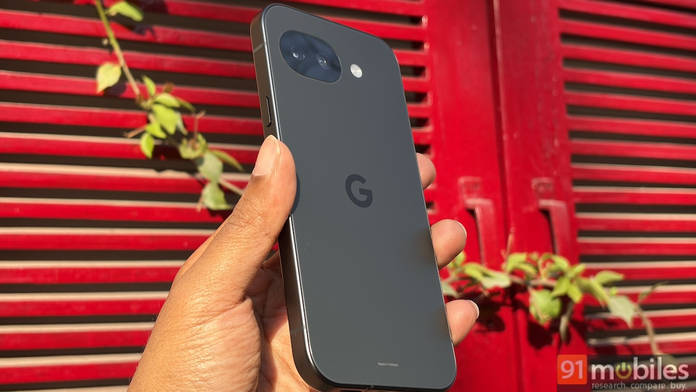
The Pixel 10a continues with the flush camera design introduced on the Pixel 9a, but takes it a step further. Where the 9a still had a slight protruding lip around its pill-shaped camera cutout, the Pixel 10a eliminates that entirely, resulting in a completely bumpless rear panel. It’s a subtle but noticeable refinement that makes the phone feel even cleaner and more minimal in hand.
The textured matte back and satin metal frame feel premium for the price, and the phone is available in four colour options: Lavender, Berry, Fog, and Obsidian. Much like its predecessor, this is a compact phone, making it one of the few handy, one-hand-friendly options in the sub-Rs 50,000 segment.

Performance and software
Here’s where things get a bit complicated. The Pixel 10a is powered by the same Tensor G4 chipset that powered not just the Pixel 9a last year, but also the entire Pixel 9 series the year before. That makes this a two-year-old chip, which is a curious decision, especially since the Pixel 10 series launched with the newer Tensor G5. Google’s likely reasoning is cost control, particularly given the ongoing memory chip shortage pushing phone prices up across the board.
The practical implication is straightforward: don’t expect a performance leap over the Pixel 9a. Rivals in this segment using newer Qualcomm and MediaTek chips will continue to hold an advantage in raw performance benchmarks. Day-to-day tasks should be handled competently, as we’ve seen from the Tensor G4 before, but the Pixel 10a won’t be winning any performance comparisons in 2026.
Where the software experience picks up is with Android 16 out of the box. The interface is as clean and stock as Pixel phones have always been, and the new Material 3 Expressive design brings refreshed wallpaper effects, a modernised notification shade, and a more polished overall look. The seven-year update promise — covering both OS and security patches — remains intact, keeping the phone relevant well into 2032. Google’s AI tools are along for the ride too, including Add Me in camera, Gemini integration across apps, and photo editing via simple text prompts in Google Photos.
Cameras
The Pixel 10a carries over the same 48MP primary sensor and 13MP ultra-wide camera system from the Pixel 9a — no hardware changes here. That’s not necessarily a dealbreaker; the Pixel 9a’s camera system performed reliably in daylight, portraits, and even held its own in low light. The key addition this time is Camera Coach, making its A-series debut. It offers real-time composition tips and step-by-step guidance to help you frame the best shot — a handy feature for users who are just getting into photography. It also gets Auto Best Take from its flagship Pixel 10 siblings.
 Battery

The 5,100mAh battery carries over from the Pixel 9a, which comfortably lasted a full day in our experience. Charging speed has received a modest bump from 23W to 30W — better, but still conservative compared to the 80W–120W speeds rivals offer. The addition of 10W wireless charging is a welcome first for the A-series, giving users at least one cable-free option. That said, the phone does not support Qi2 magnetic charging, and hence, it is the only Pixel 10 member not to support the Pixelsnap accessories. Google, once again, does not include an adapter in the box.
Early thoughts
The Google Pixel 10a brings a cleaner design, improved durability, Android 16 with a fresh coat of Material 3 Expressive, and wireless charging, all welcome additions. However, the retention of the Tensor G4 chip and identical camera hardware means this is a hard sell for anyone already on the Pixel 9a. For Pixel 8a users or those coming from non-Pixel phones, the 10a makes a stronger case, especially if you value a clean software experience, a compact form factor, and long-term update support at a stable price point. Our full review will tell you whether the refinements are enough to justify the upgrade for everyone else.