

Infinix has brought its GT gaming series back to India with the GT 50 Pro. The brand has continued to push the limits of its gaming-focused lineup with each new generation. And once again, the Infinix GT 50 Pro adds dedicated liquid cooling to help manage temperatures while retaining key gaming features such as shoulder triggers.
It comes, however, at a steep price of Rs 70,000, partly because Infinix is selling it only as part of a bundled package. In this review, we examine whether the GT 50 Pro and its bundled accessories offer enough value to justify the asking price. Let's get started!
Design: gaming aesthetics with visible liquid cooling
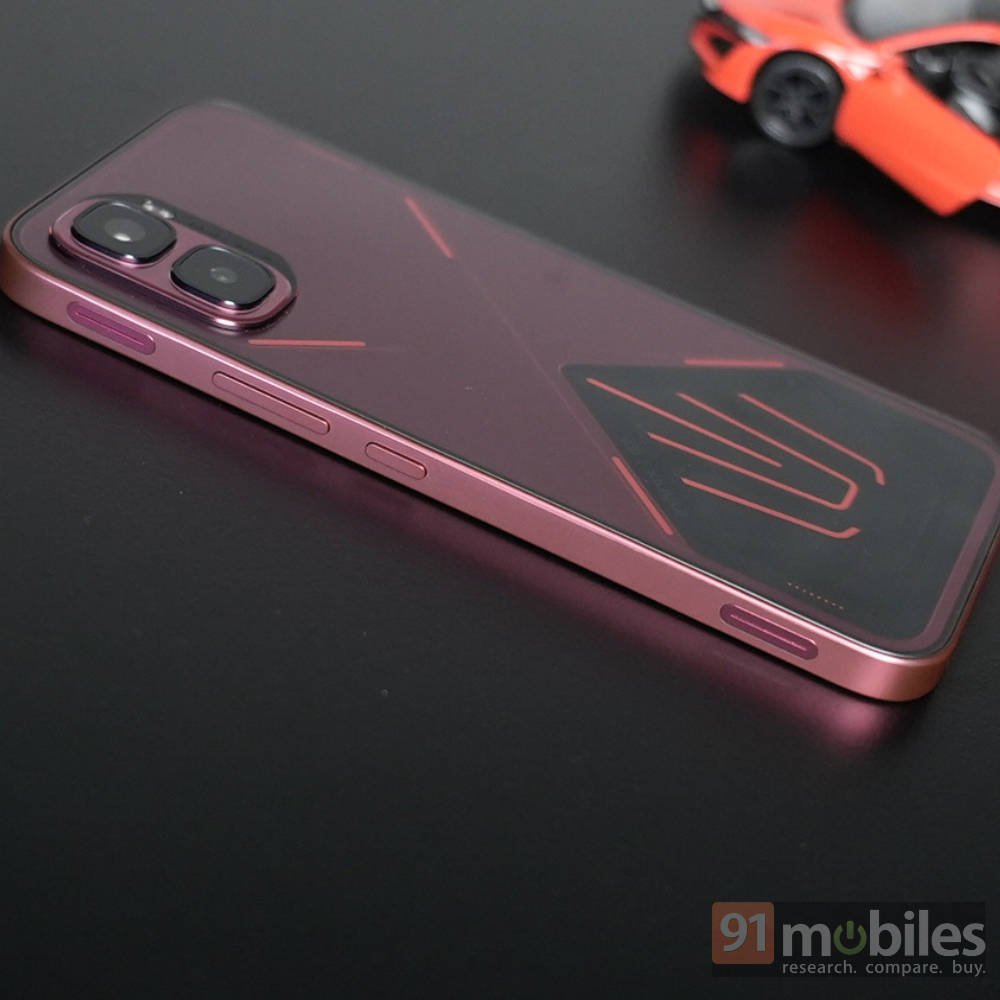
The Infinix GT 50 Pro has all the makings of a gaming phone, with RGB lighting on the back, a partially transparent panel that shows off its liquid cooling system, and programmable shoulder triggers on the frame. It also retains an IP64 rating for dust and splash resistance. The device is 8.2 mm thin and weighs 198 grams, which is on the lighter side in 2026.
The back panel is easily the most unique part of the design. It has a camera module with a relatively understated layout, housing a 50MP primary camera and an 8MP ultrawide camera, alongside a dual-LED flash. The rest of the panel has a glossy, transparent finish, with a carbon-fibre-like pattern and a honeycomb texture around the edges.
| Smartphone | Thickness | Weight | IP Rating |
| Infinix GT 50 Pro | 8.15 mm | 198 grams | IP64 |
| OnePlus 15R | 8.3 mm | 218 grams | IP68 +IP69 |
| iQOO 15R | 7.9 mm | 202 grams | IP68 +IP69 |
| OnePlus Nord 6 | 8.5 mm | 217 grams | IP68 +IP66 +IP69K +IP69 |
Infinix has added four RGB lights across the X-shaped pattern on the back, which it calls Mechanical Light Waves. These can flash in response to calls, music, games and other events, with customisation options for their colours and patterns. The lower section also has a transparent housing that reveals the liquid cooling pipes.
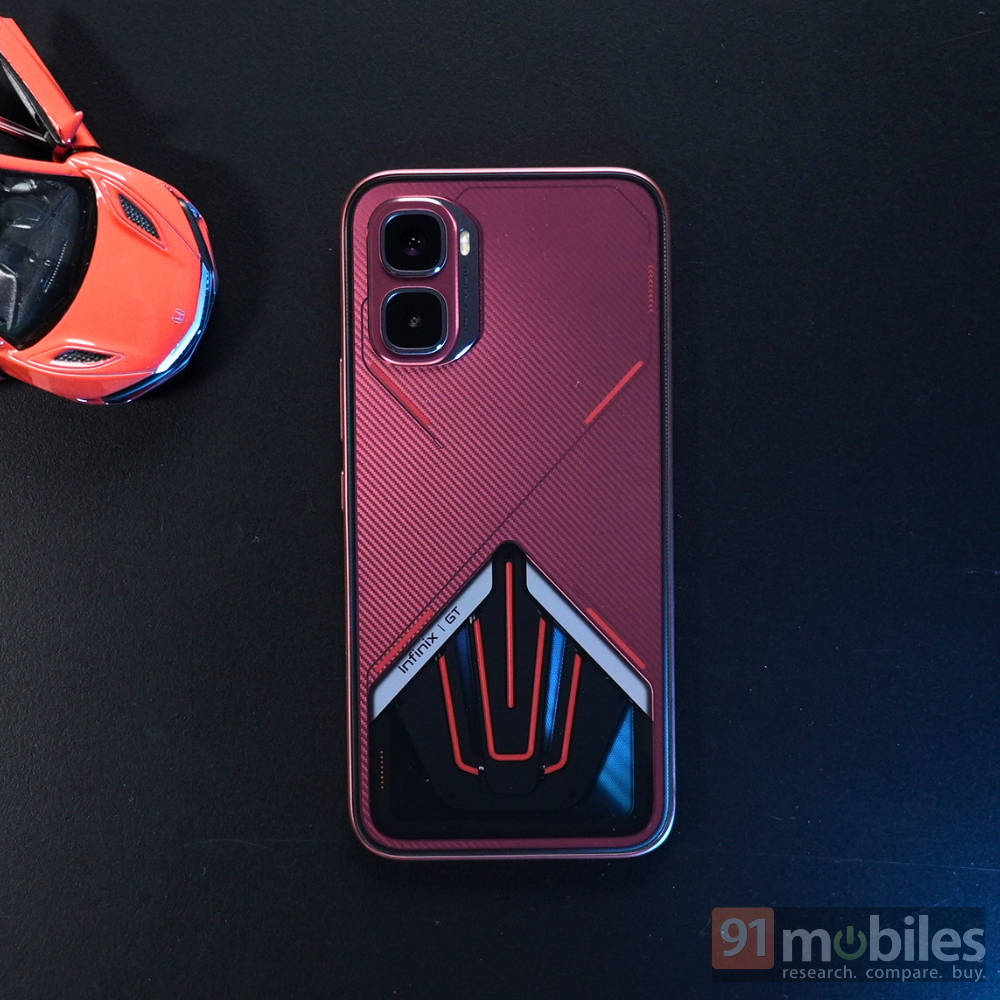
The back does attract a lot of fingerprints, although the crowded design makes them less apparent in daily use. Infinix also includes a magnetic case in the box, designed to preserve the visibility of the RGB lights and cooling system even when put on.
The phone has Gorilla Glass 7i on the front but uses a plastic frame and rear panel. Infinix offers it in two colour options: Black Abyss and Red Blaze.
Gaming bundle: good accessories but at a steep price
The Infinix GT 50 Pro's bundled accessories are a big part of its appeal, and I found the magnetic cooler and GT NX Station dock particularly useful. The cooler attaches magnetically to the phone, combining wireless charging of up to 15W with active cooling. It also supports wireless bypass charging, allowing the phone to draw power directly from the charger during long gaming sessions rather than relying on its battery.
The GT NX Station is another well-designed accessory. It connects the phone to an external display over HDMI and offers a desktop-like interface, similar to Samsung DeX. It also has a generous selection of ports, including two USB Type-C ports, two USB Type-A ports, HDMI, Ethernet, a microSD card slot and a 3.5mm audio jack. The magnetic phone holder doubles as a cooling fan, and you can mount the phone in either portrait or landscape orientation.
The GT NX Controller is a fun addition too, as it attaches to the phone for a Nintendo Switch-like gaming experience, while the two halves can also work as separate controllers for multiplayer games. It even comes with a hard case, making it easier to carry around.
I wholly appreciate what Infinix is trying to achieve here. Rather than selling a gaming phone and leaving users to find compatible accessories, it has built an entire ecosystem around the GT 50 Pro. The accessories are convenient and well-designed, particularly the magnetic cooler and TV dock.
However, the entire package costs Rs 70,000. At this price, buyers can consider a dedicated console like the PS5 or an older gaming laptop with discrete graphics, both of which offer greater flexibility and access to a wider range of games. While the GT 50 Pro is capable of emulation, Android still cannot match the breadth and quality of gaming experiences available on a PC or console.
I would have preferred an option to buy the phone on its own. The bundle is useful but remains a niche offering when more versatile gaming alternatives are available at this price.
Performance: capable performer and impressive cooling
The MediaTek Dimensity 8400 Ultimate, a 4nm chipset, powers the Infinix GT 50 Pro. The graphics are handled by the Mali-G720 MC7 GPU. The phone is available in India with 12GB of LPDDR5X RAM and 256GB of UFS 4.1 storage. This is a capable hardware combination, and our benchmark results reflect that. The GT 50 Pro scored well in AnTuTu and Geekbench benchmark tests.




One of the GT 50 Pro's biggest selling points is its dedicated liquid cooling system, which works alongside the phone's vapour chamber and graphite cooling layers. During 30 minutes of gaming, the phone recorded an average temperature increase of just 3.6 degrees over 3 games. That is an impressive result and makes the GT 50 Pro one of the coolest-running phones this year.
However, the OnePlus 15R (review) manages similar temperatures during gaming without dedicated liquid cooling and is more capable with its flagship chipset. This makes the Infinix's cooling hardware not as impressive, especially when you consider the price difference between the two phones.
The Dimensity 8400 Ultimate is certainly capable, and the GT 50 Pro delivers excellent benchmark numbers. At its Rs 70,000 bundled price, however, it competes with phones such as the OnePlus 15R and iQOO 15R (review), which offer a substantially stronger performance package. The Infinix has plenty of gaming-focused features, but its underlying hardware doesn't quite justify its asking price.
Display: bright and vibrant AMOLED panel
The Infinix GT 50 Pro features a 6.78-inch AMOLED display with a resolution of 1208 x 2644 pixels and a pixel density of 440ppi. The panel supports a 144Hz refresh rate and 10-bit colour depth. It is protected by Corning Gorilla Glass 7i, although there is no official mention of HDR support.
| Smartphone | Display | Peak Brightness |
| Infinix GT 50 Pro | 6.78 inches - AMOLED | 4500 nits |
| OnePlus 15R | 6.83 inches - AMOLED | NA |
| iQOO 15R | 6.59 inches - AMOLED | 5000 nits |
| OnePlus Nord 6 | 6.78 inches - AMOLED | 3600 nits |
In my experience, the display produces likeable colours and remains quite legible even under direct sunlight. Infinix claims typical brightness of 700 nits, HBM brightness of 1,600 nits and peak brightness of up to 4,500 nits. The latter only kicks in a few pixels in select situations and isn't the actual brightness the device operates on in day-to-day use.
The 144Hz refresh rate is another highlight on paper, but its usefulness is limited by app support. The phone mostly runs its interface and popular apps at 120Hz, switches to 90Hz for some other apps and games, and drops to 60Hz when idle. You can force 144Hz for compatible apps through the high refresh rate mode, but only a handful of apps supported this in my testing.
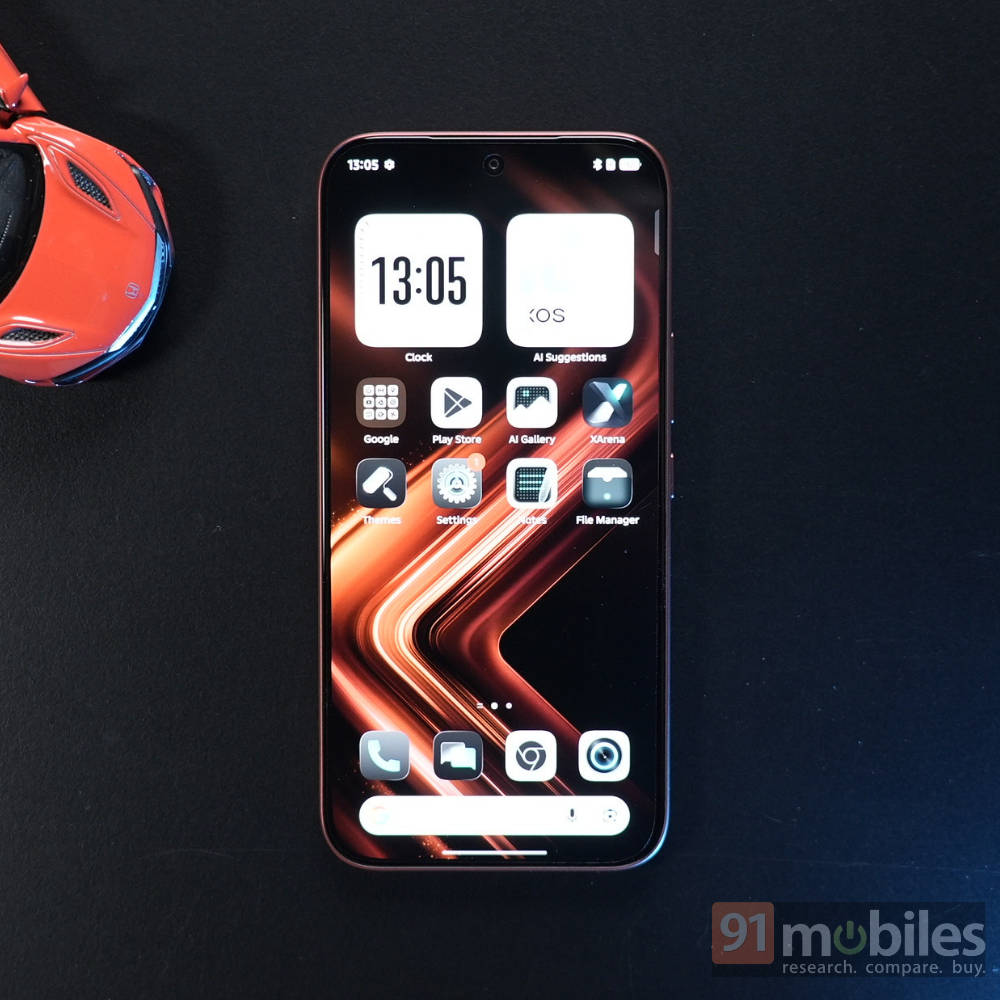
YouTube recognises the display as HDR10-capable, but Netflix does not, and there is no official HDR10 video certification. The stereo speakers are a slight letdown. They sound rather shrill and lack depth, which can take away from the content-viewing experience, particularly when watching videos or streaming shows
Battery: falls a little short of expectations
The Infinix GT 50 Pro packs a 6,500mAh battery, a sizeable upgrade over the 5,500mAh cell in the GT 30 Pro. It supports 45W wired charging and 30W wireless charging through a compatible MagSafe case and charger. The phone also supports reverse wired and wireless charging, along with bypass charging over both wired and wireless connections.
The bundled 45W charger took roughly 60 minutes to charge the phone fully, which is reasonable for a battery of this capacity. The GT 50 Pro scored around 11 hours in our PCMark battery test, which is underwhelming for a phone in this price segment.
| Smartphone | Battery Capacity | Charging Support | Charging time (20% to 100% ) |
| Infinix GT 50 Pro | 6500 mAh | NA | 1h 0m |
| OnePlus 15R | 7400 mAh | 80W Super Charging | 49m |
| iQOO 15R | 7600 mAh | 100W Super Flash Charging | 45m |
| OnePlus Nord 6 | 9000 mAh | 80W Super Charging | 1h 5m |
My real-world experience was not much better, and with moderate-to-heavy use, I managed roughly 7 hours of screen-on time and a full day of use at best. Streaming on YouTube drained around 6 per cent of the battery per hour, while gaming consumed roughly 7 per cent every 30 minutes.
These figures suggest that the phone's battery life is not quite as impressive as I would expect from a device costing this much, especially when several alternatives, like the OnePlus 15R and Vivo V80 offer better endurance.
Software: clean, responsive OS and gaming features
The Infinix GT 50 Pro runs XOS 16.1 based on Android 16. The interface has an iOS-inspired look, with plenty of customisation options, but remains fairly straightforward to navigate. Infinix promises three major Android OS upgrades and five years of security patches.
| Smartphone | Pre-Installed Apps | Software Support |
| Infinix GT 50 Pro | 41 | 3 Years OS Updates + 5 Years Security Updates |
| OnePlus 15R | 53 | 4 Year OS Updates + 6 Year Security Updates |
| iQOO 15R | 54 | 4 Year OS Updates + 6 Year Security Updates |
| OnePlus Nord 6 | 22 | 4 Year OS Updates + 6 Year Security Updates |
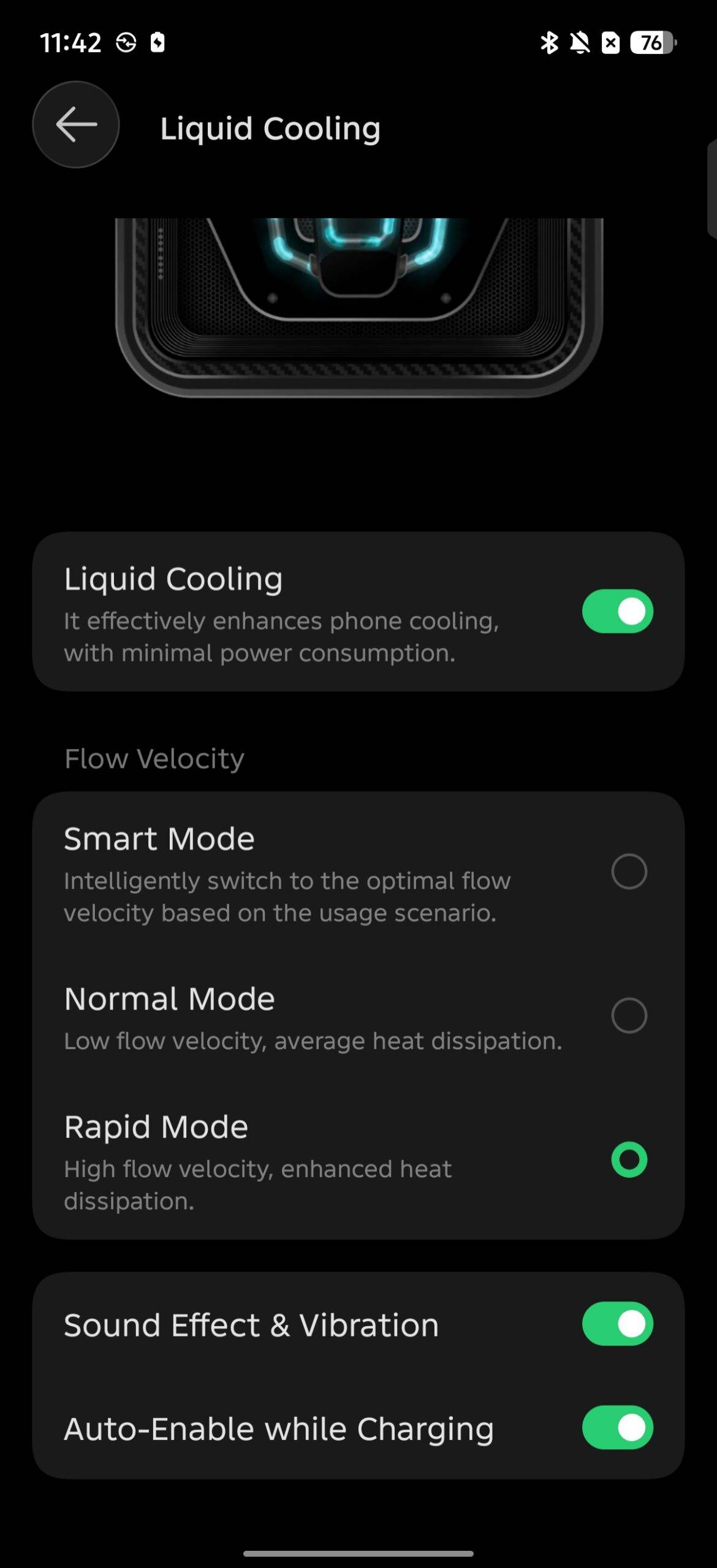
The GT Zone is one of the more important parts of the software experience on the GT 50 Pro. It brings the phone's gaming-specific features together, allowing you to configure the shoulder triggers, RGB lighting and liquid cooling system.
You can customise the shoulder triggers, enable or disable their vibration feedback, and assign shortcuts to actions such as double-tapping the upper trigger or long-pressing both triggers. This gives you some flexibility in how you use the controls outside games as well.
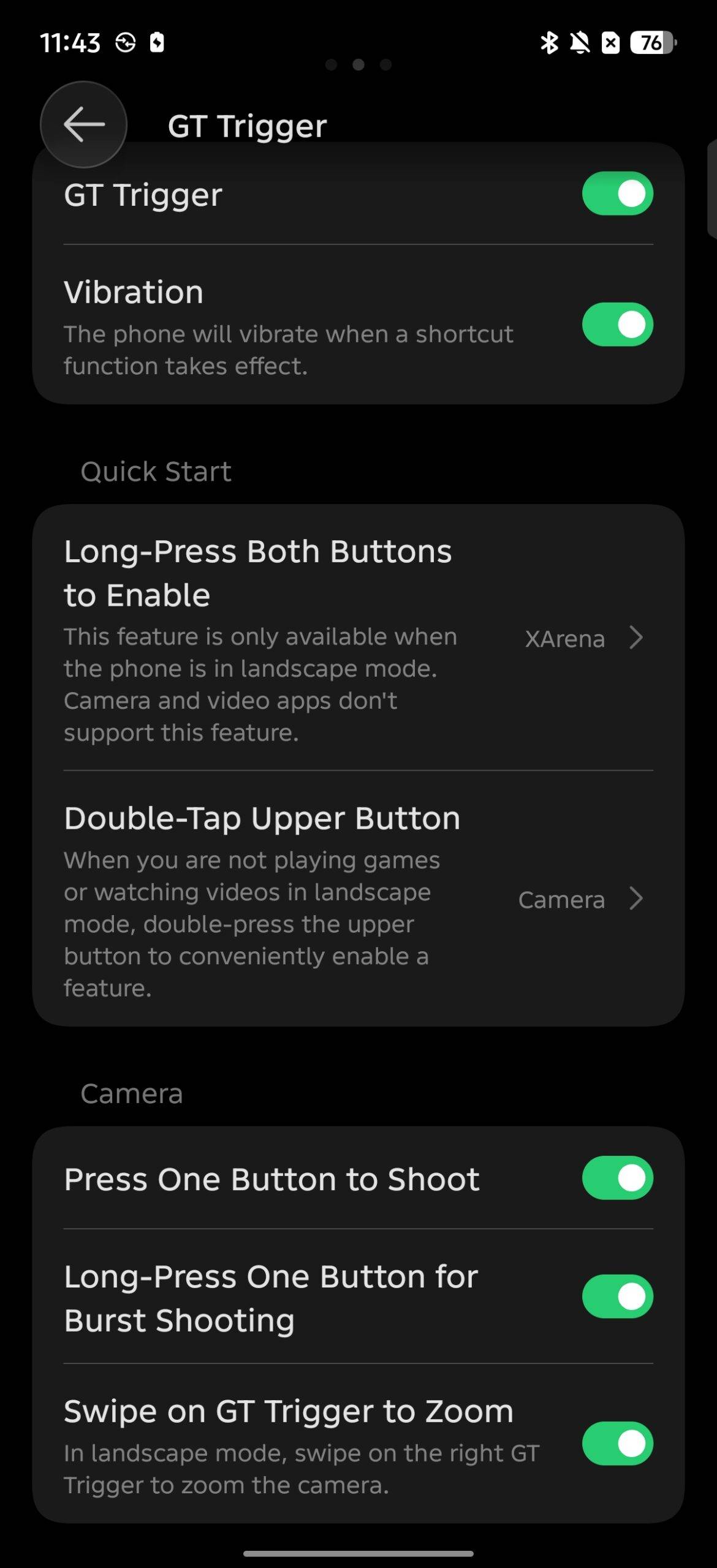
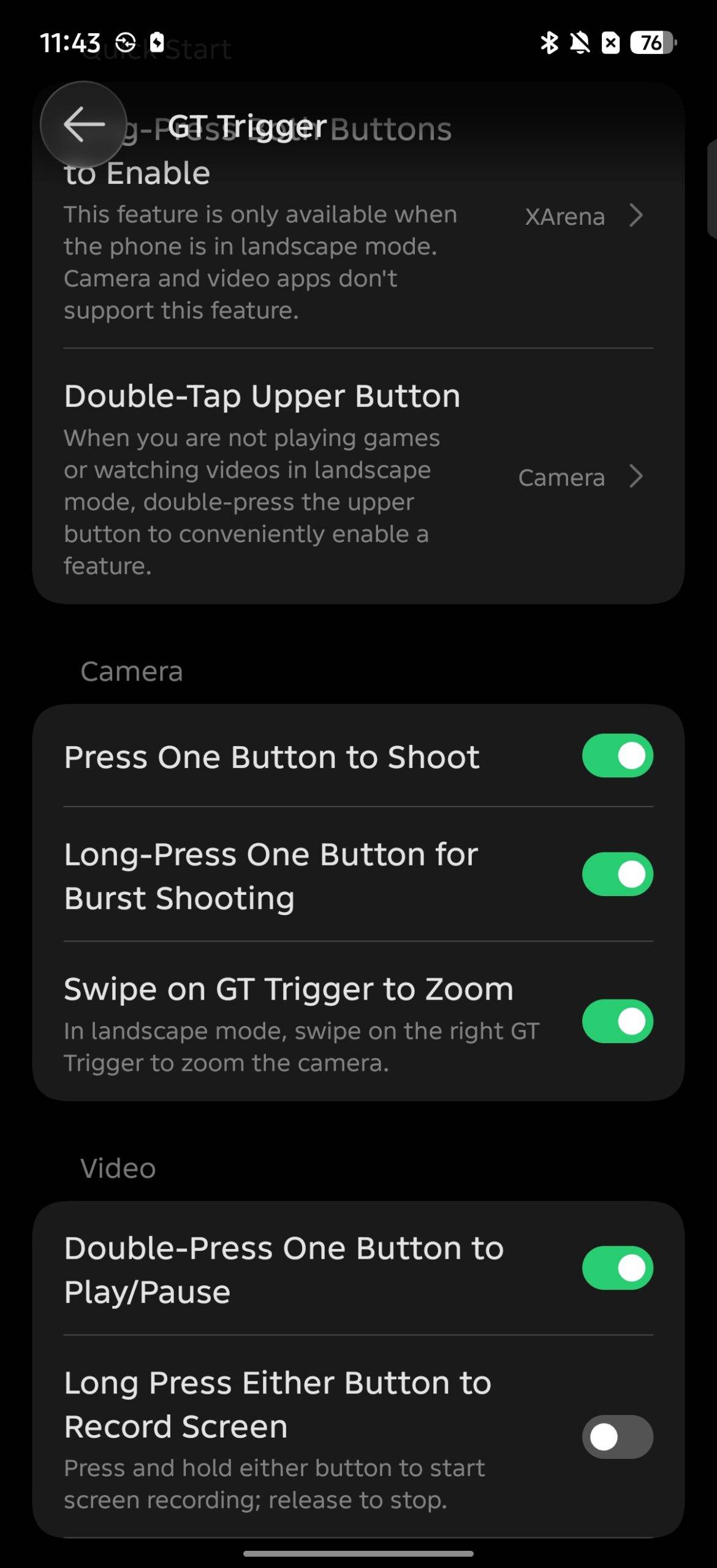
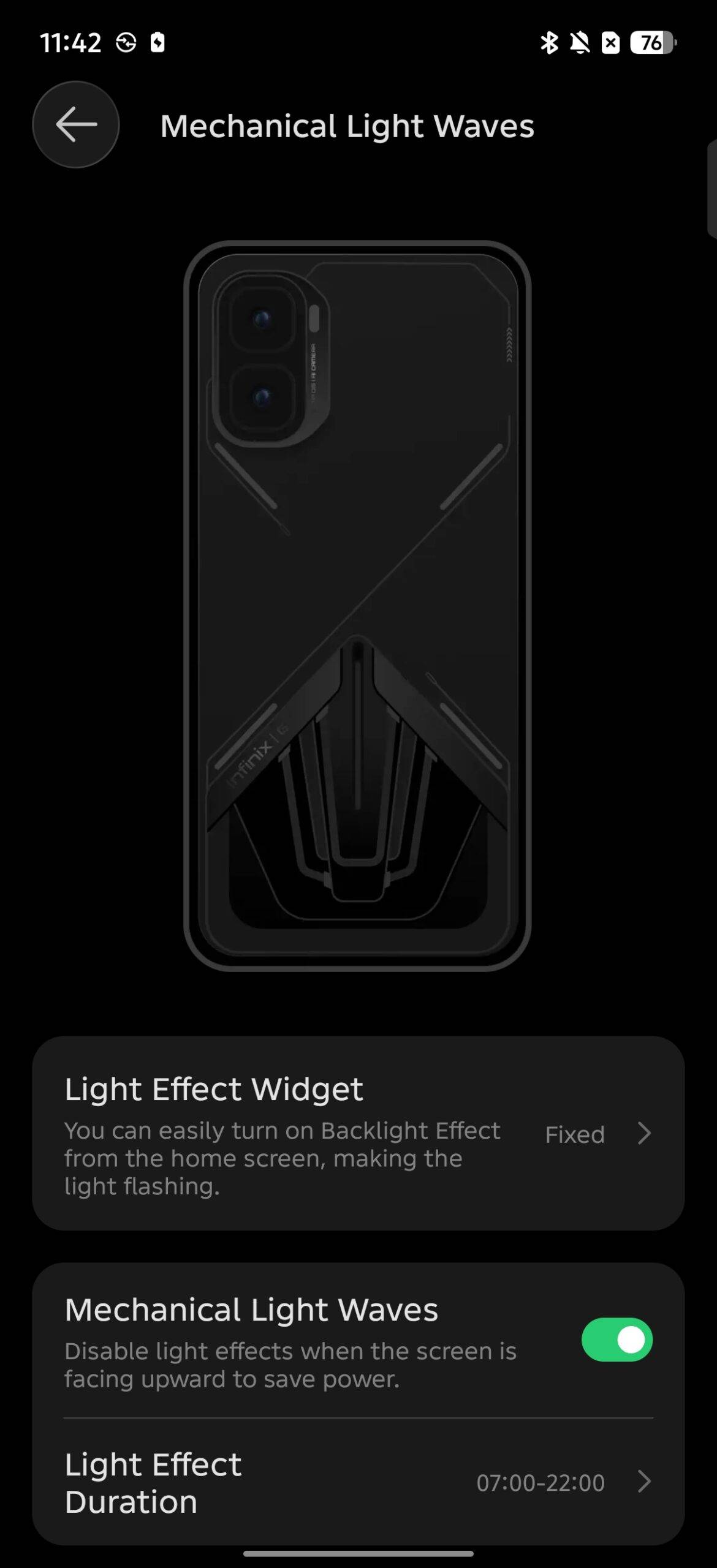
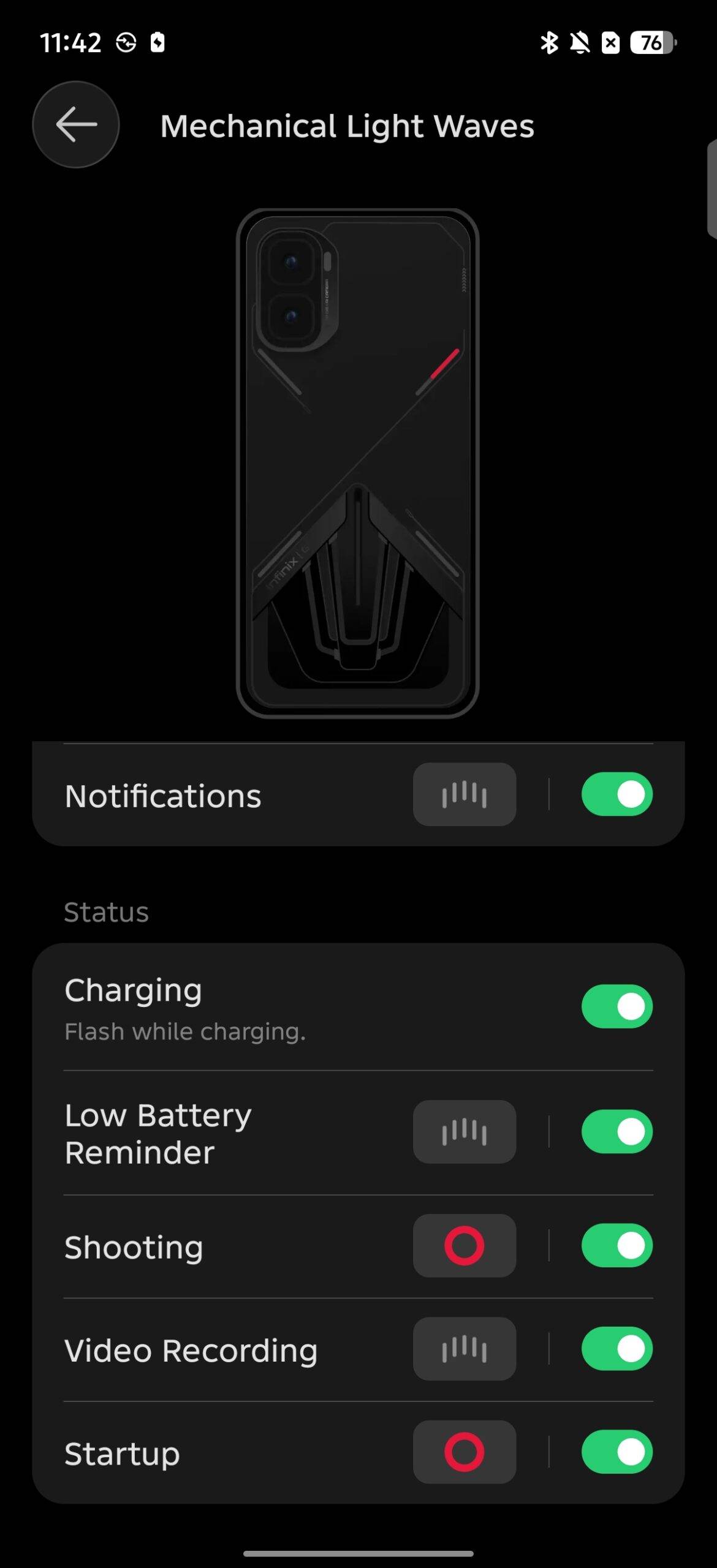
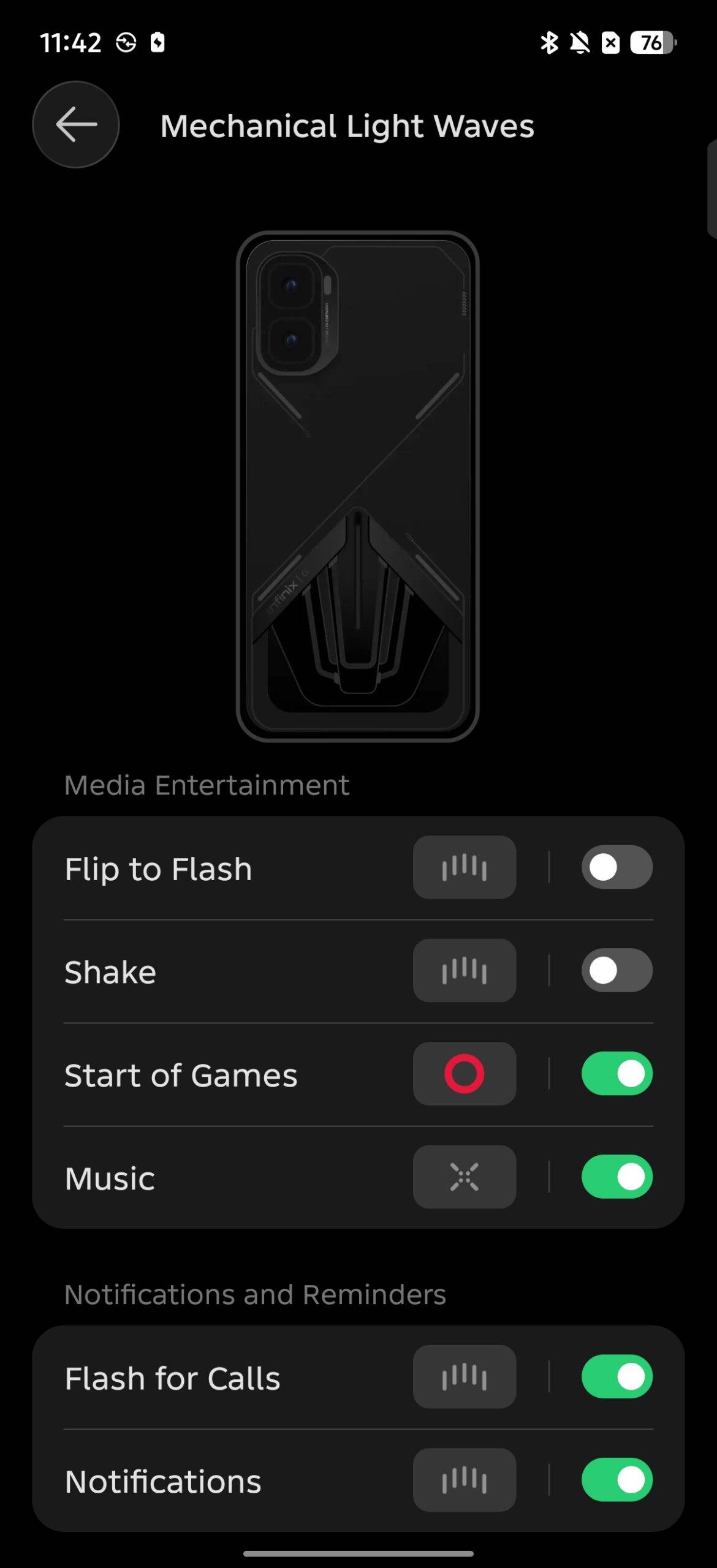
The Mechanical Light Waves RGB lights on the back panel are also configurable through GT Zone. You can switch them off, choose between different lighting effects and patterns, and set them to respond to calls, notifications and supported games.
You can also manage the liquid cooling system from here. It can be enabled or disabled, with three operating modes to choose from. There are options to add sound and vibration feedback while it runs, although the actual benefit of the cooling system is something we'll discuss in the performance section.
Cameras: surprisingly capable cameras
The Infinix GT 50 Pro has a dual rear camera setup with a 50MP primary sensor with OIS and an 8MP ultrawide camera with autofocus. There is also a 13MP front camera. The primary camera is a downgrade on paper from the 108MP sensor on the GT 30 Pro, which is a notable compromise given the higher prices across the segment amid rising RAM and storage costs.
The main camera captures good daylight shots, with sharp details, vibrant colours and a wide dynamic range. Portraits also have natural-looking skin tones and decent background blur. The 2x zoom option is quite useful too, retaining good detail despite the lack of a dedicated telephoto camera. The 8MP ultrawide camera is more modest, but delivers decent colours and dynamic range for its class.











Low-light performance is fairly good as well. The primary camera captures well-exposed shots with good detail and colour reproduction, while the ultrawide camera remains usable in challenging lighting. The 13MP selfie camera also delivers detailed images with vibrant skin tones and a wide dynamic range.
The shoulder triggers can double as shutter buttons, while long presses can be assigned to burst shooting. This is a useful addition, although I did end up with a few accidental bursts before changing the settings. Overall, the GT 50 Pro offers a capable camera experience, but it is not a major reason to consider the phone, particularly at its asking price.
I compared the phone's cameras against a similarly performance-focused rival, the Redmi Turbo 5. Check it out below.
Daylight
Comparing the daylight shots of both phones, we noticed that the Turbo 5 manages to output a greater level of detail and sharpness when we zoom closer. When it comes to colour accuracy, the Turbo 5 once again maintains the lead compared to the GT 50 Pro. The latter does manage to output a likeable image, but it loses out to its competitor on a technical level.


Ultrawide
Switching to the ultrawide lens, both phones produce a colour shift; the GT 50 Pro's image has more vibrant tones, while the Turbo 5's shot tones down the colours. Neither is accurate in this case. In terms of details and sharpness, the Turbo 5 continues to lead.


Portrait
In portraits, the GT 50 Pro produces better,more accurate skin tones and colours compared to the Turbo 5. It loses out, however, in terms of sharpness and facial details to the Turbo 5. Looking at the edge detection, both phones do a reasonably good job, but the Turbo 5 is ahead of its rival by a notch.

Selfie
The selfie scenario is largely similar to the portrait one. The GT 50 Pro manages to retain better skin tones and colours compared to its peer, but its detail and sharpness aren't as good in comparison.

Lowlight
In low-light conditions and with night mode enabled, both phones produce likeable results, but there's a clear winner between the two. The Turbo 5 better controls lens flares and stray light, making the image appear sharper. The GT 50 Pro introduces subtle colour bleeding around light sources, and falls behind on colour accuracy.


Final verdict
The Infinix GT 50 Pro is a capable gaming phone that does several things quite well. It has a distinctive design, a vibrant AMOLED display, surprisingly good cameras and a useful set of gaming features. The dedicated liquid cooling system and shoulder triggers also help it stand out from conventional smartphones and push the envelope further on innovation.
The bundled accessories only amplify that experience, with the magnetic cooler and TV dock being particularly useful additions. There is a clear effort from Infinix to build an ecosystem around the phone rather than simply sell a gaming-focused device.
The Rs 70,000 price tag, however, makes the GT 50 Pro a difficult recommendation despite its capabilities. Its performance and battery life do not quite match those of more powerful rivals in below this price, such as the OnePlus 15R (review) and iQOO 15R (review), which are available under Rs 60,000. Both phones offer flagship Snapdragon chipsets, better displays, bigger batteries, more premium builds and longer software support.
Unfortunately, the bundled accessories cannot fully make up for that gap. Buyers can also consider a dedicated console or gaming laptop at this price, which offers access to a much wider range of games. I would have much preferred Infinix to offer the phone separately at around Rs 45,000. At that price, its gaming features and overall package would make considerably more sense. The GT 50 Pro is not a bad phone by any means, but its bundle-only pricing makes it a niche proposition.
Editor's Rating: 8/10
Reasons to buy the Infinix GT 50 Pro
- You get a distinctive gaming-focused design with a dedicated liquid cooling system.
- The bright, vibrant AMOLED display makes gaming and content consumption enjoyable.
- Its thermal performance is impressive, keeping temperatures in check during extended gaming sessions.
- The phone has surprisingly capable cameras for a gaming phone
Reasons not to buy the Infinix GT 50 Pro
- It is available only as part of a pricey Rs 69,999 bundle, with no standalone phone option.
- Rivals such as the OnePlus 15R and iQOO 15R offer considerably better performance at this price.
- Battery life is underwhelming for the price segment and could be better.
 | vs |  |
| vs |  |