


Review Summary
Expert Rating
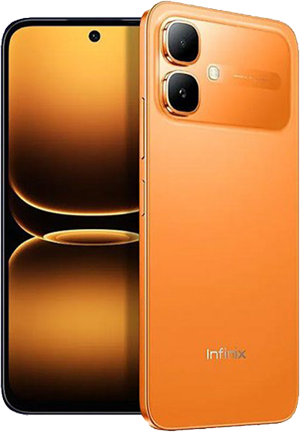
The Infinix Smart 20 is the company’s latest offering in the sub-Rs 15,000 segment. Launched at a starting price of Rs 12,499, the handset is aimed at users seeking a slim design with good looks, a variety of built-in AI options, and workable performance with the MediaTek Helio G81 Ultimate at an affordable price. With the smartphone missing out on 5G, is it a major deal breaker or do the other aspects make up for it? Find out in this review where I daily drove the Infinix Smart 20 for more than a week.
Table of Contents
Quick verdict
The Infinix Smart 20 excels with its slim design, polished software featuring several AI tools, decent cameras, and reliable battery life that easily lasts a full day for most users. On the other hand, the lack of 5G support limits future-proofing, while the display doesn’t get as bright as its rivals.
Design: cohesive with striking colour options
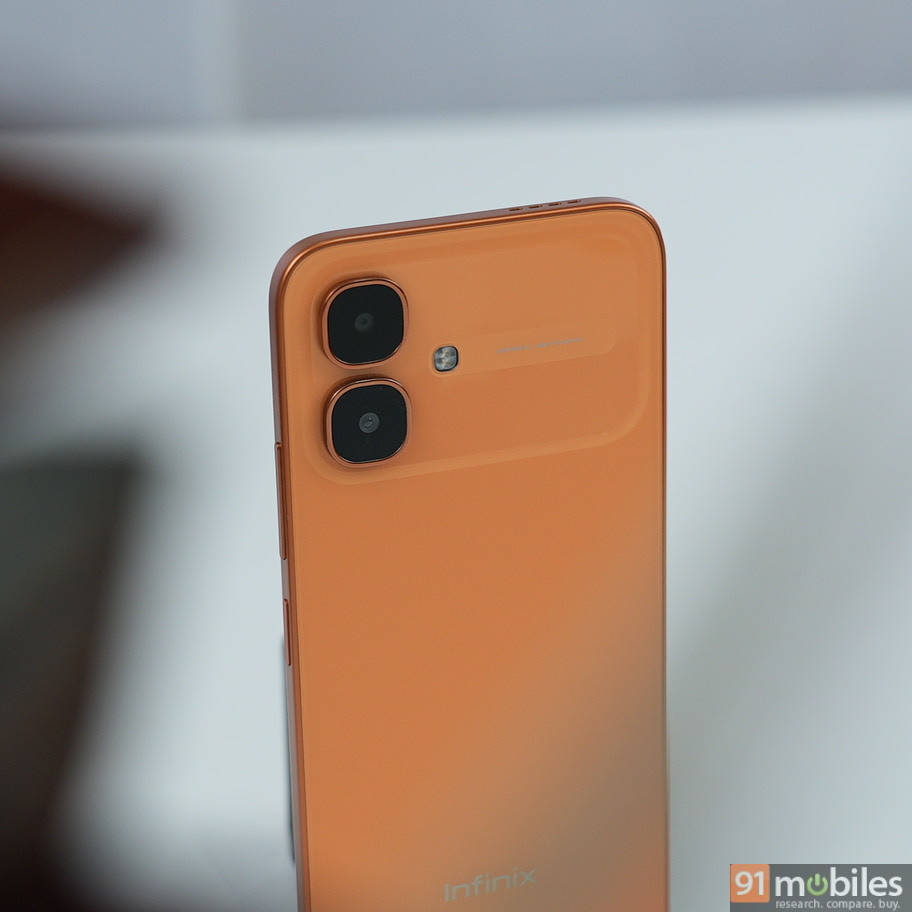
Much like the brand’s previous two releases, the Infinix Note Edge and Note 60 Pro, the Smart 20 comes in a striking Sunlike Orange colourway, alongside other tones. If you do happen to grab this particular colour, it’s a sure shot to grab eyeballs in public places due to its strong, poppy appeal. The other colour tones include Shadow Black, Polaris Titanium, and Cloudline Blue, which appear more subtle and understated compared to orange.
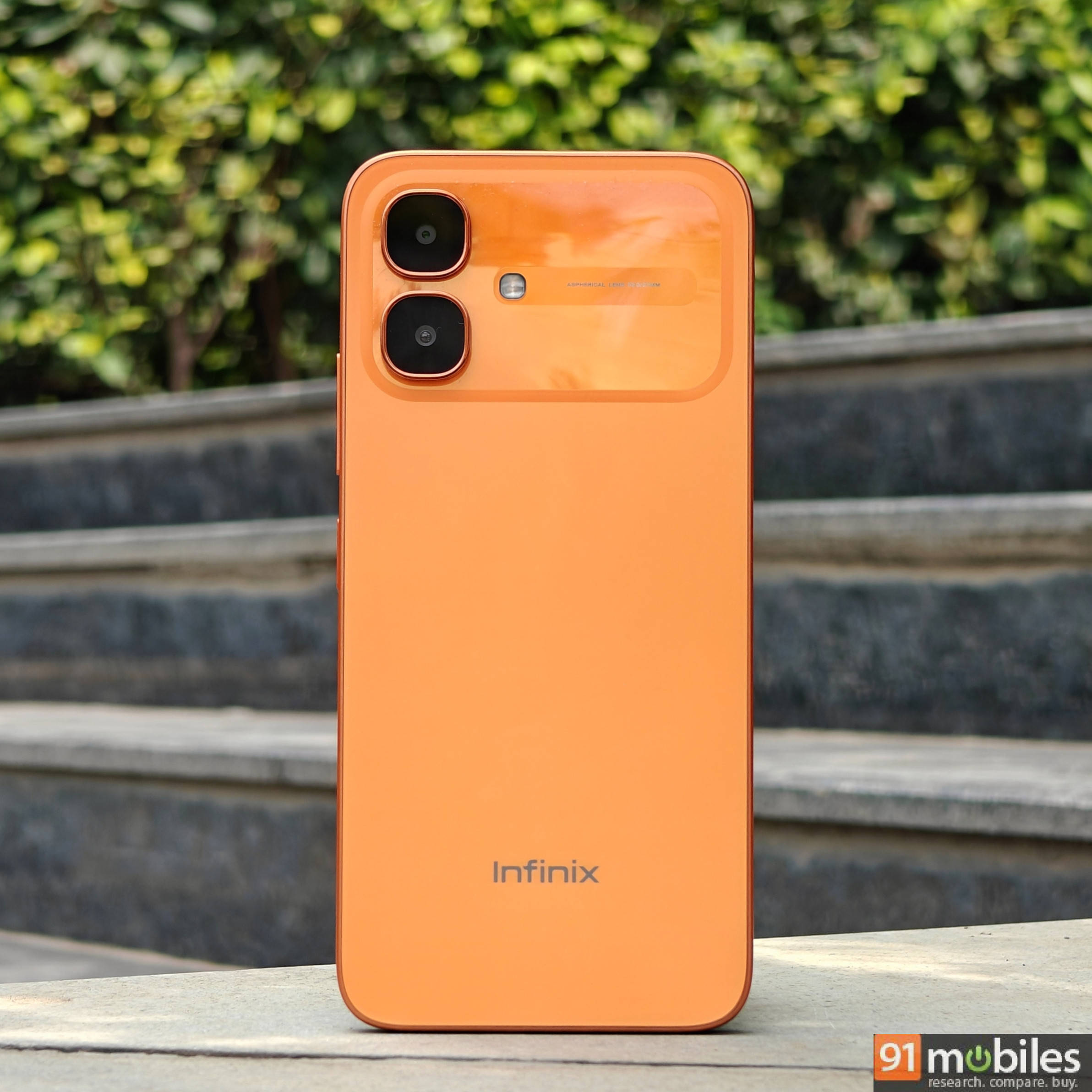
Now, focusing particularly on the plastic rear design, I really like how Infinix maintains visual cohesiveness across its lineup with the camera module. Even though it features a single camera, the squircle-shaped lenses match those on the Note Edge and Note 60 Pro, with the exception being that the top-half area doesn’t protrude. Compared to the Smart 10, the Smart 20 has shaved off some thickness, making it the slimmest smartphone to launch under Rs 15,000 this year at just 7.7mm.
With all the recent new launches weighing over 210g, such as the Lava Shark 2 5G, HMD Vibe 2, and Realme C83, the Smart 20 weighs 189g, making it more comfortable to hold for long periods, even though the height and width are just as chonky. With an IP64 rating, the handset is well protected against water and dust exposure.
Display: doesn’t get bright enough
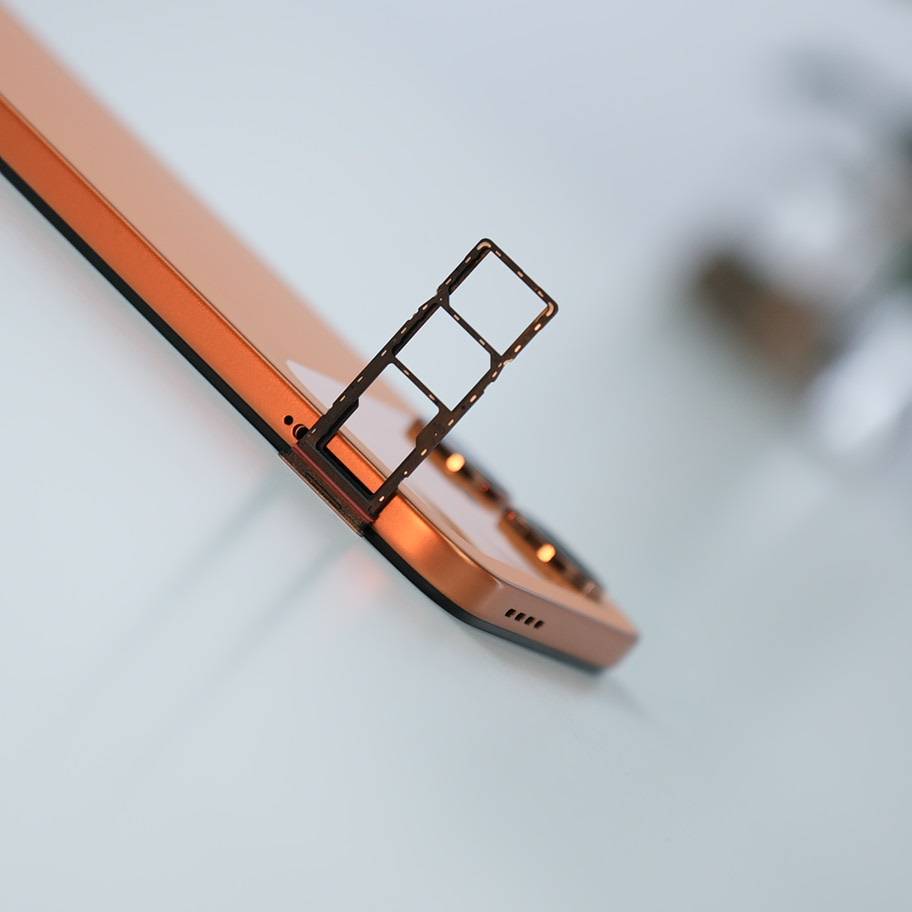
The Infinix Smart 20 sports a large 6.78-inch IPS LCD display with a 720p resolution and up to a 120Hz refresh rate. Getting the refresh rate aspect out of the way first, only a handful of first-party and third-party apps run at 120Hz, including Instagram, Facebook, Phone, Settings, etc., while all other apps are restricted to 90Hz. On the positive side, the display gets a punch-hole cutout instead of a U-shape notch found on others, resulting in a modern appearance.
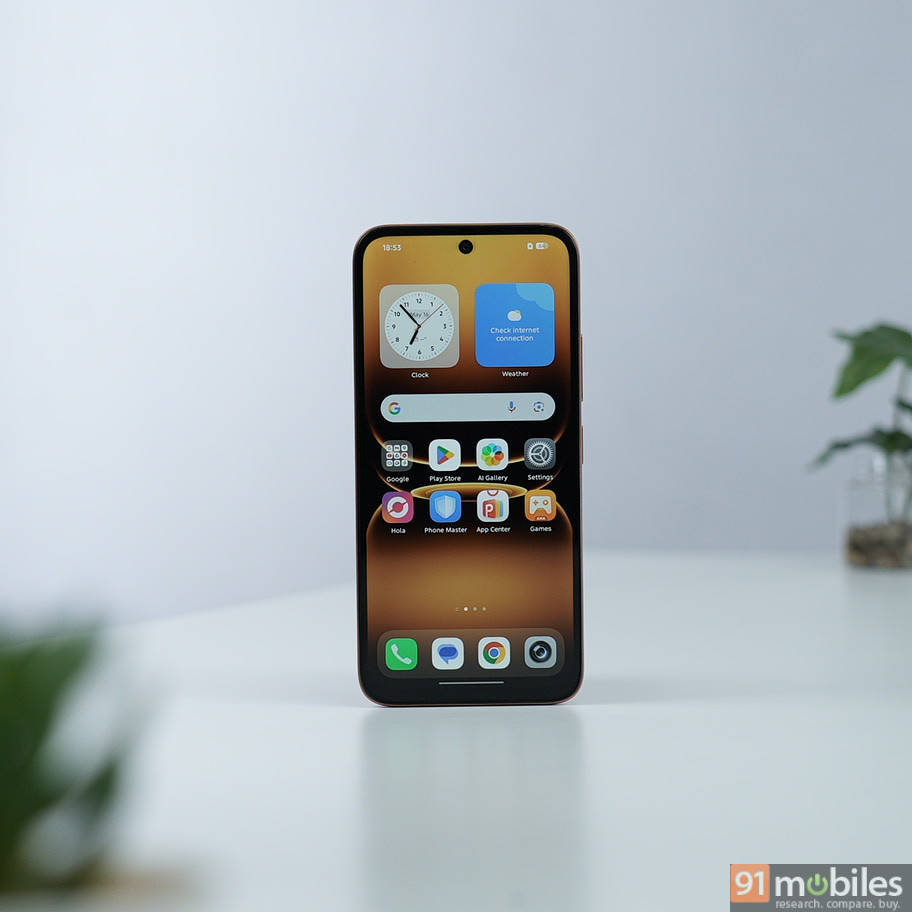
A peculiar aspect of the Smart 20’s design is that the single speaker is placed at the top, instead of the bottom like most phones. As for its quality, it doesn’t get loud enough even at the maximum volume.
Performance: well-suited for casual gamers
In a segment where most manufacturers are increasingly adopting 5G-capable Unisoc processors, the Infinix Smart 20 settles for the MediaTek Helio G81 Ultimate, a 4G chipset. This is paired with 4GB LPDDR4X RAM and either 64GB or 128GB EMMC storage, depending on the variant you opt for. The internal storage is further expandable up to 2TB using a microSD card.
In benchmarks, the Helio G81 Ultimate trails behind the popular chipsets commonly found on phones priced around Rs 15,000, as you can see in the AnTuTu and Geekbench charts below. On the contrary, I found the Infinix Smart 20 performs well during everyday use. Unlike the Lava Shark 2 5G, which I reviewed recently, the Infinix smartphone didn’t show any signs of stuttering when pushed by loading multiple apps in the memory or filling up the storage with new apps.


The Infinix Smart 20 can provide a modest gaming experience for the price. In our lab tests, we ran BGMI at the ‘HD’ graphics and ‘High’ frame rate settings for 30 minutes straight, and the device offered an average frame rate of 28.4, with the temperatures seeing a rise from 27.5 degrees Celsius to 31.4 degrees. Similarly, in Call of Duty: Mobile, I played the ‘Hardpoint’ Multiplayer mode on the Nuketown map, in which the Smart 20 constantly delivered 40 to 45 FPS throughout the match’s duration.
While you’ll have to shell out more for more capable processors to have a better gaming experience, the Infinix Smart 20’s performance should be well suited for those who engage in games casually for a few minutes a day.
Camera: fares better than the competition
The Infinix Smart 20 is one of the few phones in its segment to feature the exact same camera sensors on both the front and rear, an 8MP 1/4-inch unit with an f/2.0 aperture.
Therefore, users can record videos in up to 2K resolution at 30 FPS using the primary and selfie cameras. Some of the key camera modes include Dual Video, Time-Lapse, Documents, and Panorama.
During night, the small sensor of the Smart 20 does its level best to gather light and expose the scene for an appealing look, even though the shots carry noise and softness.






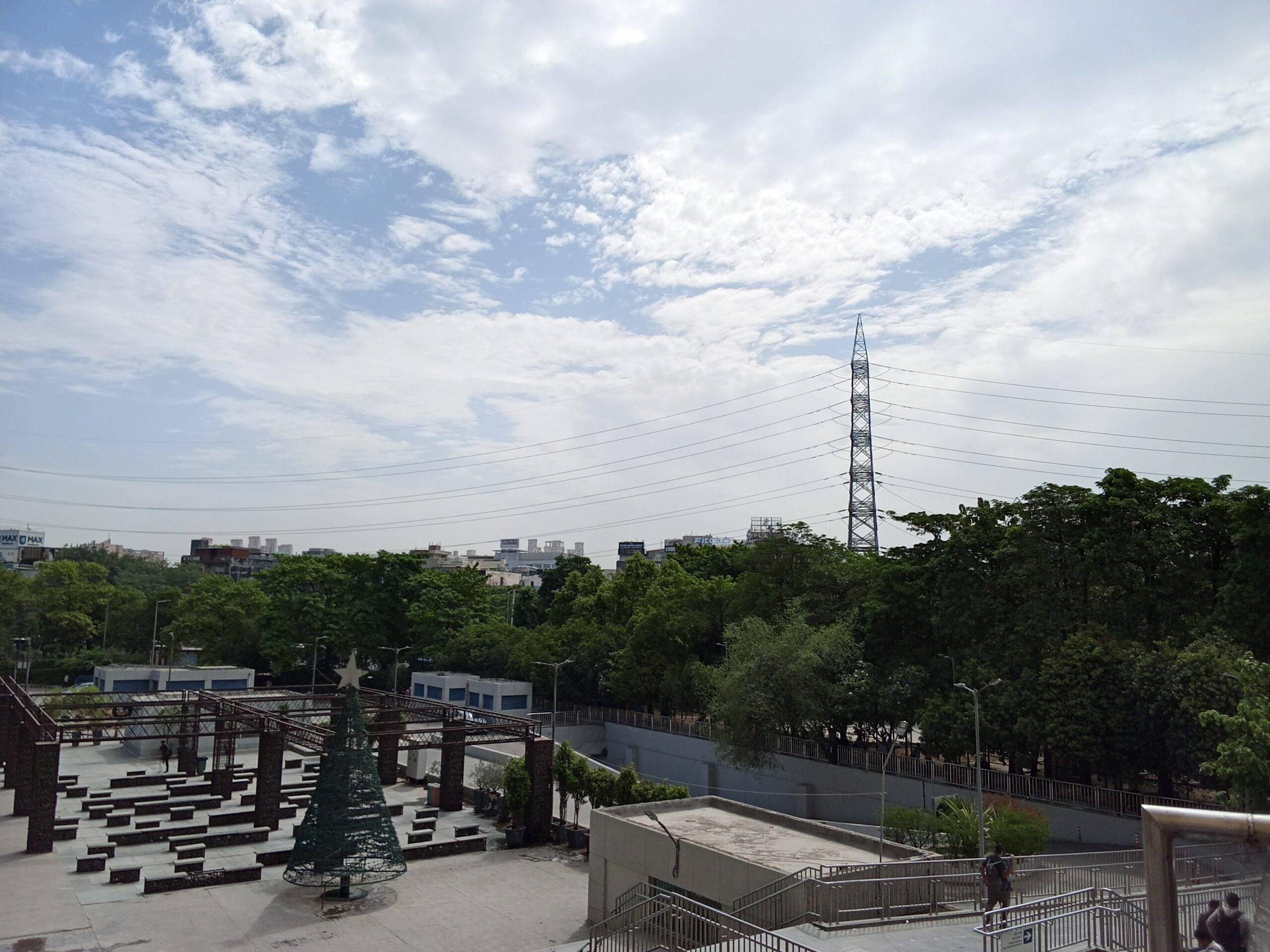







To check how the cameras of the Smart 20 fare against the competition, I compared it against the HMD Vibe 2 (review) in various scenarios.
Daylight


In the comparison above, despite the lower megapixel camera sensor, the Infinix Smart 20’s shot carries slightly better details. On top of that, it not only accurately depicts the actual scene but also delivers better dynamic range. The only advantage the HMD Vibe 2 seems to carry is the wider field of view, allowing users to fit more elements in the frame.
Portrait


In portrait mode, the HMD Vibe 2 has completely blown out the background, while the Smart 20 does a decent job in maintaining the colours of the subject and background. When zooming into the images, the Smart 20’s output carries better details, and the edge detection is also superior compared to the Vibe 2.
Selfie


In selfies, the Vibe 2 turns the tide in its favour by delivering a more detailed image, while not going overboard with the exposure on the face. It also manages to maintain the colours of the scene better. However, the Smart 20 once again comes out on top when it comes to dynamic range, delivering more accurate colours in the sky and background.
Night mode


In low-light conditions with Night mode enabled, the Infinix Smart 20 captures more light, resulting in better-exposed images. When zoomed in, it’s clear that the Smart 20 retains slightly more detail. In terms of colour accuracy, however, the HMD Vibe 2’s shots look more realistic.
Software: polished, refined, and AI-enabled
The Infinix Smart 20 boots on Android 16 with XOS 16 layered on top. Having used most of the recently released budget smartphones, I’d say the Smart 20 offered the most polished and refined software experience. Even though it isn’t as smooth as the much higher-priced Infinix Note Edge (review), which we got our hands on to cover XOS 16 in detail, the software’s design, layout, and transitions look and feel complete, which is something that can’t be said for newer releases from Lava, Ai+, and HMD.
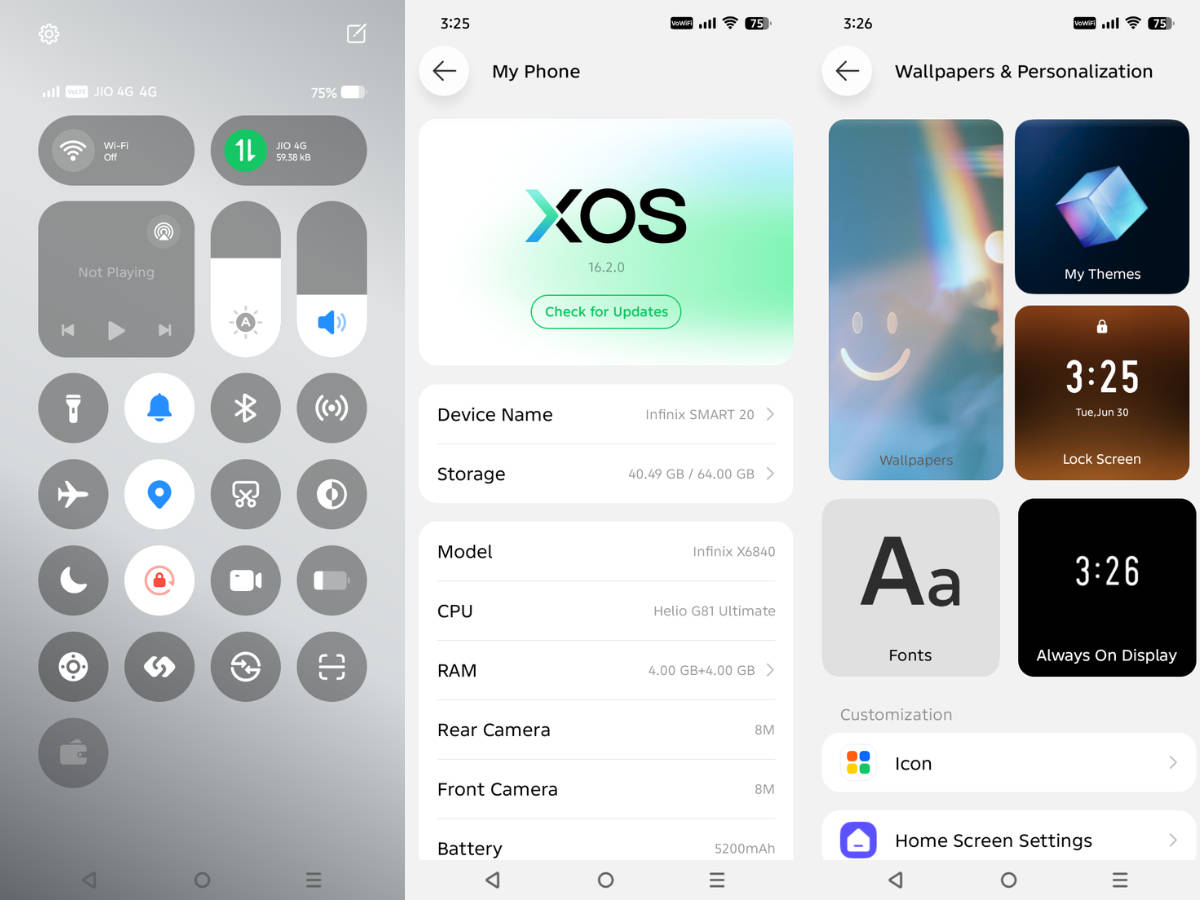
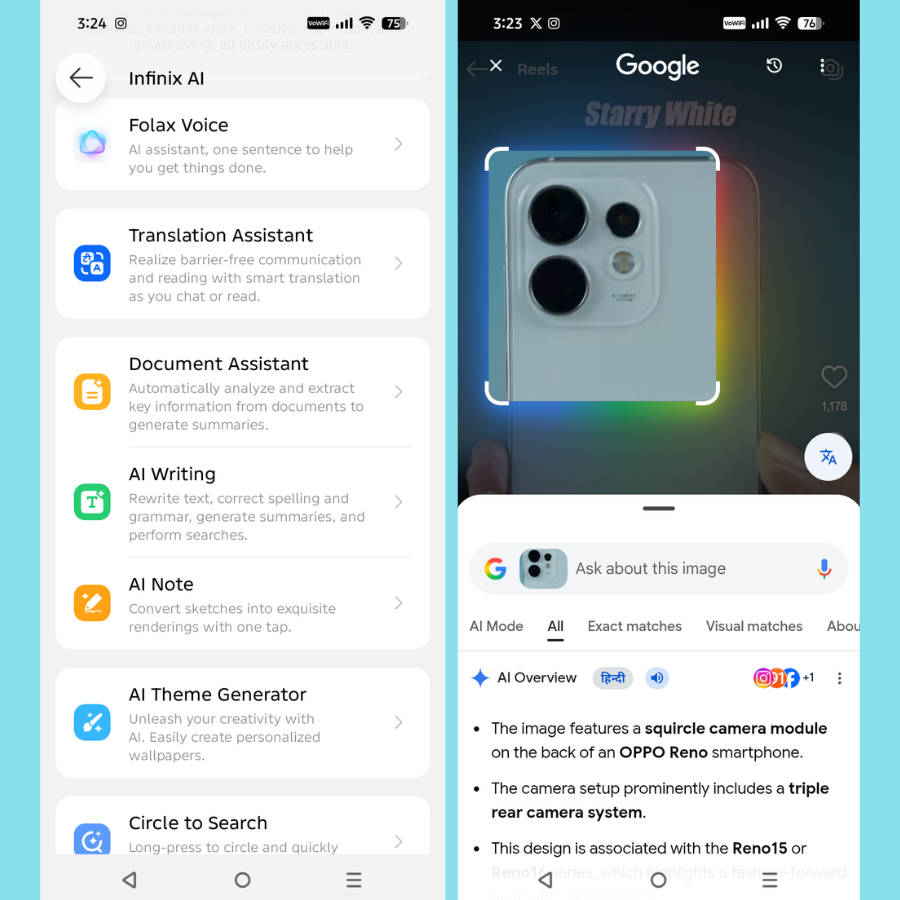
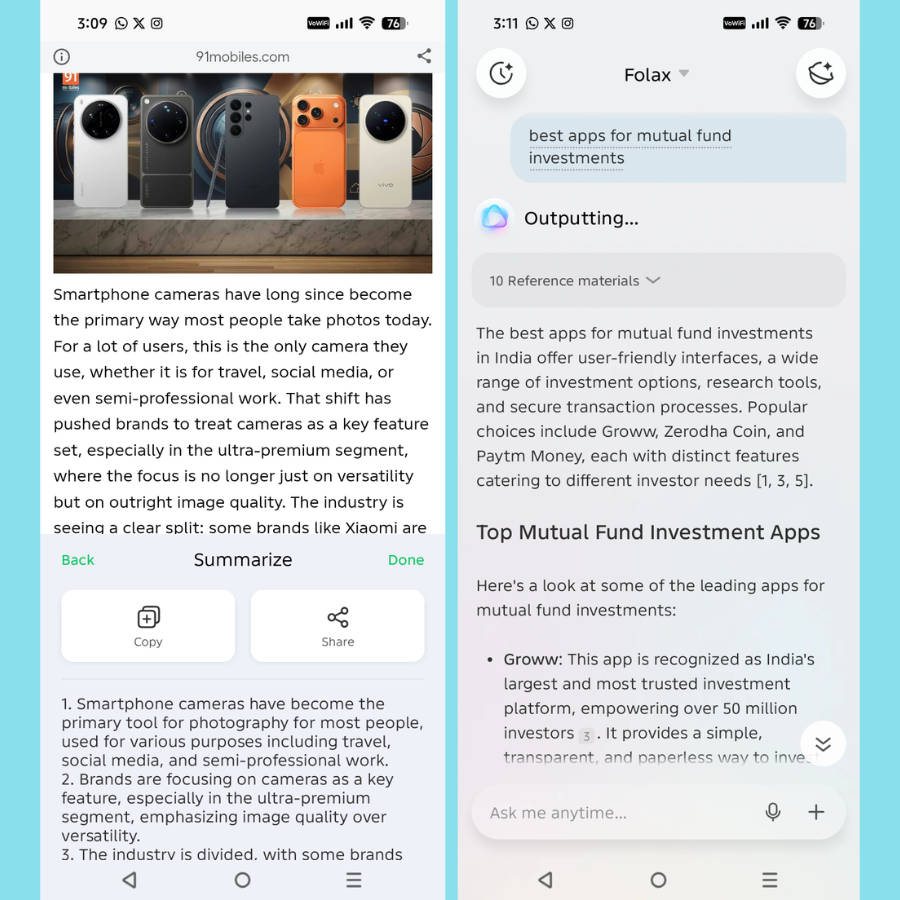
For instance, every pop-up menu has proper padding, the buttons across the interface have subtle lighting effects on the borders, and the quick settings panel smoothly summons from the top. Apart from that, it also carries several AI features within the “Infinix AI’ section in the Settings, offering features like AI writing and summarisation, AI translation, Folax Voice, and more. More importantly, Smart 20 also comes with Google’s Circle to Search, which I dearly missed on Lava Shark 2 5G and HMD Vibe 2.
The Infinix Smart 20 is set to receive two years of security patches, though there are no details regarding major OS upgrades at the time of drafting this review.
Battery: serviceable battery endurance
The Smart 20 runs on a 5,200mAh battery and comes with 15W charging support using the bundled power adapter. As for the endurance, the phone’s idle drain is kept at a minimum even on 4G mobile data. During my time with it, the phone lasted four days on a single charge when using it occasionally for checking WhatsApp messages, email, and Instagram reels.
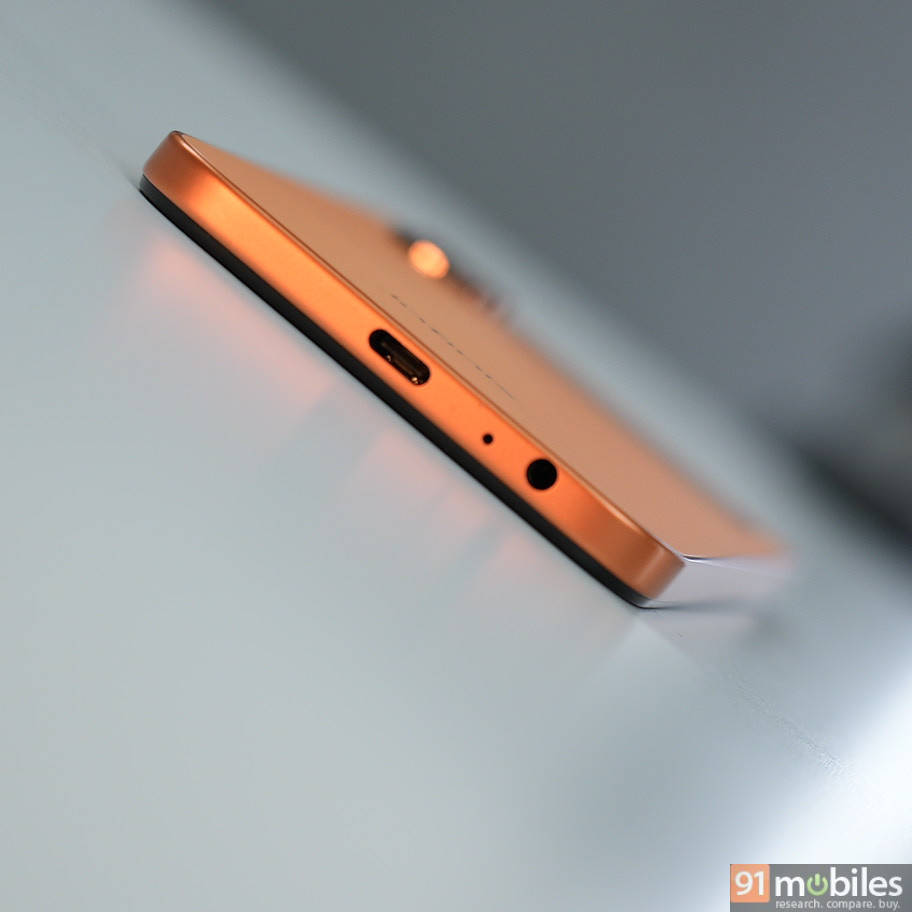
Since the Smart 20 has a smaller battery than the Lava Shark 2 5G and HMD Vibe 2, it takes less time to fully charge its 5,200mAh cell. In our charging tests, the handset fully topped up from 20 to 100 percent in 2 hours and 12 minutes, while the Shark 2 and Vibe 2 took 3 hours and 14 minutes and 2 hours and 17 minutes, respectively. All things considered, the Smart 20 delivers at least one full day of battery life even with heavy usage, while charging typically takes under 2.5 hours.
Final verdict: Is it worth getting the Infinix Smart 20, a 4G phone above Rs 10,000?
The Infinix Smart 20 is quite a polarising phone. Meaning, while the handset excels in various aspects, such as delivering a polished software experience, a strong primary camera, and a slim design, it completely falls behind the competition in departments like display brightness, speaker output, raw performance, and connectivity.
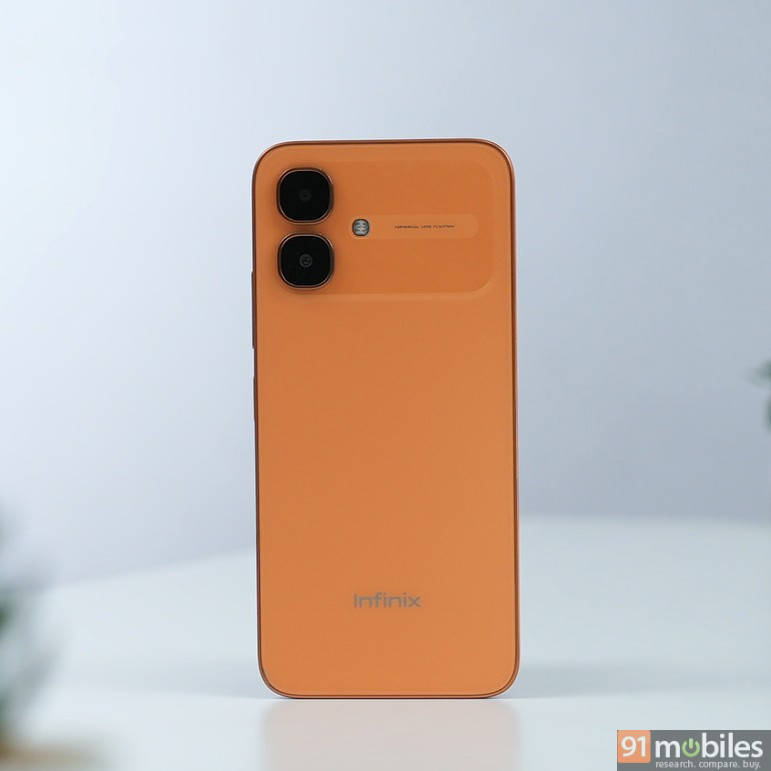
On the positive side, the Infinix Smart 20 makes a strong case for itself by offering a well-designed, refined UI that carries several AI features for daily workflows. Moreover, the cameras perform better than similarly priced competitors like the HMD Vibe 2 5G, which in turn offered better results than the Lava Shark 2 5G. So, if you’re seeking serviceable cameras and a rich software experience under Rs 13,000, the Smart 20 could be well worth it.
Editor’s rating: 7.9/10
Reasons to buy the Infinix Smart 20
- Slim design with attractive colour options.
- Refined and polished software with several AI features.
- Primary camera fares better than the competition.
- Battery life is well-suited for light to casual use cases.
Reasons to skip the Infinix Smart 20
- Lacks 5G connectivity, limiting future-proofing.
- The display doesn’t get bright enough, and colours fade when viewed from the side.
 | vs |  |
| vs |  |