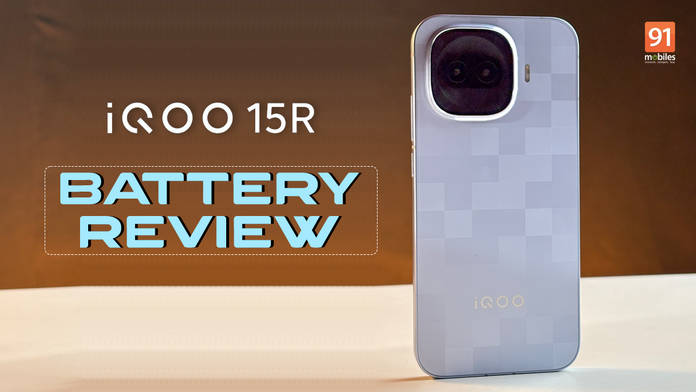
I’ve been using the recently launched iQOO 15R as my daily driver for a while now. While a full experience of the device will be shared in our review, this piece focuses on the feature that stood out for me – the massive 7,600mAh battery. It is currently the largest in both the sub-flagship and flagship brackets.
iQOO has opted for a silicon-anode cell, allowing it to pack in that huge capacity without turning the handset into a brick. Despite the numbers, the 15R remains surprisingly manageable in hand. In fact, the handset can be considered one of the more compact options in its segment. It measures 74.42 x 157.61 x 7.9mm in dimensions and weighs 202 grams.
Read on to find out why the iQOO 15R, priced starting at Rs 44,999, could be a good pick for your gaming and movie marathons.
Table of Contents
Promising endurance in synthetic benchmarks
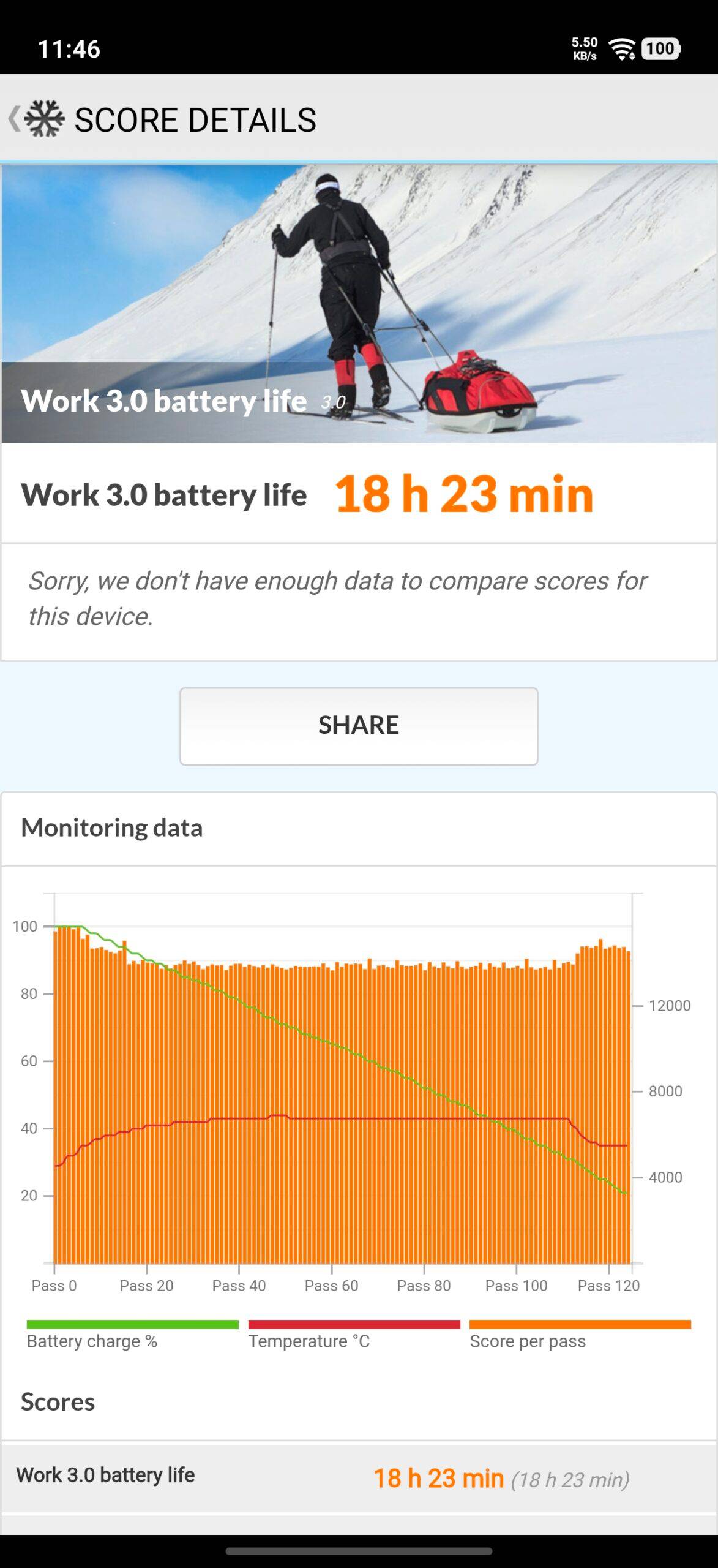
To begin with, we put the iQOO 15R through the PCMark battery benchmark, which simulates a mix of real-world tasks and runs continuously until the battery level drops below 20 percent. Under these conditions, the handset delivered an impressive 18 hours and 23 minutes of runtime. For context, the display brightness was set to 80 per cent and the volume to 50 per cent throughout the test, making the result all the more noteworthy.
While it may not be the highest smartphone runtime (the Realme P4 Power with a 10,000mAh battery still tops the chart), it is still remarkable. The iQOO 15R mimics the PCMark performance in the real world as well.
Equally matched results in our internal testing
During our internal testing, we put the iQOO 15R through the same tests and similar conditions as other smartphones to keep the comparison fair. Over a total of 120 minutes, split between YouTube streaming and gaming, the handset consumed just 11 per cent of its battery. To make the tests as realistic as possible, we kept the volume fixed at 50 percent – after all, the audio also accounts for battery loss.
Moreover, brightness was set at 50 per cent while streaming YouTube, and increased to 80 percent during gaming sessions with BGMI and Call of Duty: Mobile at Ultra HDR and Max graphics, respectively. Even under these mixed and slightly demanding conditions, the battery drain remained impressively low.
If we extrapolate that 11 per cent drop over two hours, the math suggests you could be looking at close to 10 hours of screen-on time, an impressive figure by any standard. However, it wasn’t exactly the case once I began relying on the iQOO 15R as my daily driver. This could be due to constant notifications, network fluctuations, background app activity, and routine syncing – factors that the above tests didn’t account for.
While the handset doesn’t quite sustain that theoretical number in regular mixed usage, it still delivers comfortably long screen time – helping it rank among the best in its class.
Built to last: from light use to heavy
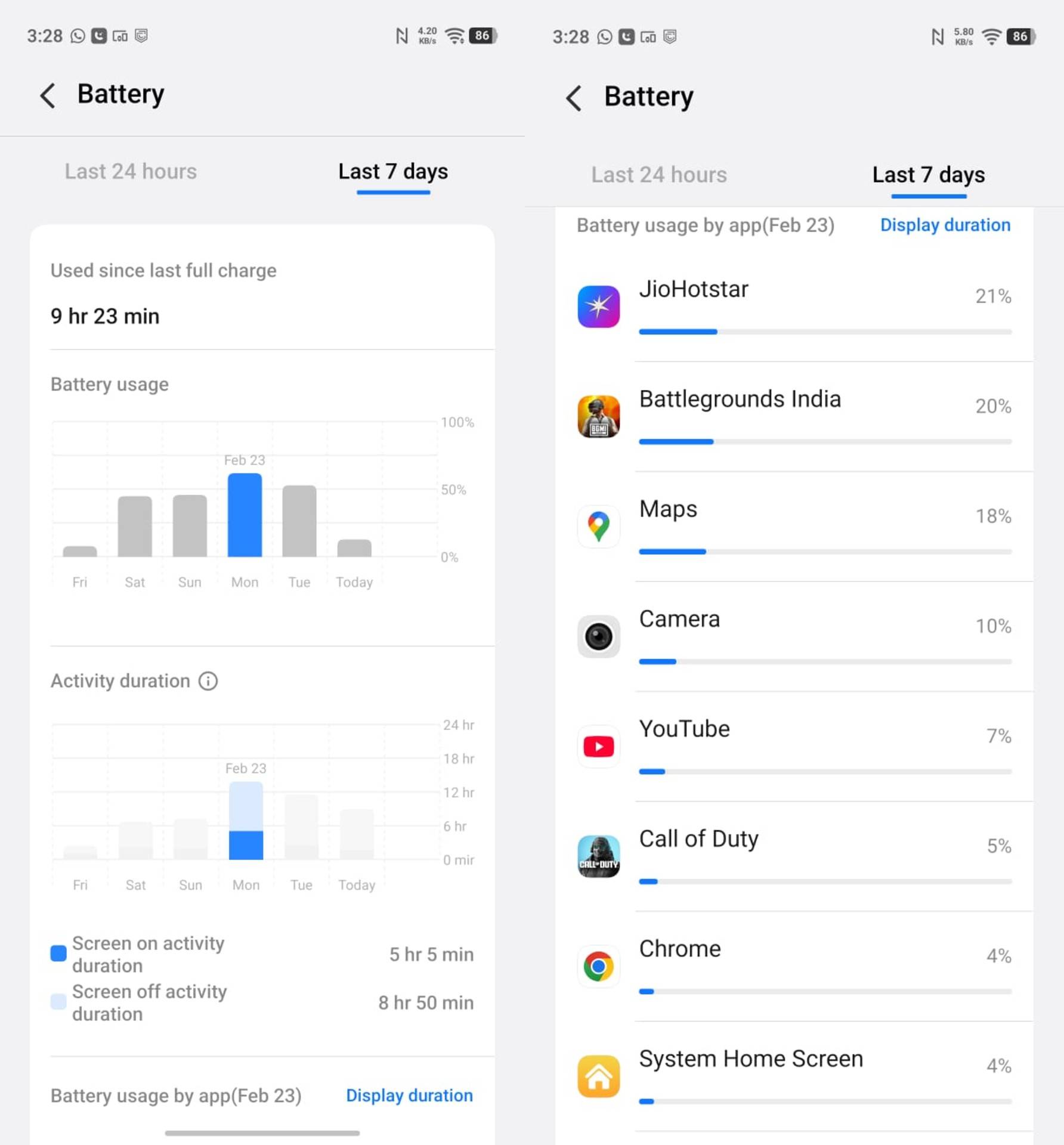
I initially used the iQOO 15R for basic stuff, including social media scrolling, messaging, casual browsing, and some video playback. With that usage, it comfortably stretched to two full days without needing a charge. This was with 8 hours of total screen time.
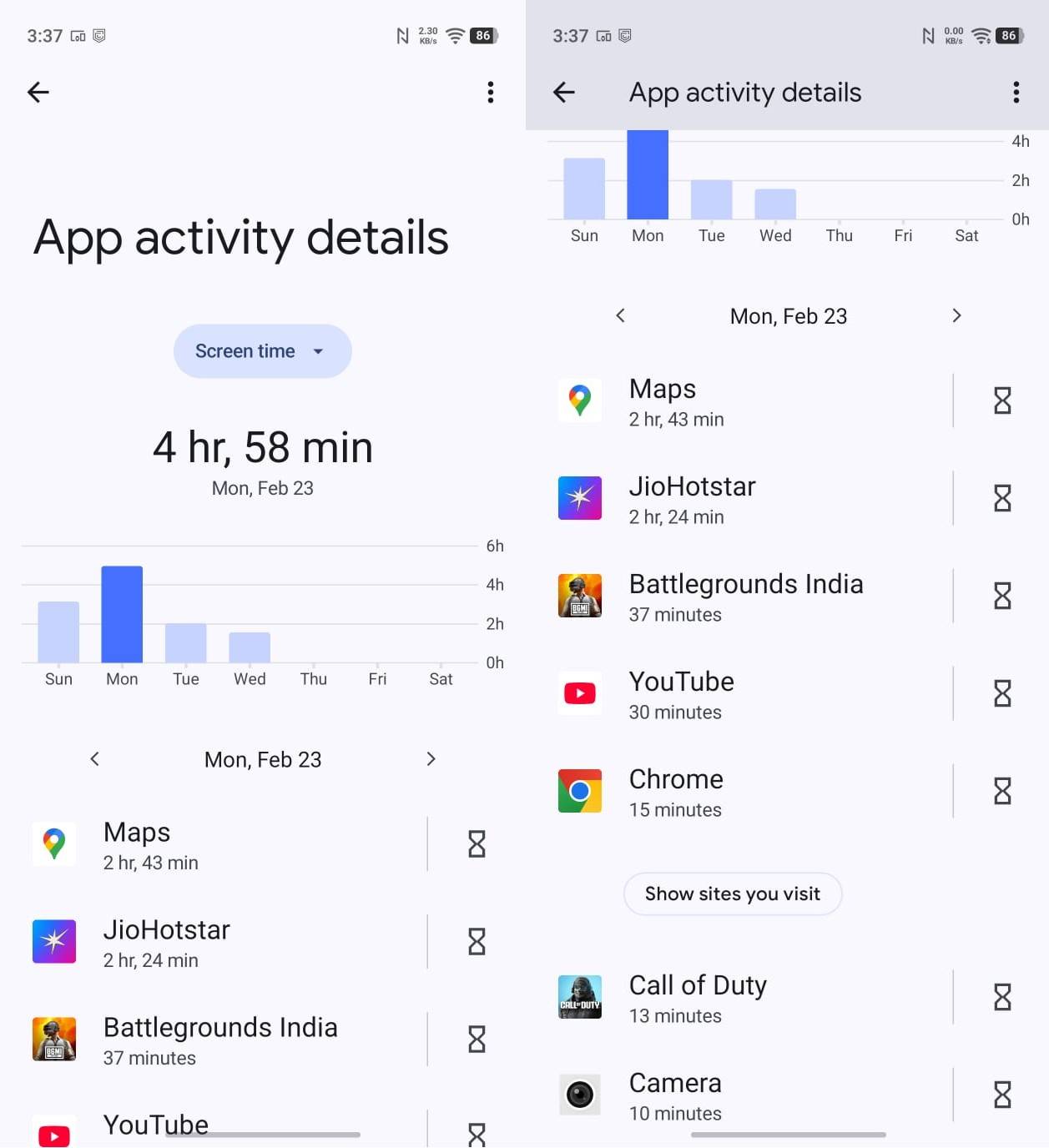
On the next full charge, I pushed the phone harder to see how it coped under heavier demands. The iQOO 15R came off the charger at 06:00 am on 23 February at 100 per cent. Nearly 30 hours later, it was still hanging on with 18 percent remaining. This was after high 144fps gaming, turn-by-turn navigation, prolonged streaming, and even editing a 4K video, on top of the usual calls, messaging, social media scrolling and background syncing. The screen time dropped to around seven hours, but it is still considerably resilient given the workload.
iQOO 15R vs the rest
I didn’t personally perform the same tasks on any of iQOO 15R’s competitors to tell how much better or worse they are than the iQOO phone. However, our controlled lab tests, including synthetic benchmarks, YouTube streaming, and gaming, suggest it holds a clear edge over its closest rival, the OnePlus 15R (review). While the PCMark and video streaming results were broadly comparable between the two, the iQOO 15R is twice as power-efficient as the OnePlus smartphone.


Under identical conditions, the same titles (BGMI and Call of Duty: Mobile), matching graphics settings, frame rate caps, and test duration, the OnePlus 15R device shed 13 percent of its battery. The iQOO 15R, by contrast, dropped just 7 percent.
When you do reach for the charger…
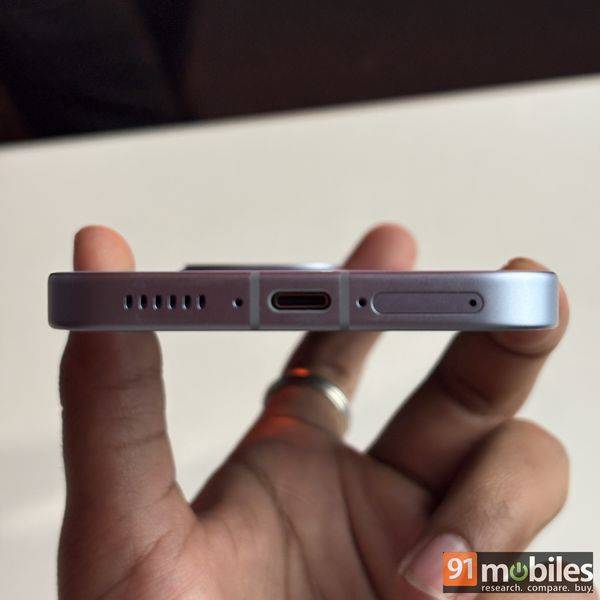
The iQOO 15R also ensures quick top-ups. With the bundled 100W fast charger, the handset reaches a full charge in roughly 45 to 50 minutes. That means even if you do manage to drain the sizeable battery, you’re never tethered to a wall socket for long.
The handset also supports bypass charging, allowing the device to draw power directly from the charger during gaming sessions without affecting the battery’s performance or health. For competitive gaming or extended streaming sessions, that’s a meaningful advantage.
Verdict
This concludes my iQOO 15R’s battery analysis, and it’s clear that the smartphone doesn’t just boast the largest battery in its class – it actually makes full use of it. From strong benchmark numbers to efficient real-world drain, dependable two-day endurance, and rapid 100W charging, the handset delivers on all fronts.
The smartphone’s full worth will be analysed once we test it on all fronts. However, in the current scenario, the handset is worth buying for anyone who has long gaming sessions and back-to-back binge-watching marathons as part of their routine. The handset packs a promising hardware lineup, including the sub-flagship Qualcomm Snapdragon 8 Gen 5 SoC, a 6.5k large VC cooling system, and a relatively compact 6.59-inch AMOLED display that offers 1.5k resolution, a 144Hz refresh rate, HDR10+ support, and 5,000 nits peak brightness.