Adding extra “oomph” to your home entertainment cannot get easier than bringing in a pair of active speakers and suddenly hearing everything get elevated. From movies to music and even gaming, if you’ve been fed a bass-deficient diet compounded by a lack of clarity, keep reading…
Table of Contents
Design & Build (9/10)
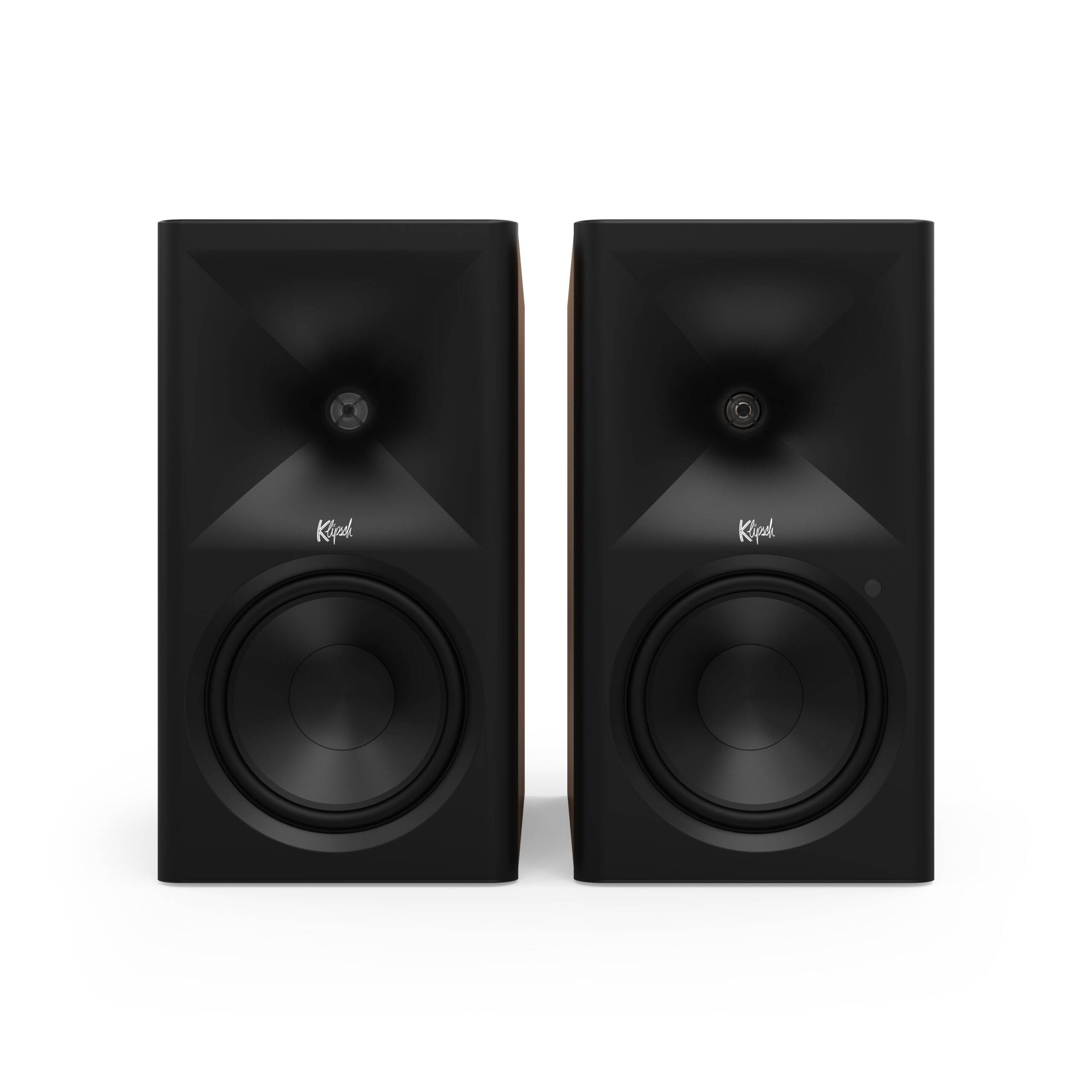
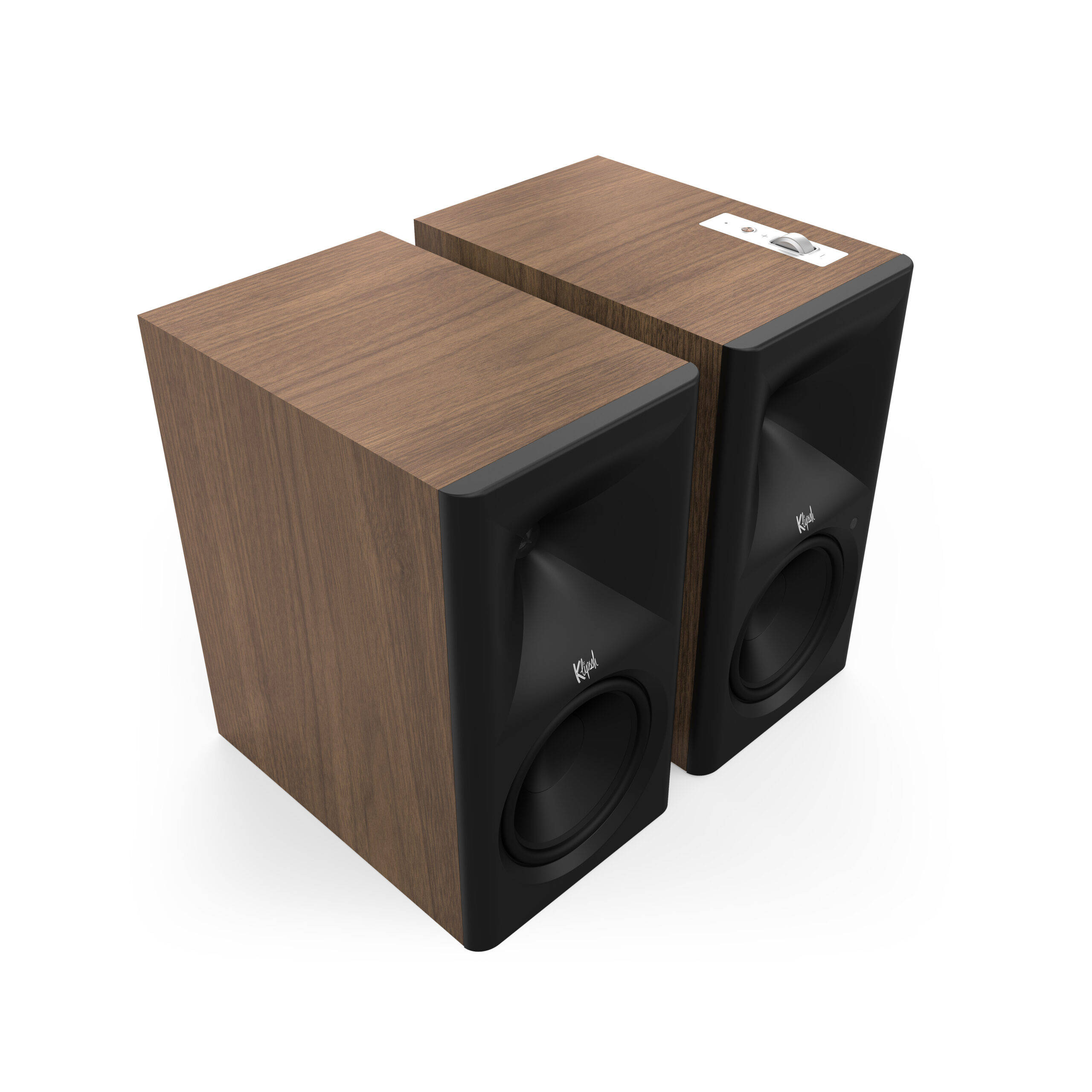
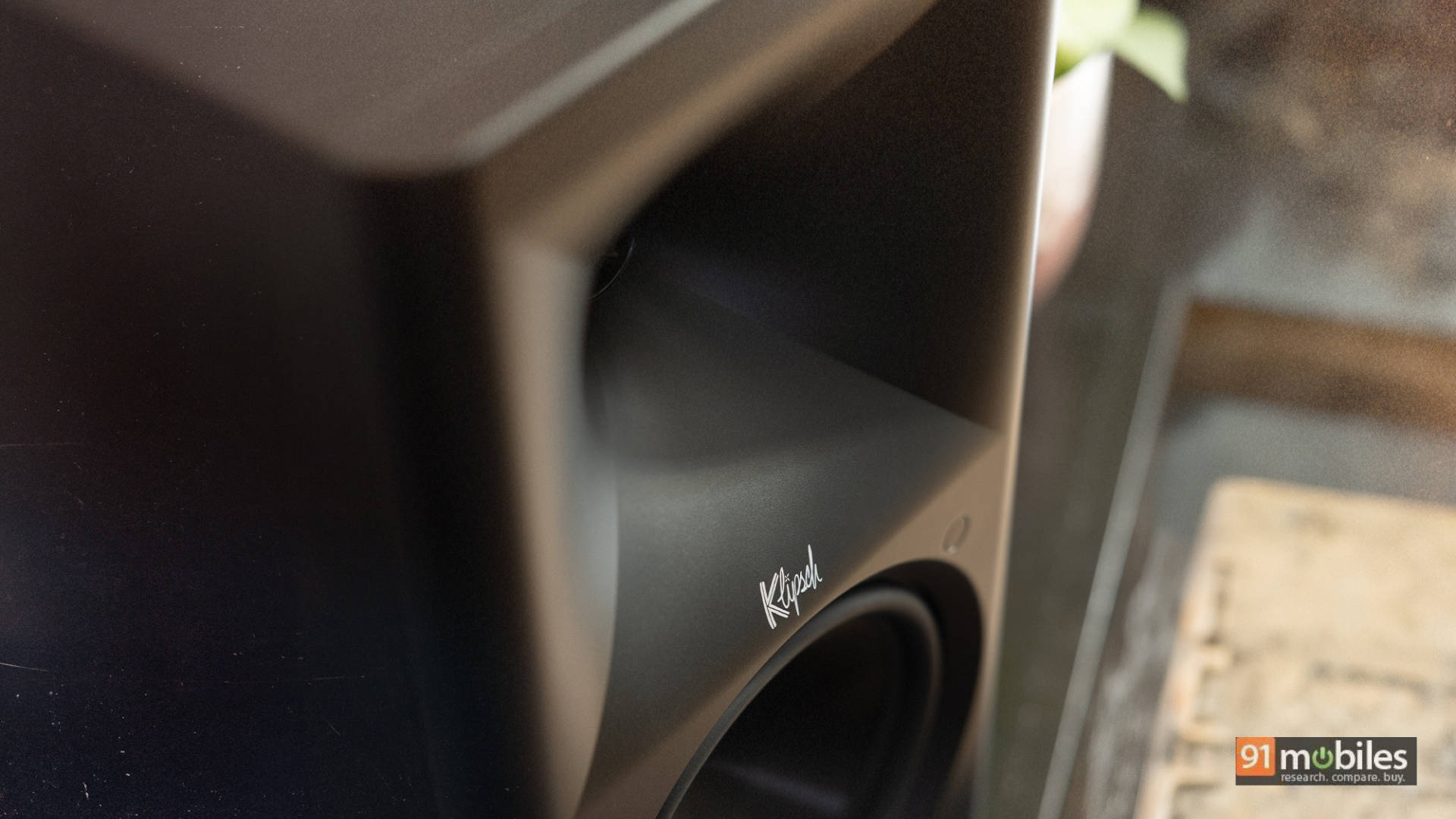
Klipsch hasn’t messed with the winning look of the previous gen, but instead refined it further with an elevated finish. The Sevens II wear real wood veneer in Ebony, Walnut or a new Red Oak with a white baffle, which is my personal favourite, but our review sample wore the walnut and black suit that will fit the vast majority of Indian decors. A 1-inch titanium tweeter in a Tractrix horn pairs with a 6.5-inch Jet Cerametallic woofer, a Klipsch staple in their serious speakers and almost a signature of the brand.
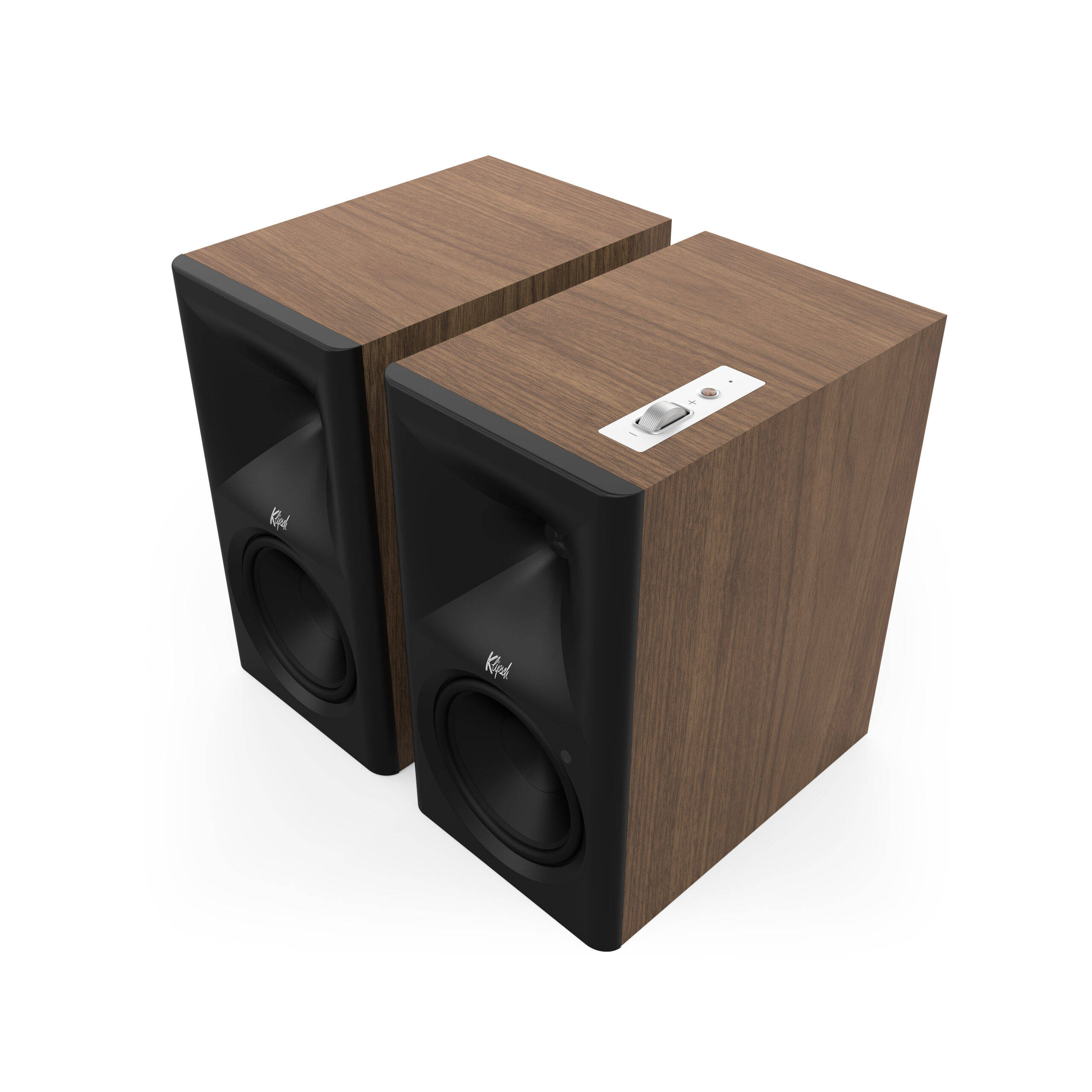
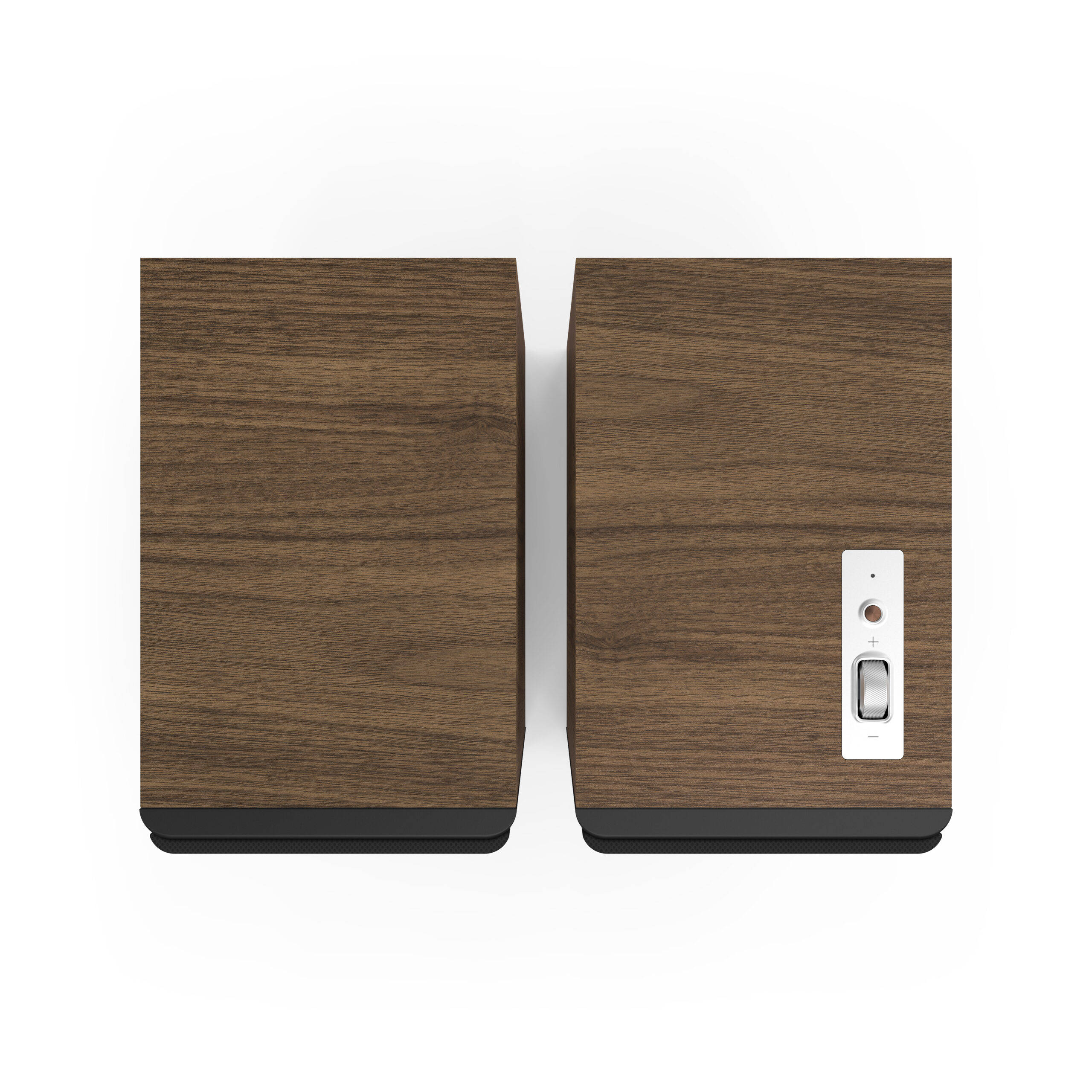
Even the grilles have been beefed up with an upmarket-looking vintage Klipsch logo on a metal coin and powerful magnets that snap the grilles into place on the front baffle if you like a discreet look. The metal volume wheel on the primary speaker is charming, offering a small but satisfying hit of analogue interaction in a world determined to put everything behind an app. Although some sort of front panel display or coloured LED to indicate the source selected would’ve been ideal while seated. Almost everything is done via the Klipsch Connect app, which works well but doesn’t allow for a device-free listening experience late into the night. There is a remote included, though, which is handy for track changes, volume control and selecting sound modes.
Connectivity (9/10)
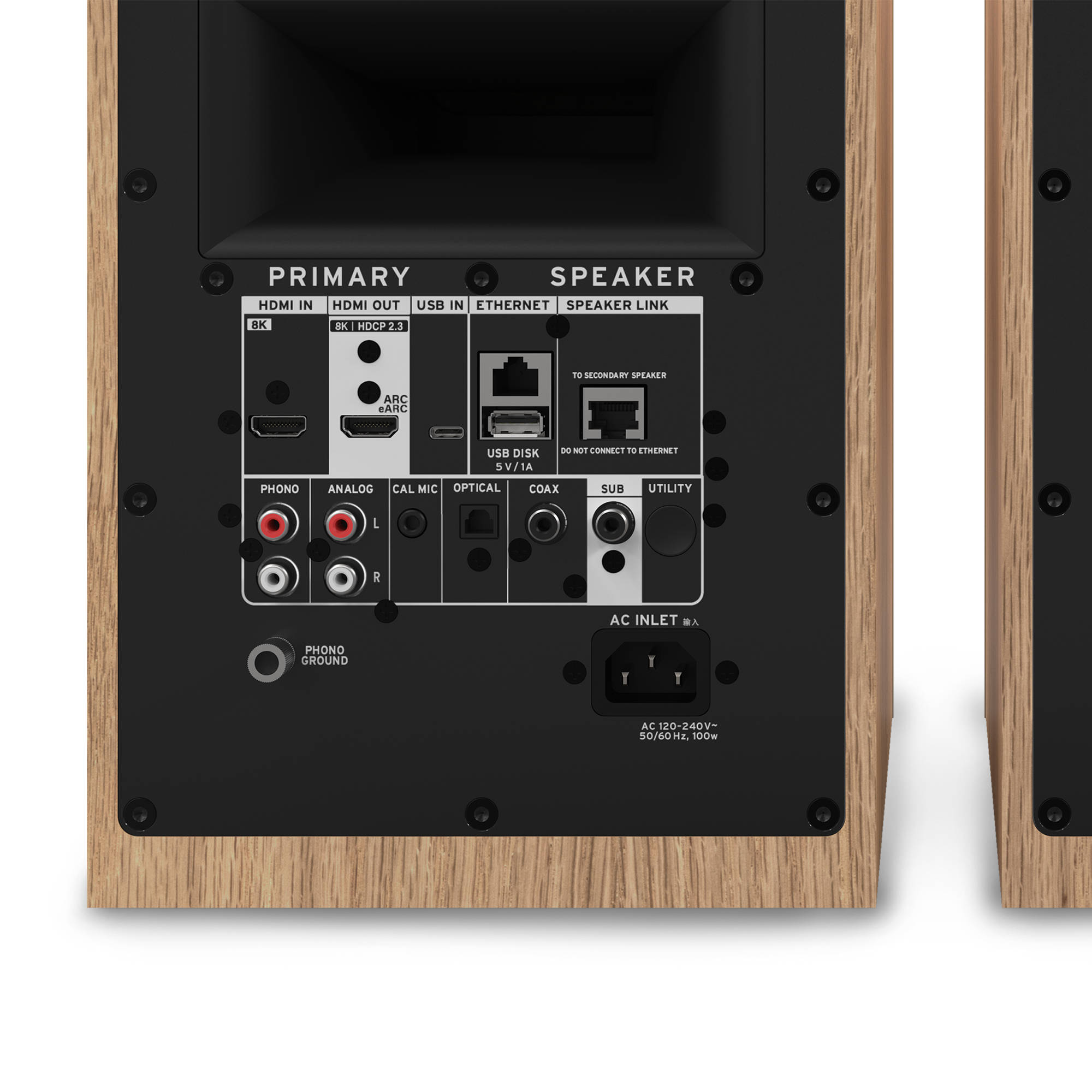
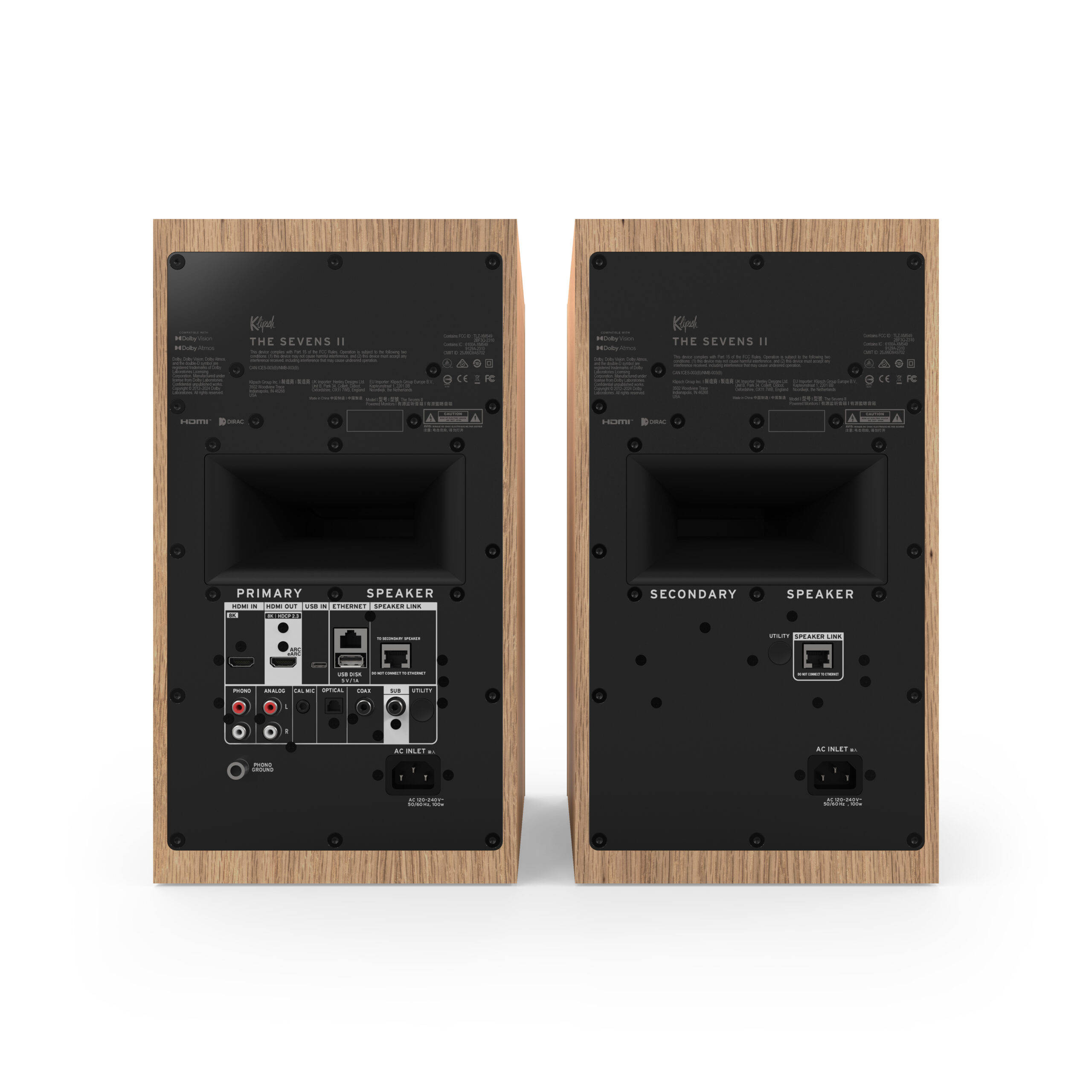
This is where the second generation earns its upgrade. Klipsch has practically plonked an Onkyo AVR inside the Sevens II, justifying much of the premium it commands over the previous generation. You get a robust supply of power, HDMI 2.1 with eARC, a second HDMI input, optical, coaxial, analog, MM phono, USB-C and a subwoofer output. Streaming covers AirPlay 2, Google Cast, Spotify Connect, Tidal Connect and Qobuz Connect. The optional wireless link between the speakers caps resolution at 48kHz, so I’d recommend using the supplied Ethernet cable for true Hi-Res.
The Klipsch Connect app lets you control everything, from EQ presets to custom modes, different Dirac filters, DSP sound modes, Dynamic Bass, Night and Dialog modes, input selection and firmware updates. If you mostly use AirPlay, the app is still the better way to control volume. It allows much finer control in single steps, whereas the iPhone’s volume buttons only work in increments of five steps.
There is a macOS app too, sort of. You can run the iOS app on a Mac, which helps if your laptop is your main music source, say in an office, and you don’t want to reach for your phone to change tracks or adjust the EQ.
Sound (8.5/10)
The three sound modes that shape the presentation are Movie, Music and Direct. Each opens up the perceived soundstage depth in increasing amounts, so it really depends on your taste. Some music actually sounds better in Movie mode, thanks to the Dolby Atmos virtualisation, with larger scale and more image width that projects beyond the boundaries of the two speakers. Direct is the most focused and works best if you can manage more than 6 to 8 feet between the left and right speakers.
Dirac adds weight to the low end and helps in a difficult or asymmetrical room layout. It also works well as a low-level listening mode, filling out the bottom end with more oomph and spicing things up. The bigger challenge in India is finding a window quiet enough, without any ambient noise, to get the Dirac calibration done. The supplied mic is overly sensitive to even a faint, errant bike or rickshaw passing in the distance, and calibration simply won’t complete. I literally had to set an alarm for 4 am and hope the morning laughing therapy club members didn’t show up early.
Once you have all your parameters dialled in just right, the Sevens II sound dynamic and detailed, with bass that runs deeper than the cabinets suggest. It may be too much of a good thing depending on your room size and source, so don’t be afraid to use the EQ or experiment with the myriad of Dynamic Boost, Dirac on/off and sound mode combinations. Imaging and instrument separation on tracks like Diving Duck Blues by Taj Mahal is sharp, with a reasonably believable phantom centre and respectable soundstage that almost make you forget that you’re listening to an all-in-one overachiever. The midrange is natural and for the most part, neutral, whereas the highs didn’t exhibit any of the sibilance and shoutiness that I was apprehensive of. Klipsch has judged the tonal character just right on the Sevens II and shipped them with a recipe book for you to make your own dish. Mostly, just add salt to taste.
Switching between sound modes or toggling Dirac took a couple of seconds too many for my liking, but it’s not something that you will be using often once you find your sweet spot with these speakers. Turning up the volume to higher SPLs did cause audible disintegration of the tonal balance, and they start sounding strident and harsh. But keep it at sane levels, and they are plenty rewarding with high levels of dynamic energy.
Verdict
While the sound can be expansive, it is also now very, very expensive compared to the earlier generation. Almost Rs. 90,000 more expensive at approximately Rs. 2,60,000 now, they are a tough pill to swallow. For the extra outlay, though, you get Wi-Fi streaming, Dolby Atmos decoding, Dirac (limited bandwidth) and a second HDMI input. Sure, you could assemble your own entourage of bookshelf speakers, integrated amplifier, phono amp and streamer, but you’d have to spend a lot more time and energy in finding components that work as a synergistic whole and, even then, take a whole lot more space than just two speakers. So, while they are hard to recommend at their high price, they also pack in a tempting amount of kit in a good-looking package.
As one pair handling TV, vinyl, streaming and consoles, they are hard to beat. These are big, lively, unapologetically Klipsch speakers that throw a wide, high-energy stereo image, dig surprisingly deep without a subwoofer, and make films and OTT sound far grander than they have any right to from two cabinets.
Editor’s Rating: 9 / 10
Pros
- Big, bold sound with deep bass
- Fantastic build with charming analog touch
- Comprehensive connectivity and flexible app control
Cons
- Sound mode switching lag
- Dirac calibration needs near-silent surroundings
- Steep price jump over predecessor