
Motorola’s smartphones have mostly played it safe with their design and feature choices, something that seems to have worked in the brand’s favour over the years. The company recently took a bolder step by entering the premium segment with a slab flagship, the Motorola Signature. Its Edge series, however, remains the brand’s most recognisable lineup, catering largely to the mid-range segment.
The company has now launched the Motorola Edge 70 Fusion in India at a starting price of Rs 26,999. Positioned in the competitive upper mid-range segment, the new Edge model brings features like a curved display, Pantone colours, a slim design, and a large battery. We’ve spent some initial time with the device, and here are our first impressions ahead of our detailed review.
Same Edge design language, still premium
The Motorola Edge 70 Fusion carries forward the familiar Edge-series design language with elements like a curved display, Pantone colours, and a slim profile. Does it make the phone stand out in its segment? To an extent, yes. But it also looks very similar to the Edge-series phones we’ve been seeing for the past few years. That sense of familiarity may appeal to some users, while others looking for a more refreshing design might find it a bit predictable.
Design familiarity aside, the Edge 70 Fusion feels very comfortable in the hand. The phone is noticeably slim and lightweight, which makes it easy to hold and use for long periods. It also slips easily into a pocket. The difference becomes especially noticeable if you’re switching from a bulkier phone.
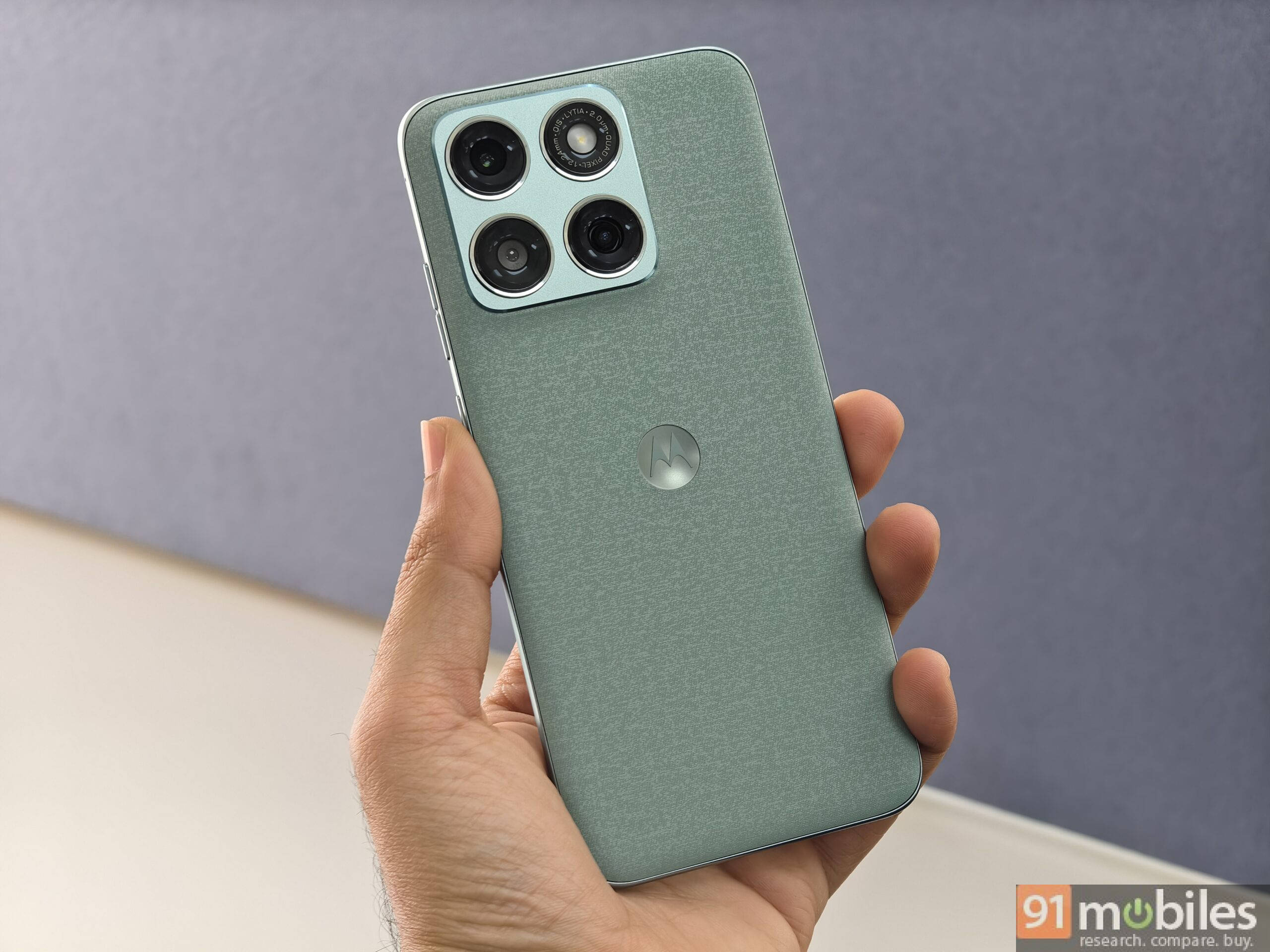
In terms of aesthetics, the Edge 70 Fusion carries a premium look and feel thanks to its soft fabric back panel paired with a metal frame. The fabric finish isn’t just about appearance; it also helps prevent fingerprint smudges and offers better grip compared to glossy glass backs.
The side buttons, which include the volume keys and power button, are quite slim to match the phone’s thin profile. Despite that, they don’t feel flimsy or plasticky and remain comfortable to use.
The colour variant we received is Blue Surf, a turquoise-like shade. It’s a soft pastel tone that should appeal to users who prefer something subtle rather than overly flashy. The Edge 70 Fusion is also available in other colour options, including Country Air and Silhouette.
Curved screen that’s bright, smooth, and immersive
The curved display adds to the device’s immersive feel, though it may divide opinions since flat displays are currently trending. Thankfully, the curves aren’t overly aggressive, and the bezels are slim, so the design still feels balanced even if you’re moving from a flat-screen phone. Motorola’s displays have generally been among the highlights of its devices, and this one, too, immediately gives off a premium, almost flagship-like impression.

The Motorola Edge 70 Fusion features a 6.78-inch 1.5K quad-curved AMOLED display with a 144Hz refresh rate and peak brightness of 5,200 nits. At first glance, the screen immediately gives off a premium feel. It’s sharp, vibrant, and very smooth to use. Scrolling through apps and navigating the interface feels fluid thanks to the high refresh rate.
During our brief time with the device, the display also appeared bright enough for both indoor and outdoor use. If you’re someone who watches a lot of videos or streams content on your phone, the Edge 70 Fusion’s display should make that experience enjoyable. That said, we’ll need to spend more time with the phone to evaluate how the curved edges perform in real-world use, particularly during gaming and extended usage. We’ll cover that in more detail in our full review.
New camera sensor and upgraded chipset
Coming to two of the Edge 70 Fusion’s key aspects, the cameras and the chipset. These are areas we’ll be able to properly evaluate only in our full review, but here’s a quick preview of what the phone offers.
The Edge 70 Fusion features what Motorola claims is the world’s first 50MP Sony LYT-710 sensor in a smartphone. The company says the sensor is designed to deliver improved low-light performance, sharper details, and better dynamic range. Alongside the main camera, you get a 13MP ultra-wide sensor with macro support and a 32MP front camera for selfies and video calls. This is a fairly typical camera setup for this price segment, where the primary sensor does most of the heavy lifting. The secondary camera doubling as a macro shooter could appeal to users who enjoy taking close-up shots and experimenting with different perspectives.
The camera interface is also clean and simple, much like Motorola’s overall software experience. You get several shooting modes such as Portrait, Slow Motion, Night Vision, Photo Booth, Dual-Capture video, and a Pro mode for more manual controls. Overall, the camera app feels well-equipped for both casual users and those who like to experiment with smartphone photography. We’ll be testing the cameras more thoroughly to see how they perform across different lighting conditions and scenarios.
Motorola has also upgraded the chipset on the Edge 70 Fusion. The phone is powered by the Snapdragon 7s Gen 4, replacing the Snapdragon 7s Gen 3 used in the Edge 60 Fusion. On paper, this should bring noticeable improvements in overall performance and efficiency. In our brief time with the device, the phone felt smooth and responsive, with no noticeable lag or stutter during regular usage.
The UI remains very clean, with no pre-installed bloatware apart from Google’s standard suite of apps and services. The overall software experience feels minimalistic yet polished, which has long been a strong point for Motorola phones. The Edge 70 Fusion runs Hello UI based on Android 16 out of the box, and Motorola is promising three Android OS upgrades along with six years of security updates, which should add to the phone’s long-term usability.
Bigger battery, slimmer design
Battery is where the Motorola Edge 70 Fusion seems to have received its biggest upgrade. The phone packs a 7,000mAh silicon-carbon battery, a significant jump from the 5,500mAh battery on the Edge 60 Fusion. This also brings Motorola in line with several rival brands that have started offering 7,000mAh batteries as the new standard in this segment, with some devices even going beyond that.
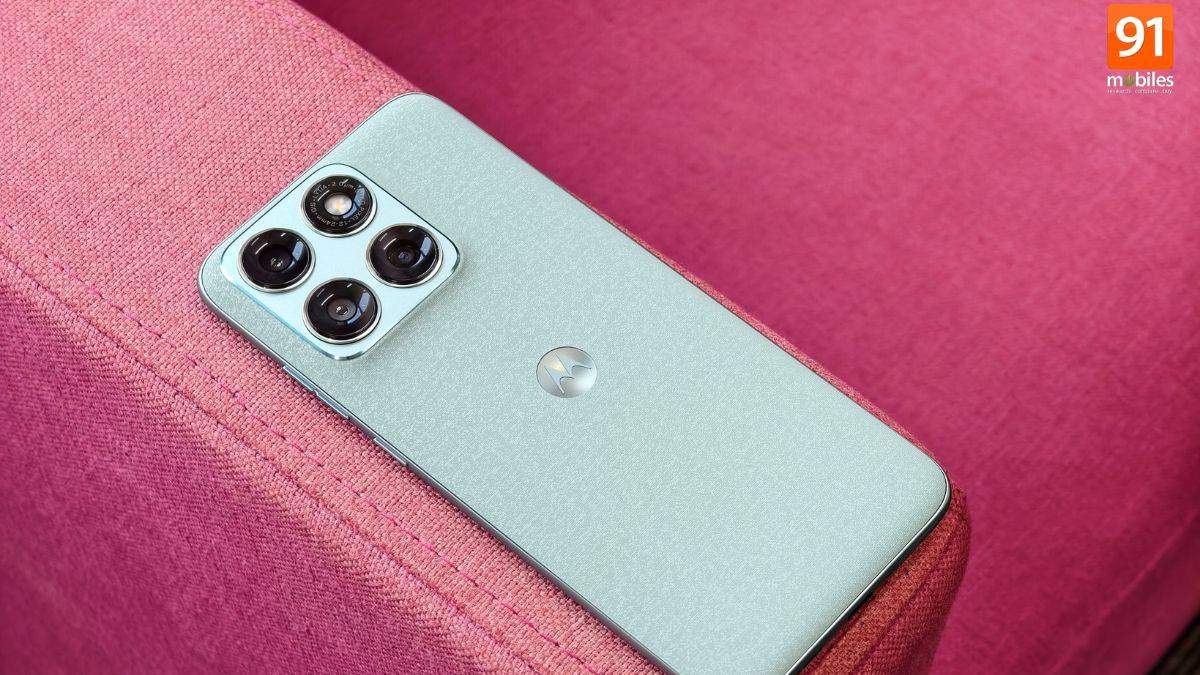
Motorola claims the Edge 70 Fusion can deliver up to 52 hours of battery life under typical usage. The phone also supports 68W fast charging, which should help quickly top up the large battery when needed. What makes the Edge 70 Fusion stand out, however, is that it manages to pack this large battery without becoming bulky. Despite the capacity, the phone remains slim and lightweight, something made possible by the silicon-carbon battery architecture, which allows manufacturers to increase capacity while maintaining a thinner form factor.
As a result, the Edge 70 Fusion manages to balance battery endurance with a slim and stylish design. We’ll be testing the phone further to see how well the battery is optimised and how long it lasts in real-world usage scenarios.
First impressions so far
Overall, the Motorola Edge 70 Fusion appears to tick several important boxes for a phone in this segment. It offers a premium-looking design, a vibrant curved display, upgraded cameras, a new Snapdragon chipset, and a significantly larger battery. On paper, it looks like a well-rounded device that could appeal to users who prioritise battery life, clean software, and a stylish design without stepping into flagship pricing.
That said, the real test will be how well these features translate into everyday performance, camera consistency, and battery optimisation. If Motorola manages to deliver on those aspects, the Edge 70 Fusion could be a strong contender in the sub-Rs 30,000 category. It takes on the likes of the Realme P4 Power with its massive 10,001mAh battery. But if you prioritise a slim design with a big battery and are in the market for a phone right now, the Edge 70 Fusion could be worth considering. For now, these are just our first impressions, so stay tuned for our full review, where we’ll take a deeper look at its cameras, gaming performance, battery endurance, and overall value for money before giving our final verdict.