The OnePlus 15R has long been a strong contender in the sub-flagship segment, but it now faces fresh competition from the Motorola Edge 70 Max. Motorola’s first gaming-focused smartphone shares several key traits with the OnePlus offering. Both devices are powered by the Qualcomm Snapdragon 8 Gen 5 SoC, support high-frame-rate gaming, pack large batteries, and feature impressive displays, making them compelling options for performance-focused users.
The Motorola Edge 70 Max (review) and OnePlus 15R (review) also approach the cameras in the same way, with identical resolutions. So, which smartphone deserves your money? We set out to answer that by putting both devices through their paces.
Table of Contents
Design
Despite their gaming-focused positioning, the Motorola Edge 70 Max and OnePlus 15R don’t look out of place alongside conventional smartphones. Both follow the signature design language of their respective brands. The OnePlus 15R features a sleek rectangular camera module, while the Edge 70 Max opts for a squarish camera island. Personally, I prefer the cleaner, more understated look of the OnePlus 15R. Its Mint Breeze colourway also stands out more than the Aqua Grey variant of the Edge 70 Max that we received for review.

| Smartphone | Thickness | Weight | IP Rating |
| Motorola Edge 70 Max | 8.29 mm | 221 grams | IP68 +IP69 |
| OnePlus 15R | 8.3 mm | 218 grams | IP68 +IP69 |
The OnePlus 15R may not have the military-grade durability, but it comes with an additional IP69K certification, protecting it from high-pressure and temperature jets. The placement of ports, speakers, optical in-display fingerprint scanner, and buttons is identical on both smartphones.
Ultimately, the choice comes down to what you value more: a cleaner, more understated design or a more premium in-hand feel. The decision is yours.
Display
The Motorola Edge 70 Max and OnePlus 15R both feature large 6.8-inch AMOLED displays with centred punch-hole cutouts, ultra-slim bezels, and HDR10+ support. However, there are a few key differences. The OnePlus 15R boasts a higher peak refresh rate of 165Hz, while the Edge 70 Max counters with a sharper 2K (QHD+) resolution, compared to the 1.5K panel on its rival, along with an LTPO display that dynamically adjusts the refresh rate up to 144Hz for improved power efficiency.
| Smartphone | Display | Peak Brightness |
| Motorola Edge 70 Max | 6.8 inches - Extreme AMOLED (Curved Display) | 7000 nits |
| OnePlus 15R | 6.83 inches - AMOLED | NA |
In day-to-day use, though, the viewing experience is remarkably similar. Both displays are equally sharp, produce vibrant colours, offer deep blacks, and deliver excellent contrast. Animations and UI transitions also feel equally smooth, largely because both smartphones operate at a maximum of 120Hz during regular use.
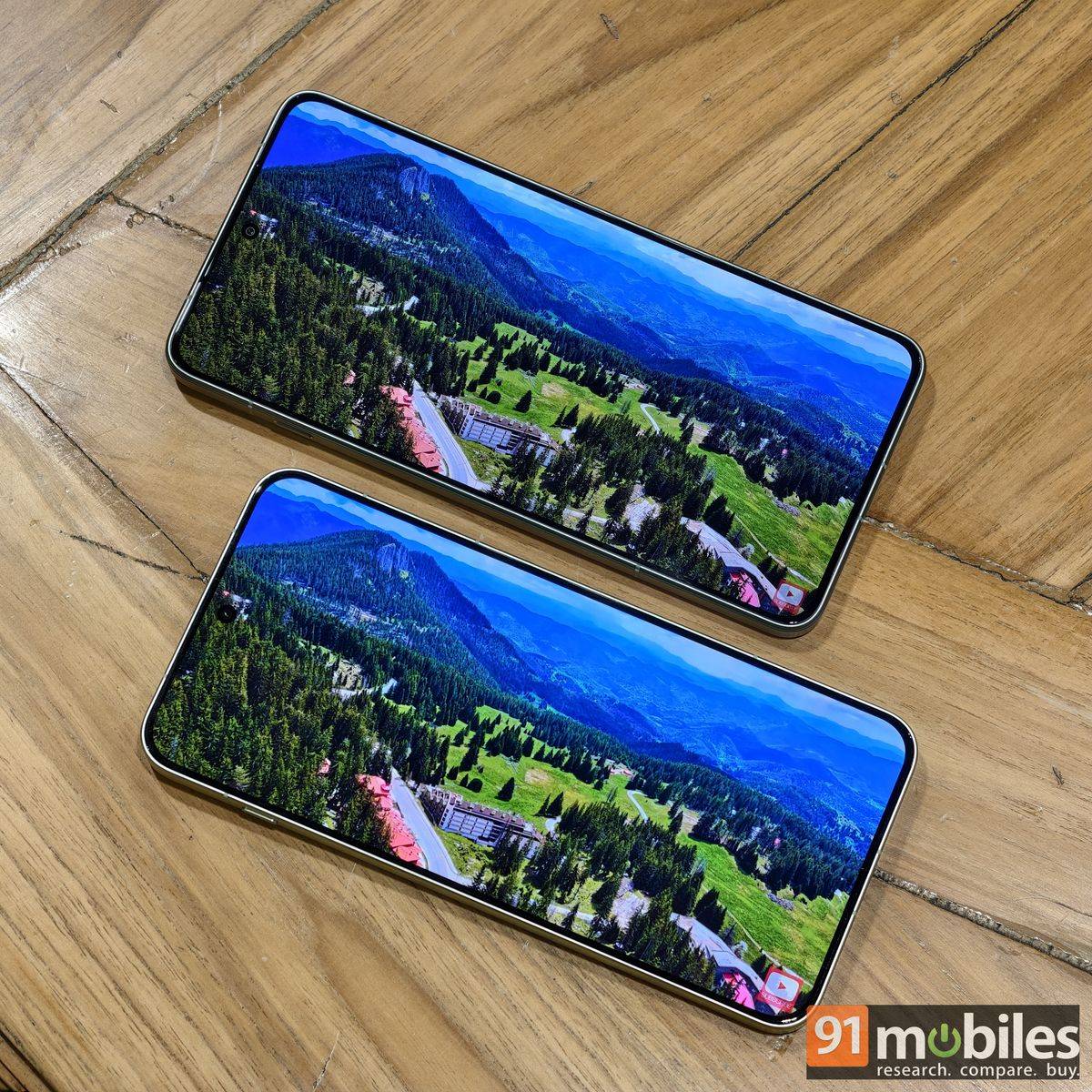
The OnePlus 15R only unlocks its 165Hz refresh rate in supported games such as BGMI and Call of Duty: Mobile. The Motorola Edge 70 Max, meanwhile, remains capped at 120Hz even while gaming. While this isn’t a deal-breaker for most users, competitive gamers who spend a lot of time playing fast-paced titles may appreciate the extra smoothness offered by the OnePlus 15R. The latter also outshines its competitor with better legibility outdoors under direct sunlight. This is despite the Motorola Edge 70 Max’s lofty 7,000 nits peak brightness claim.
Performance


Performance is virtually identical on both smartphones, thanks to the Qualcomm Snapdragon 8 Gen 5 SoC. Each device is equipped with a large vapour chamber cooling system – 5,500mm2 on the Motorola Edge 70 Max and a slightly larger 5,704mm2 unit on the OnePlus 15R – to keep thermals in check during sustained workloads. While the OnePlus 15R comes with ‘Ultra’ LPDDR5X RAM, it doesn’t feel any faster in real-world use.
Both smartphones deliver equally smooth performance in day-to-day tasks and maintain stable temperatures under heavy loads. This was irrespective of the fact that the Edge 70 Max had 8GB RAM as opposed to the 12GB RAM on the OnePlus 15R.
The smartphones also excel at multitasking, keeping multiple apps active in the background without noticeable slowdowns. Complementing the flagship chipset is UFS 4.1 storage on both devices, ensuring fast app launches, quick file transfers, and an overall responsive user experience. We even rendered a 4K video on both smartphones, and it was done at the same time.
Software
The Motorola Edge 70 Max and OnePlus 15R both run Android 16, customised by their respective skins. The Motorola smartphone is layered with Hello UI, which keeps the experience closer to stock while also adding a handful of third-party apps. The handset even supports a handful of Moto gestures; however, the AI features are not available out of the box on its 8GB RAM variant. It will be rolled out via a software update, bringing a new cross-device AI experience called Qira, which lets you catch up with notifications, generate images, and record live conversations, among other things.
| Smartphone | Software Support |
| Motorola Edge 70 Max | 3 Year OS Updates + 5 Year Security Updates |
| OnePlus 15R | 4 Year OS Updates + 6 Year Security Updates |
The OnePlus 15R, on the other hand, boots OxygenOS 16 (will be changed to ColorOS via software support). The handset offers AI features out of the box, including its AI Mind Space, which stores all the relevant information such as voice recordings and screenshots in one place and summarises them for you. The handset offers a fully customisable experience with a bunch of apps pre-installed. Unlike the Motorola smartphone, the 15R lacks gestures such as chop chop to turn on the flashlight, flip to open the camera app, and more.
Apart from the visual and feature differences, both smartphones offer plenty of personalisation options. However, the software support on the Motorola Edge 70 Max remains limited to three major OS upgrades and five years of security updates. The OnePlus 15R, meanwhile, offers four major OS upgrades and six years of security updates, making it a favourable choice for longevity.
Battery
The OnePlus 15R packs a larger 7,400mAh battery compared to the Motorola Edge 70 Max’s 7,100mAh cell. Both smartphones support fast wired charging—80W on the OnePlus and 90W on the Motorola—along with bypass charging and reverse wired charging. The Edge 70 Max, however, gains an advantage with Qi2.2 wireless charging support, allowing for up to 25W wireless charging when paired with a compatible MagSafe charger or power bank.
That wireless charging support is one of the Edge 70 Max’s key strengths in this comparison. Otherwise, the OnePlus 15R holds the edge when it comes to battery endurance. That’s not to say the Motorola underperforms – it can comfortably last a day and a half with regular use and continues to deliver solid battery life under demanding workloads such as gaming. It also posted a respectable runtime of over 16 hours in the PCMark battery test.
| Smartphone | Battery Capacity | Charging Support | Charging time (20% to 100% ) |
| Motorola Edge 70 Max | 7100 mAh | 90W Turbo Charging | 57m |
| OnePlus 15R | 7400 mAh | 80W Super Charging | 49m |
The OnePlus 15R, however, takes things a step further with superior efficiency across the board. It lasted 18 hours in the PCMark battery benchmark and can comfortably stretch to nearly two days of regular use on a single charge. The handset also delivers excellent battery endurance during extended gaming sessions, making it a more appealing device for power users.
Cameras
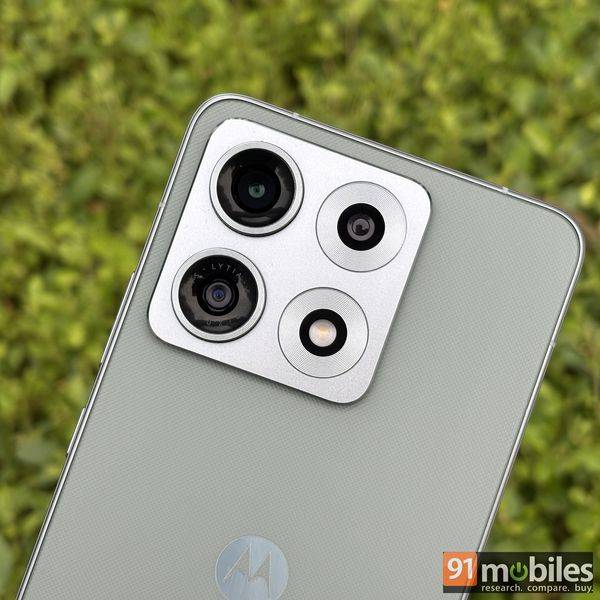

The Motorola Edge 70 Max and the OnePlus 15R offer identical camera resolutions. That said, while the primary camera on the Motorola smartphone is a 50MP OIS Sony LYT-710 sensor, the 15R sports a 50MP OIS Sony IMX 906 sensor. The main sensors on both smartphones are paired with an 8MP ultrawide lens. Up front, you get a 32MP snapper for selfies and video calling. Speaking of video, the handsets are capable of recording 4K videos, but 1080p remains standard across cameras.





The OnePlus 15R delivers contrasty images that look appealing straight out of the camera and should work well for social media. While the dynamic range is decent, exposure in shadowy areas could be better. The ultrawide camera follows a similar colour science, maintaining consistency across the cameras. Portraits are another strong point, with the computational processing doing a respectable job of separating the subject from the background, even though the skin tones and colours may not look accurate. Overall, the OnePlus 15R offers a pleasing camera experience, but its handling of shadows and oversaturated skin tones and colours leaves room for improvement.





The Motorola Edge 70 Max impresses with more realistic colours and natural-looking skin tones in well-lit environments, while also handling contrast and dynamic range better than the OnePlus 15R. Portraits benefit from multiple focal lengths using the primary camera, although there is a noticeable loss of detail. Edge detection, however, remains precise. In low-light conditions, the Edge 70 Max struggles more with controlling light flares than the OnePlus 15R. Overall, the Motorola Edge 70 Max delivers the more natural and balanced camera output, despite some shortcomings in portrait detail and flare control.
Verdict
| Variant | Motorola Edge 70 Max | OnePlus 15R |
| 8GB + 256GB | Rs 54,999 | NA |
| 12GB + 256GB | Rs 58,999 | Rs 59,999 |
| 12GB + 512GB | NA | Rs 64,999 |
| 16GB + 512GB | NA | Rs 66,999 |
The Motorola Edge 70 Max is more competitively priced than the OnePlus 15R. The handset is also more feature-rich, with a sharper display, better durability, wireless charging, and a power-efficient LTPO panel. The Motorola smartphone also outshines its rival with more natural-looking cameras.
The OnePlus 15R, on the other hand, starts with 12GB of RAM, with a higher 16GB configuration also available. The OnePlus smartphone offers better battery endurance for everyday usage, higher FPS support in supported games, better outdoor legibility, and longer software support.
Those are the major differences between the two smartphones. In other areas, the Motorola Edge 70 Max and OnePlus 15R are closely matched, with both smartphones delivering flagship-level performance, capable displays, strong gaming credentials, and impressive battery life.
For most performance-focused buyers, the OnePlus 15R is the better overall choice. However, if your budget is tight, the Edge 70 Max remains a compelling alternative, offering most of the same core performance at a lower starting price, with some additional features.