Cloud gaming events usually come with an asterisk. There’s always a dedicated line, a carefully staged setup, and a “please ignore that one hiccup” moment. So, walking into NVIDIA’s preview of GeForce Now in Mumbai, expectations were honestly modest. The assumption was that this would be a tightly controlled showcase designed to highlight best-case scenarios rather than something that resembles how people actually game. Surprisingly, that wasn’t the case.
Table of Contents
A gaming session, more than a demo
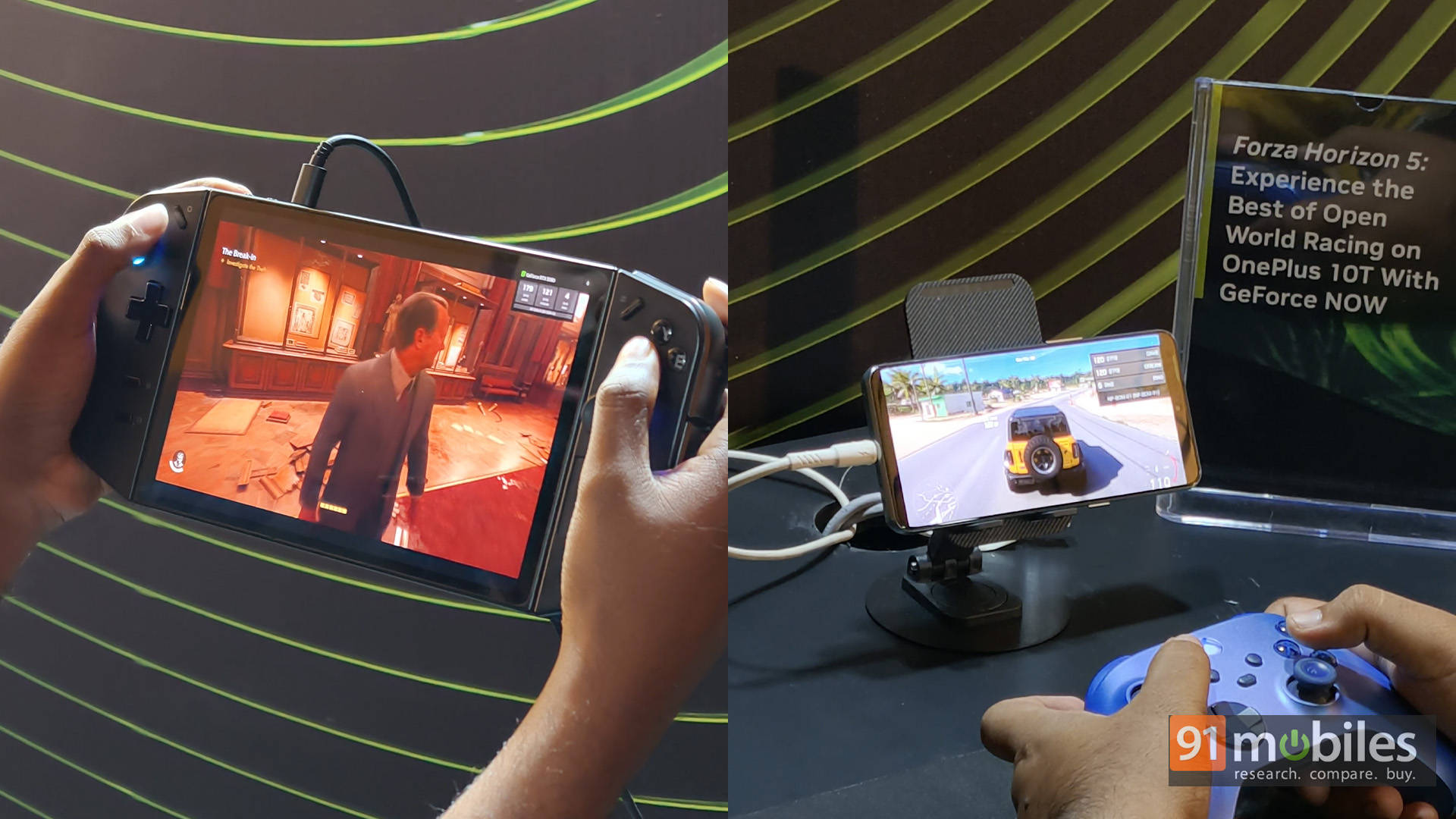
Instead of lining up flashy RTX laptops everywhere, the team deliberately put together what looked like a random pile of everyday devices. A corporate-style Dell Latitude was running Linux, a thin-and-light M1 MacBook Air, a couple of Lenovo Legion Go handhelds, smartphones including a OnePlus 10T and even an older iPhone, plus a smart TV hooked up in the corner. In other words, the kind of hardware most homes already have lying around, not expensive gaming rigs. And every single one of them was running full-fledged PC games.
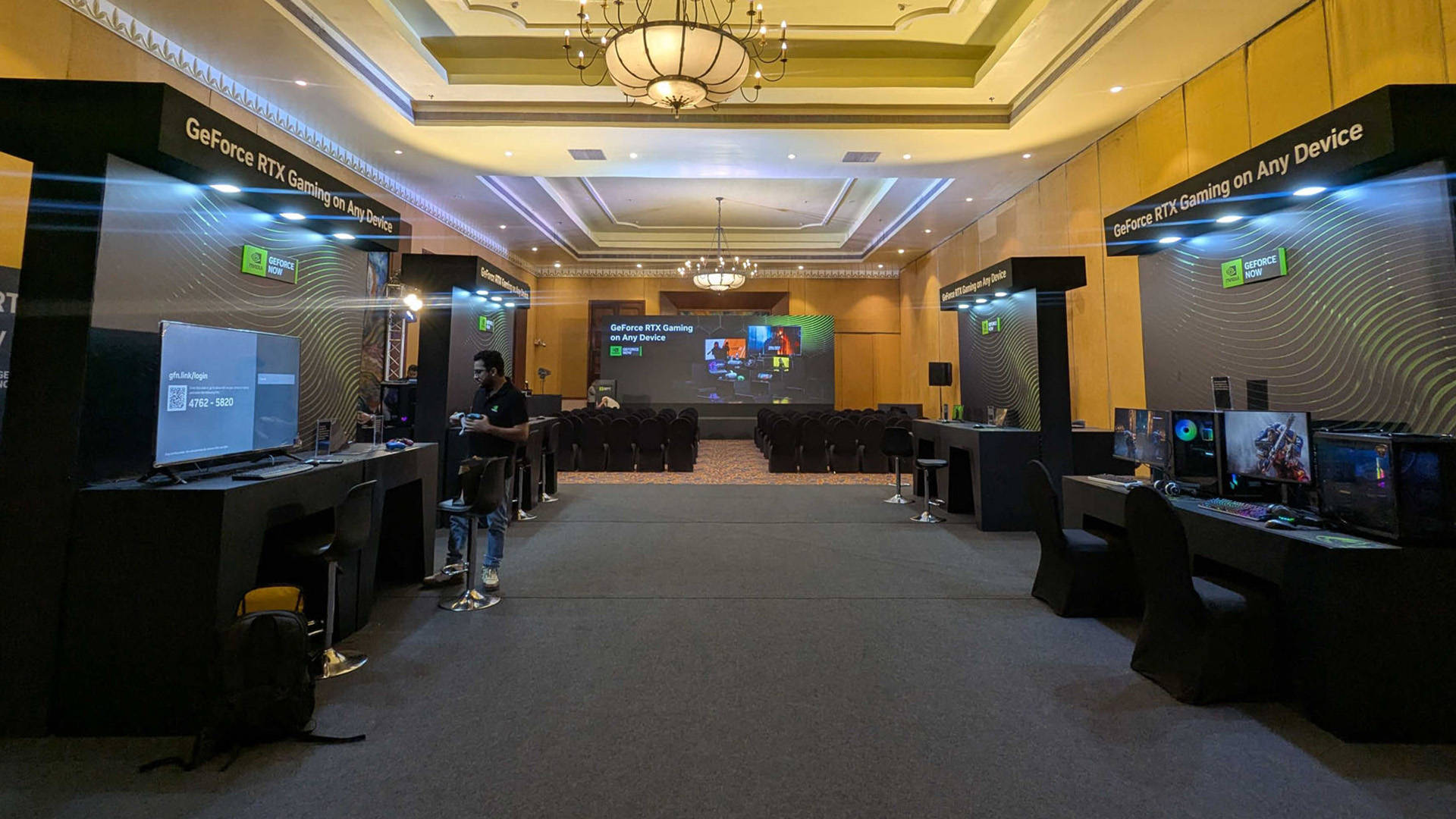
Not mobile ports. Not stripped-down versions. Proper desktop titles with real settings menus and keyboard-mouse controls. That detail changes everything. Because the moment a MacBook Air or an office laptop starts running something that would normally need a bulky gaming tower, the pitch becomes instantly clear. This isn’t trying to replace consoles or compete with budget streaming services. It’s trying to give everyday hardware access to a proper gaming PC that just happens to live somewhere else. That subtle difference defines the entire GeForce Now experience.
Local servers, low latency, and why Mumbai matters
One of the first things NVIDIA confirmed during the event was that GeForce Now’s infrastructure for India is being hosted out of Mumbai. On paper, that sounds like a small logistical detail. In practice, it’s the difference between cloud gaming feeling playable and feeling frustrating.
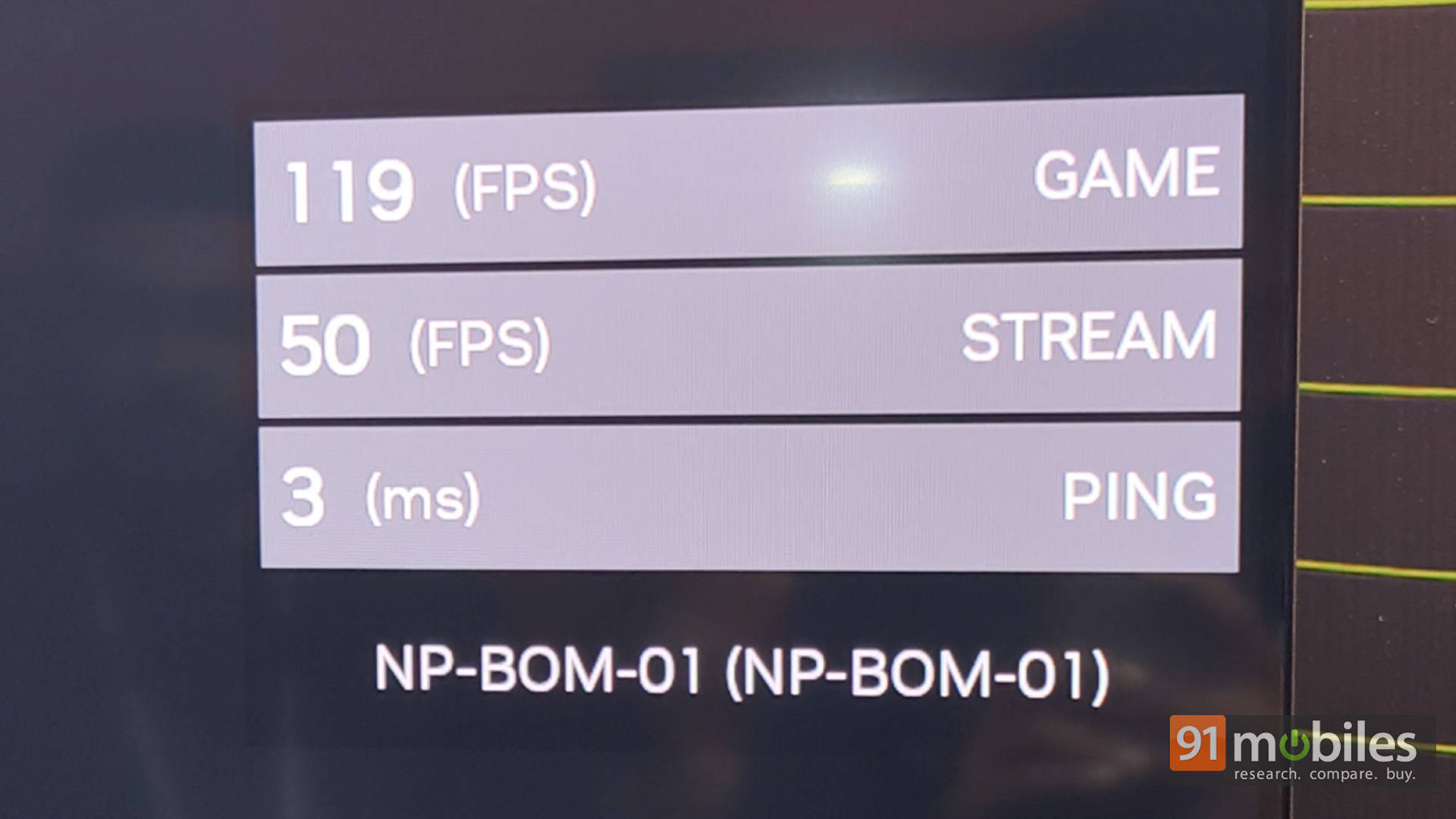
You see, latency is the silent killer of any streaming service. It doesn’t matter how pretty the graphics are if every mouse click takes half a second to register. That’s why proximity to servers is so critical. The shorter the physical distance between the user and the data centre, the lower the round-trip time.
During the demo, latency hovered around 2–3 milliseconds. That number almost sounds fake until the mouse starts feeling indistinguishable from a local PC. Inputs felt immediate, and competitive games didn’t carry any delay that most cloud services often suffer from.
What can you expect, though?
For some perspective, most evenings you’ll find me playing Valorant from Delhi NCR on Mumbai servers, where my ping typically sits around 25ms. Of course, Riot’s match servers and NVIDIA’s rendering servers are fundamentally different systems. Riot’s servers are gameplay hosts, while GeForce Now’s servers are full remote rendering machines streaming compressed video back. But it still gives a ballpark idea. If the cloud PC is geographically close, it feels snappy. Really snappy.
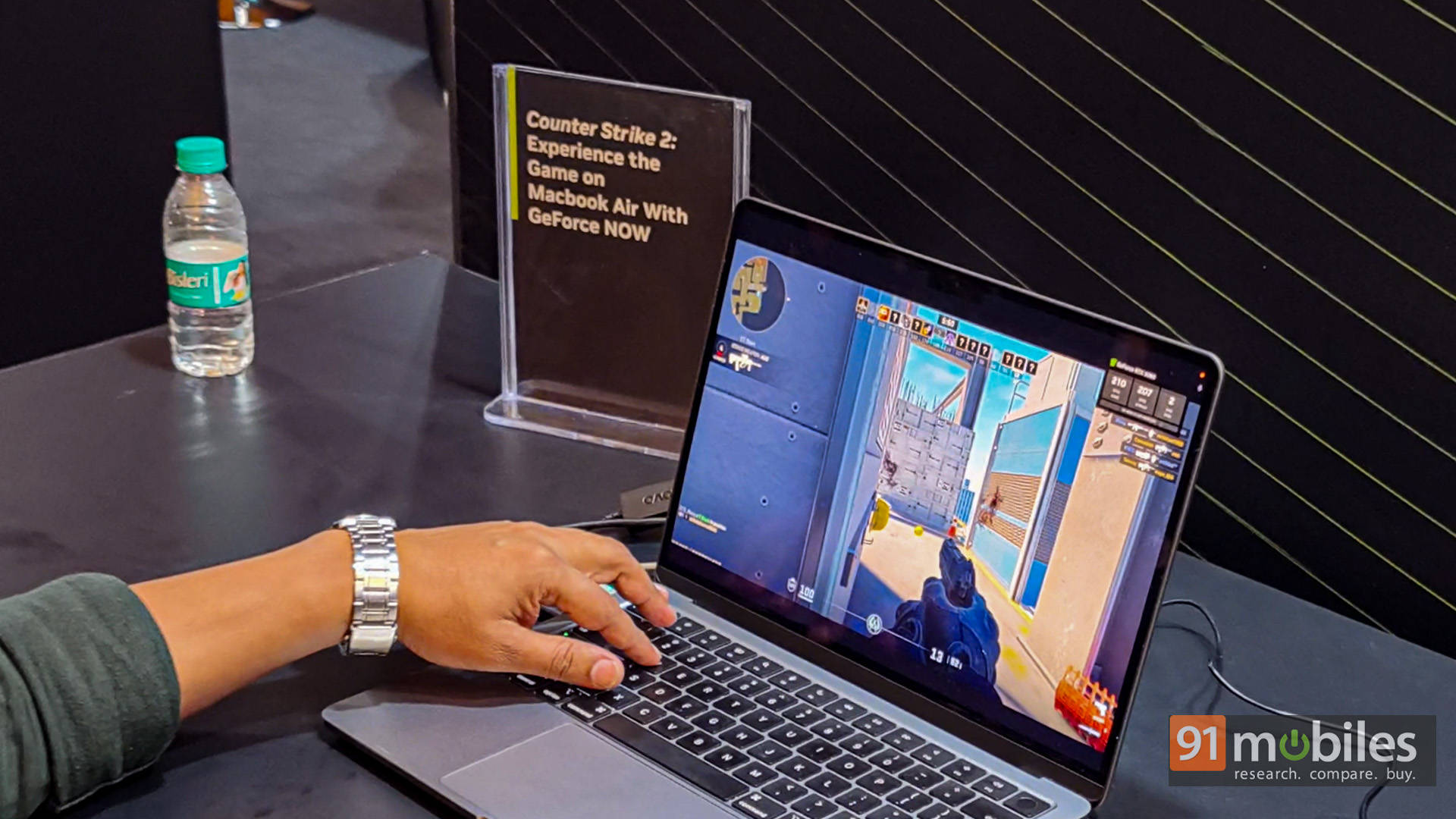
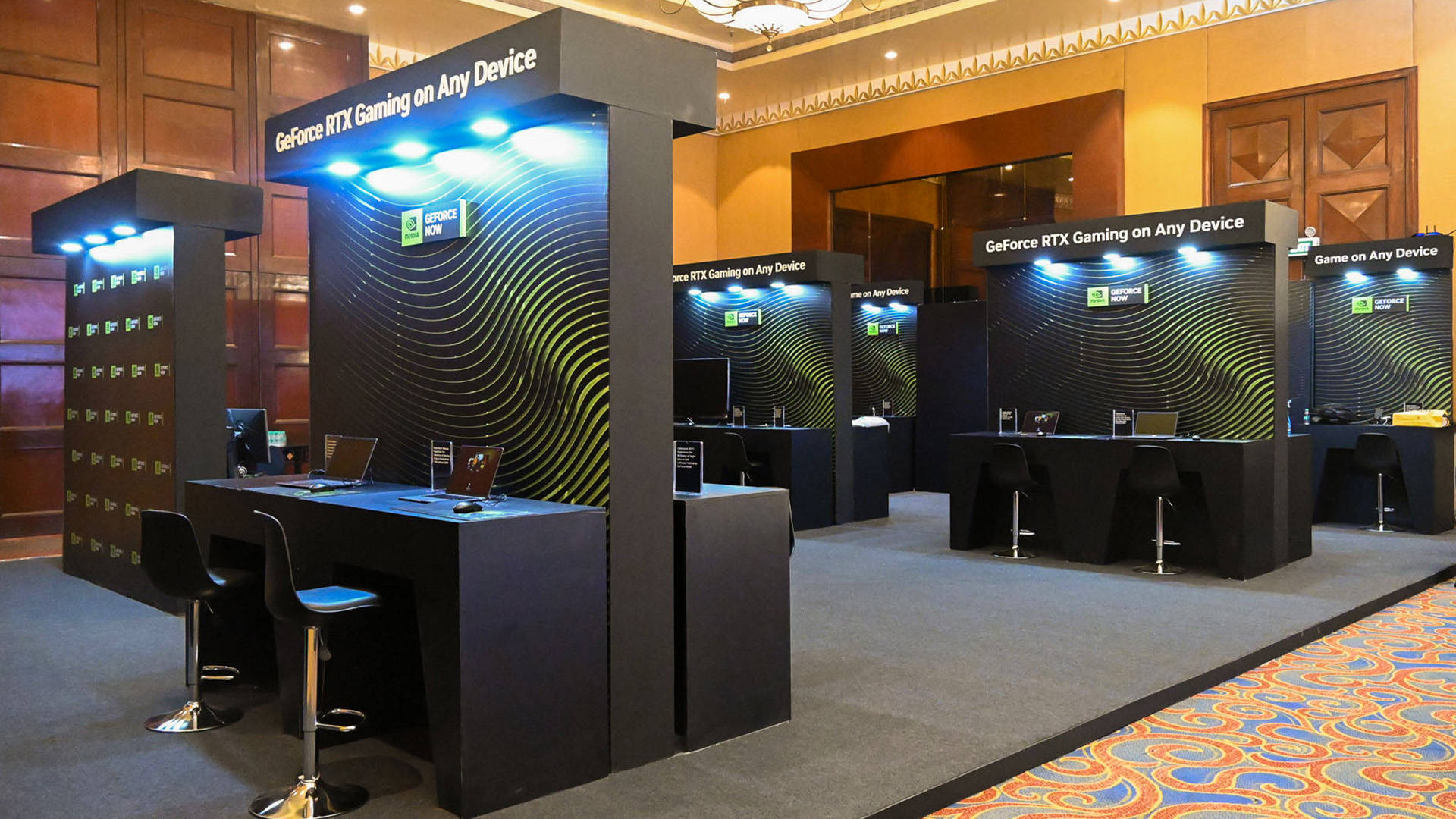
NVIDIA also made it a point to clarify that there was nothing “special” about the network setup at the venue, which honestly surprised me a bit. There wasn’t some secret lab-grade connection or a dedicated fibre line pulled in just for the demo. It was literally a regular leased line from the hotel, plugged into a switch, and then split across a bunch of devices. That’s it. No magic, no overengineering.
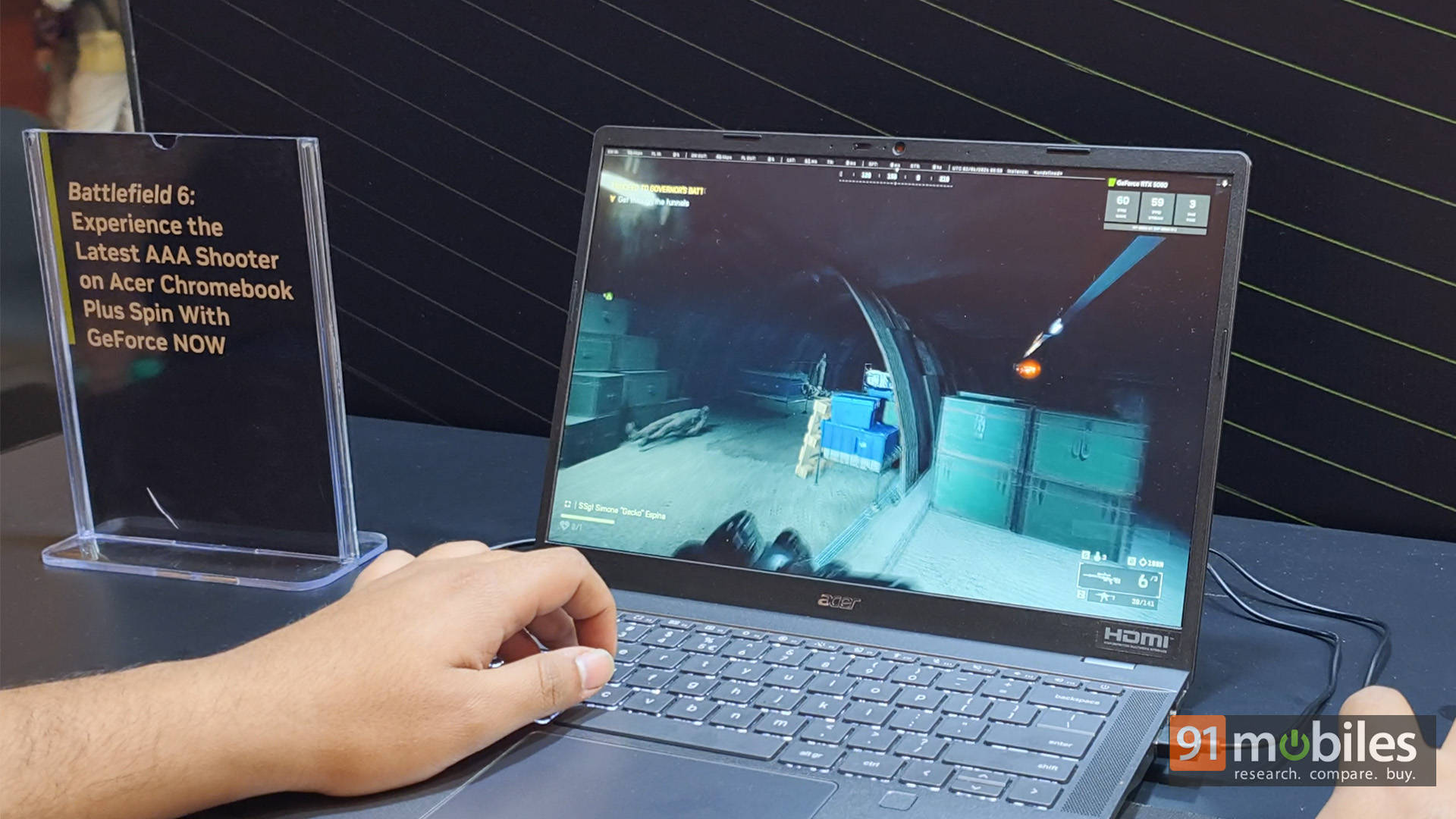
And weirdly, that’s actually comforting. Because it means what we experienced wasn’t some carefully staged, best-case scenario that falls apart the moment it leaves the event floor. If a standard hotel connection can comfortably handle a dozen-plus devices streaming games simultaneously, that’s a pretty good sign for real-world usage at home.
That said, the real litmus test will obviously be outside Mumbai. Tier-2 and Tier-3 cities, mixed broadband quality, crowded evening networks — that’s where cloud gaming usually starts sweating. Until the service rolls out publicly, that question mark will always remain.
Local ISPs still need to get on board, though
There’s also an interesting technical layer here. GeForce Now globally works with ISPs to enable something called L4S networking, short for Low Latency, Low Loss, Scalable Throughput. In simple terms, it allows providers to prioritise game-streaming traffic over less time-sensitive stuff, so your match doesn’t get stuck behind someone downloading a movie. Unfortunately, Indian ISPs haven’t implemented that yet.
It’s a bit disappointing for now, but there’s a silver lining. If and when L4S does roll out locally, latency over longer distances could drop even further. So what already feels pretty snappy today might actually get better with time, which isn’t something you usually get to say about internet performance in India.
Why cloud gaming suddenly makes sense in India’s market
If there’s ever been a time when cloud gaming actually feels logical in India, it’s now. Building or upgrading a gaming PC has quietly become a frustrating (and expensive) exercise. We recently talked about the best PC you can build under Rs 1.25L in India, which used to be a pretty comfortable budget, but even that piece had to start with a disclaimer that this really isn’t the best time to build.
Mid-range GPUs like an RTX 4060 aren’t exactly affordable anymore, and newer cards swing between being out of stock or priced like someone’s monthly rent. For a lot of people, dropping six figures just to play a handful of games simply doesn’t make practical sense, which is why many gamers are sticking with older hardware, moving to consoles, or stepping away from PC gaming altogether.
That’s where GeForce Now’s pitch starts to click. Instead of spending heavily upfront, the idea becomes subscription-based access to high-end hardware. You rent the performance rather than owning it. For someone on an ageing GTX 1660 or an integrated graphics laptop, that’s a massive jump in capability overnight.
Console-like ease of use for PC Gaming
There’s also a broader psychological shift here. PC gaming has always had a reputation for being complicated, thanks to drivers, updates, hardware compatibility, and troubleshooting. Heck, even on my flagship gaming PC, almost every day it’s a constant battle between Windows updates, driver updates, and bug fixing.
Cloud gaming removes most of that friction. There’s no driver installation, no Windows update breaking something mid-session, and no worrying whether the GPU can handle the next big title. Everything runs on NVIDIA’s end. So for the average user who just wants to click “Play” and get going, this feels less like a compromise and more like convenience. It lowers the entry barrier in a way traditional hardware upgrades never could.
Where GeForce Now stands apart from Xbox Cloud Gaming
Of course, one of the biggest questions that any consumer would want to know is how it differs from the competition. It’s tempting to lump every cloud gaming service into the same bucket, but GeForce Now and Xbox Cloud Gaming operate on very different philosophies.
If I had to describe these services using a different analogy, let’s look at movie streaming. Think of Xbox Cloud like Netflix. You subscribe, get access to a curated library through Game Pass, and stream games casually. It’s optimised for accessibility first. Bitrates are lower, sessions are lighter on bandwidth, and in some cases, there are wait times before a machine becomes available.
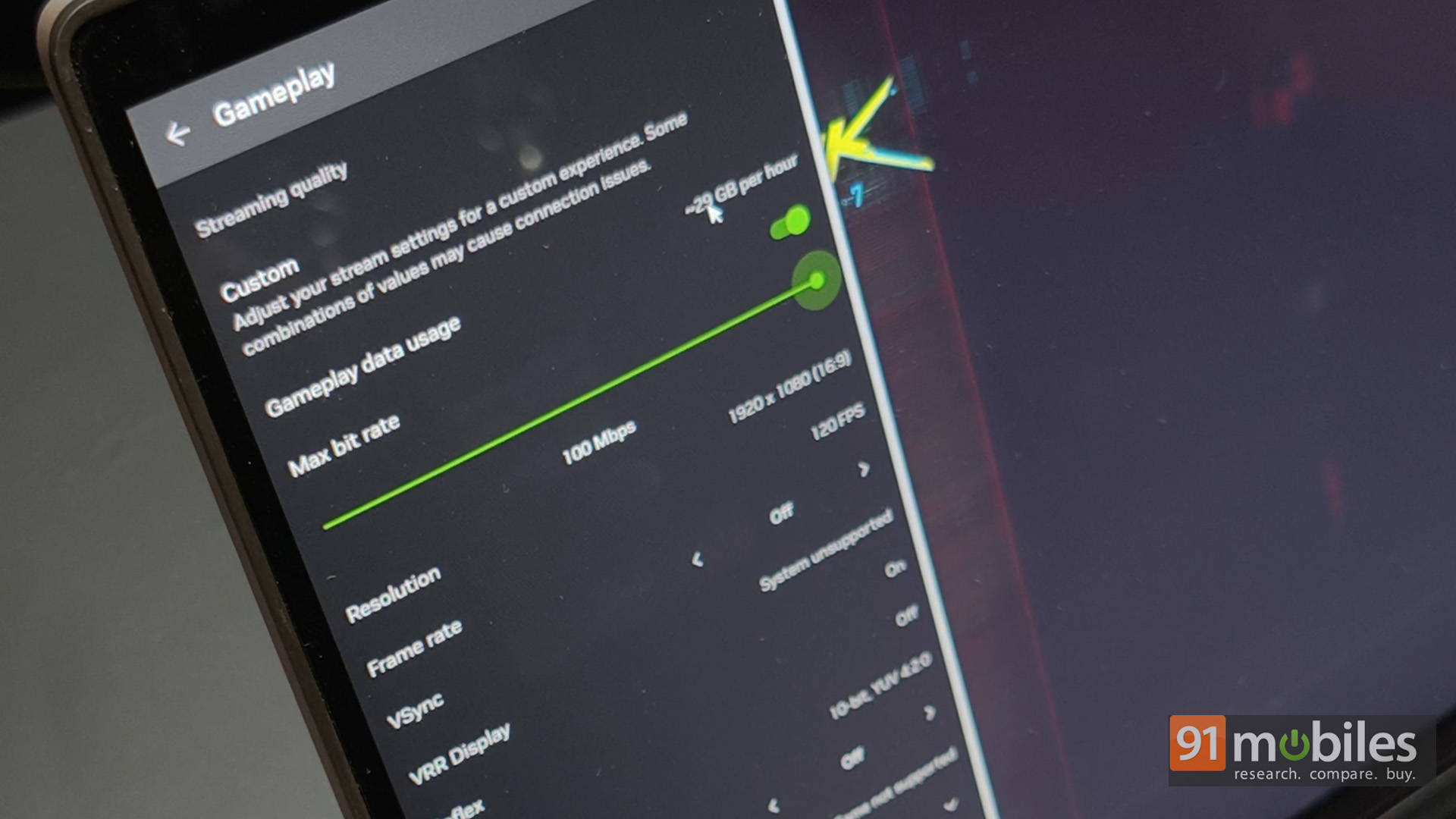
GeForce Now feels more like using Apple TV 4K, or if you want to keep things in line, maybe an NVIDIA Shield. Instead of handing over a library, NVIDIA hands over hardware. You log into your own stores (Steam, Epic, GOG, or PC Game Pass) and play the games you already own. The service then streams from a much higher-quality feed. NVIDIA claims up to 100Mbps, and during testing, we saw Counter-Strike 2 on a MacBook Air at native 2560×1600 resolution pulling close to 88Mbps. The visual difference is obvious. Less compression, sharper image, fewer artifacts.
Finally, we also have the enthusiasts who love to own their own Blu-ray discs, and in gaming terms, those are the folks who’d still want to own their own gaming PCs. As such, NVIDIA sort of sits in the middle of the spectrum.
GeForce Now feels more like renting a premium PC by the hour
Unlike Xbox Cloud, which mostly assumes a controller in hand since you’re essentially streaming from a Series X in the cloud, GeForce Now behaves exactly like a proper PC. Plug in a keyboard and mouse, and it just works. Dive into the settings and everything’s there: resolution sliders, DLSS toggles, multi-frame generation, even NVIDIA Reflex. It doesn’t feel like a simplified “streaming version” of a game; it feels like the real deal, just running somewhere else.
That flexibility is where it really shines. Competitive players can crank up higher refresh rates and squeeze out every millisecond, while story-driven folks with ultrawide monitors can actually use all that screen real estate instead of being stuck with black bars. It’s very unapologetically PC in spirit. The flip side, of course, is that all this fidelity chews through more data, so this isn’t exactly a lightweight stream. But if crisp visuals and snappy responsiveness matter, the extra bandwidth feels like a fair price to pay.
Talking tech with John Gillooly: The Bigger Vision
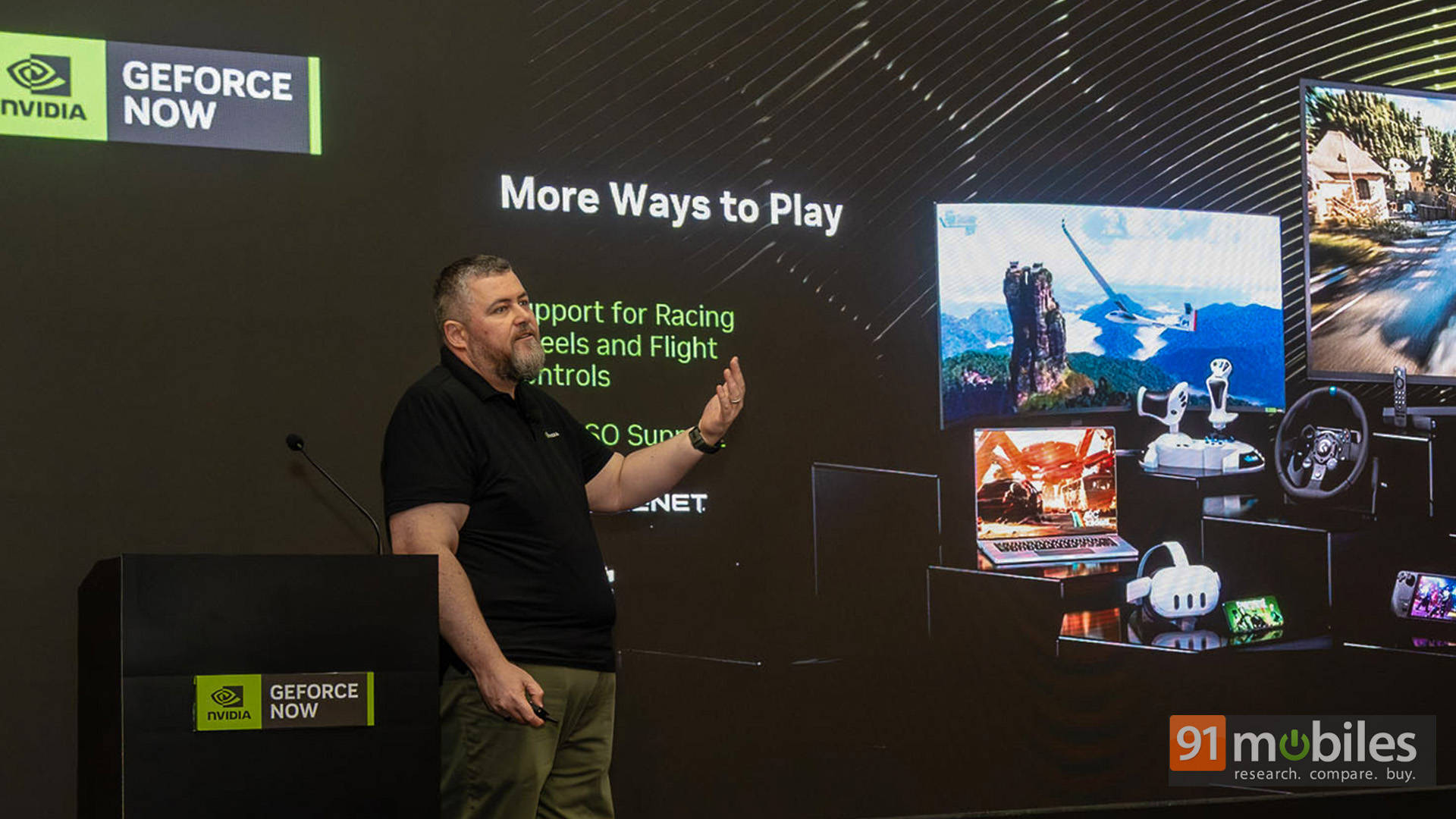
At the demo, I also got the chance to have a quick chat with John Gillooly from NVIDIA, who added some useful context behind the scenes. When asked about latency, he broke down how NVIDIA Reflex plays a crucial role in the overall experience.
In simple terms, Reflex helps manage how the CPU feeds frames to the GPU, eliminating unnecessary buffering so the GPU always works on the most recent frame. That reduces the delay between input and output. In competitive games, that difference can mean landing or missing a shot. On top of that, GeForce Now uses additional network-level optimisations to minimise delay between the server and the player.
it’s an RTX gaming PC in the cloud
His description of the service’s audience was also interesting. Rather than targeting just console or PC gamers, NVIDIA sees GeForce Now as an entry point. Someone with an old laptop can instantly access high-end gaming. Someone considering a hardware upgrade can test the waters. And enthusiasts can use it as a complementary option when away from their main rig.
When asked to sum it up in one sentence, he simply said it’s an RTX gaming PC in the cloud. And honestly, after spending time with the service, that line feels less like marketing and more like an accurate description.
Not All Headshots: The Trade-Offs Explained
GeForce Now isn’t perfect, and NVIDIA isn’t pretending it is. Pricing hasn’t been revealed yet. Tiers remain unclear. Add to that, globally, some plans have monthly playtime caps, which could be a concern for heavy users. There’s also the practical question of performance outside Mumbai. The event conditions were ideal. Real-world networks are messy.
But even with those uncertainties, it’s easy to imagine where this service fits. Think of a group of friends where only one person owns a high-end gaming PC. The rest are on older hardware. GeForce Now suddenly levels the playing field. Everyone gets ray tracing, DLSS, high settings, and modern features without spending a fortune. For many users, that’s enough.
At the end of the day, this was a glimpse at what GeForce Now in India could look like. Of course, we’ll be reviewing it once the service goes live sometime in Q1 2026, but even so, I feel confident in saying that this doesn’t feel like a futuristic experiment anymore. It feels like a genuinely practical way to experience PC gaming without the usual headaches. If NVIDIA gets pricing right and maintains this level of performance nationwide, this could quietly become one of the most accessible ways to step into serious PC gaming in India.