Review Summary
Expert Rating
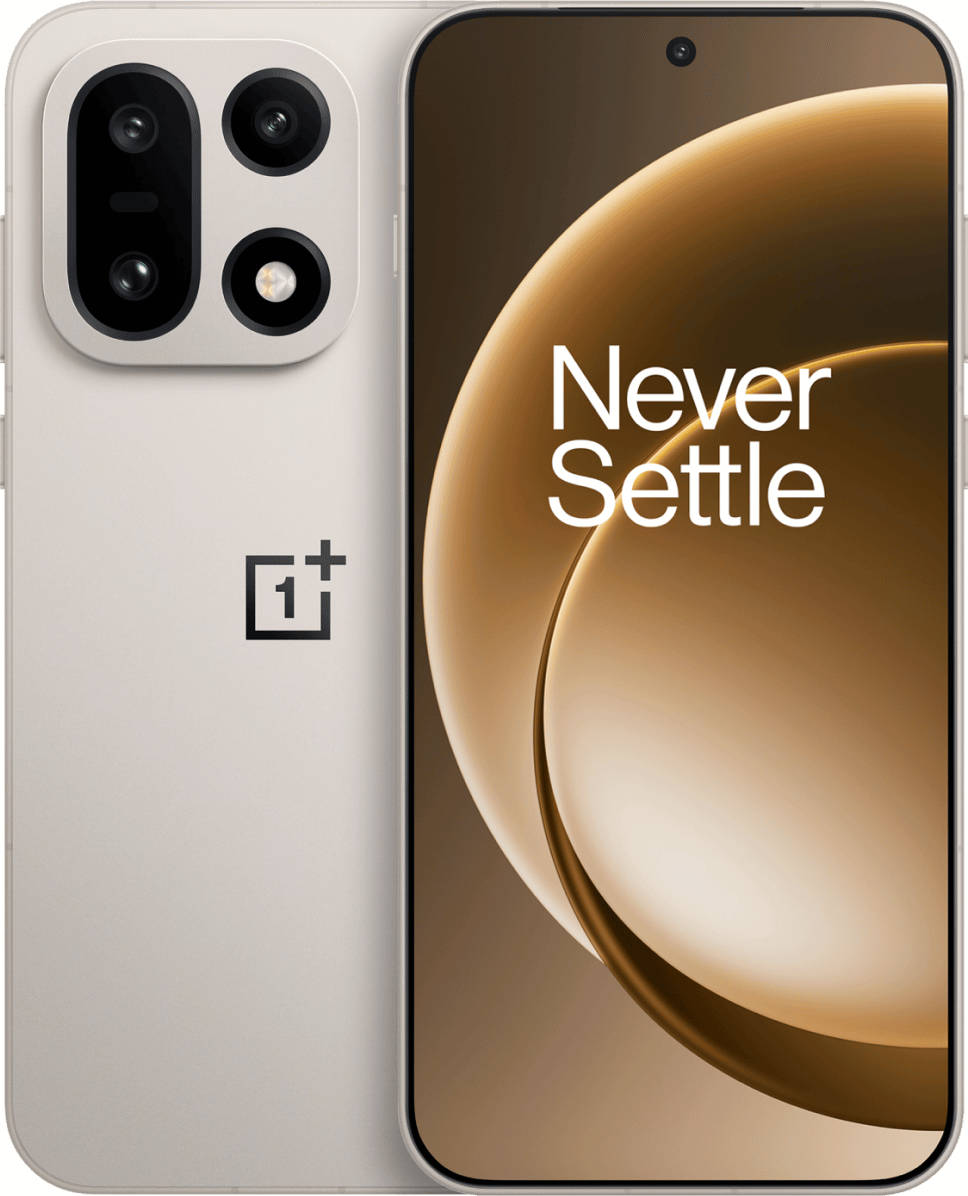
OnePlus smartphones are undergoing an interesting transformation right now, both physically and philosophically. It started with the OnePlus 13s, a compact flagship that proved small phones no longer have to make compromises. I reviewed the device back in June and found it to be the ideal compact phone in all areas but one. Now, we have the OnePlus 15, the company’s premium flagship for the first half of 2026. And it also comes with some radical changes, both physically and philosophically.
Physically, the OnePlus 15 features a redesign, ditching the circular rear camera module seen on the OnePlus 13 and its two previous predecessors. It is now more like the OnePlus 13s, only bigger. Philosophically, the brand’s “Fast & Smooth” tagline remains, but with a greater emphasis towards gaming than before. These two changes have led to the creation of a new flagship phone that’s catering to a segment of audience that past OnePlus phones have not. But at a higher starting price of Rs 72,999, does the OnePlus 15 deliver an all-round flagship experience? Here’s my take.
Table of Contents
Design: minimal and practical over flash and pizzazz
The OnePlus 15 bears less resemblance to its predecessor, the OnePlus 13, and more to the compact OnePlus 13s. This design change is intentional. When we reviewed the OnePlus 13 last year, we noted that the phone doesn’t break any new ground in terms of design. It seems the brand heard us and several other publications that might have shared similar sentiments, and went ahead with a redesign that prioritises practicality over style.
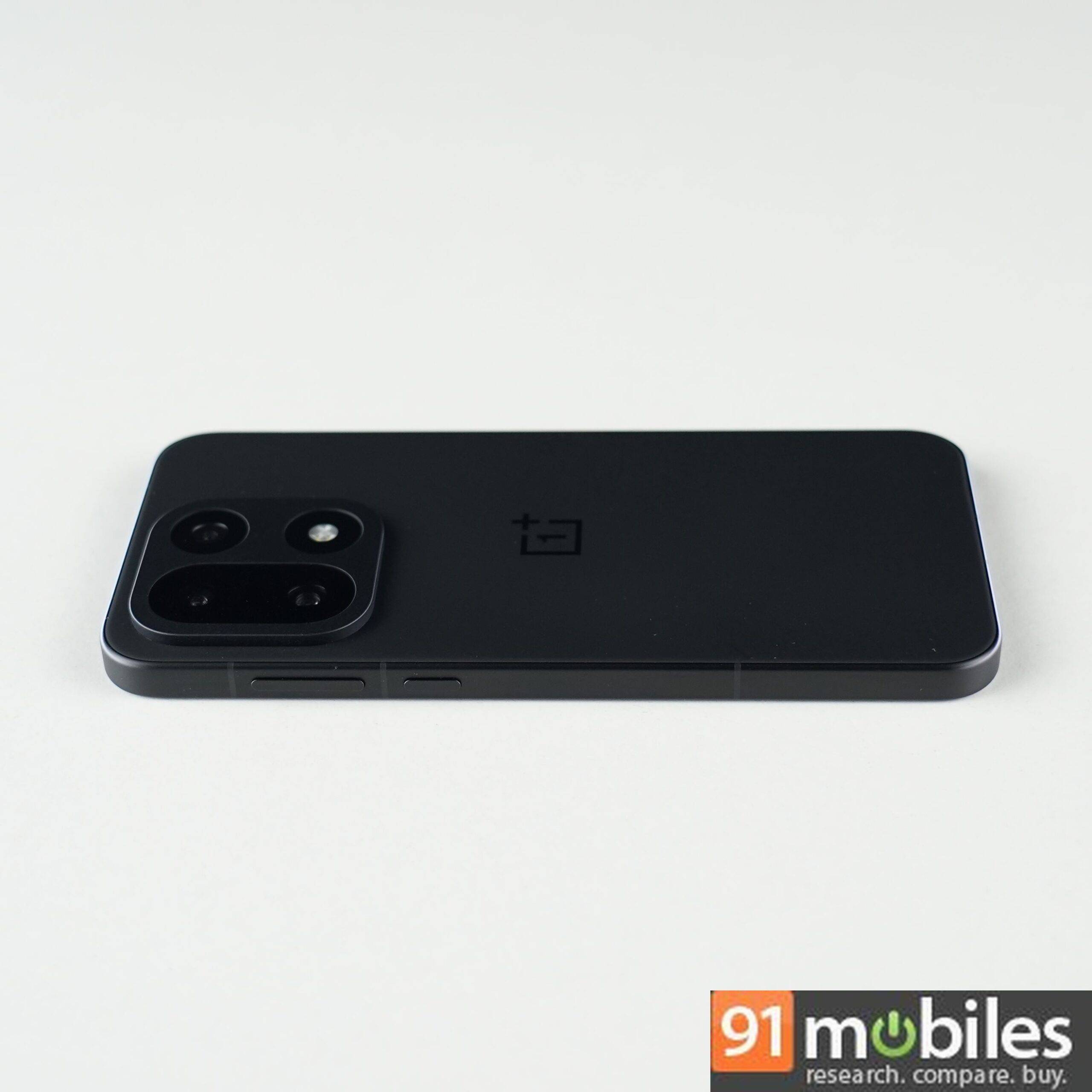
They were also able to reduce the camera bump (due to using smaller sensors), so the phone doesn’t wobble as much on a flat surface. The OnePlus logo has been moved to the centre, a subtle change but one that makes the back look far cleaner and more minimalist than before, which is great if that’s what you’re looking for. I personally like this new look, as I did with the OnePlus 13s. However, buyers who loved the premiumness and style of the OnePlus 13 may find the OnePlus 15 rather bland.
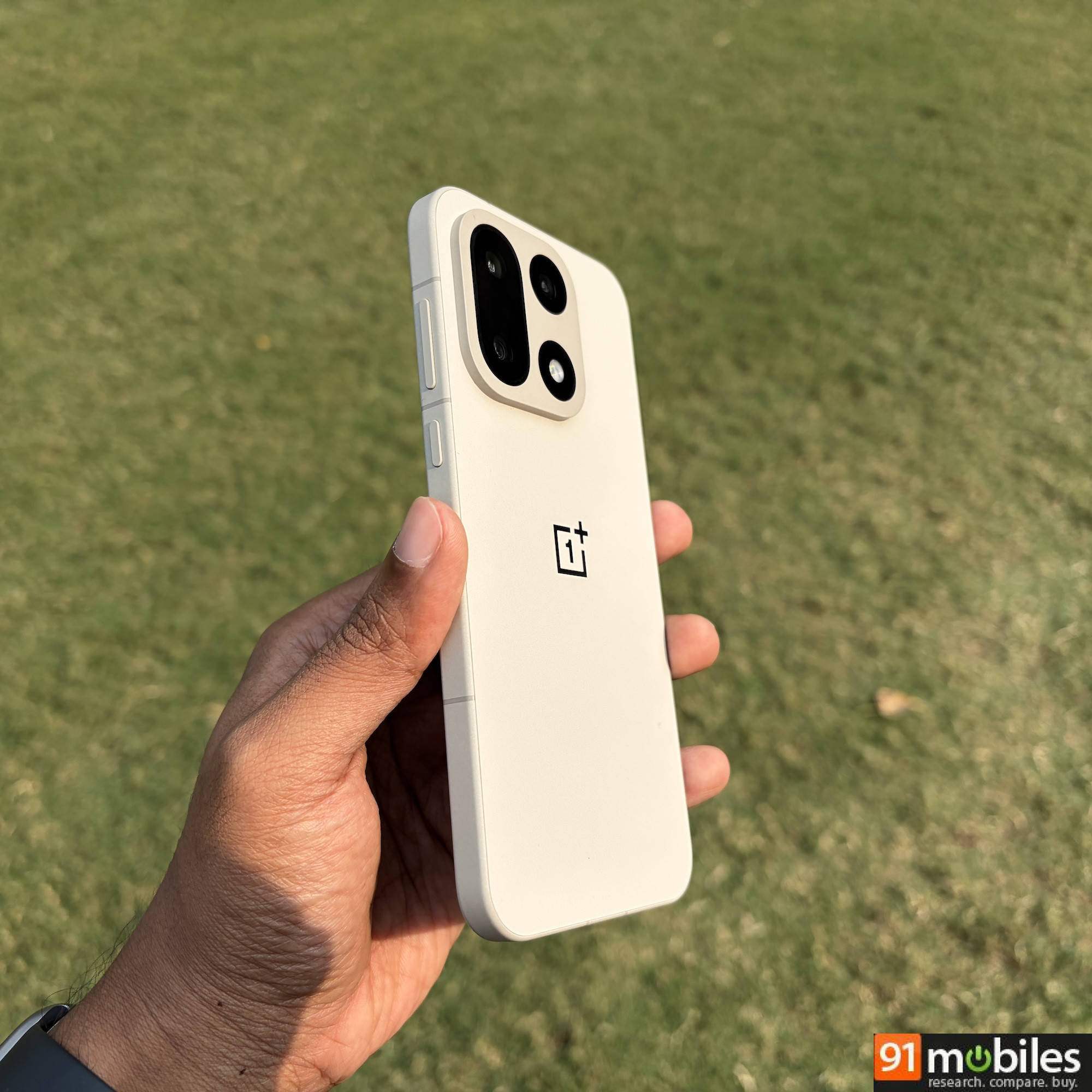
Through a plasma-based electrochemical process, called MAO (Micro-Arc Oxidation), the metal frame on the Sand Storm colour variant we received has a ceramic-grade coating. This makes the frame not only more durable than aluminium or titanium mid-frames, but it also makes it cooler to the touch compared to the back panel.
Personally, the Sand Storm colour variant we received looks nice, but I’m leaning more towards the Infinite Black option, which has a stunning pure black finish for an understated look. Even the Ultra Violet looks nice for those who want their OnePlus 15 to stand out.
The OnePlus 15 comes with not three but four IP ratings. In addition to IP66, IP68, and IP69, the phone is also IP69K rated, which is a slightly enhanced version of IP69, signifying protection against high-pressure water jets at temperatures up to 80 degrees Celsius. This makes it one of the most durable phones in the segment against dust and water.
Display: a visual treat for gamers
There’s a lot going on with the display, so let’s start with the most obvious changes. OnePlus has opted for a flat display and back over curved ones – a major indication that the phone is designed with mobile gamers in mind. The flat body makes it easier to grip the device and reduce accidental touches on the display, both of which are important when playing games.
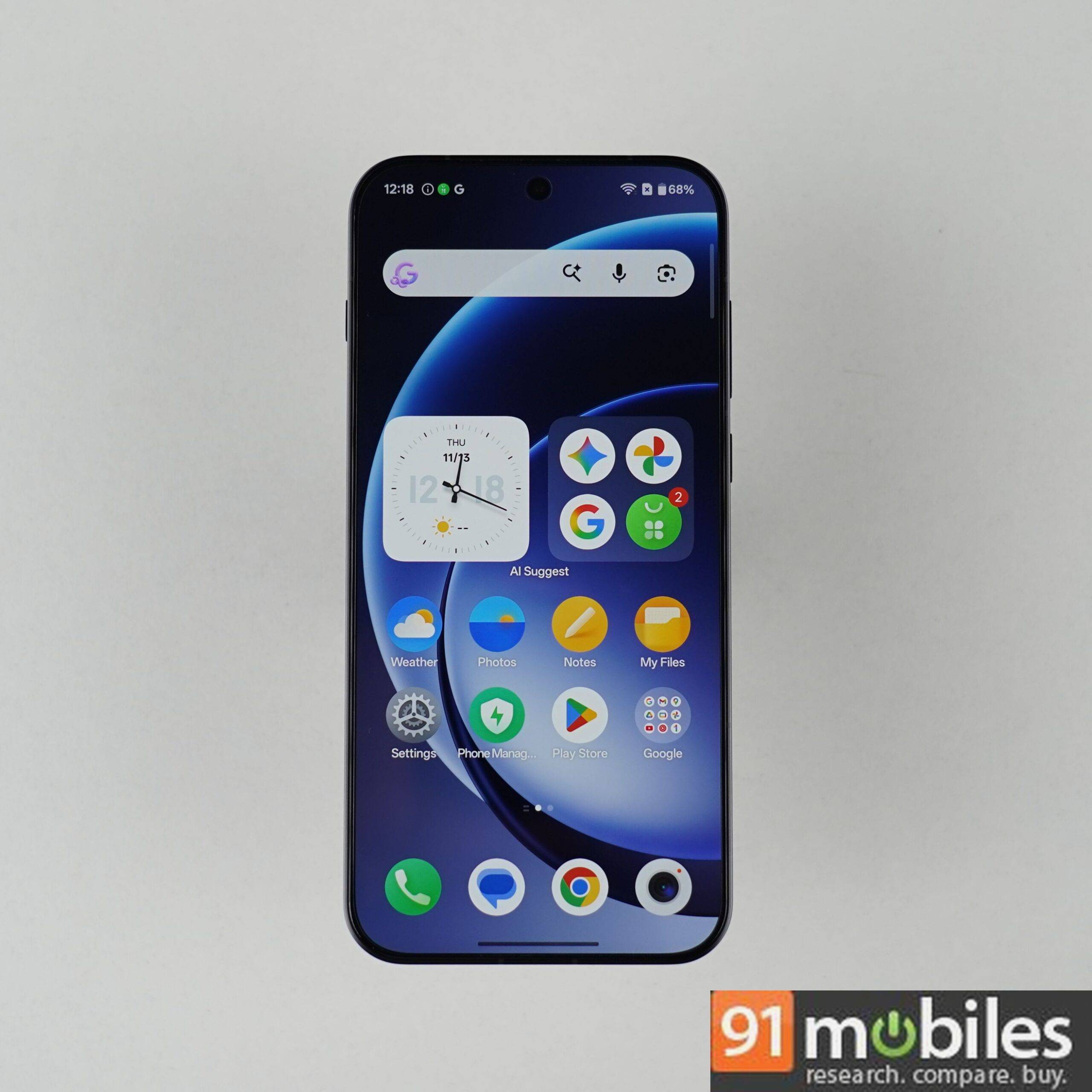
It’s important to note that the 165Hz only kicks in when gaming, while regular usage dynamically switches between 1-120Hz.
Honestly, the resolution downgrade won’t be noticeable. The display looks crisp and vibrant. The 6.78-inch LTPO AMOLED display delivers plenty of brightness under sunlight, with up to 1800 nits HBM, and the ability to dim as low as one nit (even 0.5 nit if you enable “Reduce White Point” under Accessibility settings). The biggest improvement, especially noticeable during gaming, is the instant touch sampling rate of 3200Hz, the highest in the industry at present, thanks to a dedicated touch response chip. This translates to imperceptible latency when typing, browsing through social media, and especially during gaming, which is when you need that split-second faster reaction time than your opponent.
The 165Hz screen enables select games, such as Call of Duty Mobile, to run at native 165fps. Yes, we’re talking native 165fps. Games like BGMI will run at 165fps using frame interpolation. Still, the end result when playing either of the two games is a noticeably smoother gaming experience with excellent touch response, giving pro gamers an extra competitive edge.
Also, the bezels are slimmer than ever, measuring just 1.15mm on all four sides for a symmetrically edge-to-edge display experience. It would have been nice if the OnePlus 15 had an anti-reflective coating like the upcoming iQOO 15, as it can get difficult to play games or view the screen clearly if you hold the phone at an angle under sunlight.
Cameras: smart but not bright
- Main camera: 50MP Sony IMX906, OIS
- Telephoto camera: 50MP S5KJN5 with 3.5x optical zoom, OIS
- Ultrawide camera: 50MP OV50D
- Front camera: 32MP Sony IMX709
OnePlus ended its partnership with Hasselblad, resulting in the development of its in-house DetailMax Engine computational algorithm. This change had everyone wondering just how good the cameras on the OnePlus 15 can be without Hasselblad’s tuning. Well, there’s a clear answer. The OnePlus 15 won’t be the best camera phone in the premium segment. The camera system, while versatile, delivers decent photos in daylight and dramatic photos in low light, resulting in an overall passable photography that is good enough for social media. However, if you’re looking for true pro-grade cameras, consider the upcoming OPPO Find X9 or the Vivo X300.
Let me try to simplify things: the OnePlus 15 is a solid point-and-shoot camera phone if all you’re concerned about is capturing quick and reliable photos to share on social media. I took hundreds of pictures during my recent trip to Singapore, and most of the daylight stills, including some portraits at 3.5x zoom, looked mostly great. Colours look nice and saturated, good enough for















The OnePlus 15 is a solid point-and-shoot camera phone if all you’re concerned about is capturing quick and reliable photos to share on social media.
According to OnePlus, the DetailMax Engine is designed to produce 26MP stills in daylight by fusing 12MP frames with a wide dynamic range and 50MP frames with high resolution. The resulting 26MP shot should have the best of both worlds. And this is supposed to happen automatically. However, all the photos I captured were in 12MP rather than 26MP, which meant I couldn’t capture the kind of clear and stunning photos OnePlus claimed we could.


The 50MP telephoto lens kicks in at 3.5x zoom and I was pleased with the portraits it captured. Compared to the iPhone 17 (which does not have a dedicated telephoto lens), the OnePlus 15 captured slightly better details and edge detection, although the former did better with skin tones. There’s also a noticeable colour shift when switching between the regular and telephoto lenses.


Low-light performance is where opinions will be split. Since OnePlus is using smaller sensors, photos don’t allow as much light in as you would see on the iPhone 17 or OPPO Find X9 Pro. I took several low-light photos with the OnePlus 15 and iPhone 17, and the latter captured brighter and more detailed pictures in general.
In low-light scenes with the sky involved, the iPhone 17 tends to overexpose the night sky, making it appear brighter than it actually is. In general, darker scenes appear brighter and clearer on the iPhone 17. The OnePlus 15 handles the darkness of the sky well, but the rest of the scene will be darker and less sharp than the iPhone 17. The result is a more dramatic low-light scene on the OnePlus 15, which some folks might prefer, but it will be a niche rather than the masses.
Another side effect of using a smaller sensor is that night mode tends to activate frequently, even in scenes with decent ambient lighting, which means waiting a few seconds longer to capture the photos.


The 32MP front camera captures pleasing selfies in daylight and OnePlus has added autofocus, which is great. However, the iPhone 17 still displayed better colours and sharper images compared to the OnePlus 15.
The OnePlus 15 is capable in videography, with all the cameras able to shoot at 4K 60fps. But the magic sauce here is that it is currently the only phone that can shoot at 4K 120fps with Dolby Vision using the primary camera. Videos look really good with decent stability and a wide dynamic range.
Performance, gaming and software: can it get any faster & smoother?
Performance
With the new Snapdragon 8 Elite Gen 5 at the helm, the OnePlus 15 feels like a phone on steroids. Combined with a smooth and touch-responsive display, everything on the OnePlus 15 feels blazing fast, whether you’re using basic day-to-day apps like Instagram, Twitter, Gmail, and WhatsApp, or engaging in high-intensity multitasking that involves switching between multiple apps quickly, or gaming for extended sessions. I didn’t experience any stuttering or slowdown on the OnePlus 15 at any point.




Our in-house testing team recorded over 36 lakh on the AnTuTu benchmark, marginally higher than the 35.5 lakh score of the Dimensity 9500-powered OPPO Find X9 Pro. However, the OnePlus phone ran warmer during the test. In the Burnout CPU throttle test, the OnePlus 13 demonstrated higher throttling on sustained performance compared to last year’s OnePlus 13, as well as the OPPO Find X9 Pro, suggesting that the phone will throttle during heavy usage.
Gaming
Gaming is where the OnePlus 15 truly excels and proves itself as a flagship rival. The phone comes with new Gaming Technology features, including OP Gaming Core, Performance Tri-Chip, and FPS Max, which I’ve written about in detail in a separate article. Here, I’ll discuss how the phone actually performs during gaming, and I’ve been nothing but impressed.
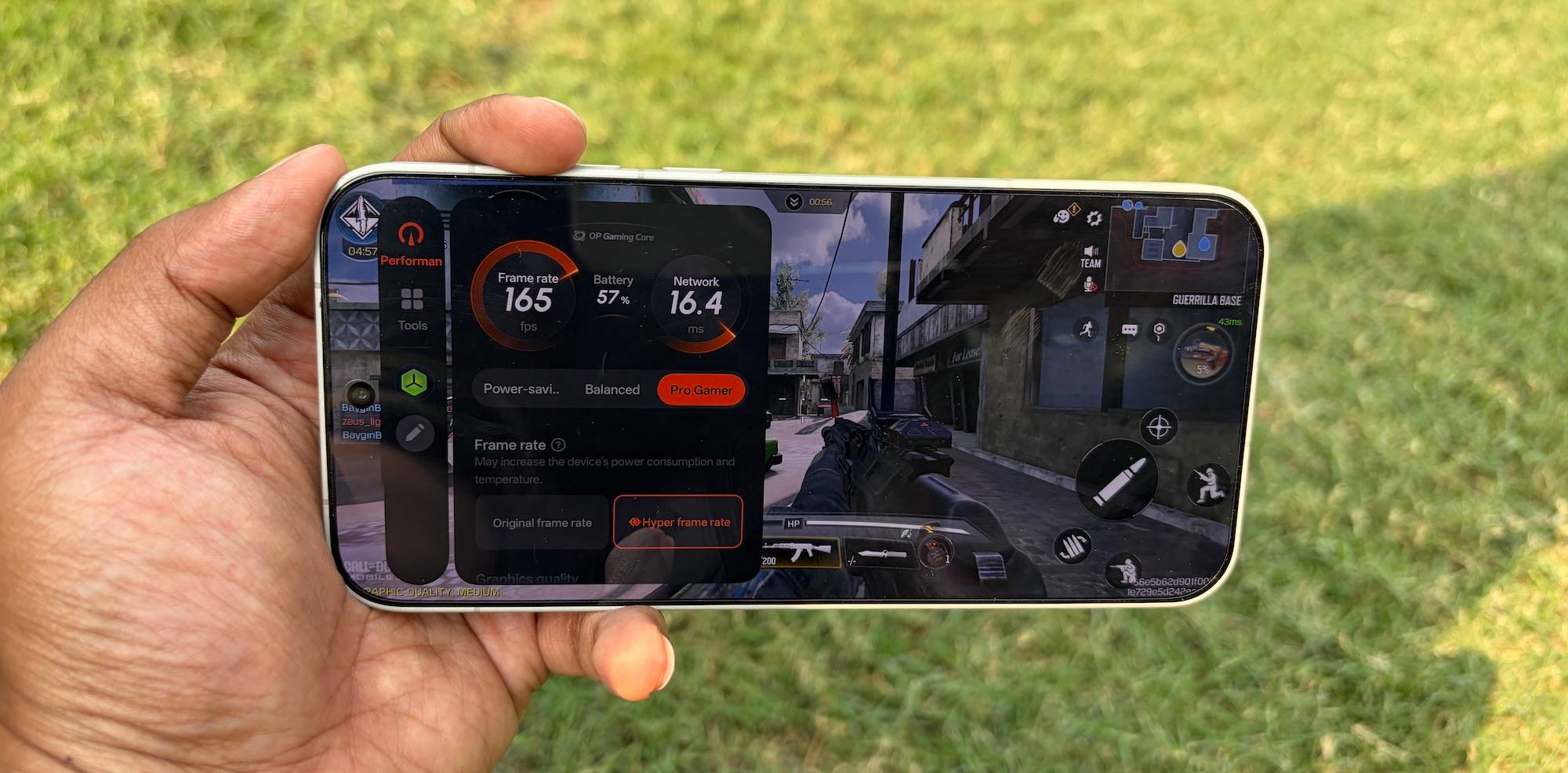
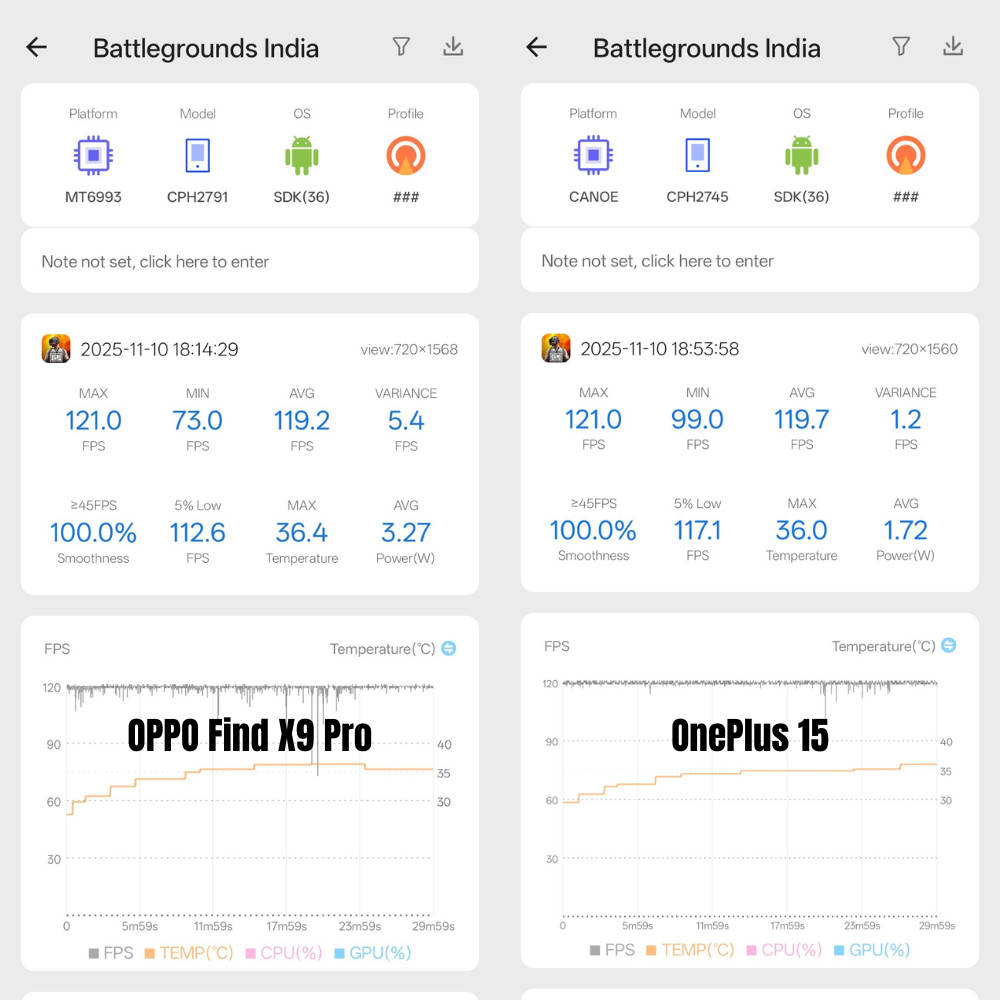
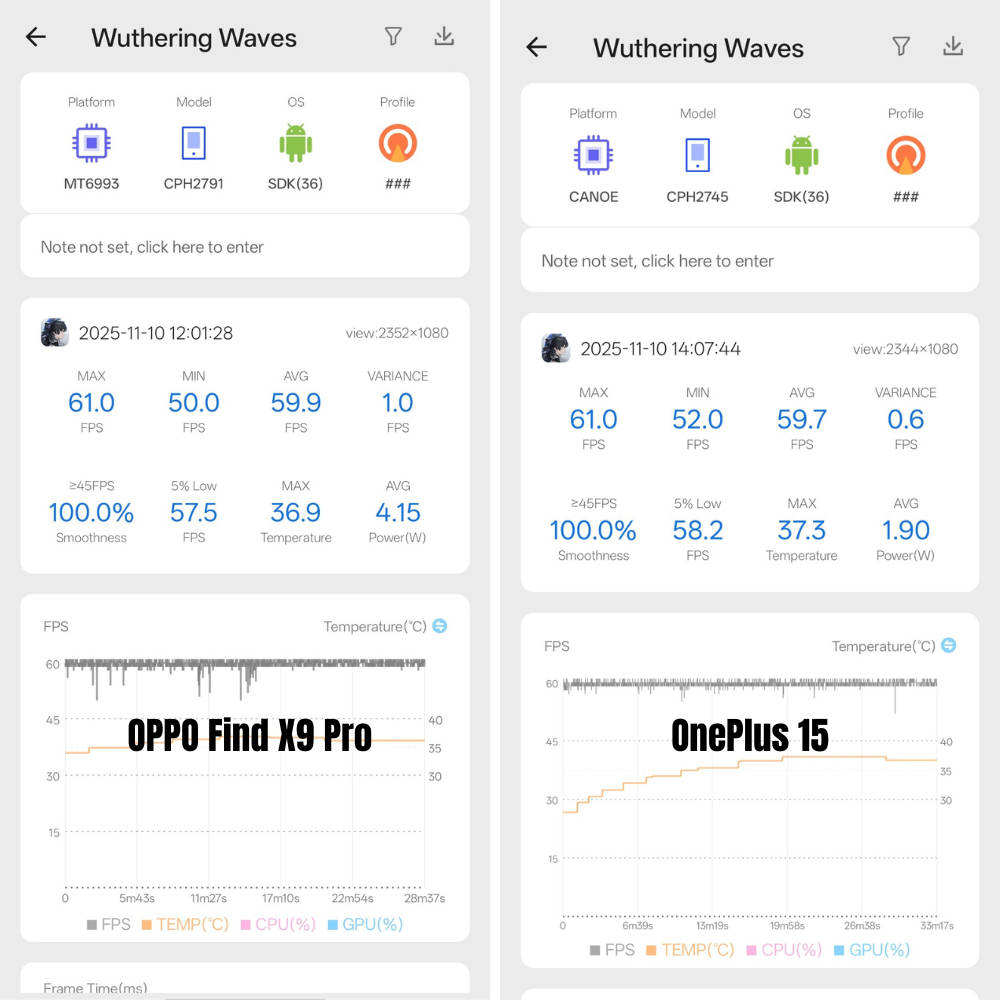
While playing games like CoD Mobile and BGMI, we achieved a consistent 165fps as claimed by the brand on enabling hyper frame rate in OP Gaming Core. We also tested the phone against the upcoming OPPO Find X9 Pro. Since the Find X9 Pro doesn’t feature a 165Hz display, we played the games keeping the graphics and frame rates at par. Both phones delivered nearly identical average fps, while the OnePlus 15 maintained better minimum average fps as well as lower power consumption.

Software
The all-new OxygenOS 16 adds to the fluidity of OnePlus 15 while adding a host of worthwhile new features, some of which are aesthetic, while others are more quality of life improvements. On the aesthetic front, OnePlus has introduced a somewhat iOS 26-like transparent glass effect, but limited to only certain UI elements that involve the number pad. It’s not as pervasive as you see on iOS 26, which is a good thing. There are also improvements in transition effects when opening and closing apps, as well as a redesigned weather app and charging effect, among other things.
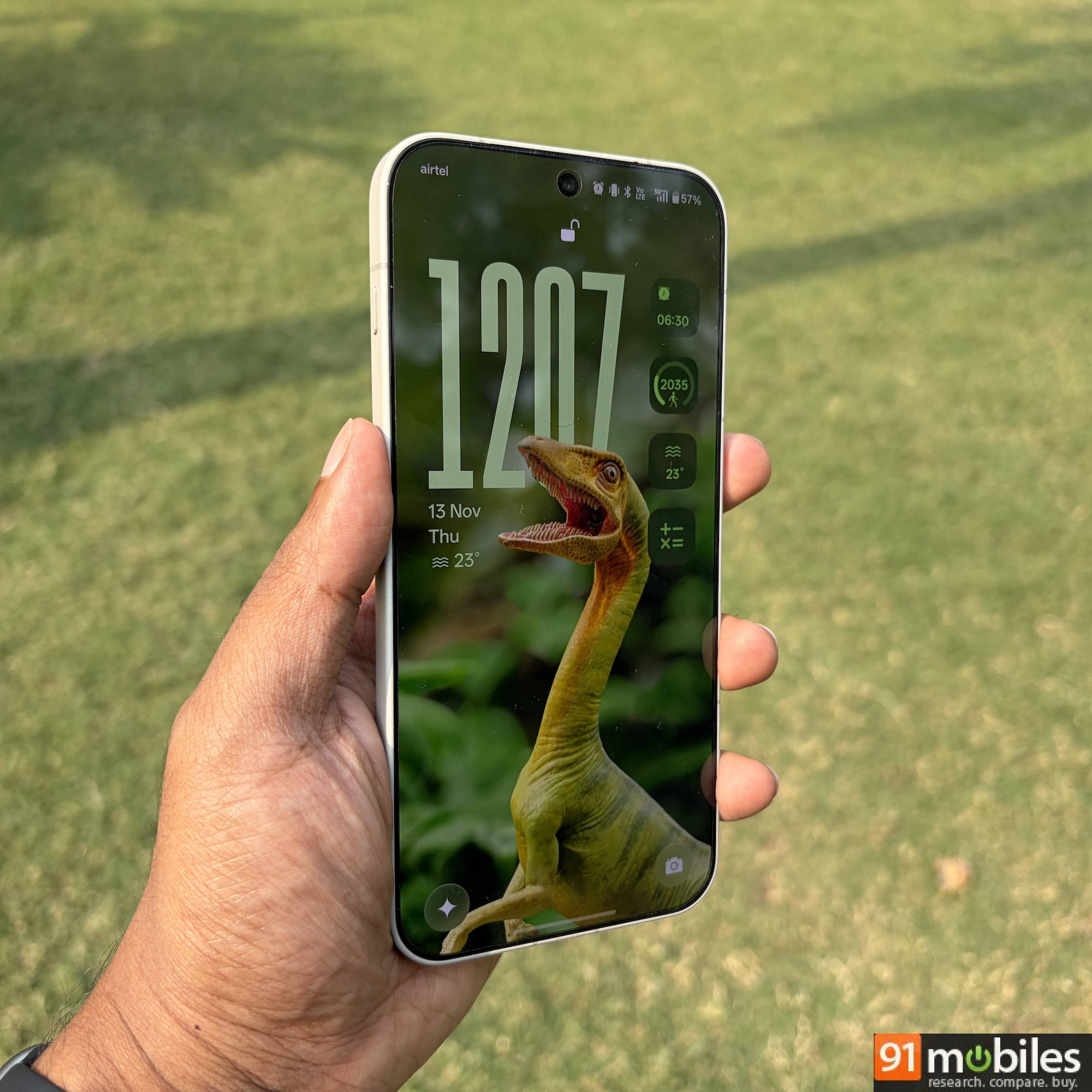
Personally, I love the new customisation options for the lock screen more than the home screen. The new Flux Themes 2.0 allows you to add custom text, motion pictures, a variety of widgets, full-screen AOD, depth and glass effects, and more. There’s just a lot more to play around with now, allowing you to personalise the lock screen to a greater depth. Other QOL improvements include the search bar moving to the bottom of the screen for easy accessibility and the Photos app getting a UI overhaul with a more unified look than before.
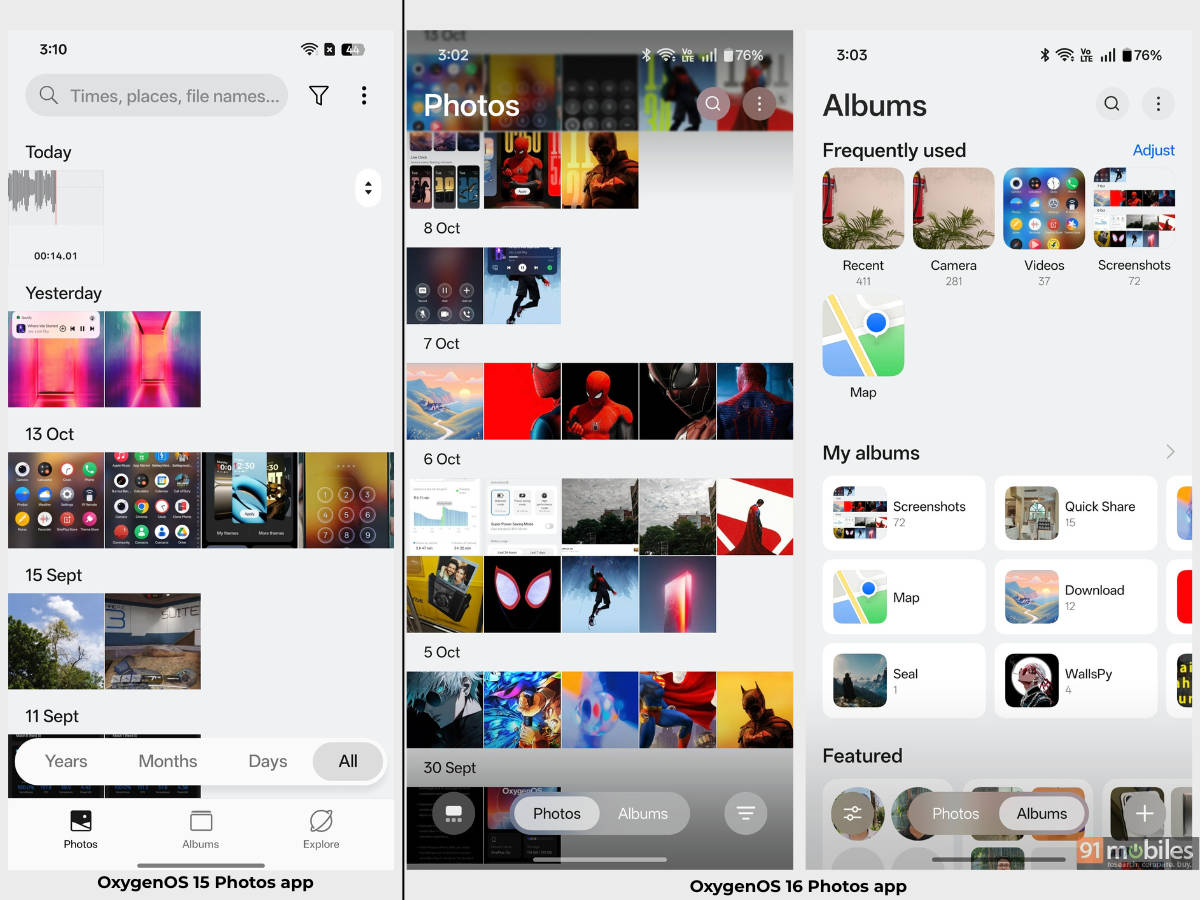
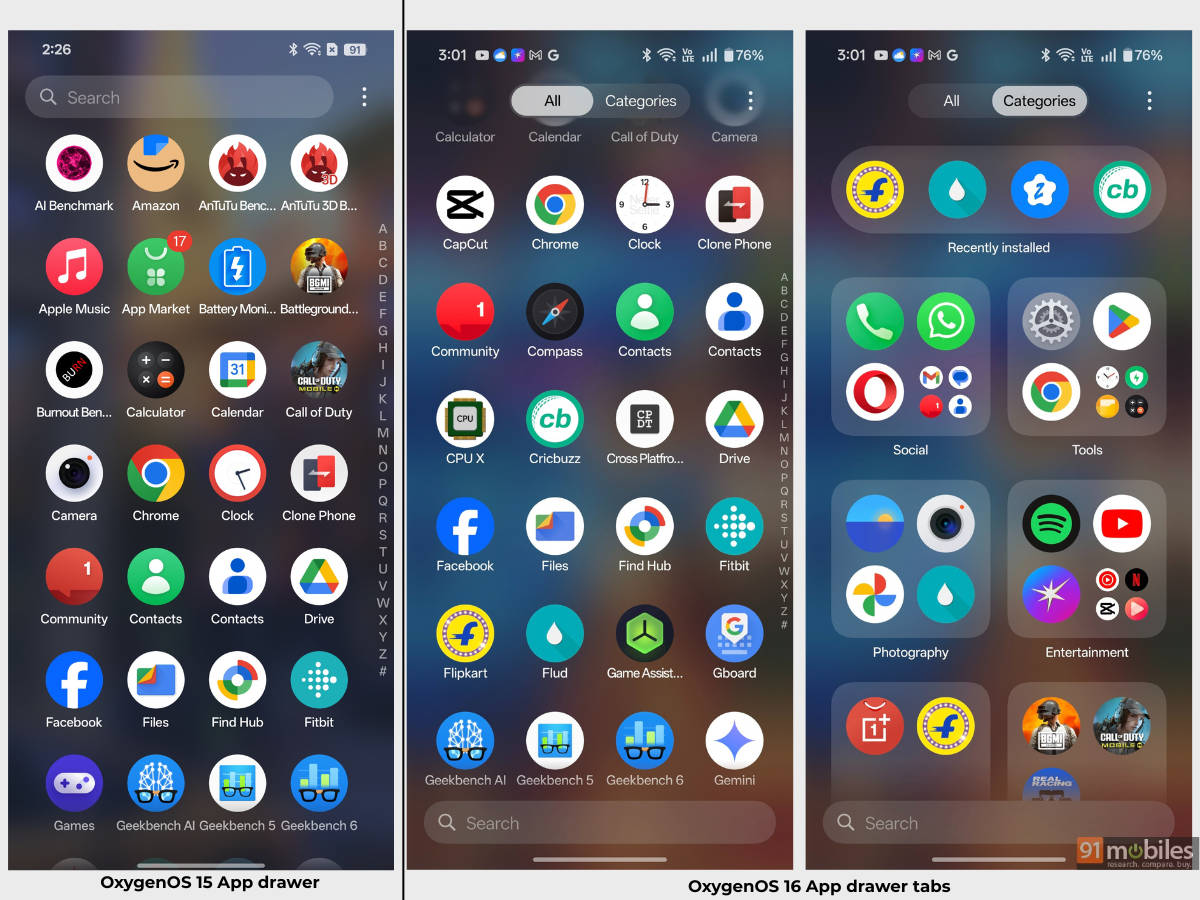
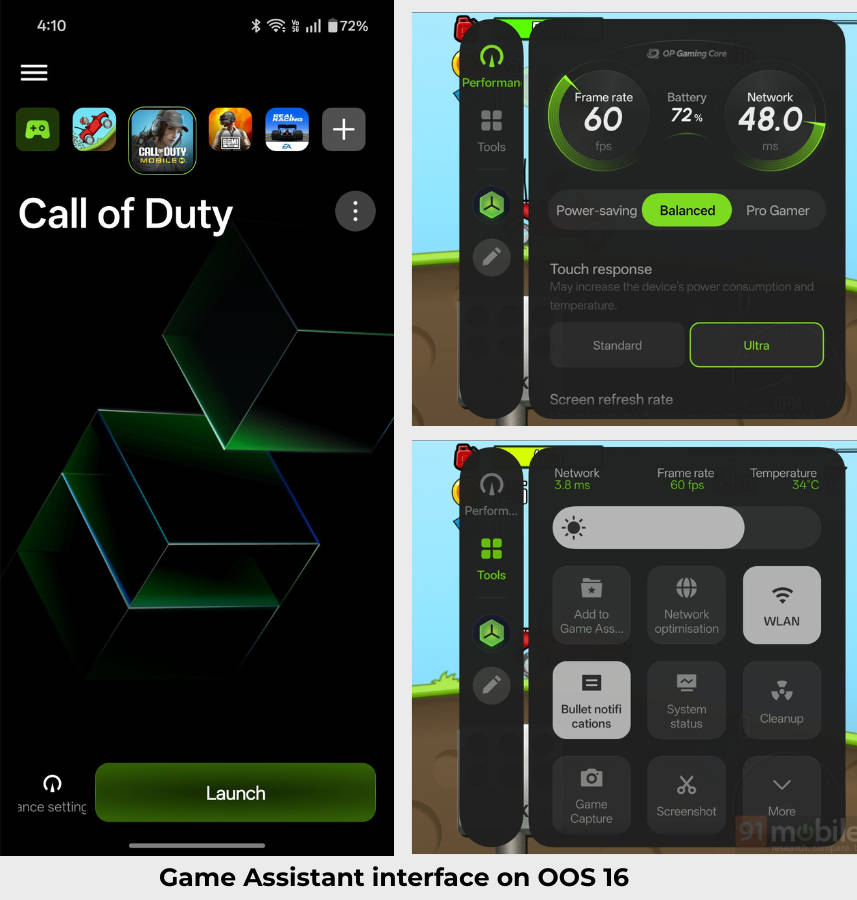
OxygenOS 16 still has some bugs that need to be addressed, such as a peculiar black banding issue that occurs when opening certain apps, like Instagram, from time to time. If you want to learn more about the latest features of OxygenOS 16, I recommend reading our in-depth analysis here.
OnePlus 15 ships with all these new OxygenOS 16 features out of the box, and the company promises four years of major OS updates and six years of security updates, which is about the same as the OnePlus 13, but not as long a support as you get with the Pixels, Galaxys and iPhones out there.
Battery life and charging: smokes the competition
The OnePlus 15 houses a 7,300mAh battery, which is the largest yet in a flagship phone in India and significantly larger than the 6,000mAh unit found in the OnePlus 13. OnePlus is utilising Silicon NanoStack technology, which features a 15% silicon content, allowing for a higher-density battery while maintaining a slimmer profile (8.1mm) compared to its predecessor (8.5mm). The phone is only marginally heavier, weighing 215 grams, as opposed to the OnePlus 13’s 210 grams.
This increase in battery size does translate to a stellar battery life in reality. I put the phone through its paces on some days, running intensive benchmarks like AnTuTu, streaming a full hour-long epsiode of Stranger Things Season 4 (cause Season 5 is around the corner, you know), an hour of gaming on Call of Duty Mobile and BGMI, along with my regular day-to-day useage involving messaging on WhatsApp, scrolling through Twitter and Instagram, and checking emails. By the end of the day, I was left with around 40-50% battery life, enough to last me through half of the next day.
So, a day and a half is what you can expect with the OnePlus 15, which is pretty excellent. Even our PCMark benchmark test aligned with this, recording over 17 hours of runtime from 100% to 20%. No other flagship phone came close to this level of battery endurance this year, save for the upcoming OPPO Find X9 Pro, which lasted 16 hours. For reference, both the OnePlus 13 and OnePlus 12 scored around 11 hours.
Fast charging has been bumped from 100W to 120W, which is great because it takes the OnePlus 15 about the same time as the OnePlus 13 did to charge from 20-100%, i.e., in less than 30 minutes, despite having a bigger battery. This makes the OnePlus 15 one of the fastest charging phones in the premium segment.
Verdict
The OnePlus 15 offers sufficient upgrades to justify its price of Rs 72,999. Yes, it’s more expensive than its predecessor, but that’s something you can expect from upcoming flagship phones due to a rise in component prices. The shift toward gaming is unmistakable, and this is the best implementation of it we’ve seen yet on a OnePlus flagship. The phone’s blazing-fast performance, 165fps gaming, stellar battery life and charging, and clean design language make it a near-perfect flagship phone worth buying.
That said, the new design may divide opinion. Some will appreciate its understated, practical minimalism, while long-time fans might miss the older OnePlus flair. The cameras deliver reliable, social media-ready images, but still lag behind those of the OPPO, iPhone, and Vivo flagships. If pro-grade photography is what you’re after, consider waiting for the OPPO Find X9 or Vivo X300 to make an informed buying decision. If cameras are something you can compromise on, the OnePlus 15 is the flagship phone to buy right now.
Editor’s rating: 8.4/10
Pros:
- Stellar performance, especially while gaming
- Improved design and durability
- Excellent battery life and fast charging
- OxygenOS 16 is polished and smooth
Cons:
- 165Hz only while gaming, downgraded resolution
- Camera performance is not the best in class
- DetailMax Engine is still in its infancy