Review Summary
Expert Rating

The OPPO Reno 15 is the most affordable model in the newly introduced Reno15 series. Despite its lower price, the handset shares the same design language, offers a comparable viewing experience, and runs the same software as the more expensive Reno 15 Pro Mini and Reno 15 Pro. Corners have been cut in performance, battery capacity, and cameras to price the OPPO Reno 15 in India at Rs 45,999, making it the most expensive base-model Reno smartphone to date.
Should you buy the OPPO Reno 15, or is there more to the smartphone than meets the eye? Read this review to find out.
Table of Contents
Verdict
The OPPO Reno 15 will make sense for buyers who prioritise design, cameras, and a refined day-to-day experience over raw performance numbers. If you’re upgrading from an older Reno model or switching brands and want a stylish, reliable smartphone that “just works,” the Reno 15 fits the bill. However, if performance and ultra-bright displays top your checklist, you may want to look for alternatives.
A slim, stylish, and sturdy design
Design has always been a core pillar of the Reno series, and the OPPO Reno 15 stays true to that legacy. The handset debuts the industry’s first HoloFusion technology, which creates a 3D visual effect using thousands of nano-curved structures etched into the glass surface to manipulate light. OPPO has also differentiated the design across colour variants. The Aurora Blue model features an ‘S’-shaped pattern inspired by the night sky, which subtly sparkles as light hits it from different angles.

The Glacier White variant we received for review leans towards a more refined aesthetic, showcasing a ribbon-shaped pattern that shimmers gently and exudes a three-dimensional effect when viewed from an angle. There is a Twilight Blue colour variant as well, which doesn’t seem to have any pattern and should appeal to users who like things simple.
Apart from this, OPPO has introduced subtle yet noticeable refinements to the Reno 15’s design over its predecessor. All three colour variants feature what the brand calls the Dynamic Stellar Ring Design, which is a square camera platform that blends seamlessly into the back panel and produces a soft, halo-like glow when light strikes it at certain angles.

The camera lenses themselves are now slightly smaller, and OPPO has done away with the pill-shaped element seen on the previous generation. In its place, the camera module features etched ‘Reno’ branding alongside ‘AI Camera’. These changes give the smartphone a more modern look. Moving on, the OPPO Reno 15 features flat edges, measures just 7.7mm in thickness, and weighs 197 grams, making the device incredibly handy and easy to use. I didn’t experience any wrist fatigue while holding the device for prolonged use.
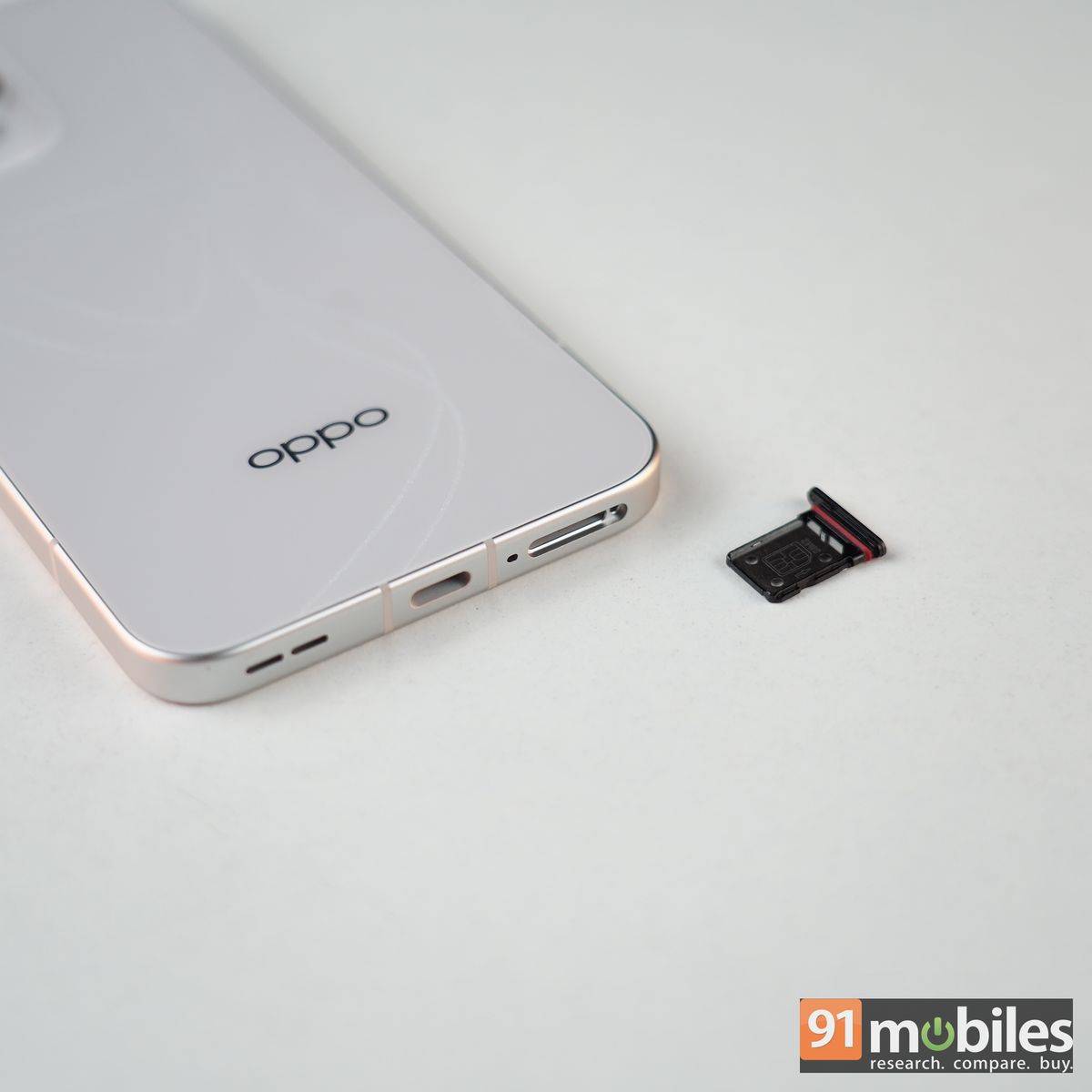
As for durability, ports, and connectivity, the OPPO Reno 15 remains unchanged from its predecessor. The handset carries IP66, IP68, and IP69 certifications for dust and water resistance. Its aerospace-grade aluminium frame adds structural rigidity while also contributing to a premium in-hand feel. Although the phone does not carry a military-grade durability rating, OPPO claims the presence of a sponge bionic cushioning system inside the chassis, designed to absorb impact from minor drops and accidental falls. Up front, the smartphone is protected by Corning Gorilla Glass 7i, which offers reliable scratch resistance along with added conveniences such as splash and glove support.
A transparent case is bundled in the box to further protect the device. For security, the phone sports an in-display fingerprint scanner, which is quick and accurate. The volume rocker and power button are conveniently placed on the right spine. However, unlike the flagship Find X9 series, the Reno 15 does not get the AI Mind Plus or camera keys.
Bigger battery, steady gains
The OPPO Reno 15 houses a 6,500mAh battery, aided by 80W SuperVOOC charging support. While the charging speeds remain unchanged, the battery has been upgraded by 500mAh from its predecessor. The improvement seems to be paying dividends in the PCMark battery test, where it registers over 17 hours of run time before its battery drops below 20 percent from 100 percent. Part of it could also be attributed to optimisation.
In real-world use, the OPPO Reno 15 feels virtually indistinguishable from the Reno 14. During our internal testing, the Reno 15 averaged around a 6 percent battery drop after 30 minutes of mixed usage that included YouTube streaming alongside sessions of BGMI and COD: Mobile. Over the course of nearly a week, I was able to consistently count on the phone to last a full day on a single charge, though, to be fair, this wasn’t under particularly heavy usage.
I’m neither a gamer nor an editor. Instead, I used the phone for everyday activities, such as navigation, messaging, media streaming, social media scrolling, and more, to gauge its overall endurance. The OPPO Reno 15 screen time averaged around 5.5 to 6 hours, which should be more than enough for its intended use case.




When it comes to charging, the OPPO Reno 15 takes less than an hour to achieve a full charge from 20 percent using the compatible 80W charger provided in the box. This is pretty standard for a smartphone in the mid-range segment. But, if you want a smartphone that juices up faster than the OPPO smartphone, the Vivo V60 remains a good choice, which packs an identical battery but offers 90W fast charging support.
Polished software, with some clutter
The OPPO Reno 15 runs ColorOS 16 out of the box, bringing it in line with OPPO’s flagship Find X9 series. I’ve already covered the software experience in detail in my review of the OPPO Find X9 Pro, and for the most part, the Reno 15 delivers a familiar experience.
The interface itself remains largely unchanged, except for the number of pre-installed apps. Out of the box, the Reno 15 ships with as many as 71 apps, which can make the app drawer feel cluttered at first. That said, many of these apps are widely used, and OPPO does allow most of them to be uninstalled if you don’t find them useful. However, out of the box, the UI may look a bit cluttered, especially to those coming from a relatively cleaner interface.
If you can wrap your head around that, you will appreciate the custom skin from OPPO, which is layered on top of Android 16. The software feels smooth and responsive, with plenty of customisation options available for both the home screen and lock screen.
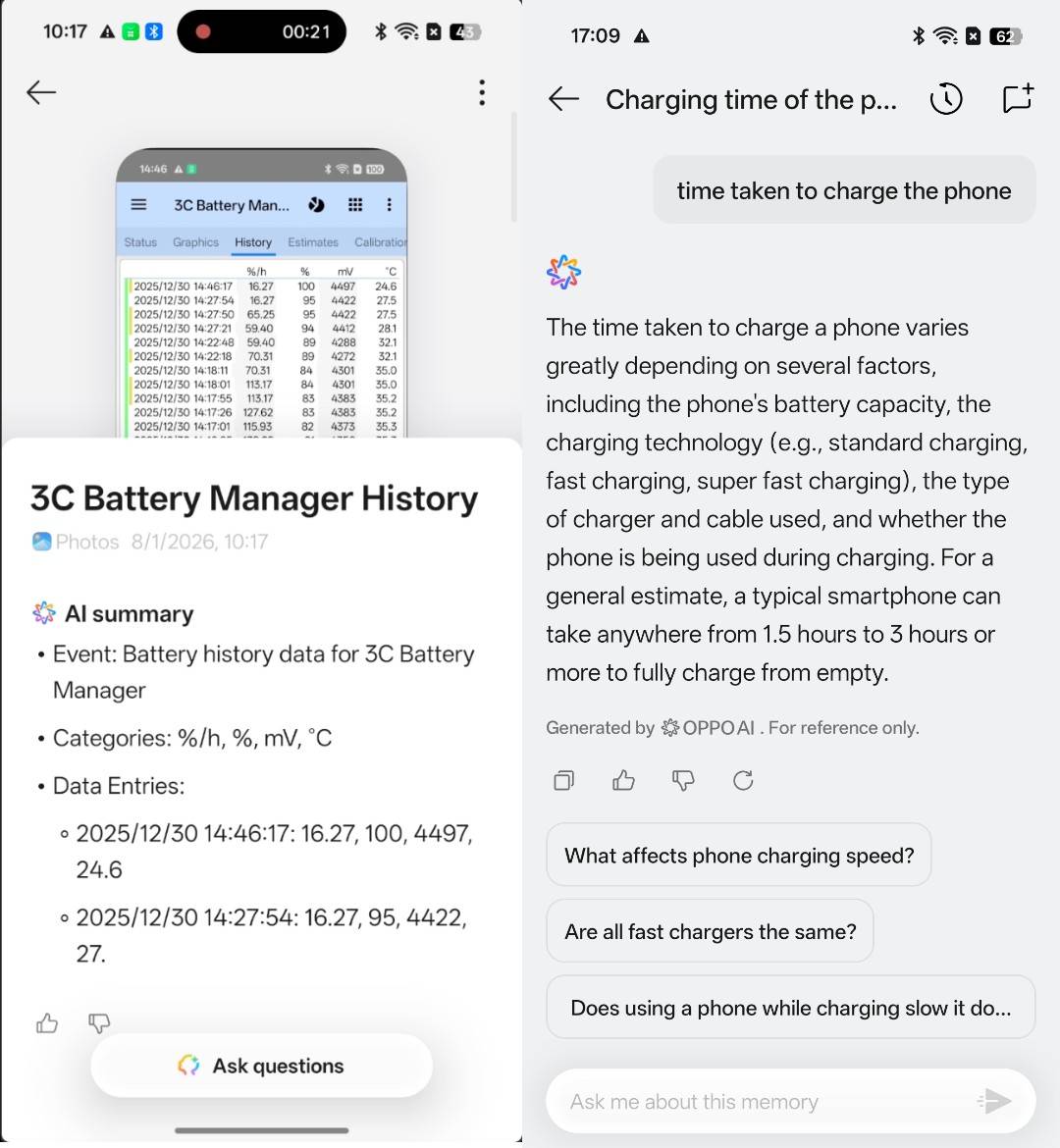
The Reno 15 also comes loaded with AI features, including OPPO’s AI Mind Space. Since there’s no dedicated physical key, accessing it requires a three-finger swipe gesture on the display. AI Mind Space acts as a central hub for storing screenshots, notes, voice memos, and other personal information. It can automatically summarise this content, making it easier to retrieve what you need without having to go through everything manually. However, I wish its AI to be more interactive and able to answer follow-up questions, like calculating the time taken to charge the phone based on the screenshot provided.
Besides the AI Mind Space, there are AI tools to improve images, assist with writing, brainstorming ideas, and more, which can come in handy at times. The handset is promised to receive at least 5 major OS upgrades and 6 years of security updates, which puts it ahead of the Realme 16 Pro+ in terms of longevity.
Smooth everyday performance, with respectable gaming
At the core of the OPPO Reno 15 is Qualcomm’s Snapdragon 7 Gen 4 SoC, the same as the recently introduced sub-Rs 40,000 Realme 16 Pro+. Benchmark performance reveals the smartphone with the latest Qualcomm mid-range chipset is on par with the predecessor Reno 14’s MediaTek Dimensity 8450 SoC. Even on the CPU Throttle test Burnout, there is near-identical throttling on both smartphones. However, on paper, the MediaTek Dimensity 8450 SoC is relatively more powerful.

I wasn’t able to test the two phones side by side to gauge the real-world performance gap, but my experience with the Reno 15 was largely smooth. Coming from the OPPO Find X9, it doesn’t feel quite as snappy as the flagship, yet it never lagged or ran into issues during my regular usage. By regular usage, I mean using the smartphone for basic tasks such as calling, messaging, streaming, browsing, and a little bit of multitasking. If you are looking for a mid-range smartphone with similar usage, then the OPPO Reno 15 will provide a smooth sailing.
However, anything heavier than that, like editing, gaming, and even multitasking with a bunch of apps running in the background, can put the OPPO Reno 15 under pressure. Alternatives such as the OnePlus 15R (review) might handle such workloads better, even though the Reno 15 managed BGMI and Call of Duty: Mobile fairly well during our testing. While the OPPO smartphone wasn’t thermally efficient, it ran both games without noticeable frame drops or stutter. As long as you’re not planning on extended gaming sessions or demanding tasks, the Reno 15 remains a reliable companion.
The phone comes in a couple of RAM and storage configurations: 8GB/ 12GB and 256GB/ 512GB. The storage is not user-expandable, but the RAM can be extended virtually up to 8GB.
Camera setup is unchanged, but still impressive

The OPPO Reno 15 boasts an identical camera setup as its predecessor – from sensor size to name, everything remains the same. The handset features a triple rear camera system consisting of a 50MP Sony IMX882 primary sensor with OIS, an 8MP ultra-wide lens, and a 50MP Samsung JN5 telephoto camera offering 3.5x optical zoom.
On the front, the smartphone is equipped with a 50MP camera for selfies and video calls. Based on our internal testing, where we evaluate detail retention, colour accuracy, exposure, and dynamic range, the Reno 15 scores on par with the Reno14. So if you have the OPPO Reno14, there is little reason to upgrade purely for camera performance.
However, if you’re upgrading after a long gap or switching from a different brand, the Reno 15 still stands out as a strong camera-centric option in its segment. The handset delivers rich detail, particularly from the primary camera, even in adverse lighting conditions. It also handles exposure well, preserving detail in shadowy areas, while producing punchy yet largely accurate colours.

















The 8MP ultrawide lens may not impress you much, with a slight loss of detail, a shift in colours, and an underwhelming dynamic range, but it can be handy for capturing images with a wide perspective in well-lit environments. The telephoto camera, however, does a commendable job with edge detection, cleanly separating subjects from the background with minimal warping while delivering a pleasing bokeh effect. Skin tones appear largely accurate, although there is some mild smoothing of finer facial details; nothing particularly concerning.
The front camera is a mixed bag. While it offers strong dynamic range and handles background exposure well, the results aren’t the most natural. The phone tends to oversharpen details, giving selfies a slightly processed look, and skin tones lean towards a faint reddish tint in an effort to boost contrast.
To put the OPPO Reno 15’s cameras into perspective, we compared its performance against the Rs 39,999-priced Realme 16 Pro+, which comes equipped with a notably powerful camera setup headlined by a 200MP primary sensor.
Daylight


Neither smartphone delivers perfectly accurate colour science. The Realme 16 Pro+ produces more contrast-heavy images that are well suited for social media, while the OPPO Reno 15 slightly brightens scenes, often to better effect. In comparison, the OPPO handset preserves more detail, manages exposure more consistently, lifts underexposed areas effectively, and offers a more balanced dynamic range overall.
Ultrawide


Both smartphones make the scene duller when switched to the ultrawide lens. Moreover, details are lost, which could be due to their low-resolution 8MP camera. The Reno15 outperforms the Realme 16 Pro+ with slightly better colour science, preserving more detail and avoiding edge and shadow distortion.
Portraits


The Reno 15’s portrait camera does a superior job with edge detection to the Realme 16 Pro+. The smartphone also catches the skin tones correctly, but might oversaturate other colours, such as greens, a bit. As for the facial details, you will find the Realme 16 Pro+ doing a better job.
Selfies


The OPPO Reno 15 falters with accurate skin tones when it comes to selfies. The smartphone adds a reddish tone, which may appear impressive but lacks the natural appeal. Details do appear crisp, but this is largely the result of mild oversharpening.
The Realme 16 Pro+, in contrast, handles skin tones and overall scene rendering more convincingly. However, its background exposure falls short when compared to the OPPO Reno 15, which manages highlights and shadows more effectively.
Low light (night mode)


When it comes to low light, the OPPO Reno 15 and Realme 16 Pro+ handle light flare almost identically. However, while the OPPO smartphone delivers more details with minimum light, the Realme 16 Pro+ outshines by keeping the scene close to reality.
Immersive display indoors, decent outdoors
The OPPO Reno 15’s display is largely unchanged from the Reno 14, except for a marginal increase in size. The panel now measures 6.59 inches, up from 6.57 inches, a gain of just 0.02 inches. Notably, OPPO has achieved this without altering the phone’s overall dimensions, suggesting slimmer bezels and a slightly improved screen-to-body ratio. The added pixels do contribute to a marginally more immersive viewing experience, but the upgrade feels incremental rather than meaningful.

More than the taller display, a bump in brightness would have been far more welcome. That was my qualm with the Reno14, and it continues to be with the Reno 15 as well. The phone boasts 1,200-nit HBM brightness, which is very underwhelming for bright and sunny weather like in Delhi or the mountains. It feels even less appealing when you have a more affordable offering, the Realme 16 Pro+, offering up to 6,500 nits peak and 1,800 HBM brightness.
That said, if you can look past that shortcoming, there is plenty to like about the display. Indoors, the display looks as punchy and bright as it can get for the price. Moreover, the 1,256 x 2,760p resolution and HDR+ certification ensure a crisp viewing experience, making it a reliable companion if you like consuming multimedia content on a smartphone. The panel also maintained colour consistency when viewed off-axis.
Complementing the display are dual stereo speakers, which add depth to the viewing experience. Audio output is clear and well-balanced at moderate volumes, though pushing the speakers to their limits introduces slight distortion.
Final verdict
The OPPO Reno15 feels like a mixed bag, and much of that comes down to its noticeable Rs 8,000 price hike over its predecessor. That said, this isn’t a challenge unique to OPPO – most smartphone manufacturers are grappling with rising component costs. Some have managed to remain price-competitive only by making trade-offs elsewhere. The OnePlus 15R, for instance, drops the telephoto lens with a marginal bump in price tag.
The OPPO Reno15, on the other hand, retains the telephoto camera while also upping the battery capacity and introducing a refreshed design, changes that pay dividends. The phone makes a strong impression with its HoloFusion glass and Dynamic Stellar Ring design, and the 6,500mAh battery delivers dependable all-day endurance. Camera performance remains a highlight, with the primary and telephoto lenses producing detailed daylight shots and pleasing portraits, respectively.
However, I would have liked to see an upgrade in performance, with a more capable chipset, a better thermal solution, and faster RAM and storage. These would have made the smartphone equally compelling to power users who also like to show off their device and capture every moment.
If you don’t fall into that category and are upgrading from a two- to three-generation-old device to a modern, mid-range, camera-focused smartphone that can handle everyday use with ease, the OPPO Reno 15 stands out as an impressive choice.
Editor’s rating: 8/10
Reasons to buy
- Striking, premium design with HoloFusion glass and slim, comfortable in-hand feel.
- Reliable, versatile camera setup with strong portraits and consistent main camera output.
- Crisp AMOLED display with good colours, contrast, and HDR support indoors.
- Solid battery life with dependable all-day endurance and quick top-up speeds.
Reasons not to buy
- Performance is adequate but not class-leading for heavy gaming or intensive multitasking.
- Too many pre-installed apps make the UI feel cluttered out of the box.
- Ultrawide camera is average, with noticeable detail loss and limited dynamic range.