


Review Summary
Expert Rating

The smartphone market in India is in its most turbulent time yet, with new phones launching at roughly 40 percent higher price points than their predecessors, only to sit even higher with a follow-up price hike. That is all because of the ongoing RAM price inflation worldwide, pushing manufacturers to pass the increased costs to consumers. The OPPO Reno16c, which I’ll be discussing in this review, is also part of the new wave of launches suffering the same fate.
The new Reno16c is the entry point into the latest Reno16 series lineup, and like all Reno phones before it, it is focused more on camera output and design than other aspects. On offer is a robust camera system, complete with a telephoto lens, an eye-catching design, a big 7,000mAh battery and the polished ColorOS, among other things. In this review, I’ll walk you through my everyday experience with the Reno16c and whether the device delivers enough value at its new price point.
Table of Contents
Short verdict
The Reno16c is an extremely specialised phone that focuses on a few things. It looks good, feels comfortable, lasts easily through the day, and offers a very capable camera setup with a telephoto lens. On top of that, you get a polished OS, a vibrant AMOLED display, stereo speakers, and fast charging, which helps add balance to the formula. However, its performance feels less impressive, but for buyers who value design, battery life, and imaging, the Reno16c is still worth a serious look.
Design: unique and comfortable
The Reno 16c carries over its design elements from its predecessor, the OPPO Reno15c, with the back-panel effect that creates a subtle 3D look, and it is certainly eye-catching. A lot of people will probably like it, though I will admit it did make me feel a little off at first since I am prone to motion sickness. Still, as a visual idea, it is quite striking and gives the phone a more distinctive character.
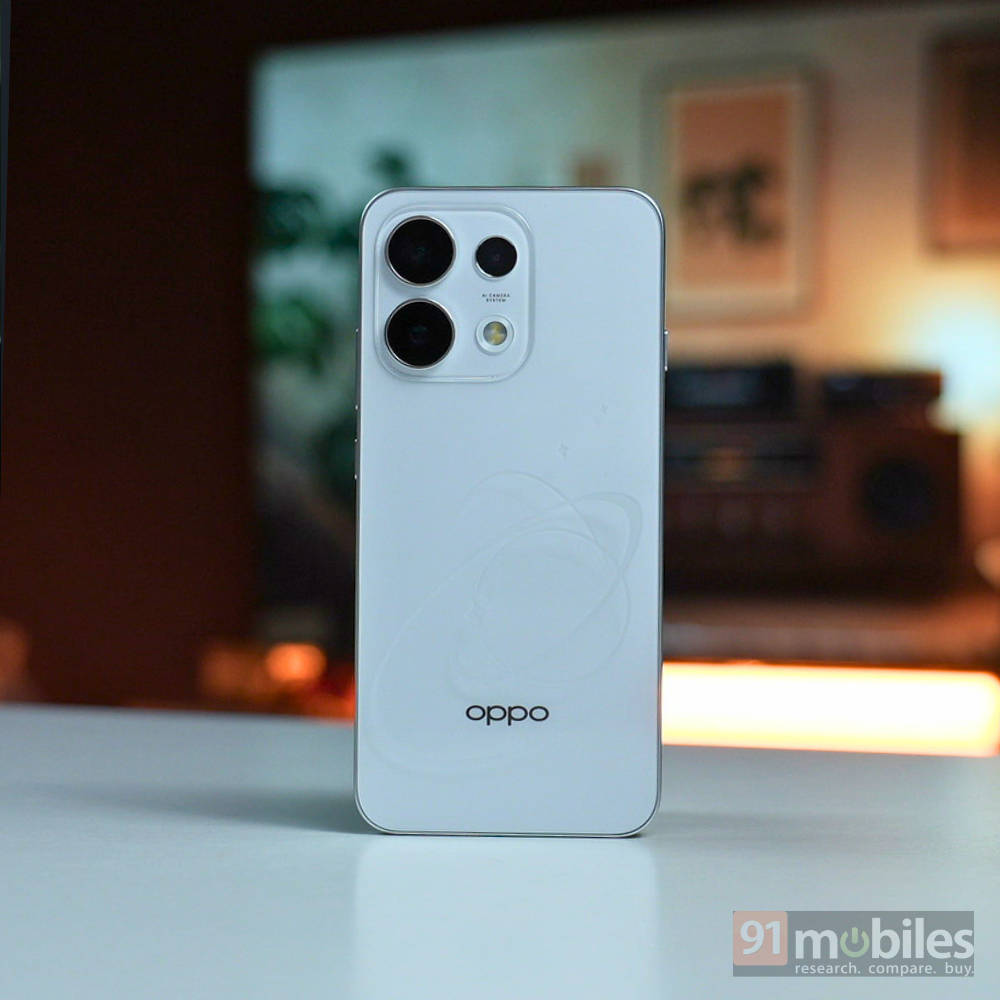
What also works well is how well the phone’s weight is balanced. At 197g, it does not feel heavy in the hand, and the weight is spread out nicely for comfortable use during prolonged use. It is a little thick at 8.4mm, mainly because of the large battery, but the smaller 6.6-inch body helps offset that somewhat. The Starry White finish I got for review looks quite nice, and the phone also comes in Stellar Purple and Twilight Violet if you want something a bit more vivid.
| Smartphone | Thickness | Weight | IP Rating |
| OPPO Reno16c 5G | 8.1 mm | 195 grams | IP69 |
| Motorola Edge 70 Pro + 5G | 7.19 mm | 190 grams | IP68 +IP69 |
| Nothing Phone 4a Pro | 7.9 mm | 210 grams | IP65 |
OPPO has also given the device a lot of protective features. You get a transparent TPU case in the box, along with IP66, IP68, IP69 and IP69K certification, so the phone should handle dust, water and rougher conditions quite well. There is also Crystal Guard protection on the front, which should add another layer of reassurance against accidental drops. All in all, I’m quite fond of the design of the new Reno16c.
Cameras: a capable system complete with telephoto lens
Now, let’s move on to the key pillar of this device: cameras. On offer is a 50MP OIS primary camera, a 50MP OIS telephoto lens with 3.5x optical zoom, an 8MP ultrawide lens and a 50MP selfie shooter with Autofocus. The setup makes OPPO Reno16c one of the few phones under Rs 50,000 (right now) to offer you a camera system that includes a telephoto lens.
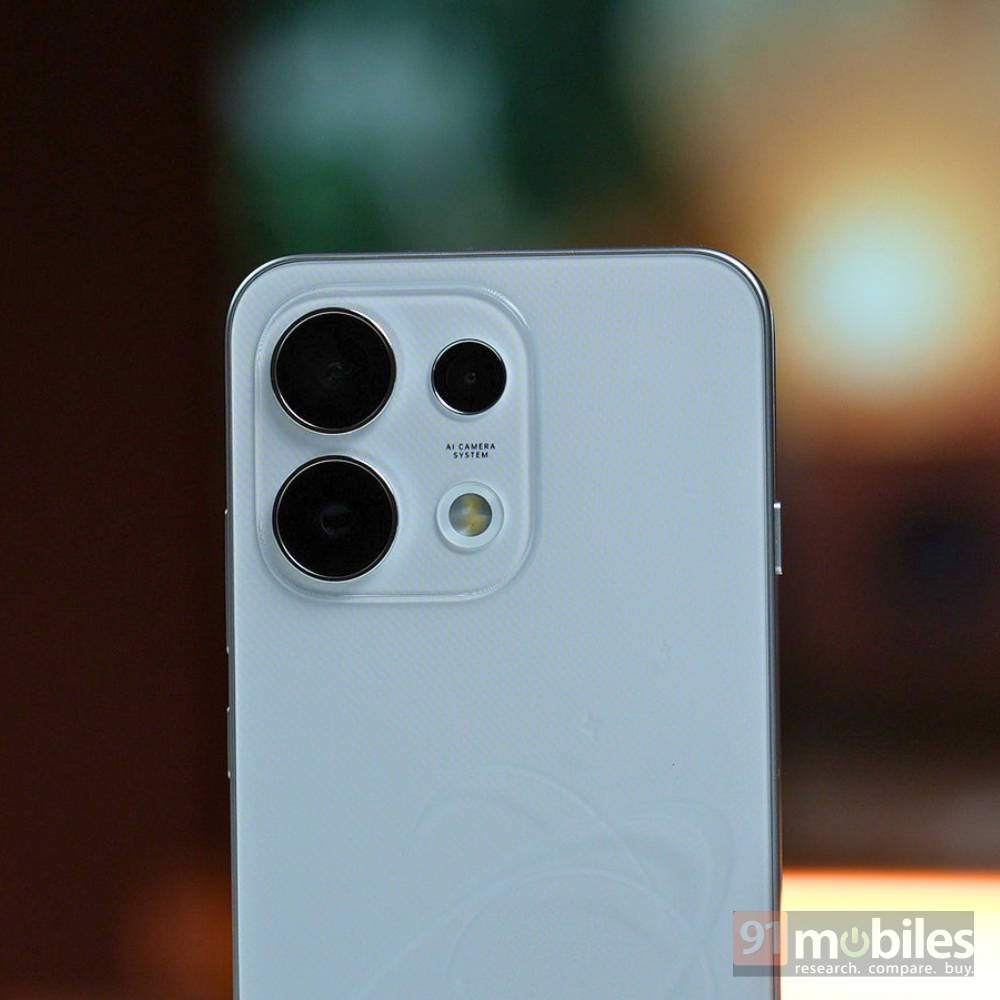
The 50MP primary camera handles most everyday shots best, delivering sharp images, good dynamic range, and pleasing colours that stay lively without looking too unnatural.
The 50MP telephoto lens is great for portraits and zoom shots, while the 8MP ultrawide lens works best for landscapes, although it tends to output darker colours compared to the primary lens.







The 50MP selfie camera with autofocus also does a strong job, especially when it comes to keeping faces clear and skin tones looking natural. Overall, it is a well-rounded setup that covers almost every kind of shot well.
To give you a better idea of the phone’s camera output, I compared it against the Motorola Edge 70 Pro+ (review), which is one of the best camera phones in this segment.
Daylight
In daylight conditions, the Reno16c’s results are quite competitive with the Edge 70 Pro+. The former has better sharpness and detail level across the frame, and its dynamic range is superior. The Edge 70 Pro+ does take the lead when it comes to colour reproduction.


Ultrawide
For ultrawide shots, the Edge 70 Pro+ outputs results that are more consistent in colour science compared to their daylight counterparts than the Reno 16c. When it comes to detail, however, the Reno smartphone takes the lead.


Portrait
If you like capturing human shots, the Reno16c outputs results with pleasing colours, although the skin tones are not entirely accurate. The Edge 70 Pro+ delivers results that are more consistent with reality. The Edge 70 Pro+ captures better facial details, but its edge detection falls a bit behind the Reno16c.


Selfie
The situation is reversed in selfies as the Reno16c now delivers more accurate skin tones compared to the Edge 70 Pro+. The colours are a bit more vibrant on the Motorola’s image, making it more likeable. In terms of details, both phones are almost on par with each other.


Low light (nightmode)
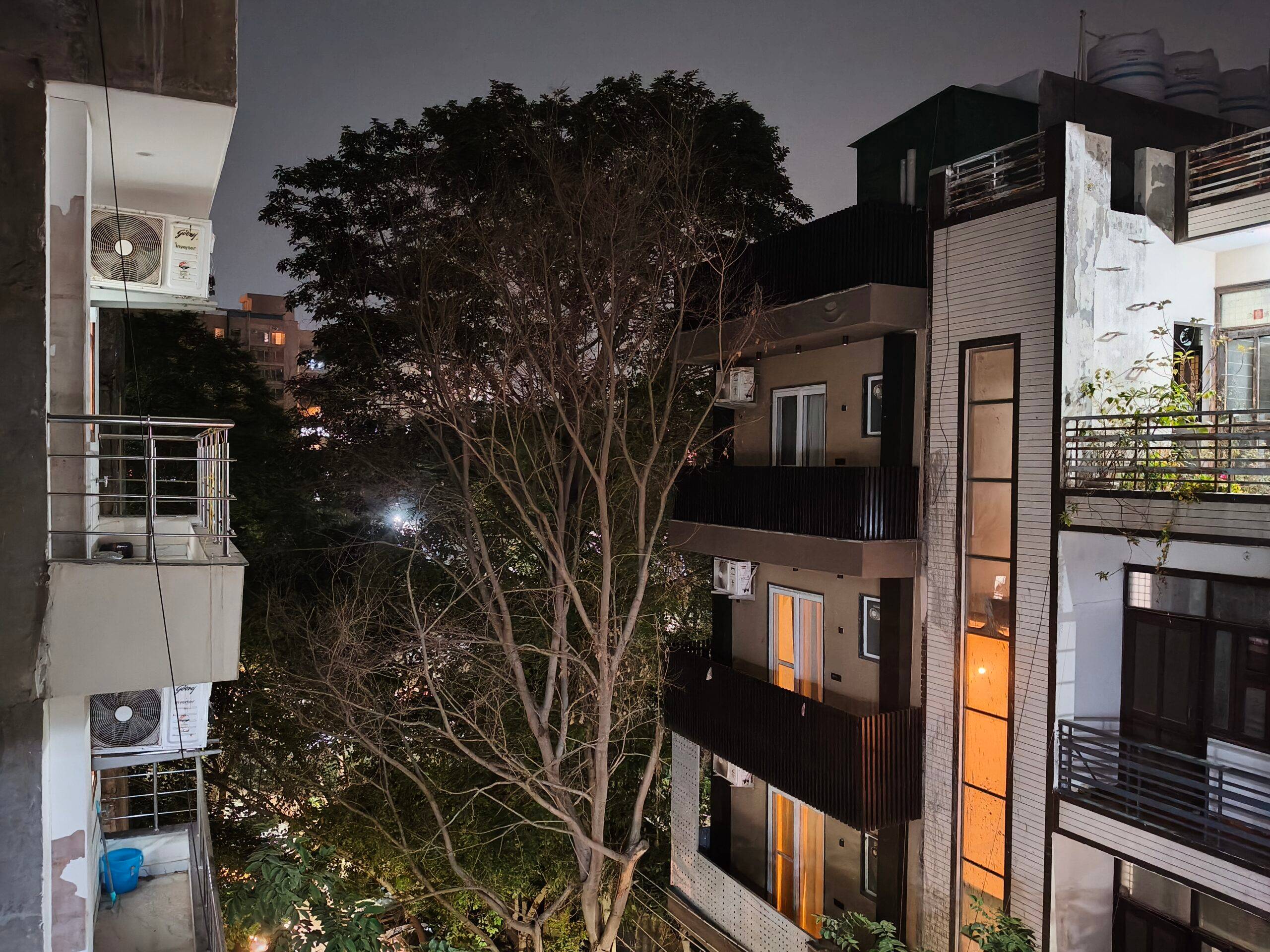
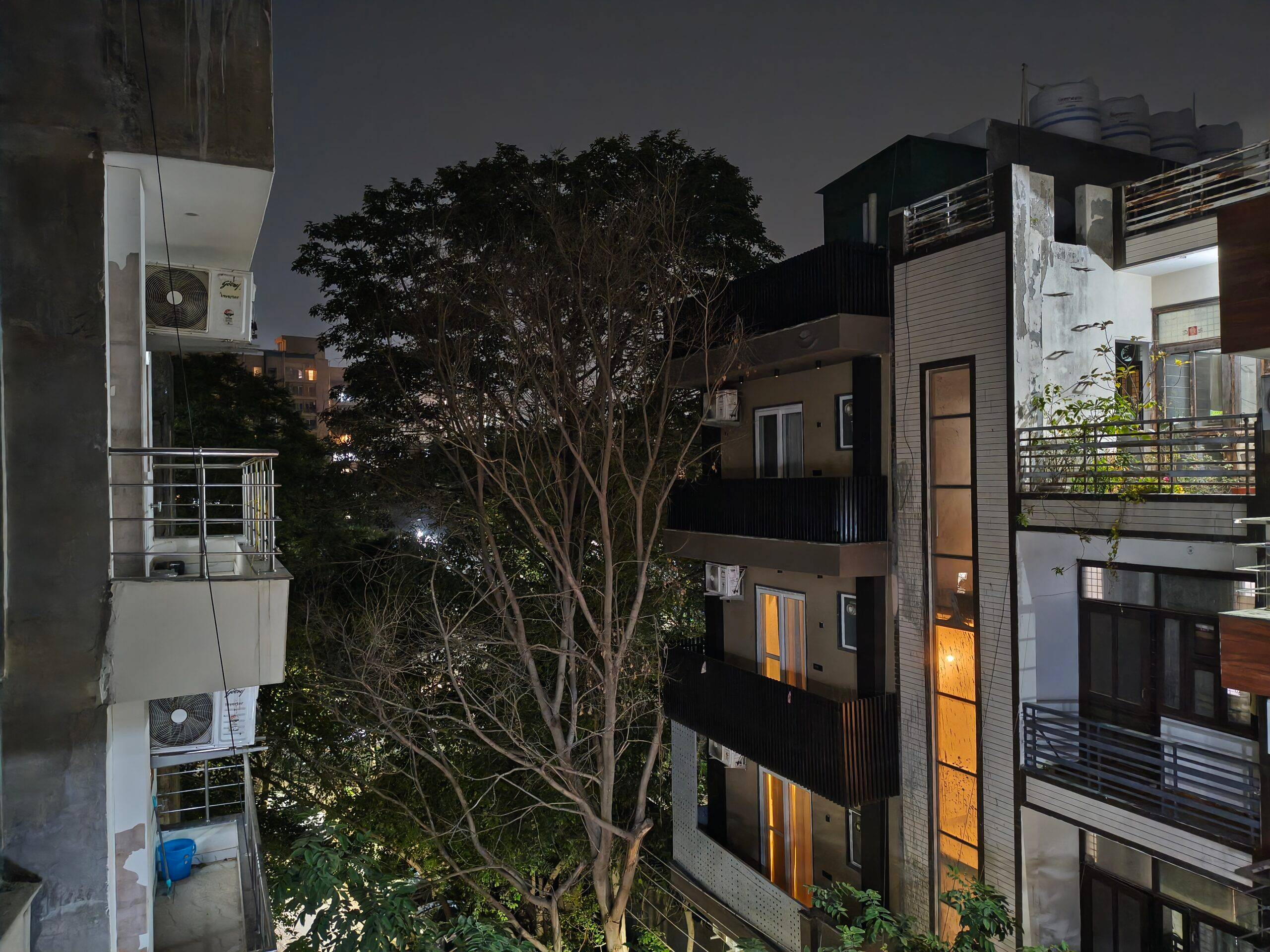
With night mode enabled, both phones take some impressive shots. The Reno16c, however, is in the lead since it controls lens flares and exposure better compared to the Edge 70 Pro+. Even the detail level is a lot higher in the Reno16c’s shots, although its colours aren’t as accurate as its rival.
Display and speakers: vivid visuals and full-bodied sound
The Reno 16c gets a 6.57-inch AMOLED display with FHD+ resolution and a 120Hz refresh rate, and the setup makes a great first impression. Colours look vivid, thanks to the 100 percent DCI-P3 coverage, making the content look lively and pleasing straight away. The display also feels quite premium due to the thin, almost symmetrical bezels.
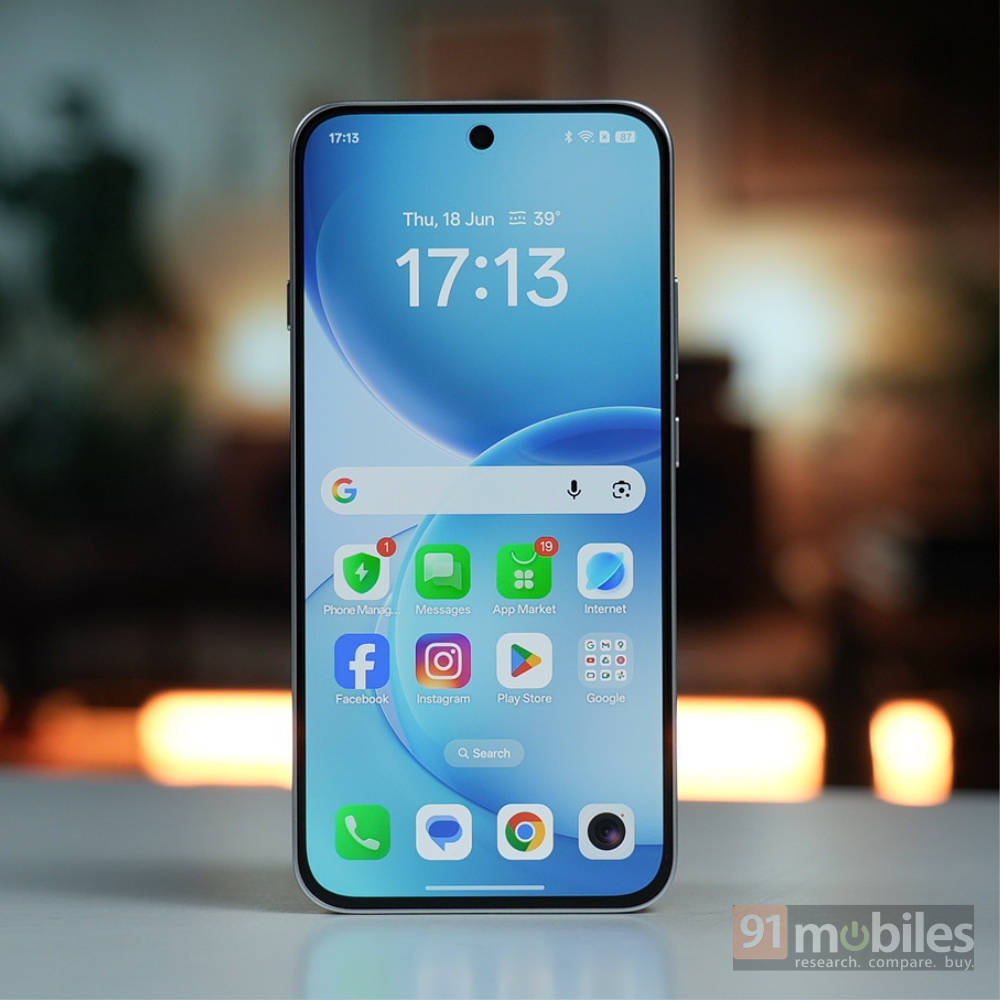
Indoors, the panel gets extremely bright at 1400nits HBM, and feels great to use, but the outdoor experience is a bit more mixed. The brightness level is not weak by any means, but it also isn’t the best, so visibility can be a little less convincing under harsh sunlight. At 1400 nits, it remains quite usable, but I would have liked a bit more brightness when I’m out and about.
| Smartphone | Display | Peak Brightness |
| OPPO Reno16c 5G | 6.57 inches - AMOLED | NA |
| Motorola Edge 70 Pro + 5G | 6.8 inches - Extreme AMOLED | 5200 nits |
| Nothing Phone 4a Pro | 6.83 inches - AMOLED | 5000 nits |
The stereo speaker setup on offer here adds a lot to the overall multimedia experience. It sounds loud, full-bodied, and well suited for videos, shows, and casual gaming. Put together, this makes the display and audio combo a very enjoyable part of the phone.
Battery: excellent longevity and fast top-ups
Battery life is easily one of the strongest strengths of the OPPO Reno 16c. The 7,000mAh capacity is especially impressive in a phone this size, and it gives the device a real advantage without making it feel overly bulky. In everyday use, it should comfortably last a full day even for the most heavy users, while lighter users can stretch it close to 1.5 days without worrying too much about finding a charger.


Even our PCMark battery benchmark result crossing 21 hours shows that the phone has the stamina that puts it right up there with some of the better battery performers of the year. That seems to be helped by the Dimensity 7300 Energy, which appears to do a good job of keeping power use in check, along with Oppo’s own battery optimisation in ColorOS.
Even after an hour of gaming, the battery drop was only around 5.5 percent, which is a good result and suggests the phone manages heavy use quite sensibly.
| Smartphone | Battery Capacity | Charging Support | Charging time (20% to 100% ) |
| OPPO Reno16c 5G | 6500 mAh | 45W Super VOOC Charging | 59m |
| Motorola Edge 70 Pro + 5G | 6500 mAh | 90W Turbo Power Charging | 47m |
| Nothing Phone 4a Pro | 5400 mAh | NA | 1h 2m |
Then there is the 80W fast charging, which rounds things off nicely by taking the battery from 20 to 100 percent in about an hour. The efficiency and charging speed combined make the whole experience feel very well thought out.
Performance: just about enough
Oppo has clearly kept performance modest here, and that feels like a deliberate choice to balance costs. The Reno 16c is powered by the Dimensity 7300 Energy SoC, paired with up to 12GB of LPDDR4X RAM and 256GB of UFS 3.1 storage, which is not especially exciting on paper but still gives the phone enough to handle day-to-day use properly.
With the optimised software doing some of the heavy lifting, browsing, multitasking and general navigation stay smooth enough, and you do not really run into trouble unless you start pushing it harder.
Although, the limits do show up once you move into heavier use. Gaming performance is what I’d call decent enough, and while the phone keeps temperatures fairly controlled with an average rise of just 4.5 degrees over 30 minutes, it does not go far enough to feel truly allow care-free gaming in terms of smoothness.
There is also no 120fps support in popular titles like BGMI and COD Mobile yet, which makes the experience feel a little more restrained than it could have been. However, future OTA updates will likely improve that. Since this is a camera-first device, that is not a deal-breaker, but I do think Oppo could have pushed performance a bit further here, especially given the pricing.
If you’re someone who can’t compromise on performance, the iQOO 15R (review) and POCO X8 Pro Max (review) are alternatives that are more performance-focused in this price range. But, at the expense of relatively average cameras.
Software: butter-smooth OS, rich AI suite
The Reno 16c runs ColorOS 16 on top of Android 16, and the experience feels smooth, polished, and very much in line with what Oppo is doing across its newer phones. It does come with a fair number of pre-loaded apps out of the box, so the interface can feel a little crowded at first.
The good thing is, most of the pre-installed apps can be removed if you do not want them. Once you get past that, the software feels responsive and nicely tuned, with plenty of customisation options for both the home screen and lock screen.
| Smartphone | Pre-Installed Apps | Software Support |
| OPPO Reno16c 5G | 66 | NA |
| Motorola Edge 70 Pro + 5G | 46 | 3 Year OS Updates + 5 Year Security Updates |
| Nothing Phone 4a Pro | 33 | 3 Year OS Updates + 6 Year Security Updates |
There are also a few new AI features this time like: AI bill manager for organising expenses, an AI Snap Key for quick capture and shortcuts, and an AI Mind Pilot feature that connects you to AI tools in a more guided way. While I am not someone who relies on AI tools very often, I can see the appeal for users who do.
Oppo seems to have built in enough utility here for people who want quick help with organisation, capture and everyday tasks, without making the phone feel like it is forcing AI into every corner. It is a pretty complete software package overall, that makes for a refined user experience, post the initial setup.
Furthermore, the Reno 16c’s software support is pretty great for the price, with 5 OS updates and 6 years of security patches. This is better than the 4-year level that most other phones in this bracket offer, and should help the phone stay relevant for longer.
Final Verdict
OPPO has clearly designed the Reno16c around the things it knows how to do well and chosen carefully where not to focus. The handset looks good, feels comfortable to hold, lasts through the day with ease, and brings a camera setup that is quite strong for this segment. The telephoto lens has now become a rare treat at this price, and the overall experience feels polished, which should appeal to buyers who care about design and imaging capabilities the most.
The software also helps the phone feel a lot more premium. ColorOS is smooth, intuitive to use, and well suited for most general users. Rounding off the package with a vivid AMOLED display, stereo speakers, and fast charging into the mix. All of these aspects make the Reno16c a good case for itself as a phone that gets the essentials right.
The challenge, though, is that the competition is just as good. The Motorola Edge 70 Pro+ (review) feels like the more complete package overall, with similar camera strengths and a more balanced approach. The Nothing Phone 4a Pro (review) also looks more rounded in this space, especially for users who want a camera-focused phone without giving up on too much performance. Against those phones, the Reno16c starts to feel a little more specialised, rather than versatile.
Despite all that, the Reno16c does what Oppo intended it to do, putting design, battery life and camera output front and centre, and it does that with enough confidence that translates into real-world use. For buyers who want a stylish phone with a strong focus on cameras, longer software support than rivals, and a very easy everyday experience, the phone still warrants a serious look.
The OPPO Reno16c is priced in India starting at Rs 46,999.
Editor’s rating: 8/10
Reasons to buy:
- Capable camera system with a telephoto lens
- Eye-catching design with good in-hand comfort
- Excellent battery life and fast charging
- Smooth ColorOS with a lot of customisation
Reasons not to buy:
- Performance is only average for the segment
- Is a little pricey for what it offers
 | vs |  |
| vs |  |