Xiaomi vs TCL TVs: Key differences, features, models, and which should you buy?


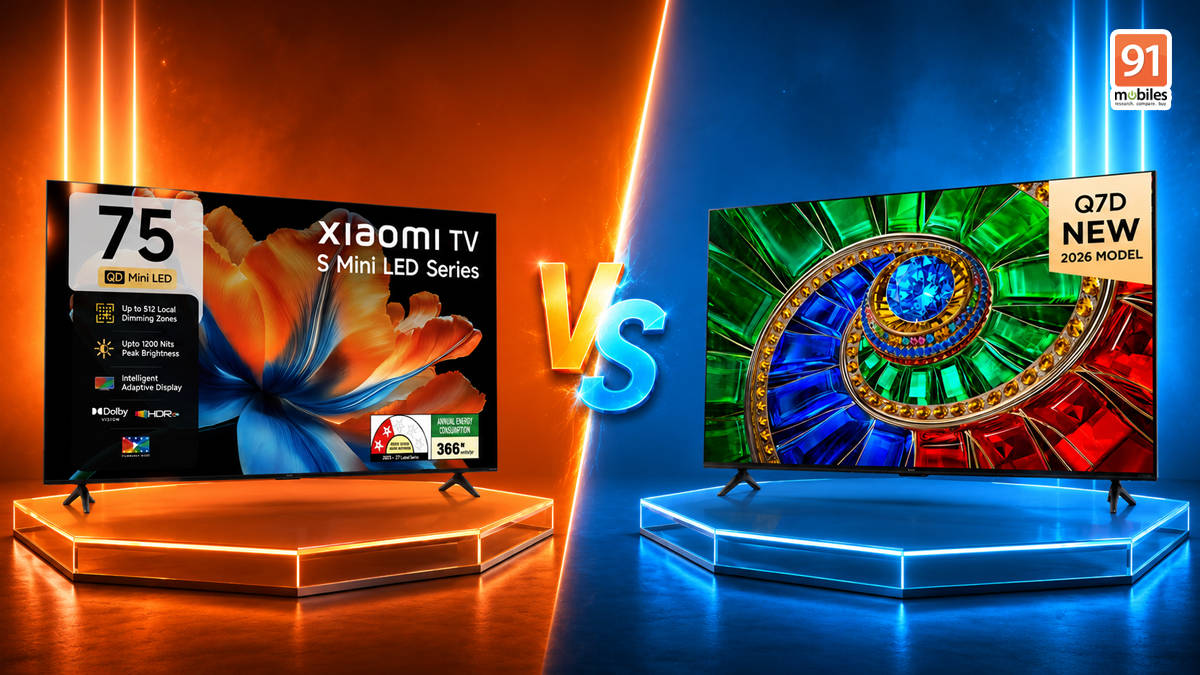
Xiaomi has built a strong reputation for offering feature-rich, value-for-money smart TVs, while TCL is widely recognised for its in-house display technology and focus on picture quality. With both brands offering compelling options across price segments, choosing between them can be confusing. Which brand offers the better display? Which one delivers more features for the price? Where does each brand excel, and where do they fall short? Most importantly, which models are worth buying?
To help answer these questions, we’ve compared Xiaomi and TCL TVs across their features, strengths, weaknesses, and best models. Check it out.
Table of Contents
Which is better for…
| If you want… | Choose |
| Display | TCL |
| Smart platform | Xiaomi |
| Audio | Tie |
| Gaming | TCL |
| Best value for money | Xiaomi |
Sizes available
TCL offers a wider range of TV screen sizes than Xiaomi. Both brands start with 32-inch models, but Xiaomi’s lineup currently tops out at 75 inches. TCL, by comparison, offers significantly larger options, including 85-inch, 98-inch, and flagship 115-inch models, making it the better choice for buyers looking for large-screen home entertainment setups.
| Xiaomi | TCL |
| 32-inch LED/ QLED | 32-inch QLED |
| 43-inch LED/ QLED/ Mini LED | 43-inch LED/ QLED |
| 50-inch LED | 50-inch LED/ QLED |
| 55-inch LED/ QLED/ Mini LED | 55-inch LED/ QLED/ QD Mini LED/ SQD Mini LED |
| 65-inch QLED/ QD Mini LED | 65-inch QLED/ QD Mini LED/ SQD Mini LED |
| 75-inch QLED/ QD Mini LED | 75-inch QD Mini LED/ SQD Mini LED |
| – | 85-inch QD Mini LED/ SQD Mini LED |
| – | 98-inch QD Mini LED/ SQD Mini LED |
| – | 115-inch QD Mini LED |
*Sizes as mentioned on Xiaomi and TCL’s official websites in India.
Display
Both TCL and Xiaomi offer a wide range of display technologies across their smart TV portfolios. In the budget and mid-range segments, both brands rely on LED and QLED panels, delivering comparable picture quality with sharp visuals, vibrant colours, and decent contrast.


The competition becomes more interesting in the premium segment. Both Xiaomi and TCL now offer QD Mini LED TVs, which combine Mini LED backlighting with a Quantum Dot layer. Compared to conventional QLED TVs, these panels deliver higher brightness, better contrast, more precise local dimming, and a wider colour gamut, resulting in deeper blacks and more impactful HDR performance.


TCL, however, takes things a step further with its flagship SQD Mini LED technology. This is an enhanced version of QD Mini LED that incorporates a more advanced Quantum Dot layer and improved light control, helping reduce colour bleed, improve contrast, and produce more accurate, lifelike colours. When paired with TCL’s advanced local dimming system, the technology delivers deeper blacks and a viewing experience that comes closer to OLED than conventional Mini LED TVs.
Apart from that, TCL’s premium TVs also boast impressive local dimming zones and higher peak brightness. This translates into stronger HDR performance, brighter highlights, and better shadow detail, making dark scenes and colourful HDR content appear more immersive.
Winner: TCL
Smart TV experience
While TCL has the upper hand in display technology, Xiaomi offers a more feature-rich software experience. In addition to Google TV, Xiaomi TVs include the company’s PatchWall interface, which provides a personalised content discovery experience. PatchWall aggregates movies and TV shows from multiple OTT platforms into a single, easy-to-browse interface, reducing the need to open individual streaming apps. It also includes dedicated content collections, recommendations, and, in India, free access to more than 200 live TV channels through Xiaomi TV+.
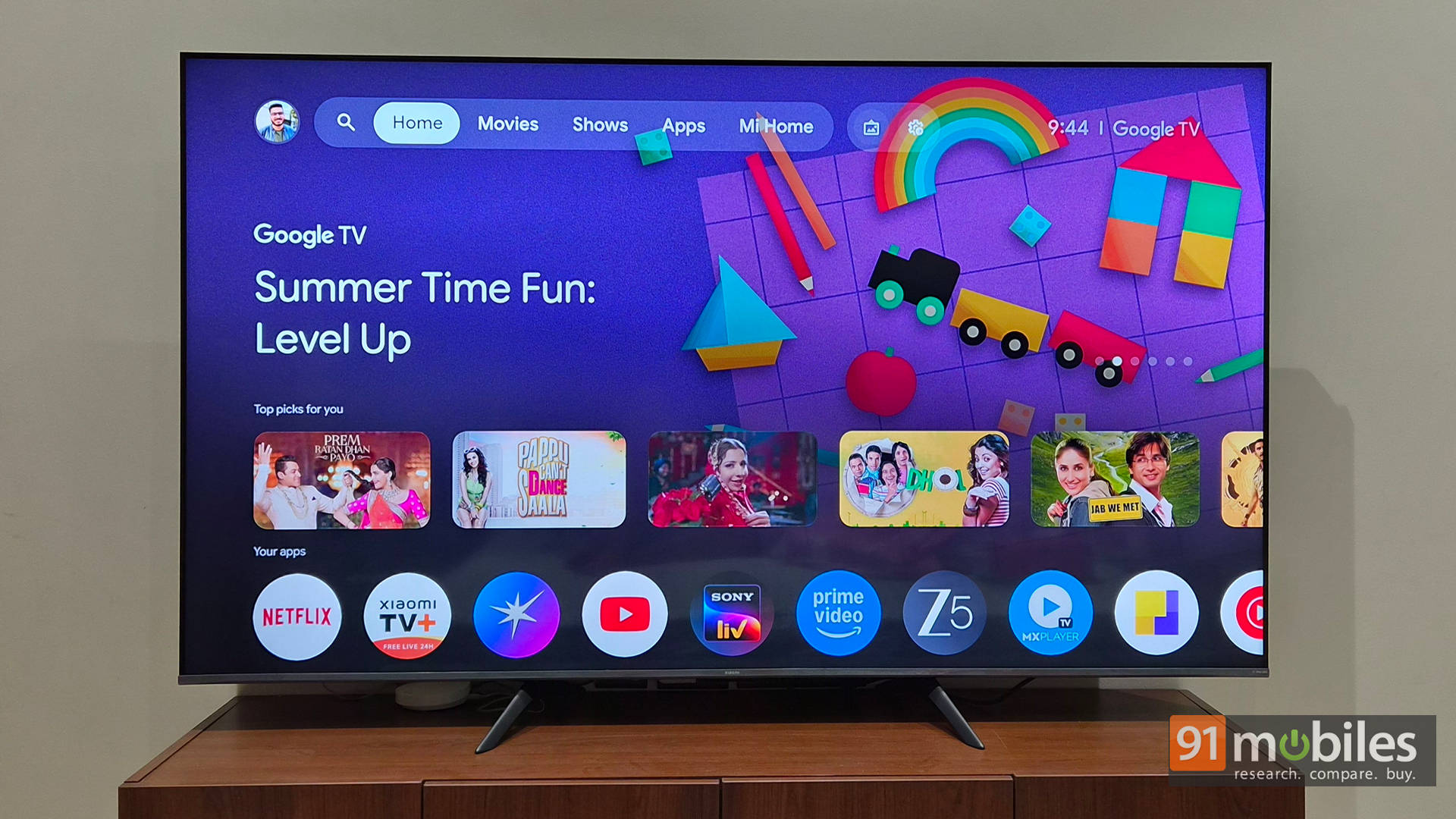
TCL TVs, on the other hand, run Google TV out of the box, which offers a pretty standard experience. The TV sticks to personalised recommendations based on your viewing history, support for multiple user profiles, Google Assistant, Chromecast built-in, and the ability to sync your Watchlist from your Google account – all these features you will also find on a Xiaomi TV.
However, unlike PatchWall, it does not provide a dedicated content-first interface that lets you browse extensively across streaming platforms without eventually opening the respective OTT app. For users who prioritise content discovery and convenience, Xiaomi’s software experience has a slight edge. The software also comes with the Mi Home app, which lets you control other Xiaomi home appliances directly from the TV.
Winner: Xiaomi
Gaming
If you’re looking for a TV that can double as a capable gaming display, TCL is the stronger choice. That’s not to say Xiaomi TVs can’t handle gaming. Many of its models include features such as Auto Low Latency Mode (ALLM), MEMC for smoother motion, and HDMI 2.1 ports on select models. However, Xiaomi’s current lineup is largely limited to native 60Hz refresh rate panels.


While a 60Hz panel is perfectly adequate for casual gaming and slower-paced, story-driven titles, it falls short for competitive first-person shooters, racing games, and other fast-paced genres, where higher refresh rates deliver smoother motion and more responsive gameplay. Some Xiaomi TV options offer a 120Hz refresh rate with Game Boost, but that comes at the expense of reduced resolution.
For users looking for both high resolution and high frame rates, TCL TVs come across as a better proposition. Several TCL models offer native 120Hz and even 144Hz panels, along with support for Variable Refresh Rate (VRR), ALLM, HDMI 2.1, and gaming modes on select models. These features make TCL TVs better suited for getting the most out of modern consoles such as the PlayStation 5 and Xbox Series X, particularly in games that support high frame rates.
Winner: TCL
Audio
Audio performance is fairly evenly matched between Xiaomi and TCL. Both brands equip their larger TVs with 2.1-channel speaker systems, while their smaller and more affordable models rely on bottom-firing stereo speakers. Speaker output is also broadly similar across comparable models, and both brands support DTS Virtual for a more immersive soundstage.


The TVs also feature HDMI eARC, allowing you to pass high-quality audio to compatible soundbars and AV receivers. The only notable difference is the Dolby Atmos support on select TCL models, whereas Xiaomi primarily offers Dolby Audio. Technically, this means a more immersive listening experience on compatible TCL TVs, but the difference is unlikely to be significant through the built-in speakers, which aren’t designed to fully reproduce the height and spatial effects that Dolby Atmos is designed to deliver.
To experience a noticeable improvement, you’ll need a capable soundbar or home theatre system.
Winner: Tie
Price comparison
The Xiaomi TVs are most competitively priced, starting as low as Rs 13,499 for the 32-inch variant. A comparable 32-inch TCL TV, by contrast, typically costs around Rs 17,000. The price gap widens further in the larger screen segments. For instance, Xiaomi’s 75-inch TV is listed on the company’s website for Rs 69,999, while TCL’s 75-inch models start at around Rs 1,79,990.
| Models | Xiaomi* | TCL* |
| 32-inch | Rs 13,499 | Rs 17,007 |
| 43-inch | Rs 24,999 | Rs 27,900 |
| 50-inch | Rs 29,999 | NA |
| 55-inch | Rs 34,999 | Rs 89,990 |
| 65-inch | Rs 56,999 | Rs 1,19,990 |
| 75-inch | Rs 69,999 | Rs 1,79,990 |
| 85-inch | NA | Rs 2,49,990 |
| 98-inch | NA | Rs 4,29,990 |
| 115-inch | NA | Rs 26,99,990 |
*Starting price, as listed online
The higher price of TCL TVs reflects their positioning rather than simply a brand premium. Many of the company’s larger models feature QD Mini LED or SQD Mini LED panels, higher refresh rates, superior local dimming, and better HDR performance, features that are generally absent from Xiaomi’s lineup.
As a result, Xiaomi remains the better value option for budget-conscious buyers, while TCL justifies its premium pricing with more advanced display technology and gaming-focused features.
Winner: Xiaomi
Top Xiaomi TVs in India
| Model | Starting price | Key specs |
| Xiaomi TV QLED X Pro series | Rs 30,999 |
|
| Xiaomi TV FX Mini LED | Rs 32,999 |
|
| Xiaomi S Mini LED TV | Rs 52,999 |
|
Top TCL TVs in India
| Model | Starting price | Key specs |
| TCL T89C QLED TV | Rs 43,990 |
|
| TCL C6KS QD Mini LED TV | Rs 47,990 |
|
| TCL C7L SQD-Mini LED TV | Rs 89,990 |
|
Verdict
Xiaomi TV seems to be a better choice for most buyers, offering excellent value with a polished smart TV experience, good picture quality, capable audio, and useful features like PatchWall and smart home integration, all at highly competitive prices.
TCL, on the other hand, should be your top priority for premium picture quality and gaming. Its Mini LED technologies, higher brightness, superior HDR performance, high-refresh-rate panels, and wider range of large-screen models make it the stronger choice for home theatre enthusiasts and console gamers.