Lenovo Yoga Slim 7x: Snapdragon X2 Plus and the New Shape of the Thin-and-Light AI PC


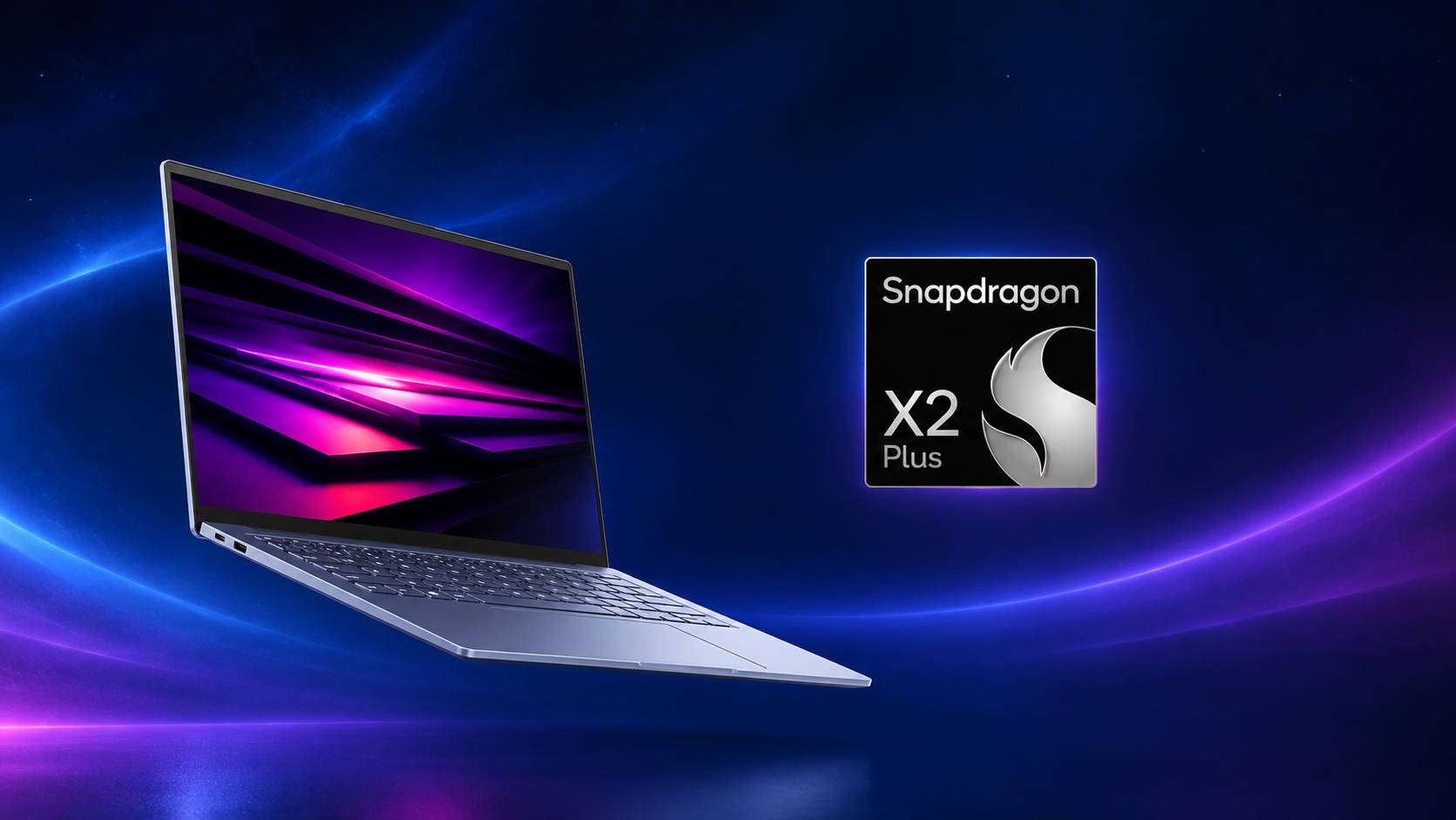
Thin laptops usually force a compromise. If the brands make them fast, the battery suffers. If they make them last all day, these portables slow down the moment you open too many tabs. The Lenovo Yoga Slim 7x is designed to avoid this exact trade-off, and the reason it can is the processor inside it: Snapdragon X2 Plus.
The Snapdragon X2 Plus was launched at CES in January 2026 as the mainstream member of its Snapdragon X2 family. It uses the same third-generation Oryon CPU cores and the same 80 TOPS AI engine,, but it is built for thin-and-light laptops sold at more accessible prices. Snapdragon chip ensures is simple: fast, responsive multitasking, hardware that speeds up demanding work, AI that runs on the laptop itself rather than in the cloud, and a battery that lasts well beyond a single working day.


The Yoga Slim 7x is where those promises get tested. Lenovo introduced this model, badged Gen 11, at the same show, with sales beginning in the second quarter of 2026. The Yoga Slim 7x powered by Snapdragon X2 Plus . It is a Copilot+ PC, so it gets Microsoft’s newest Windows AI features, and it runs on a version of Windows where the applications most people use every day now run natively on Snapdragon. Add a 14-inch PureSight Pro OLED screen, a body that weighs around 1.17kg, and cooling that makes it stay quiet, and you have Lenovo’s idea of a laptop built for people who work wherever they happen to be.
Table of Contents
What Snapdragon X2 Plus brings
The processor comes first. Snapdragon X2 Plus is built on a 3nm process and uses Qualcomm’s third-generation Oryon CPU cores in either a 10-core or a 6-core layout, both running at up to 4.0GHz across all cores with a 4.04GHz single-core boost. The Yoga Slim 7x’s Snapdragon X2 Plus is the 6 core model, which has 22MB of cache and an integrated Adreno GPU. The Snapdragon the platform delivers up to 35 per cent faster single-core performance than the previous generation while using 43 per cent less power. Of those two numbers, the second has the bigger effect on how the laptop behaves from day to day.


A chip that uses less power produces less heat. That allows the fan to stay off most of the time, lets the processor hold its speed under sustained load instead of throttling, and keeps battery drain low enough for Snapdragon to take pride in its about multi-day battery life for light and moderate work. Performance also stays the same whether the laptop is plugged in or running on battery, which has not always been true of Windows laptops.
The NPU is what changes what the laptop can do, rather than how long it can do it. The Hexagon NPU inside Snapdragon X2 Plus is rated at 80 TOPS, the same figure Qualcomm gives for the more expensive Snapdragon X2 Elite and nearly double the 45 TOPS of the first-generation Snapdragon X Plus. This is the part of the chip that handles AI tasks: live captions and translation, image generation, real-time video effects on calls, and searching your own files and screen history. Because these run on a dedicated engine, they do not take processing time away from the CPU and GPU. Multitasking stays responsive while AI features run in the background, and heavier jobs that can use the NPU, such as photo and video editing or the agent-style tasks Microsoft is adding to Windows, have plenty of capacity to draw on.
The platform also includes Wi-Fi 7, optional 5G through Snapdragon X75 modem, USB4 connectivity, and Snapdragon Guardian, a hardware-level management feature that lets an IT team locate, lock or wipe a laptop even when Windows is not running. Not every laptop uses every part of this list, but it shows how much of a modern PC now comes from a single chip.
A Copilot+ PC, with Microsoft’s software on top
A processor alone does not make a laptop useful. Microsoft’s Copilot+ PC programme is what turns the NPU into features people can use, and the Yoga Slim 7x qualifies easily. Copilot+PC status needs an NPU of at least 40 TOPS, 16GB of memory and 256GB of storage; the Snapdragon X2 Plus model has double the NPU requirement and meets the rest as standard.
The features that come with the badge are now well established. Recall, still marked as a preview and switched off until you turn it on, keeps a searchable timeline of what has appeared on your screen, stored on the laptop, so you can find a document or web page by describing it. Click to Do reads whatever is on screen, text or image, and suggests the next step, such as summarising a passage, rewriting a paragraph or removing the background from a picture.


Live Captions transcribe and translate audio from more than 40 languages into English, offline and in any app. Windows Studio Effects add background blur, eye-contact correction, automatic framing and voice clarity to the webcam without extra software. Cocreator and Image Creator generate and restyle images inside Paint and Photos, and improved Windows search understands plain-language queries across your files.
All of these run on the laptop’s NPU. None of them needs a subscription or an internet connection, and none of them slows down whatever else you are doing. Microsoft has continued to add to the list through 2026, and every Snapdragon X2 laptop qualifies for all of it, whereas only some Intel and AMD processors do. On the Yoga Slim 7x, the outcome is a machine where work, creative projects and everyday tasks such as email and browsing sit side by side without the user needing to think about which part of the chip is doing what.
App compatibility
The old objection to Windows on Arm was software. While we won’t say that has vanished, it would be fair to say that it is now much smaller. Microsoft says that around 90 per cent of the time people spend in apps on Arm PCs is spent in native Arm versions. Office, Edge, Chrome, Firefox, Teams, Slack, Zoom, Spotify and Adobe’s main applications all have Arm64 builds. Anything that does not run through Prism, the emulation layer Microsoft rebuilt for Windows 11 24H2, which converts x86 and x64 code as it runs and stores the result so the app opens faster next time. In January 2026 Microsoft also brought the Xbox app to Arm PCs, with more than 85 per cent of the Game Pass catalogue rated as compatible.
For the people the Yoga Slim 7x is aimed at, professionals and students who spend their day in browsers, Office and collaboration tools, the Windows on Snapdragon ecosystem now covers the applications they depend on, and Windows picks the native version automatically whenever there is one.
The laptop Lenovo built around the capable chipset
The Yoga Slim 7x Gen 11 is an all-metal 14-inch laptop in Cosmic Blue. It measures 13.9mm at its thinnest point, weighs from 1.17kg and has passed MIL-STD-810H durability tests. With a 70Wh rated battery, the laptop is able to offer local video playback up to a whopping 31 hours, and Rapid Charge Boost tops it up quickly when there is only time for a short charge.


The display is a 14-inch PureSight Pro OLED touchscreen. The standard panel is WUXGA (1920 x 1200), with 400 nits of typical brightness, 600 nits for HDR content, full DCI-P3 colour coverage, Dolby Vision and DisplayHDR True Black 500 certification. The upgrade is a 2.8K PureSight Pro panel at 120Hz with variable refresh rate and a 1,100-nit peak. Both give the deep blacks OLED is known for, and Lenovo says they stay readable in bright sunlight.
Quiet operation follows directly from the chip’s efficiency. Lenovo fits two fans rather than going fan-less, but reviewers who have used the laptop for weeks describe fans that stay silent through browser tabs, video calls and writing. They spin up only under sustained heavy work, such as editing photos while charging, and even then produce a soft hum rather than a whine. Qualcomm’s 43 per cent power saving is what makes that possible.
Along the edges are three full-function USB-C ports at USB4 speeds, which can drive three external displays without a dock, plus Wi-Fi 7 and Bluetooth 5.4. There is a four-microphone array, four speakers with Dolby Atmos, and a 9.2MP infrared webcam with presence detection and an electronic privacy shutter. There is no headphone jack and no port other than USB-C, which is the one design choice reviewers have questioned.
A laptop built for mobility
Taken together, the Yoga Slim 7x is a laptop designed for the way people work now: away from a desk more often than at one, through a day that does not stop for charging, and with AI features expected as standard rather than as a novelty. It works because each of the three companies involved has done its part. Snapdragon chip gives the laptop its efficiency and its AI engine, Microsoft’s Copilot+ features give that engine something useful to do, and Lenovo has wrapped both in a light, quiet body with a good screen, backed by an ecosystem of applications that are ready when you open the lid.
The more important point is that this is the mid-range model. When a chip positioned below the flagship offers the same 80 TOPS of AI performance, the same generation of CPU cores and the same efficiency, the difference between premium and mainstream comes down to memory, storage and screen options rather than to what the laptop can do. That was always the promise of the next generation of AI PCs. On the Yoga Slim 7x it has arrived sooner, and at a lower price, than most people expected. For users looking to experience this combination of performance, efficiency and portability, the Lenovo Yoga Slim 7x is also available at Croma, making it easily accessible to consumers looking to upgrade to a Snapdragon-powered AI PC. If you want, you can grab this powerful new laptop from Croma right now for ₹120,490, or with EMI options starting from ₹5,672 per month.