
A robust camera system has quickly become one of the most desired aspects of any new smartphone. Regardless of the price segment, every user now looks for a reliable camera that performs consistently across different scenarios and lighting conditions. The REDMI Note series has long maintained a leading position in the mid-range market with its feature-packed approach and impressive camera performance. The latest Note 15 Pro series continues that legacy, introducing an industry-first Master Pixel 200MP camera system powered by a 200MP HPE sensor.
I took the REDMI Note 15 Pro out for a spin to test its camera capabilities with high expectations in mind, and it managed to impress me right away. This is one of the most effortless yet capable camera systems I’ve used in recent times, delivering results that easily compete with flagship-level smartphones.
Here’s a quick look at the core specifications of the camera system of the REDMI Note 15 Pro series:
| Cameras | Key specifications |
| Primary camera | 200MP 1/1.4″ HPE sensor with OIS, f/1.7 |
| Ultrawide camera | 8MP, f/2.2 |
| Selfie camera | 20MP, f/2.2 |
Now let’s take a look at my detailed experience of how the phone performed in some key scenarios.
Table of Contents
Daylight results that don’t make me think twice
The headline feature here is the 200MP lens, but I usually don’t start with ultra-high-resolution shots right away. I began with the default camera mode, and as expected, it delivered results that were nothing short of impressive. The primary camera captures vibrant, true-to-life images with exceptional dynamic range and detail.
The shutter response is quick, the autofocus is precise, and the frame composition remains accurate to what you see on screen. For zoom shots, the process feels quite effortless. The lens offers three well-tuned focal lengths that work great across different scenarios. At 1x, it captures expansive frames, 2x is perfect for close-ups and subject isolation, and 4x maintains excellent clarity when shooting distant subjects, with no noticeable loss in quality thanks to optical-level zoom.
Below are a few examples showcasing regular shots taken with the primary lens:
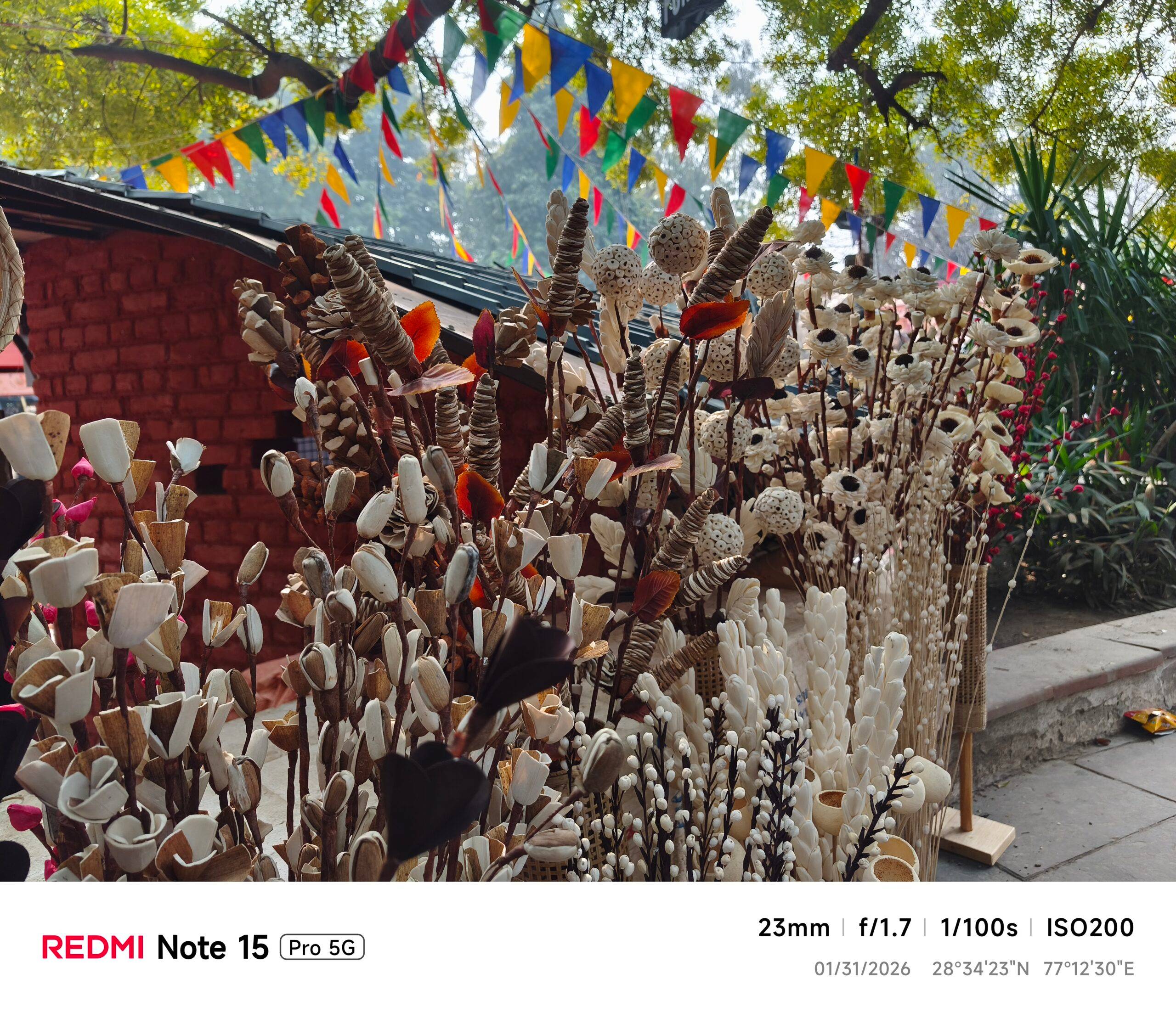
Switching to the 200MP Ultra HD mode takes things a step further. Finer details that you might miss with the naked eye are preserved beautifully, even at extreme zoom levels. You can see this in the example below, where the high-resolution shot retains the intricate texture of the wooden statue exceptionally well.

If you want to capture a truly wide scene, the ultrawide camera delivers results that stay consistent with the primary lens in terms of colour science. Both the scene and its finer details are preserved beautifully, as you can see in the examples below. I value this consistency a lot, and it adds another point of merit for the device.
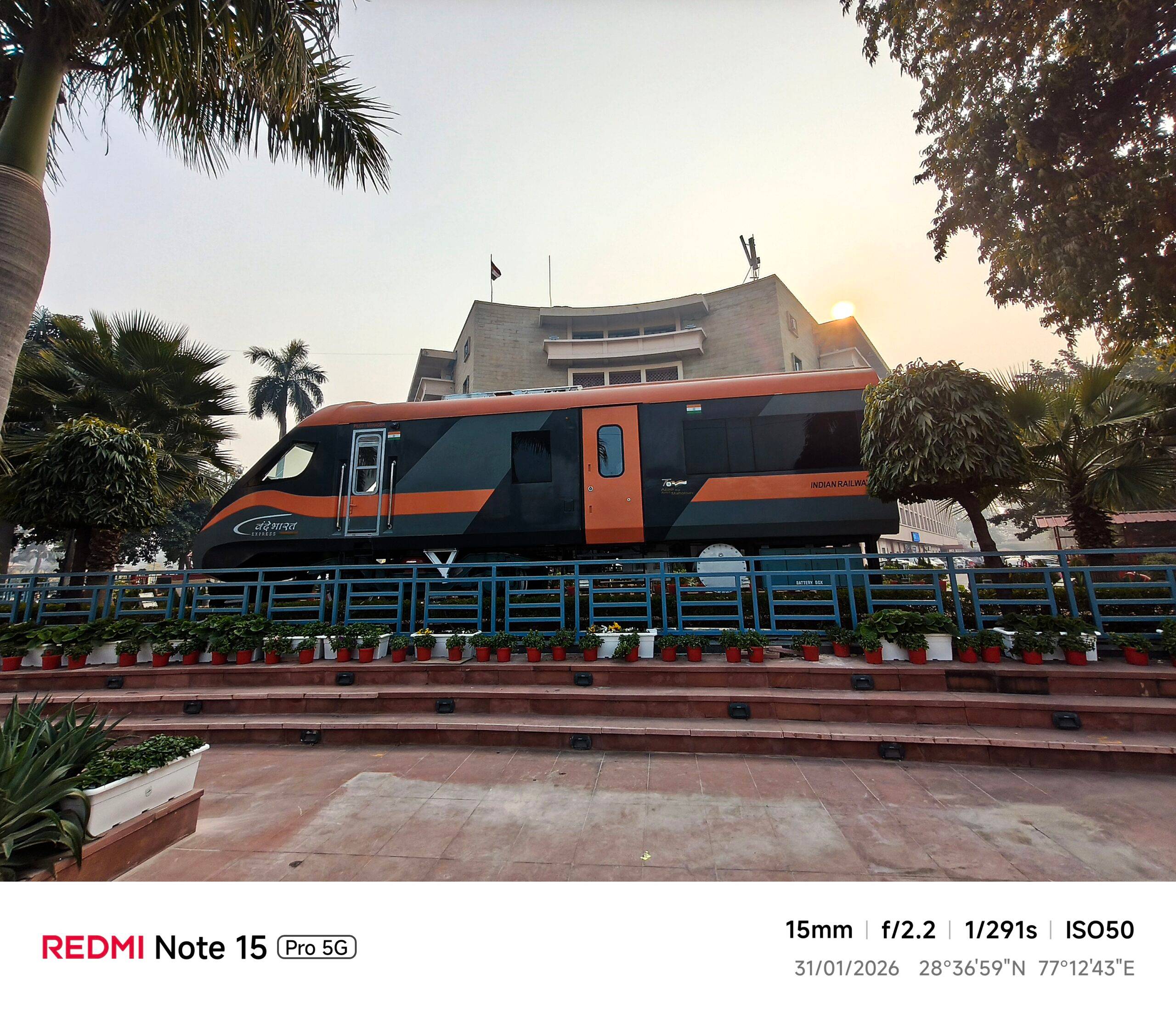
Overall, the phone’s daylight performance is extremely impressive and has left a strong impression on me. It produces effortless, reliable shots that clearly reflect a camera system capable of flagship-level output.
Consistently impressive low-light performance
Taking good low-light shots is the real test of a capable camera system. After such a positive experience during the day, I was eager to see how the phone fared in darker environments. Once again, the REDMI Note 15 Pro lived up to my expectations and delivered results I’m genuinely proud of.
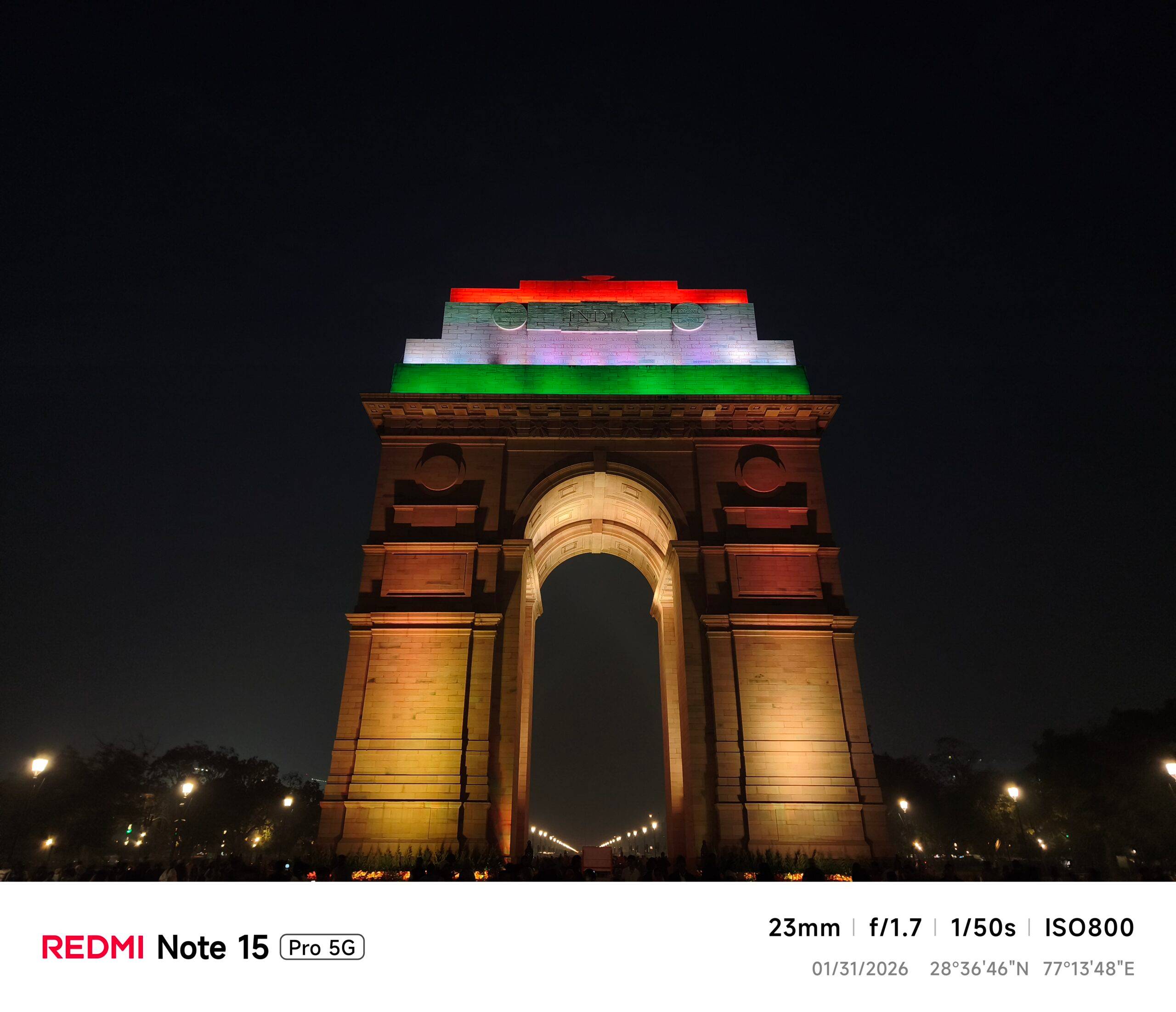
The phone manages a fine balance between exposure and colour accuracy. It brightens the scene just enough to make it easier to see without overdoing things or washing out the colours. The result is an accurate representation of the scene, yet subtly enhanced in effective, natural ways. The images are rich in detail and contrast, with good colour science. Reds, which many camera systems struggle with, are rendered very well here. Take a look at some of these examples below.

The 200MP Ultra HD mode once again proves useful when you want to preserve finer details. I was able to capture subtle textures, like the text inscribed on India Gate, with striking clarity. See for yourself below.

The phone’s low-light performance quickly became one of my favourite aspects. Capturing such clear detail at night is pretty impressive. This is where the new 200MP HPE sensor truly shines. Its large 1/1.4-inch sensor, bigger than those used in many flagship smartphones, pulls in a significant amount of light, bringing even dimly lit scenes to life with clarity and depth.
How it handles people and portrait shots
Everyone appreciates a good portrait, the subtle background blur that isolates the subject and gives photos that DSLR-like depth is always appealing. Using the dedicated Portrait mode, the REDMI Note 15 Pro captures some genuinely excellent portrait shots.

It handles skin tones beautifully, maintaining natural-looking complexions with impressive colour accuracy. The colours appear vibrant and true to life, closely matching what you see in the actual scene. Edge detection is also quite precise, cleanly separating the subject from the background without blurring the edges, while facial details remain sharp and well-defined even at a 2x zoom level.
The REDMI Note 15 Pro carries its strong imaging performance into the front camera as well. The selfie shooter captures clear, detailed images with accurate skin tones that do not look overly smoothened or artificial. In the image above, you can see how the subject’s skin tone and facial details are well preserved. The slight stubble and hair texture come through clearly, and the fabric of the shirt retains its texture.
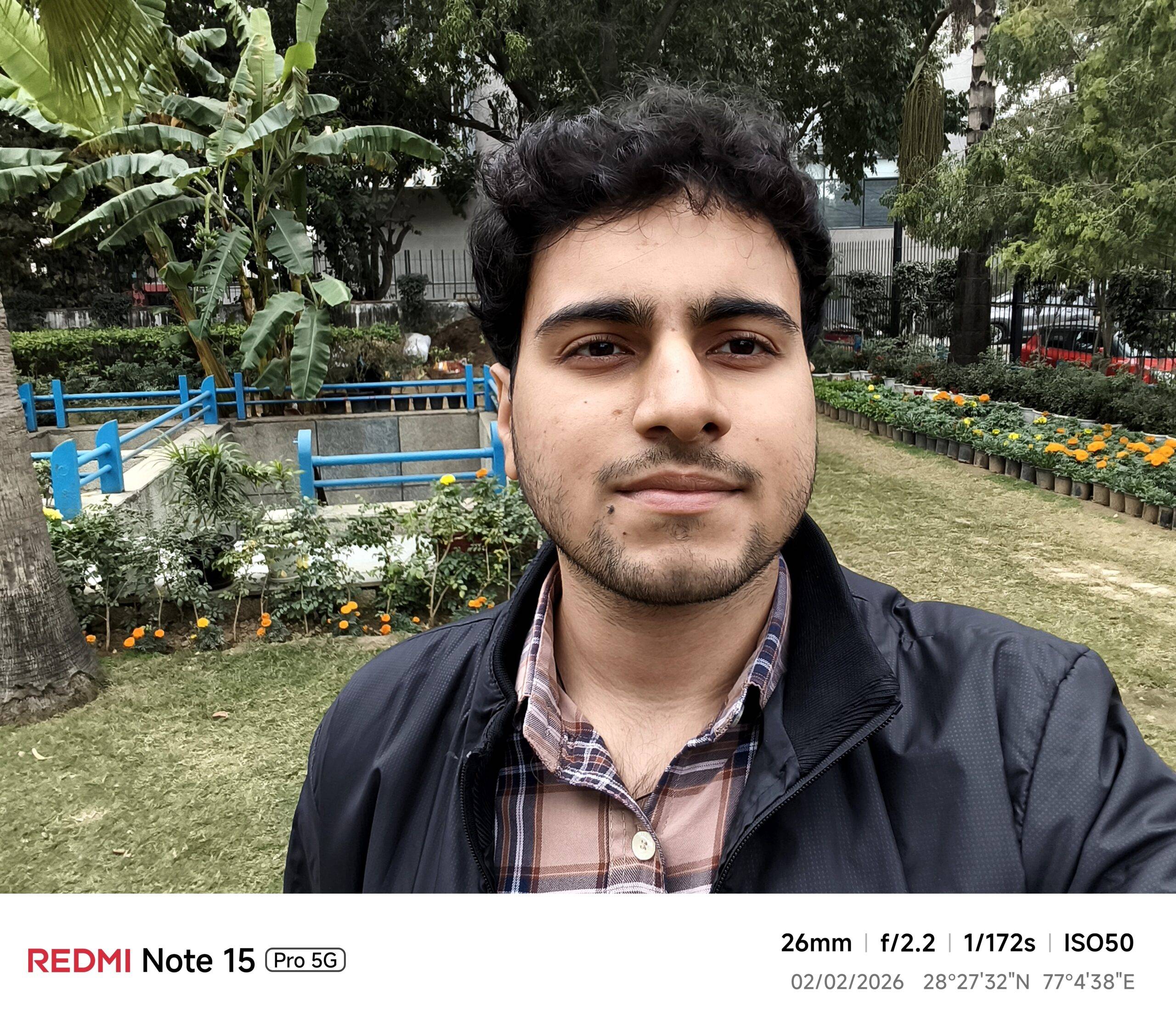
Looking at the background, the exposure is well balanced, and colours in elements like foliage and clothing appear natural and lively. This makes the overall shot look pleasing and ready to share on social media.
Smart AI features that are pretty useful
There are also some handy AI tools that help you refine your images and tune them to match your vision. I particularly like the AI Eraser, which I often use to remove unwanted objects or people to make a picture feel cleaner and less cluttered. This feature works flawlessly on the REDMI Note 15 Pro and gets the job done in no time. Here’s an example:

There is another feature here that tends to be overlooked, but I have come to rely on it quite often. You’ve probably had moments where you want to capture a shot, but you are behind a glass layer that you cannot avoid. Think of an aeroplane window or a high-rise building with a beautiful view of the horizon. This is where AI Remove Reflection comes in handy. While I was unable to recreate those exact situations, I have included a simple demonstration of the feature below.
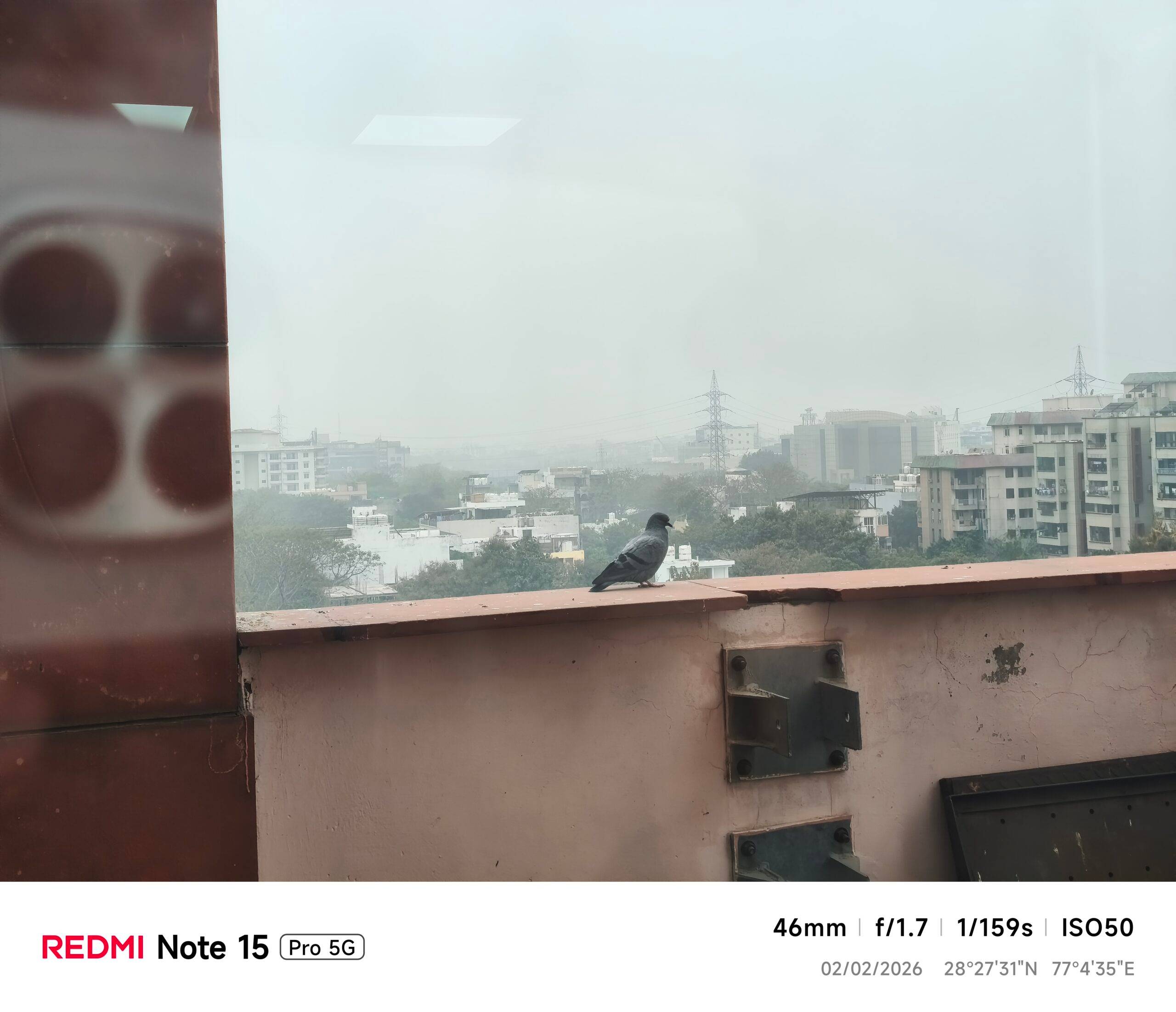
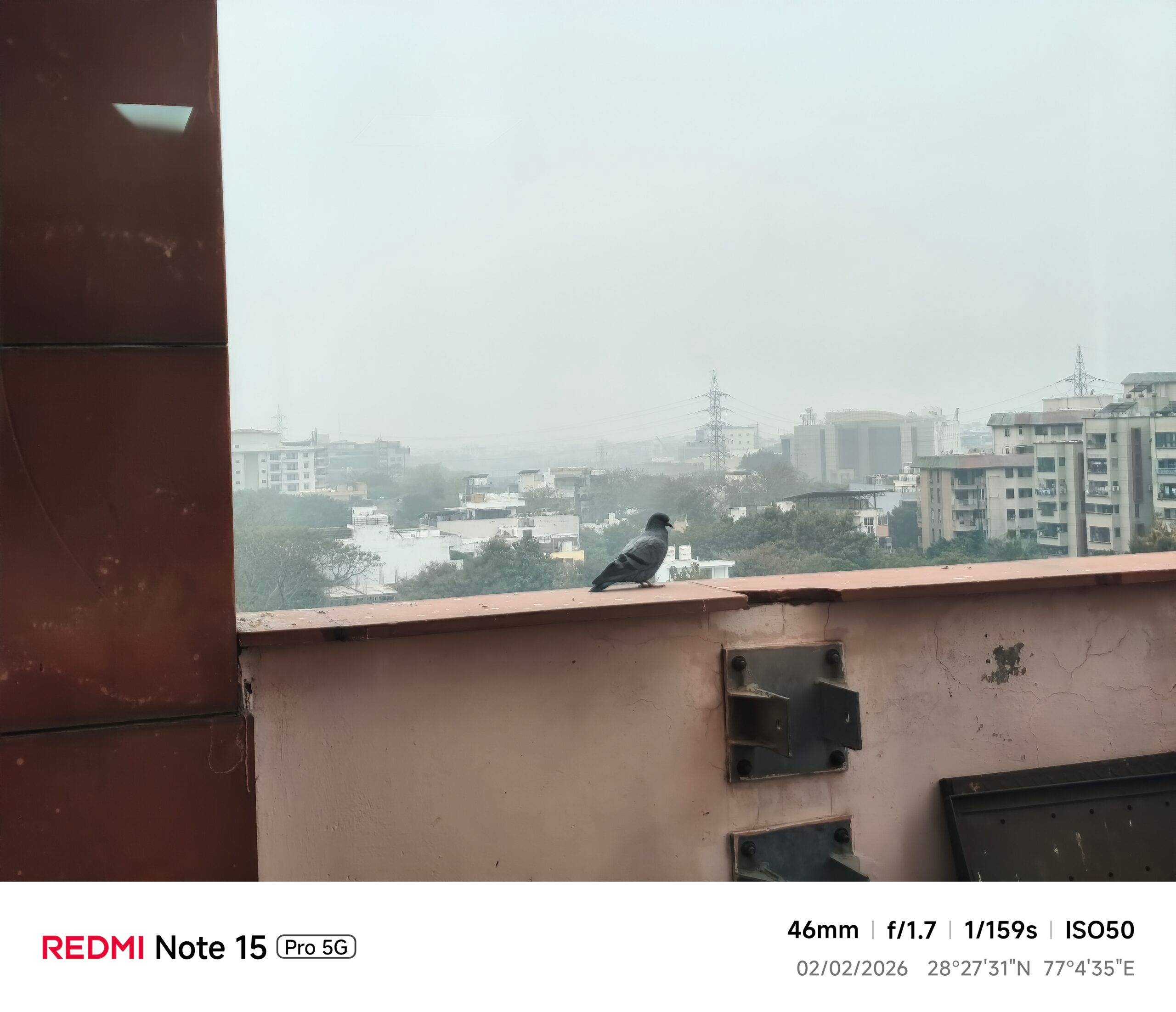
You will notice how it neatly removes the reflection of the phone, turning the frame into a clean, usable image.
What’s the verdict?
Throughout my usage of the REDMI Note 15 Pro, the cameras have consistently delivered across scenarios. It captures the scene very close to how I see it, while subtly enhancing elements like exposure, contrast, and colours to make the final image more appealing. The 200MP Ultra HD mode is a treat if you enjoy capturing highly detailed shots and later cropping into them or simply zooming in to explore the finer textures.
Low light performance, which is usually a weak spot for many smartphones, is handled very well here. Images have ample detail, a well-judged exposure balance, and well-defined colours even at night. When it comes to human subjects, I never have to worry about overly bright skin tones or soft facial features. The cameras do a great job of preserving the actual scene and facial details of anyone I photograph.
I’ve come away thoroughly impressed with my time using the REDMI Note 15 Pro. For camera enthusiasts who value a strong setup and want a stellar camera phone, I can confidently say that the REDMI Note 15 Pro series delivers flagship-level results without the flagship pricing. They are, quite simply, the best camera phones you can buy for the price.
This is a promotional post done as part of a brand collaboration.