Samsung Galaxy Z Fold8 and Fold8 Ultra Are Benchmarks With Seven Generations of Work Everyone Else Gets to Inherit


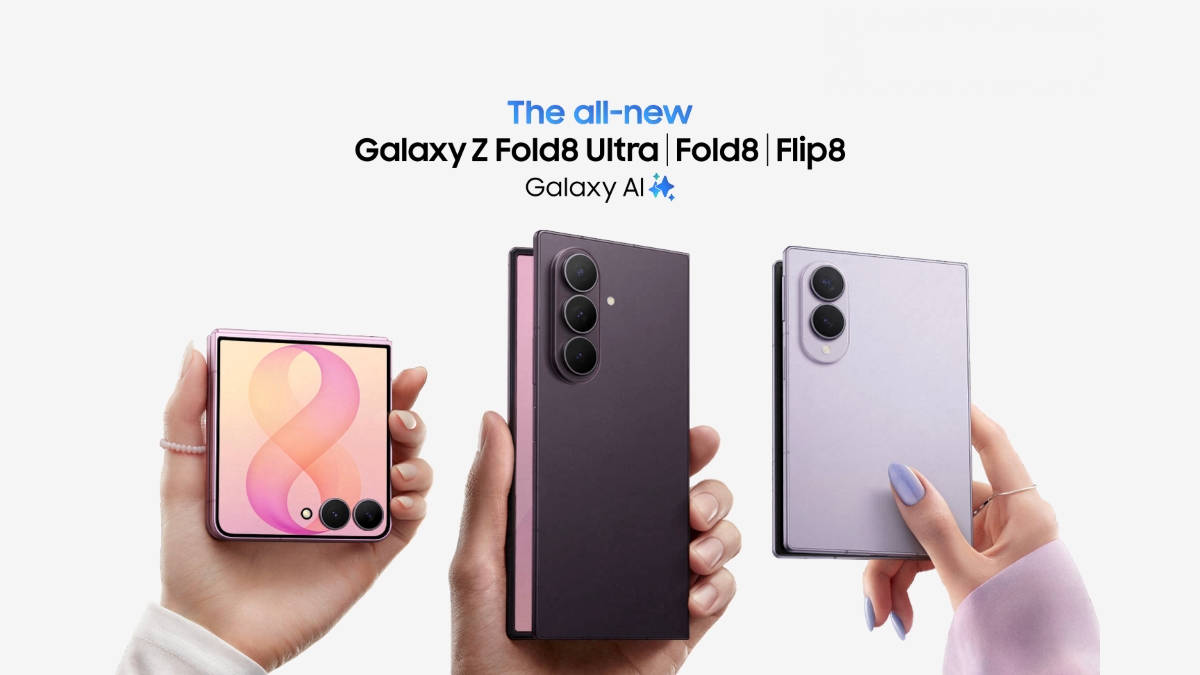
Samsung shipped its first folding phone in 2019. Fast forward to 2026, seven years and eight generations later, foldables have gone from a novelty nobody trusted to a category multiple manufacturers now want a piece of, and almost none of that would have been possible without the engineering groundwork Samsung laid first. And to top it all off, Samsung recently proved why it’s the king of this category – with the launch of Samsung Galaxy Z Fold8 and Samsung Galaxy Z Fold8 Ultra. In these phones, that groundwork shows up in exactly the places you’d expect – the display, the camera, and the sheer weight of iteration behind the hinge.
How Samsung rebuilt the foldable aspect ratio
The most significant change in this year’s lineup isn’t a bigger battery or a faster chip, it’s that Samsung rebuilt the Samsung Galaxy Z Fold8’s aspect ratio from scratch. Every Fold before this one used a tall, narrow main display. The Fold8 changes that outright: unfolded, the main screen runs a 4:3 ratio built for films and games, and rotating it switches to 3:4, a shape suited to e-books and long-form reading in a way previous Folds simply weren’t, proving how every iteration of the Fold led to this exact moment. The 5.5-inch cover screen runs 10:16, thereby also matching the shape people already scroll short-form video in.


This matters more than it sounds. A new aspect ratio means every app, every piece of content, every reading and viewing habit gets reconsidered rather than stretched to fit an inherited shape. Samsung is on its second meaningful redesign here, informed by seven years of actual usage data from millions of Fold owners, data no other manufacturer entering the category today has had the chance to collect. One-handed use is easier this year too, courtesy of a widened inner bezel gap on the standard Samsung Galaxy Z Fold8, built specifically to make unfolding the phone simpler. This is a small but considerable ergonomic fix aimed at the sheer number of people who’ve spent years fumbling with a folded phone in one hand.
Samsung’s Display Advantage Everyone Else Is Building On
Folding displays are hard for one specific reason – the crease. Every manufacturer that has ever announced a foldable has had to solve, in some form, the same problem Samsung first ran into publicly in 2019. The Samsung Galaxy Z Fold8 Ultra’s main display now hits up to 3,000 nits of peak brightness, up from 2,600 nits on last year’s Z Fold7, and both the Fold8 Ultra and the Fold8 run a new Flex Titanium display structure, a titanium-alloy film paired with a titanium plate beneath the OLED panel, engineered specifically to reduce crease visibility. The crease is markedly less noticeable at an angle than it was on the Fold7 and this is the kind of expertise you can’t build overnight – it’s a refinement built on eight generations of real-world correction.


What’s easy to miss is how much of that correction other companies now get to skip. Samsung Display, the manufacturing arm behind these panels, supplies foldable OLED technology to a large share of the phone industry, which means the material science solving crease visibility, panel durability, and fold-cycle longevity on a Samsung device very often ends up underpinning a competitor’s foldable too, whether or not the logo on the front says Samsung. Nobody entering this category now is starting from zero, and that’s true even for Apple. Foldable OLED panel manufacturing remains concentrated among a small number of suppliers capable of producing these displays at real volume, and Samsung Display is the dominant name among them, supplying foldable panel technology across a meaningful share of the industry. Whatever Apple’s own material choices turn out to be for its debut foldable, the underlying manufacturing expertise that makes a crease-resistant folding display buildable at scale in the first place is expertise Samsung spent years developing before anyone else needed it.
Samsung Put Flagship Cameras On Foldable
Foldables have historically made buyers choose between the folding format and a genuinely good camera. The Samsung Galaxy Z Fold8 Ultra doesn’t ask for that trade-off as it runs a 200MP main camera with OIS and Quad Pixel autofocus, a 50MP ultra-wide, and a 10MP telephoto offering 3x optical zoom, complete with HDR support in full 200MP mode. A 200MP main sensor with proper stabilisation on a device that folds in half is a meaningfully different proposition than what foldables offered even two or three generations ago, and it’s the kind of camera-inside-a-hinge engineering problem Samsung had to solve years before any other manufacturer needed to think about it. That system runs on the Snapdragon 8 Elite Gen 5 for Galaxy, a 3nm chipset clocked up to 4.74GHz, paired with an expanded graphite cooling structure specifically built to keep sustained camera and multitasking workloads from throttling the phone mid-use.


The standard Samsung Galaxy Z Fold8 takes a different approach, a 50MP dual rear camera system built for everyday shooting which fits a phone whose entire redesign is oriented around watching and reading. That’s a deliberate split Samsung has drawn between the two models this year – the Ultra gets the camera system built for people who’d otherwise buy a separate flagship phone, and the standard Fold8 gets a camera good enough for daily use without inflating the price of a device already positioned around its new screen shape.
What Seven Years of Iteration Actually Looks Like
The Samsung Galaxy Fold’s original 2019 launch was a genuine act of conviction: nobody had shipped a folding smartphone at scale before, and Samsung chose to be first. Early attempts came with the growing pains you’d expect from inventing an entirely new form factor, and Samsung treated every one of them as a design brief rather than a setback It refined the hinge, the crease, and the display stack generation after generation, informed by real-world data from millions of actual owners. By the time the Samsung Galaxy Z Fold7 arrived, that early ambition had matured into a genuinely dependable product. This year’s Fold8 and Fold8 Ultra represent the next layer of that same commitment: a new Easy Open-and-Close Mechanism borrowed from Samsung’s South Korea-exclusive Z TriFold, using magnets to make the phone noticeably easier to unfold one-handed, and charging finally moved up to 45W after years at a 25W ceiling. Early EU energy label data puts the Fold8 Ultra’s battery endurance at roughly 51 hours, about 20% longer than the Fold7 managed, a genuine improvement rather than a number padded by a slightly bigger cell. The Fold8 Ultra also carries an IP48 rating for dust and water resistance, a level of everyday durability that took multiple generations of hinge and seal refinement to achieve without compromising how the phone folds.

Together, they represent what seven years of shipped hardware and continuous listening to real owners actually buys a manufacturer – the ability to perfect the specific, unglamorous details that only reveal themselves after a folding phone has spent eighteen months in someone’s pocket. That’s the part of the foldable category that can’t be shortcut because Every hinge mechanism, every crease-reduction material, every lesson about what a screen needs to survive fifty thousand folds; someone had to learn it first, and for the better part of a decade, that someone has been Samsung.
Samsung’s Foundation the Rest of the Industry Is Standing On
Foldables exist as a mainstream, trusted category today because Samsung spent seven years and eight generations absorbing the mistakes so the format could mature into something people actually buy in large numbers. Every manufacturer now entering this space, building on hinge patents, panel technology, and crease-reduction techniques that trace back to lessons Samsung learned the hard way, is benefiting from work it didn’t have to do itself. The Samsung Galaxy Z Fold8 and Samsung Galaxy Z Fold8 Ultra are the clearest evidence of where that groundwork leads – a display, a camera system, and a hinge mechanism refined to a point no first attempt at this category could realistically match, because the first attempt at this category already happened, seven years ago, and Samsung’s the one who made it.
As far as pricing is concerned, the Galaxy Z Fold8 Ultra starts at ₹1,99,999, while the Galaxy Z Fold8 will retail starting at ₹1,79,999. If you’re looking for an even more compact form factor, you can pick up the Galaxy Z Flip8, starting at ₹1,24,999. Samsung is currently giving a ₹10,000 bonus as part of an exchange offer on the phones, and if you join Galaxy Forever, you can get up to 55% assured Buyback value, an option to pay over 24 No Cost EMIs, and Samsung Care+ worth ₹32,999 (accidental and liquid damage cover with zero deductibles for 25 months). All three handsets are currently up for pre-order.