Inside Spigen’s Complete Protection Ecosystem for the Google Pixel 11 Series


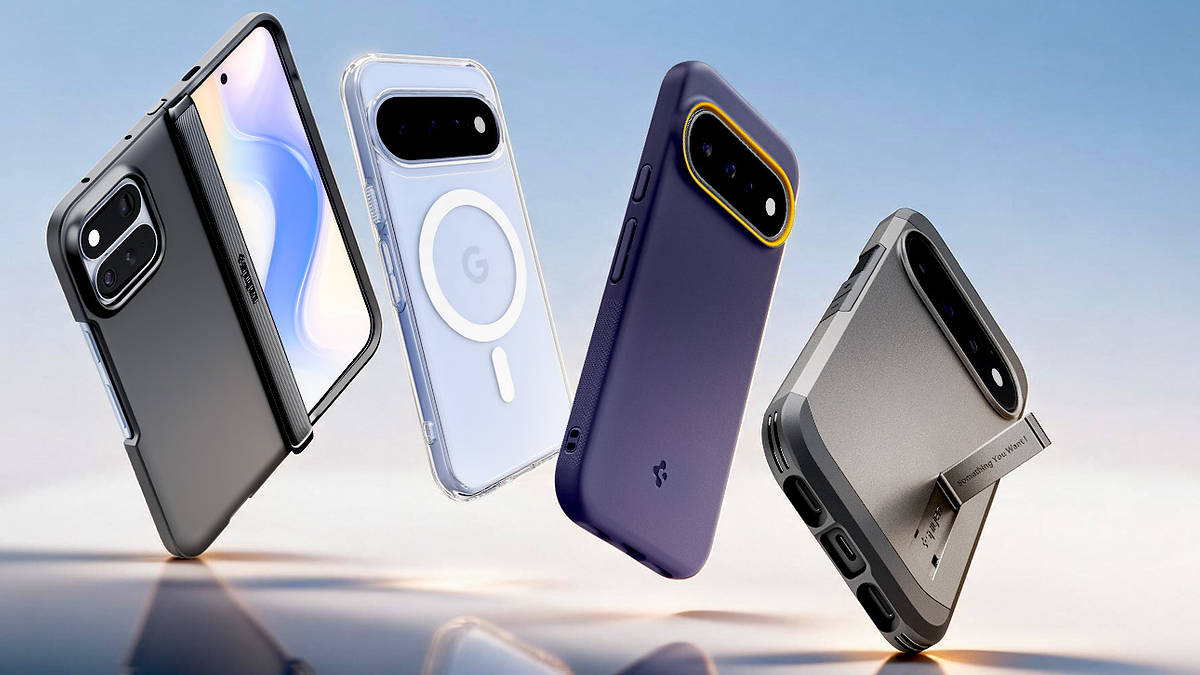
For years, the accessory market in India has run on a familiar and frustrating lag. It goes something like this: a flagship launches, and the good cases, the ones with real engineering behind them rather than a shell stamped out to fit “most phones,” take weeks to arrive. In the meantime, buyers make do with a generic clear case picked up at a mall kiosk, a screen protector applied with trapped air bubbles nobody has the patience to redo, camera glass that either doesn’t exist yet or fits so loosely it interferes with autofocus. That gap has quietly shaped how Indian consumers think about phone protection. As an afterthought, bought under duress rather than a considered part of the purchase itself.


Spigen has closed that gap for the Google Pixel 11 series before it had the chance to open. 26 products across the Pixel 11, Pixel 11 Pro, Pixel 11 Pro XL, and Pixel 11 Pro Fold, including cases, screen protectors, and camera lens guards, are available in India alongside the phones themselves, and each one is engineered to the exact camera bar, control button placement, and fingerprint sensor location of its specific model rather than adapted from a universal mould. It’s worth sitting with what that actually represents – Spigen is moving at Google’s pace because the alternative is letting new Google Pixel 11 owners spend their first weeks with an unprotected phone or a badly-fitted stopgap. And Spigen simply isn’t comfortable with that. Let’s explore the new line-up.
Table of Contents
The Google Pixel 11: 4 Ways to Wear It
The standard Google Pixel 11 gets the widest personality range in the lineup, and each option solves a slightly different version of the same problem. The Liquid Air (₹1,099, Matte Black) is the starting point for anyone who prioritises grip above all else, flexible TPU with an anti-slip texture and Spigen’s Air Cushion Technology reinforcing the corners, the company’s signature shock-absorption structure that’s been refined across more phone generations than most rival case-makers have existed. Step up to the Liquid Air MagFit (₹1,599), and that same slim, matte comfort now carries precisely aligned built-in magnets, engineered for genuine compatibility with Google’s own Pixelsnap ecosystem, so a wireless charger or a magnetic wallet snaps into place confidently without any workaround bolted onto a case that wasn’t built for it.

For buyers who want the case to disappear against the phone’s own colour, the Ultra Hybrid MagFit in Frost Black (₹1,899) pairs a polycarbonate back with a TPU bumper, the hybrid formula Spigen has spent the better part of a decade refining across its Galaxy and iPhone lines before ever bringing it to the Pixel range, now carrying the same magnet alignment.


And for anyone who wants their phone to make a statement rather than blend in, the Nano Pop MagFit in Blueberry Navy (₹1,799) delivers a bold two-tone finish without asking the buyer to sacrifice magnetic convenience.


Every one of these 4 cases shares a detail easy to overlook and expensive to omit: dedicated protection around the Google Pixel 11’s camera control button, a thin TPU layer that keeps the button fully responsive to the touch without leaving it exposed to the kind of pocket lint and dust ingress that quietly kills tactile buttons on unprotected phones.
Google Pixel 11 Pro: Precision Without the Bulk
The Google Pixel 11 Pro model takes a narrower, more deliberate approach with 3 cases built around a single governing idea: protection that never announces itself. The Liquid Air (₹1,099) offers the same flexible comfort as its standard-series counterpart, while the Ultra Hybrid in Crystal Clear (₹1,599) does what the vast majority of clear cases promise on the box but fail to deliver within a season: it actually stays clear. The combination of a TPU bumper and a polycarbonate back resists the yellowing that ruins most transparent cases within months of daily UV exposure and skin oils, an unglamorous but genuinely difficult materials problem that separates a serious accessory brand from a disposable one.

The Ultra Hybrid MagFit in Clear White (₹1,899) carries that same durability forward while adding the magnetic layer, giving Pro owners the full range of Pixelsnap accessories without needing to abandon a clear aesthetic to access it.


Google Pixel 11 Pro XL: The Largest Phone Gets the Deepest Bench
Bigger phones tend to get treated as an afterthought in accessory lineups, the same case as the standard model, just stretched a few millimeters wider to fit. Spigen didn’t take that shortcut with the Google Pixel 11 Pro XL.


The Liquid Air (₹1,099), Ultra Hybrid Crystal Clear (₹1,599), and Ultra Hybrid MagFit Clear White (₹1,899) all carry over from the Pro, but the XL also gets a case the smaller phone doesn’t: an Ultra Hybrid MagFit in Frost Black (₹1,999), a darker, understated magnetic finish built exclusively for buyers of the largest screen in the series.


Spigen’s Screen Protection Across the Google Pixel 11 Range
This is where Spigen’s engineering discipline shows up in details most buyers never think to interrogate until something goes wrong. The single biggest complaint anyone’s ever had about a screen protector isn’t the glass itself; it’s the install: the shaky freehand alignment, the trapped dust speck under the edge, and the bubble that never quite works itself out. The EZ FIT Pro Clear tempered glass, sold separately for the Pixel 11/11 Pro (₹1,499), the Pro XL (₹1,499), and the Pro Fold (₹1,499), solves that specific failure with a dual-tray design that arrives with the glass pre-mounted on an alignment tray, turning installation into a matter of positioning the tray and pressing down rather than a freehand gamble.

Rated at 10H hardness, the glass is built to absorb the scratches so the display underneath never has to, and Spigen’s own clarity figures, sitting around 0.91 to 0.92 across the clear variants, back up a claim a lot of cheaper glass makes and few actually substantiate: that the protection isn’t quietly dulling what it’s protecting.
For anyone working in a shared office, commuting on a crowded train, or simply valuing a screen that stays theirs alone, the EZ FIT Pro Privacy versions, available for the Pixel 11, Pixel 11 Pro, and Pro XL (each ₹1,699), narrow the viewing cone so the display stays fully legible only to the person directly in front of it. Everything else, the anti-spy glass itself, is built on the same foundation as Spigen’s standard EZ FIT Pro line: 10H hardness, the pre-mounted dual-tray alignment system for a clean, bubble-free install, and the same fingerprint-sensor precision that keeps biometrics working smoothly underneath. It’s privacy that doesn’t ask a buyer to relearn the installation process or trust a lesser build just because the glass is doing more.

Budget-conscious buyers aren’t left with a lesser product, just a different philosophy. The AlignMaster S line, shared across the Google Pixel 11/11 Pro (₹999) and sold separately for the Pro XL (₹999), replaces Spigen’s tray system with a faster 1-pull applicator and leans on High-Alumina Silicate, a genuinely harder raw material than standard tempered glass, to deliver its scratch and drop resistance. The AlignMaster S Privacy variants, covering the Pixel 11, Pixel 11 Pro, and Pro XL (each ₹1,299), bring that same 1-pull simplicity to the anti-spy category, undercutting the EZ FIT Pro Privacy price by a clean ₹400 without asking buyers to compromise on the core protection.


The Google Pixel 11 Camera Deserves Its Own Layer of Spigen Protection
A cracked screen and its loss is felt instantly, but a scratched camera lens does something quieter and, in its way, more expensive: it degrades every photo for weeks or months before anyone traces the soft edges and hazy flares in their shots back to the glass itself, by which point the memories are already compromised. Spigen’s EZ FIT Pro Optik lens protectors, sold for the Google Pixel 11, Pixel 11 Pro, Pixel 11 Pro XL, and Pixel 11 Pro Fold (each ₹999), exist specifically to intercept that slow failure before it starts.

Cut precisely to each phone’s individual lens housing rather than a generic ring, the protector is engineered not to interfere with autofocus or flash performance, and Spigen states plainly that the adhesive needs roughly 48 hours to fully cure after firm application. That’s only because Spigen expects the product to be used correctly rather than just sold and forgotten.
The Google Pixel 11 Pro Fold: Protection Built for a Different Shape
A slab phone forgives a slightly crooked screen protector because nobody notices a millimeter of misalignment near the edge of a flat display, and even if they did, the glass itself never has to move again once it’s down. A foldable offers no such margin, as every fold and unfold puts real mechanical stress on whatever’s sitting across that crease, and a screen protector applied even fractionally off-center doesn’t just look wrong; it can catch on the hinge mechanism itself, lift at the edge over repeated use, or interfere with the exact flex point the phone was engineered to bend around. That’s a genuinely different design problem than protecting a fixed piece of glass, and it’s one most accessory makers still struggle with. Scaling up their existing slab-phone process, rather than rethinking it for a physically moving screen, is not an option here, and Spigen understands that.
That’s why Spigen’s approach for the Google Pixel 11 Pro Fold reflects those heightened stakes directly rather than working around them. The EZ FIT Pro Clear screen protector (₹1,499) carries over the brand’s dual-tray alignment system, the glass pre-mounted and centred before it ever touches the display, precisely because freehand application on a foldable’s crease zone leaves far less room for correction than it would on a standard phone.


The matching Optik camera lens protector (₹999) follows the same logic on the rear, cut to the Pro Fold’s specific lens housing rather than adapted from a slab-phone template. Both carry the same 48-hour cure window Spigen builds into its adhesive across the range, a detail that matters more here than anywhere else in the lineup, since a foldable gets folded dozens of times a day from the moment it leaves the box, and an improperly cured protector is exactly the kind of thing that reveals itself at the crease first.
What’s Coming in September for Google Pixel 11 Series Users
The lineup isn’t finished expanding. Heavy-duty Tough Armor MagFit cases are arriving in September for the Pixel 11, Pixel 11 Pro, and Pixel 11 Pro XL, aimed at buyers who want serious drop protection without giving up magnetic accessory compatibility, with pricing to be confirmed closer to launch. The Pixel 11 Pro Fold is also getting its first dedicated case in the Slim Armor Pro MagFit, finally rounding out a foldable lineup that, for now, covers glass and lens protection.


None of this holds up as a pitch if the engineering underneath it doesn’t, and this is where Spigen’s reputation carries earned weight because every case in this lineup ships with a genuine patent design built to each Google Pixel 11 model’s exact dimensions, not a universal shell stretched across 4 different phones. Every screen protector accounts for fingerprint sensor placement precisely enough that Spigen still recommends re-registering a fingerprint twice after installation, a small instruction that reflects a tolerance for accuracy most third-party glass in this market has never bothered chasing.
Every accessory here, from a ₹999 lens guard to a ₹1,999 case, is built on the same underlying conviction: that protecting a phone shouldn’t change how it feels to use. For Google Pixel 11 owners in India, who’ve spent years waiting for accessories to catch up to their phones, that’s the real case for buying into this lineup on day 1 rather than settling for whatever fits in the meantime.