Toshiba has over 70 years of experience in consumer electronics and is a household name in the TV space. A few months ago, the brand launched the Z670SP, its first premium Mini LED TV with front-firing speakers and a native 144Hz refresh rate. The series comes in five sizes, from the 55-inch model at Rs 64,990 to a 100-inch behemoth at Rs 2,99,990, and it’s sold through Reliance Digital, both online and offline. We got the 65-inch variant for review, which is priced at Rs 79,990 and comes with cashback offers and a two-year comprehensive warranty.
On paper, the Z670SP has plenty to shout about, including a native 144Hz refresh rate, 720 local dimming zones, Dolby Vision IQ and front-firing speakers. I’ve been using it alongside my personal Lumio Vision 9 QD-MiniLED (2025) and PS5, so those are my reference points here. How does it fare? Let’s find out.
Table of Contents
Design
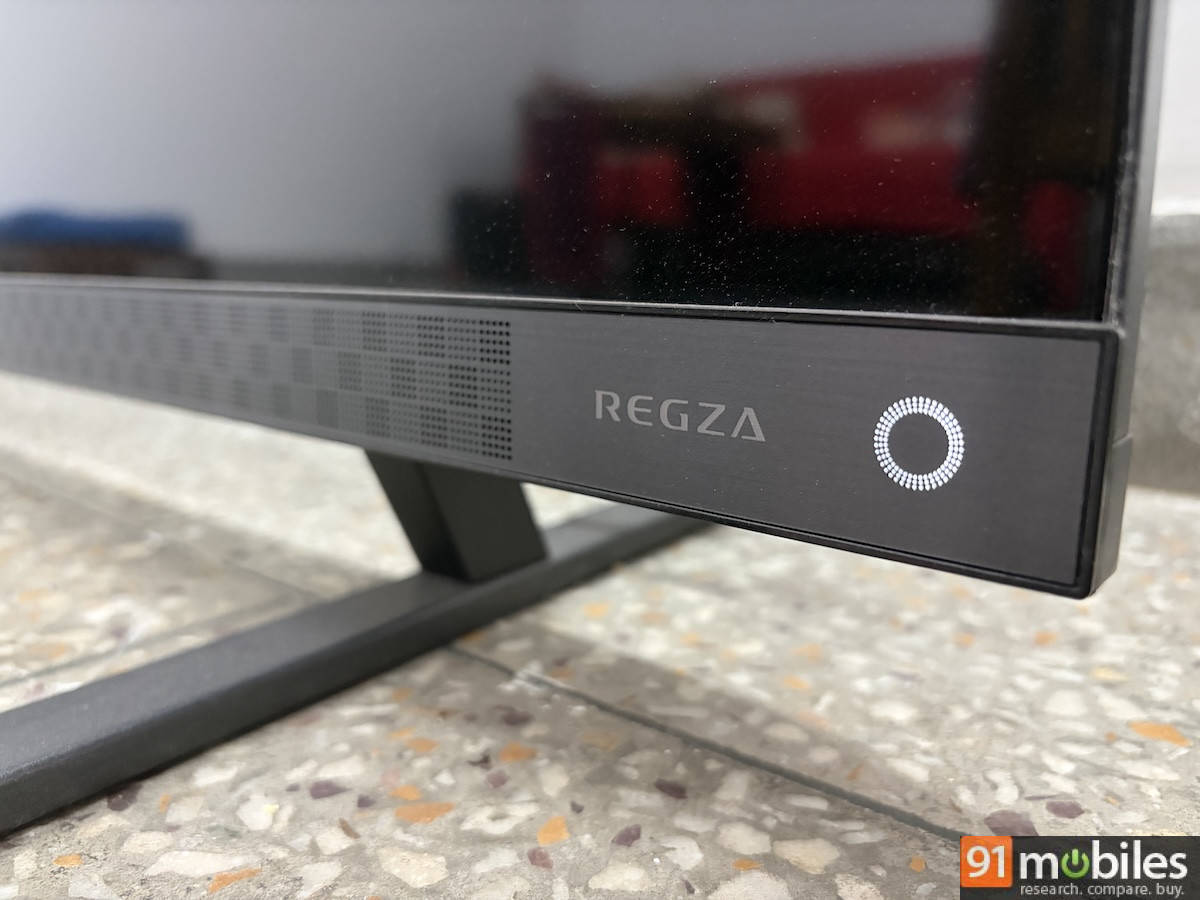
The Toshiba Z670SP looks clean and premium, thanks to a bezel-less design and a metal unibody. While the sides and top are near bezel-less, the lower bezel is rather chunky, and that’s because it houses the front-firing speakers. You’ll find the Toshiba branding on the left and the Regza branding on the right, along with an LED power ring. The stands are solid metal and straight rather than angular, which adds to the premium feel.
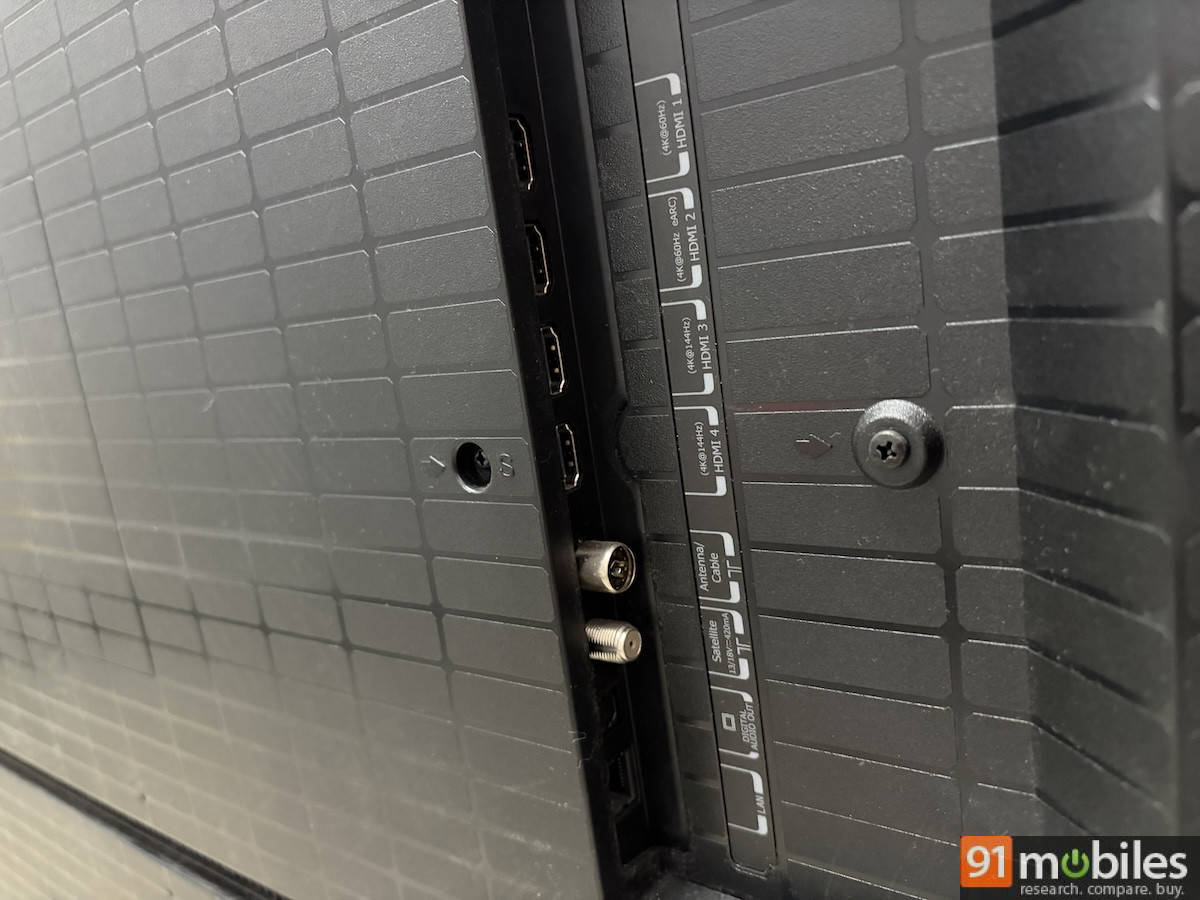
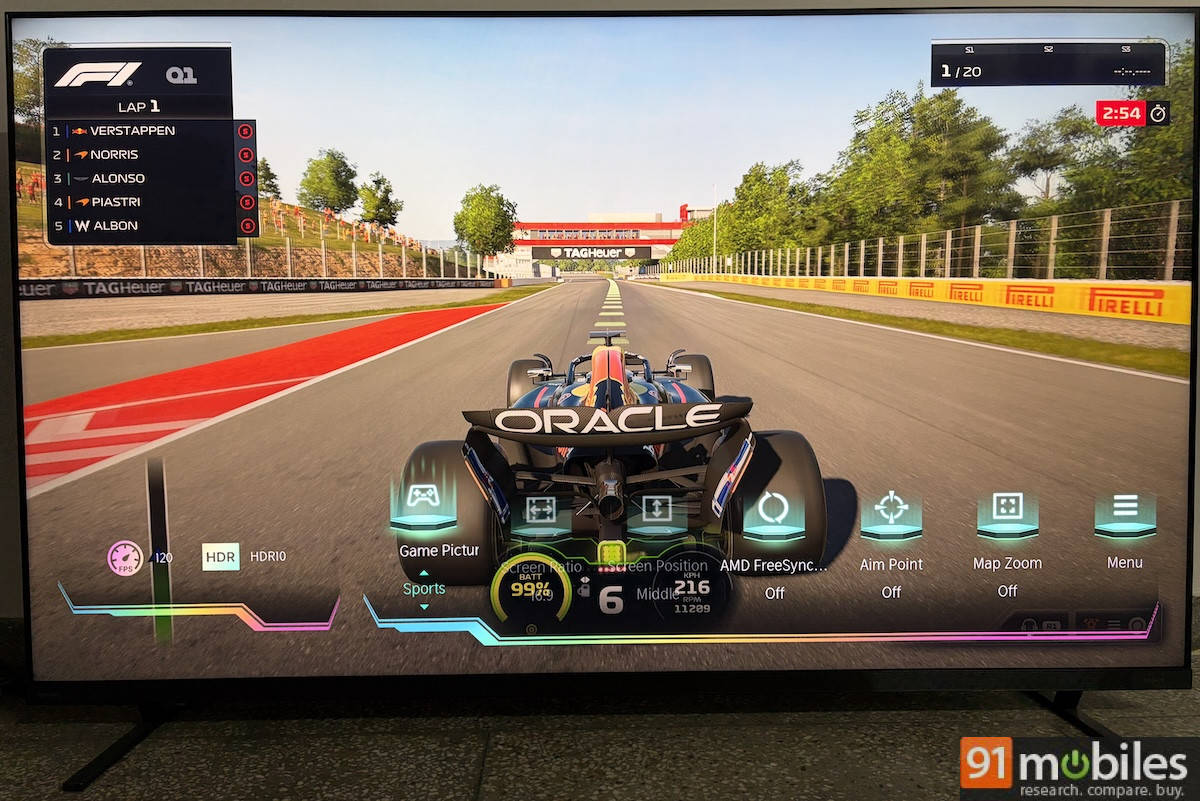
Over at the back, the power input is on the left and the rest of the ports are on the right. There are four HDMI ports, but they’re not all equal. HDMI 3 and HDMI 4 are HDMI 2.1-compliant and support 4K at 144Hz, while HDMI 1 supports 4K at 60Hz. The eARC port is HDMI 2, which also tops out at 4K at 60Hz, and it’s the one you should use for a soundbar. If you plan to hook up a gaming PC or console, use HDMI 3 or 4 with an HDMI 2.1 cable to get the highest possible refresh rate.
 Display
Now, the display is the main attraction here. The Z670SP is rated for up to 1,300 nits of peak brightness, and it’s definitely a bright TV. For those unaware, a Mini LED TV uses a backlight made up of lots of tiny LEDs grouped into local dimming zones that can be dimmed independently. One of the benefits is that it can deliver strong brightness and deep blacks, close to what you get on an OLED TV, provided the panel is a good one. And Toshiba uses one of the better VA panels out there.
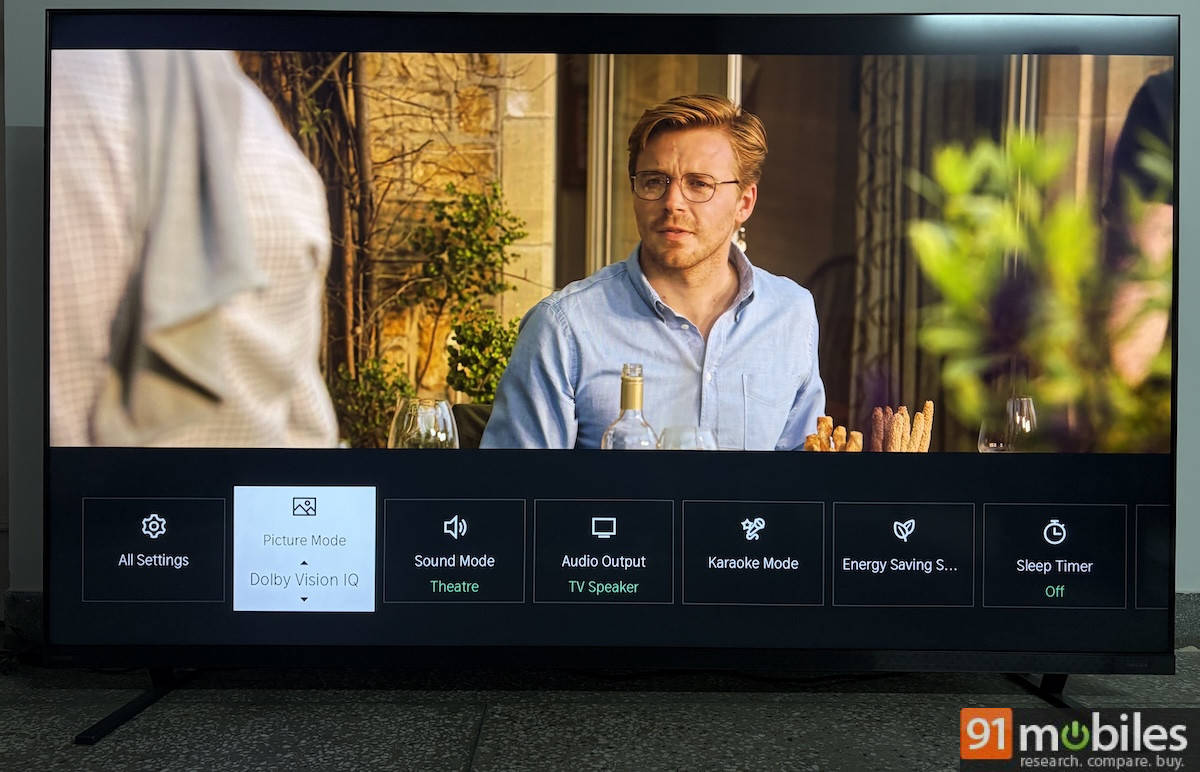
You get a bunch of picture presets, but I’d recommend Filmmaker mode for movies and shows. The TV also supports Dolby Vision IQ, which automatically kicks in on Dolby Vision content. Even better is switching to Dolby Vision plus Filmmaker mode, which gives you the best of both worlds: bright, crisp visuals with the right colour tones, frame rate and no motion smoothing, just as movies are meant to be viewed.
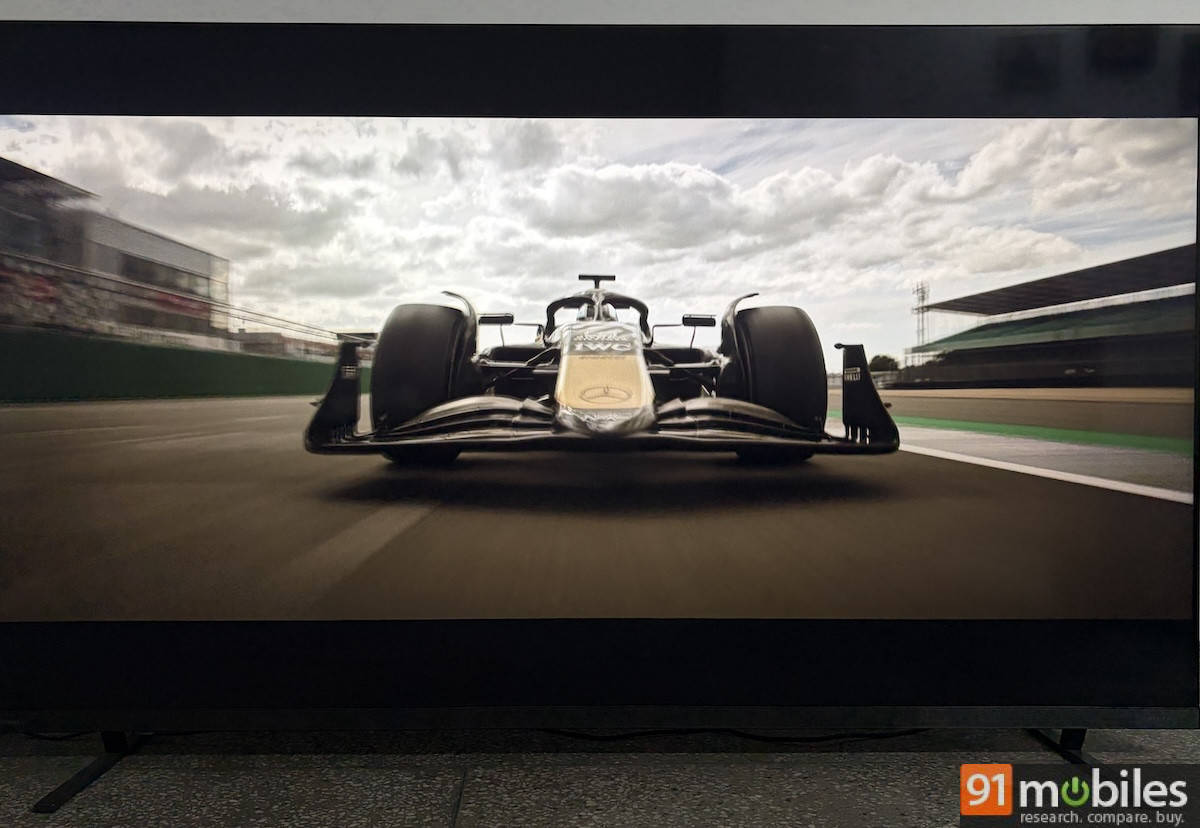
Now, MEMC (motion smoothing) is enabled by default, and it offers a very nice experience when watching sports. But you should absolutely disable it when watching movies or TV shows, as the picture motion can look unnatural.
Sound
The Z670SP has 54W of sound output and a four-speaker system, and the front-firing design delivers the full breadth of audio directly to you. The TV supports Dolby Atmos and DTS:X as well. I was pleasantly surprised by the audio quality. The speakers can get extremely loud, and I found myself hovering around 15 to 20 percent volume for the most part.
Performance and software
This is where the Z670SP stumbles. The TV ships with 2GB of RAM, and that’s instantly noticeable. This isn’t the fastest TV out there, and I admit I’m a little spoiled after using the Lumio Vision 9. I think it’s the performance benchmark right now, and it stays snappy even after a year. I don’t feel confident saying the same about the Toshiba TV as it ages. Scrolling through the UI or switching between streaming apps feels sluggish.
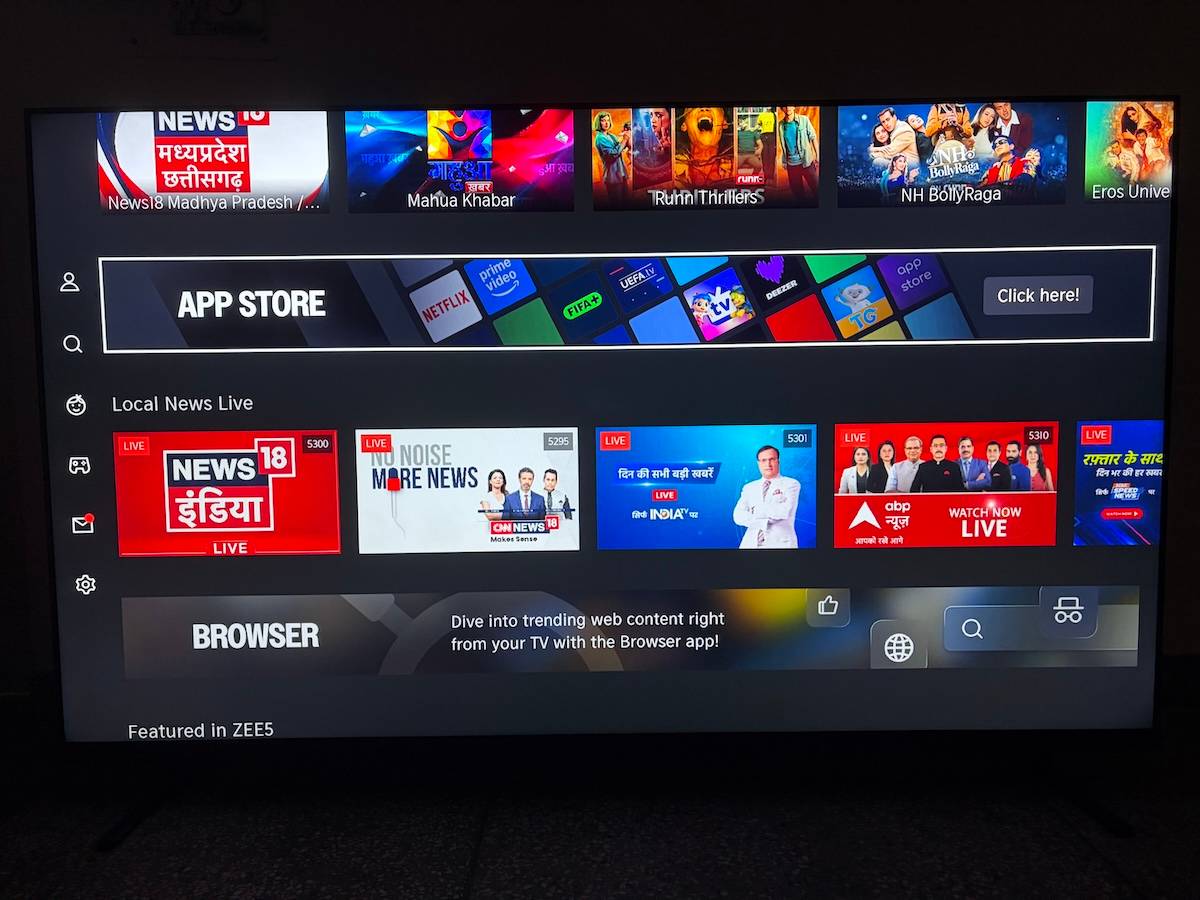
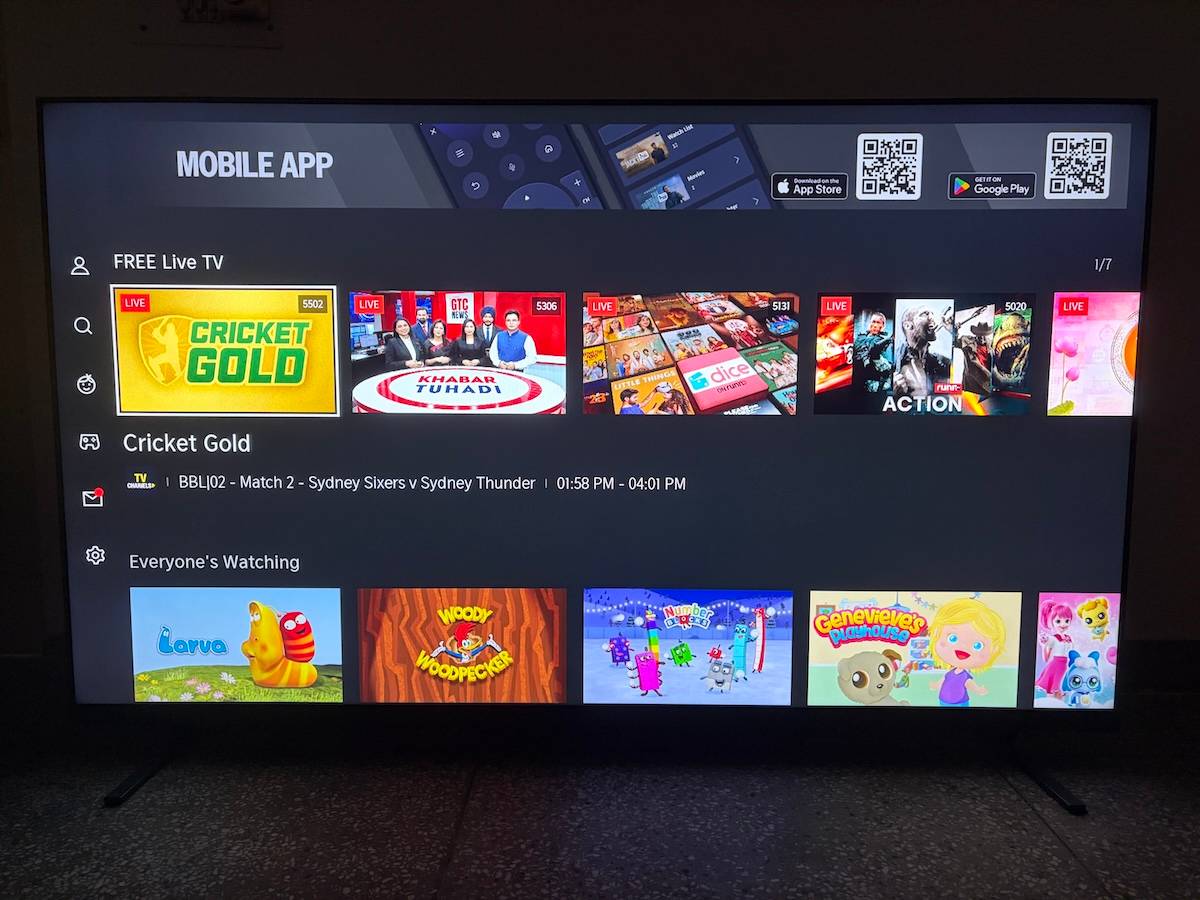
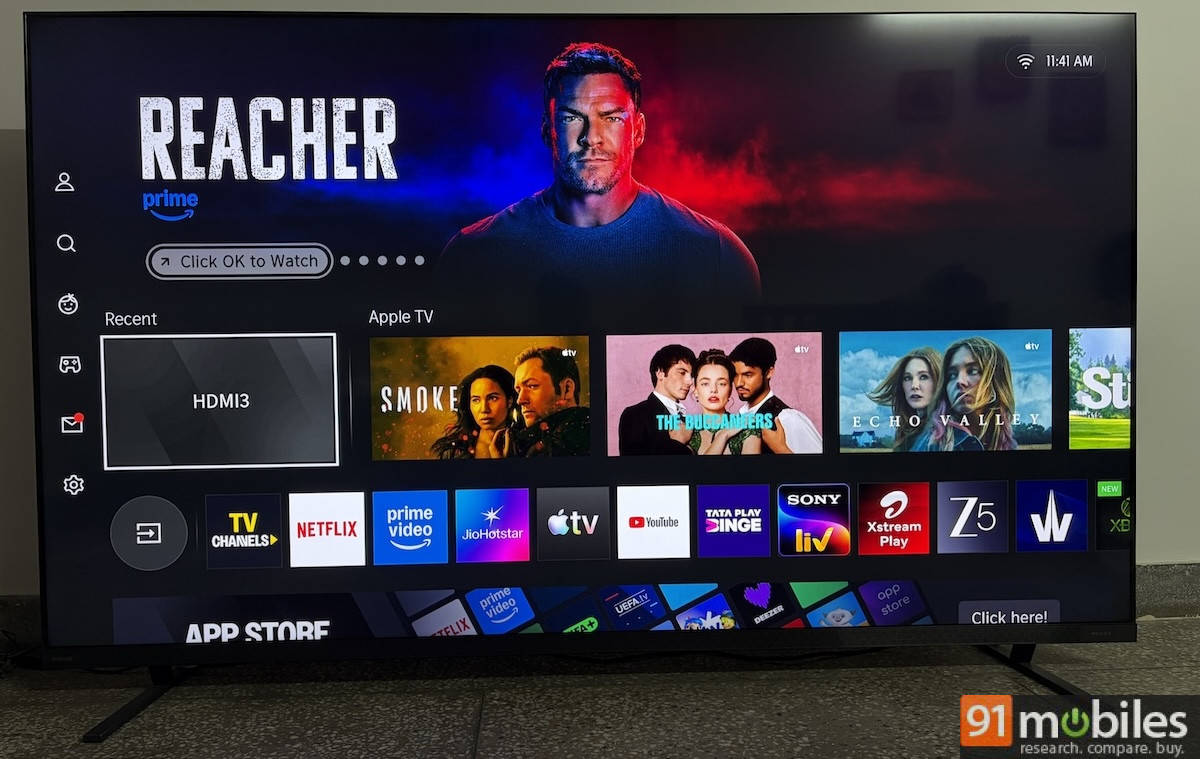
On top of that, you get VIDAA OS rather than Google TV, and I’m not a big fan of this UI. Firstly, you’re greeted with large banner ads every time you land on the home screen. Secondly, while you’ll see a long list of supported apps as you scroll, it still looks limited compared to the Google Play Store. The usual suspects are all there, including Netflix, Prime Video, JioHotstar, Apple TV and YouTube, but I couldn’t find F1 TV, for example, and I like watching F1. I also prefer Google TV’s recommendations on the home screen, which feel more organic and user-friendly than what VIDAA shows me.
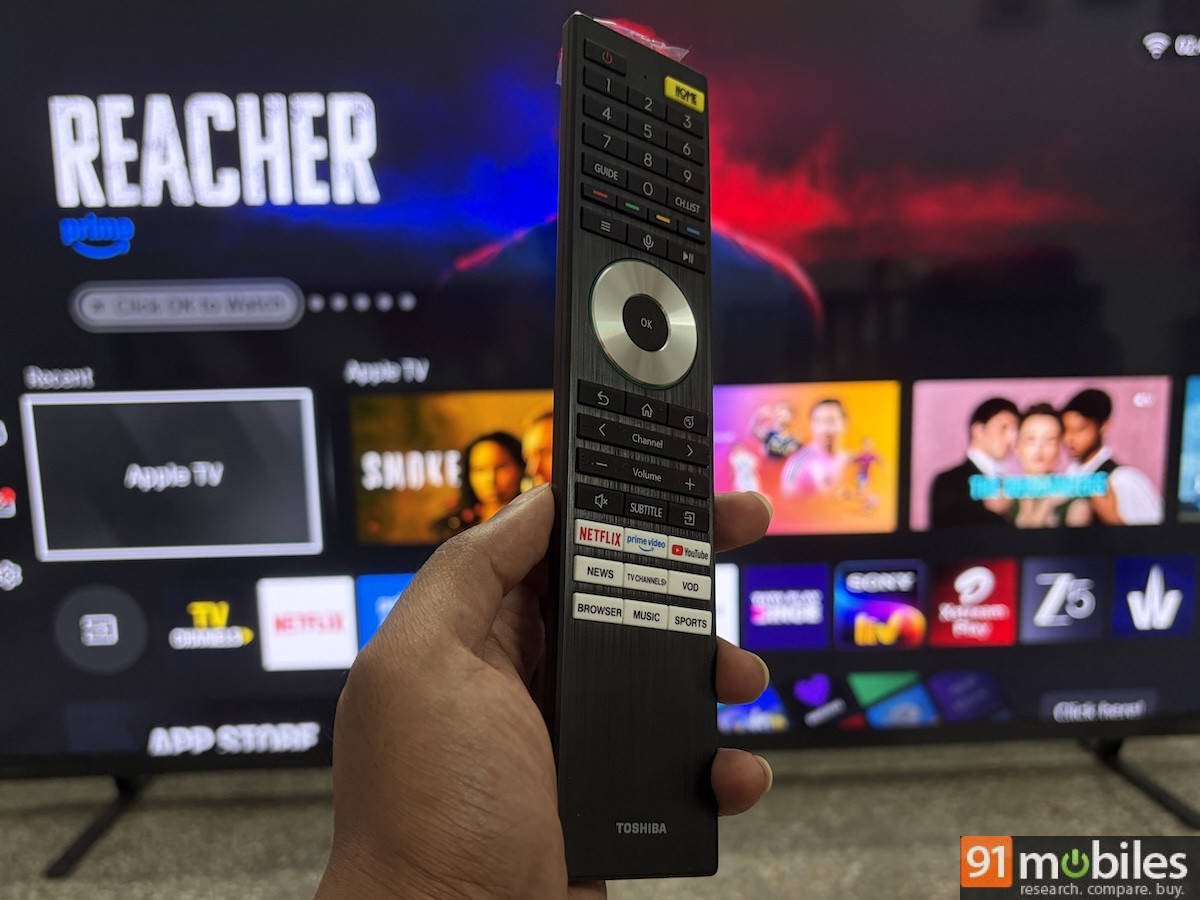
If you mostly stick to the standard set of streaming apps, you shouldn’t have a problem. Other features include AirPlay and HomeKit support, a far-field voice remote, Bluetooth 5.4 and Wi-Fi 5, along with a suite of REGZA Intelligence AI features.
Verdict
At Rs 79,990, the Toshiba Z670SP 65-inch is a TV that gets the important things right. The Mini LED panel is bright, with impressive contrast and good black levels; upscaling is handled well; native 144Hz is a bonus for gamers; and the front-firing speakers are loud and clear enough that you may not feel the need for a soundbar straight away. The premium metal build adds to the appeal.
Where it falls short is the software. The sluggish UI, banner ads and limited app selection of VIDAA are a letdown, and I’m not convinced it will age well with just 2GB of RAM. If you care most about picture quality, sound and gaming, and you stick to the usual streaming apps, the Z670SP is a solid pick. But if a snappy Google TV experience matters to you, look elsewhere, like the Lumio Vision 9.
The Lumio Vision 9 (review) is a direct competitor, with the 65-inch model priced at around Rs 73,000. It delivers noticeably faster performance, a cleaner and more approachable Google TV OS, a more intuitive TLDR app, and impressive audio quality, among other things.
Editor’s rating: 8.4 / 10
Pros:
- Bright Mini LED display with impressive contrast and black levels
- Loud, clear front-firing speakers
- Native 144Hz (120Hz on PS5) with VRR and ALLM
- Premium metal unibody design
Cons:
- Sluggish UI with 2GB of RAM
- VIDAA OS with banner ads and a limited app selection
- Mild blooming around bright objects